
How Do I Choose an Everyday Necklace I Will Actually Wear?

I can love a necklace in a photograph and still leave it unworn. A difficult clasp or awkward length can turn daily styling into extra work.
I choose an everyday necklace by checking its role in my wardrobe, its measured fit, its material details and its care instructions. I test the clasp and normal movement when I receive it. I keep a simple piece only when it is useful and comfortable for me.
I use everyday to describe how I want to wear an item. I do not use that word as a promise of waterproofing, permanent shine or comfort for every person. I need specific details to judge those questions.
What role should the necklace fill in my wardrobe?
I can buy another similar piece without knowing what it adds. A clear role helps me avoid a drawer full of choices that I rarely use.
I start with an outfit I wear often and decide what I want the necklace to add. I might want one visible pendant or a simple line near the neckline. I compare the new item with pieces I already own before I choose.

I start with clothes I already wear
I choose a few familiar tops and look at their necklines. I note whether they have buttons, prints or textured fabric near the place a necklace would rest. I then try a piece I already own if I have one. This gives me a useful reference for the position and visual weight I enjoy.
I describe the role in one short sentence. I might want a small pendant that remains visible above an open collar. I might want a chain that sits over a plain high-neck top. I might want one piece that works alone on days when I do not want to build a stack. The role helps me compare actual items instead of chasing every attractive photograph.
I compare the new item with my existing choices
I look for overlap in shape, length and color. A similar piece can still make sense if it solves a clear fit problem or replaces something I no longer use. I do not assume that another option is useful simply because it is slightly different. I want to know when I would reach for it.
| Role I want | Detail I compare |
|---|---|
| A visible daily pendant | I compare pendant size and resting point |
| A quiet supporting chain | I compare shape and visual weight |
| One piece worn alone | I compare it with several familiar outfits |
I use the jewelry collection to browse possible styles. I return to my role statement before choosing, so that the product details answer a real need in my routine.
How do I check the length and clasp before buying?
I cannot judge daily fit from a close product photograph. I need measurements and construction details before I can predict how the piece might work.
I check the stated length, extender range, pendant dimensions and clasp type. I compare those details with a necklace I like wearing. I ask the seller about missing measurements and test the actual clasp without forcing it when the item arrives.
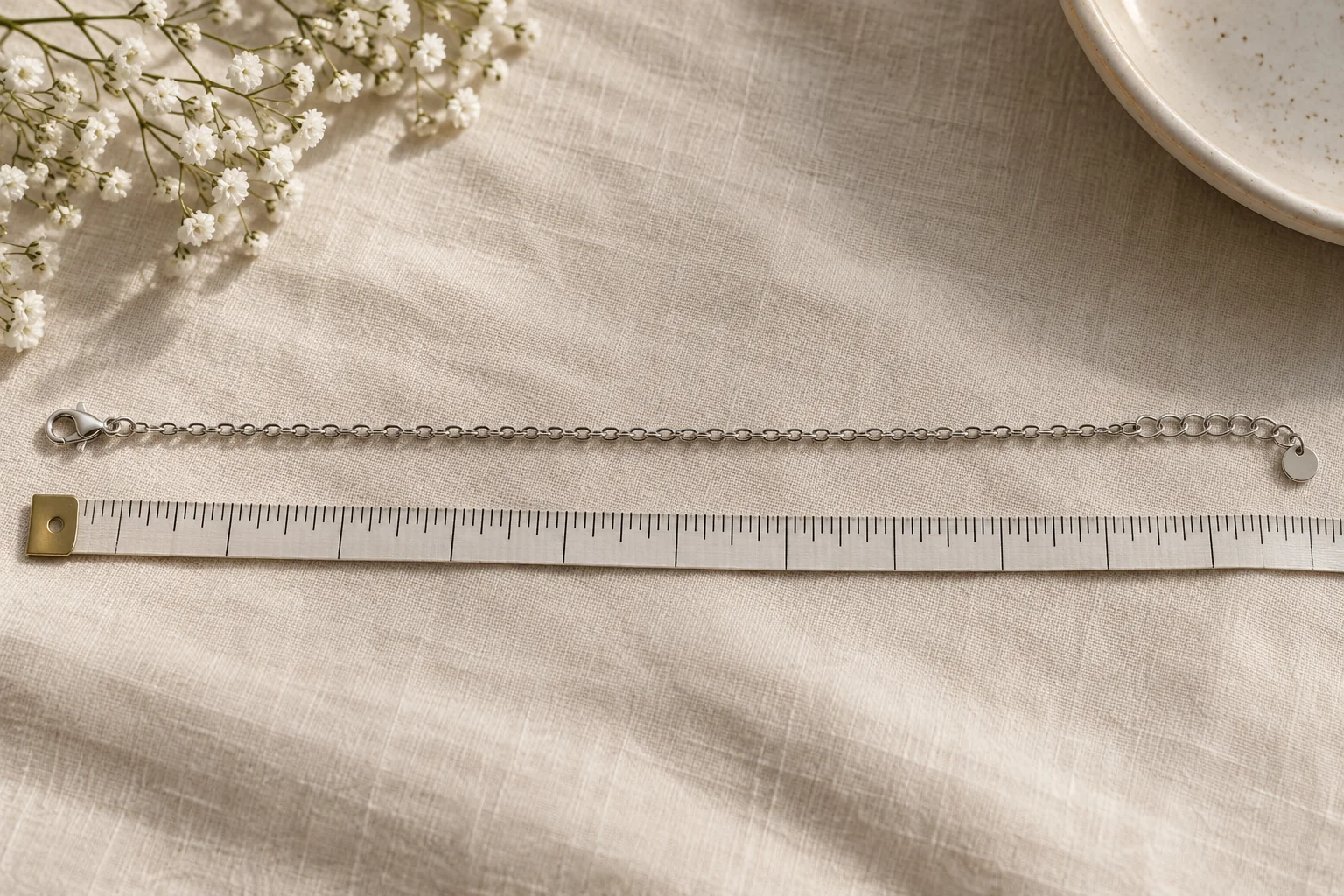
I make the measurement useful
I read whether the length includes the clasp. I check whether an extender is included in the stated number or adds to it. I note pendant height separately because it can change the lowest visible point. I use the necklace length guide when I need a clearer way to compare those details.
I measure a familiar necklace in the same way. I note the setting I use most often and try it with the intended clothes. I then compare the new dimensions with that reference. I do not treat the comparison as an exact fit guarantee because chain shape, pendant weight and my clothing can still change the result.
I think about handling as well as appearance
I check the clasp photograph when the listing provides one. I consider whether I can comfortably handle that style. I do not assume a small clasp will suit every person's hands or routine. If the listing does not show the closure clearly, I ask for a description before ordering.
When the necklace arrives, I inspect the closure in good light. I open and close it gently and check that the parts meet as intended. I stop if it appears damaged or requires force. I also look for rough edges or loose connections. I follow the seller's return instructions when something is wrong rather than trying to repair a new item in a way that might cause further damage.
What material information do I need for daily use?
I can read a friendly product name without learning what touches my skin. Missing material details leave me guessing about care and suitability.
I look for the base metal, finish and any stone or decorative material. I treat color words separately from composition. I check the item-specific care instructions and ask about unclear components, especially when I have a known material sensitivity.

I read beyond the color name
I separate the visual description from the material statement. Gold-tone tells me about color unless the listing says more. Silver-tone does not establish sterling silver. I look for a clear base material and any coating or plating description. I also read the details for the pendant and clasp because the necklace may contain several kinds of components.
I avoid turning general marketing words into technical promises. I cannot infer waterproofing from everyday. I cannot infer a skin-safety guarantee from gentle. I need a specific statement and relevant care information. If I have a known sensitivity, I use the identified materials to decide whether I need advice or a different item.
I choose a care routine I can follow
I read the cleaning and storage instructions before purchase. I consider whether the routine fits how I live. A piece that needs careful removal and separate storage may still suit me, but I need to account for that effort. I do not test a coating with harsh products simply to see what happens.
GIA explains that different jewelry materials need different care.1 I use that principle to avoid a universal cleaning method. I do not apply a precious-gemstone cleaning example to an unnamed fashion-jewelry finish. I follow the item's instructions and ask the seller when the recommended method is unclear. I can make a more useful decision when I understand the routine before I bring the piece home.
How do I decide whether the necklace earns a place in my routine?
I can keep an item because the picture looked good, even when wearing it feels awkward. A short practical check gives me clearer evidence.
I try the necklace with familiar clothes, test normal movement and check the clasp, comfort and care routine. I look for repeated catching or irritation. I keep it when it fills the role I chose and follows the product's stated use limits.
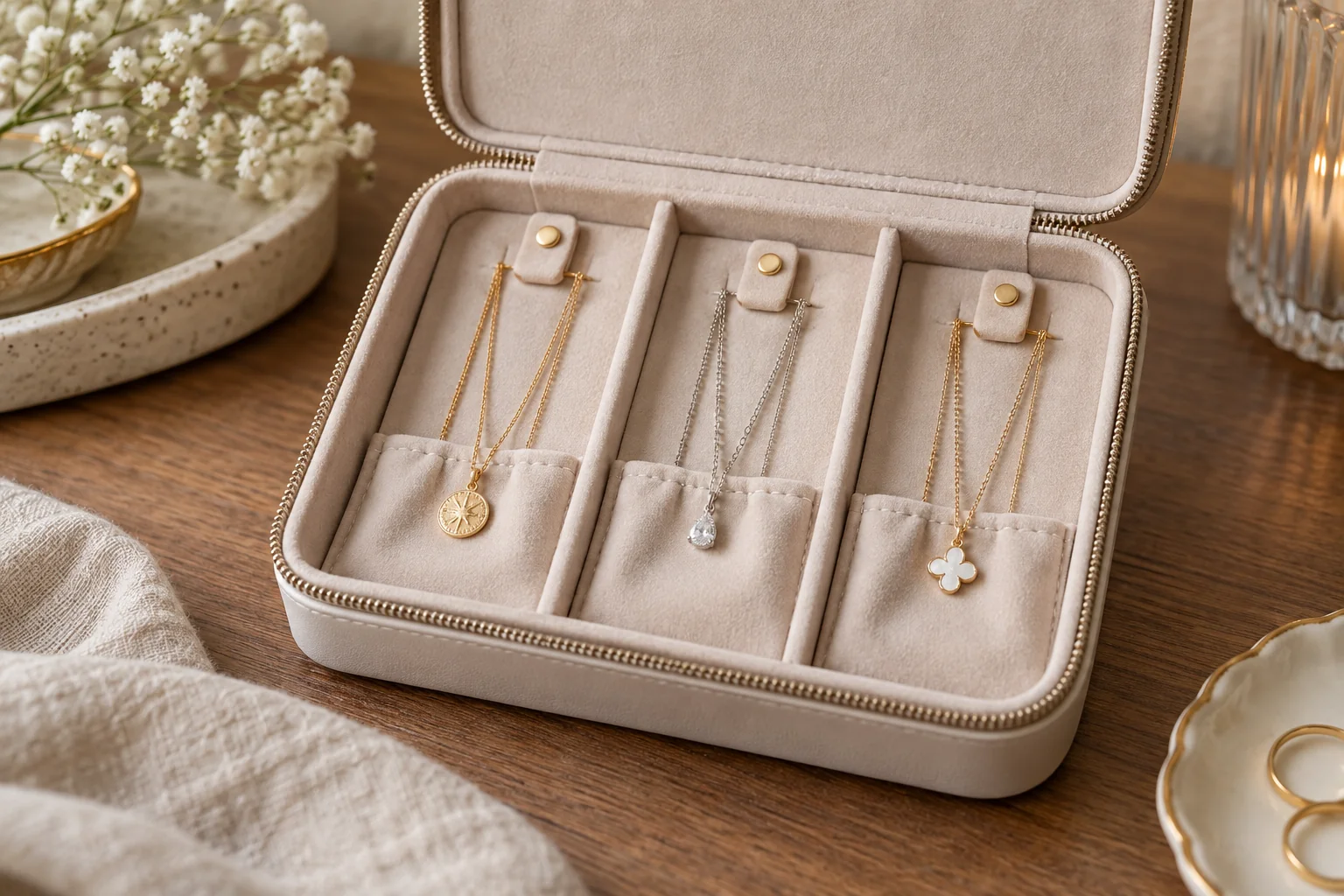
I test ordinary movement
I wear the necklace with the outfit I chose as my reference. I stand, sit and turn my head normally. I look for a pendant that repeatedly catches the clothing edge. I also check the back of my neck for a clasp or extender that catches hair. I stop if the piece feels uncomfortable or causes irritation.
I test it alone before I add a second chain. This helps me understand which item causes a problem. If I want layers, I compare the actual resting points and repeat the movement check. Etsy's layering guide gives me styling ideas about spacing,2 but I still need to test the pair on my own clothes.
I give storage a clear place
I choose where I will put the necklace when I take it off. I keep chains separate and follow the care instructions for the materials. I use the travel storage guide when I need to pack it away from home. A careful storage habit can reduce unnecessary handling and make the item easier to find the next time I want it.
| My check | What I want to observe |
|---|---|
| Fit with familiar clothes | I want a useful resting point |
| Normal movement | I want comfortable wear without repeated catching |
| Removal and storage | I want a routine I can maintain |
I decide from these observations rather than from the word everyday alone. I can return to the seller's policy if the item does not match its description or my fit needs.
Conclusion
I choose an everyday necklace through a clear wardrobe role, measured fit and honest material details. I keep it when wearing and caring for it fit my routine.
- GIA: Tips for Caring for Your Jewelry, a reference for material-specific care and storage. ↩
- Etsy: How to Layer Necklaces, a styling reference for spacing and combinations. ↩
Images are AI-generated editorial illustrations. They do not identify or verify a specific product.