
Can I Shorten My Necklace Without Cutting the Chain?
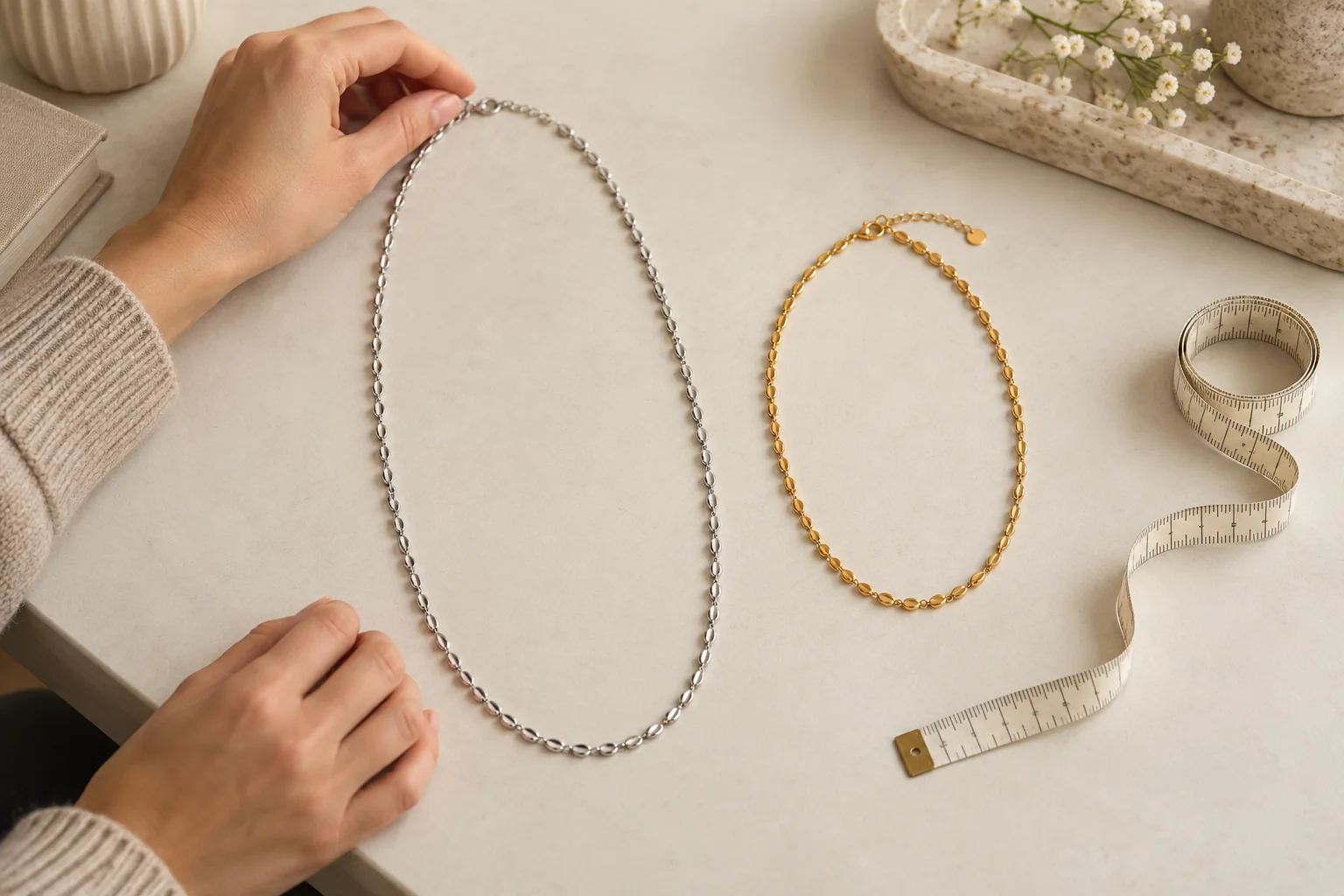
I can like a necklace but want its pendant to sit higher. I pause before trying a clip or cutting a chain I may later want unchanged.
I first use any adjustment points the maker intended. A separate shortener may suit some necklaces, but I need confirmation of fit and use. I do not knot, fold or clip an unknown chain as a shortcut. If no suitable reversible option exists, I ask about alteration or another length.
I separate a change I can undo from a permanent modification. That distinction helps me decide what I want before I buy a component or ask a jeweler to work on the necklace.
How much shorter do I actually want the necklace?
I can ask for a necklace to be shorter without knowing where I want it to land. That leaves too much room for a permanent misunderstanding.
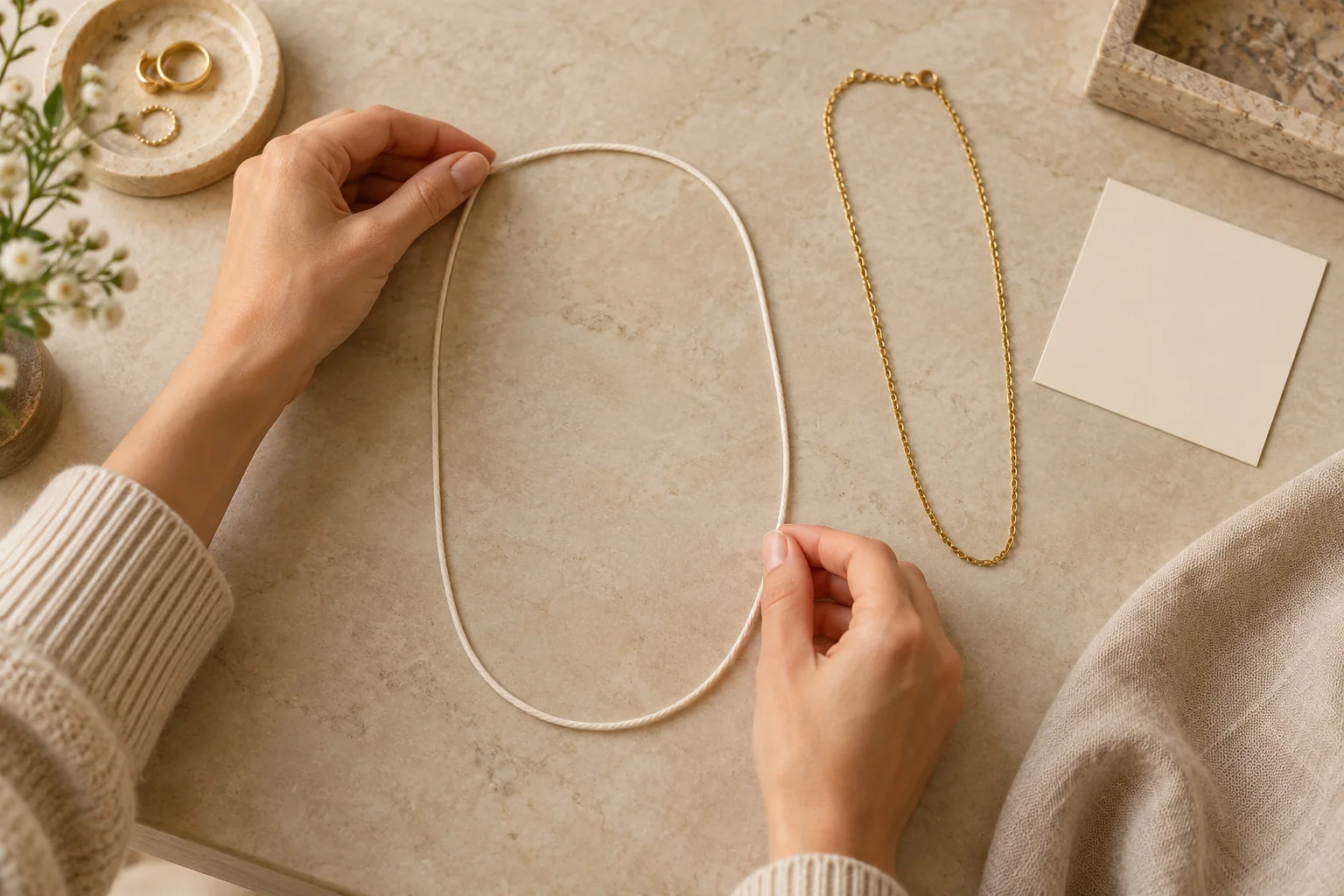
I compare the current closed length with a target closed length and the intended pendant position. I state whether the measurement covers the whole necklace or each side of a fixed pendant. I use a separate loose cord for a visual comparison, not a knot in the jewelry itself.
I write the target in one clear measurement system
I begin with the necklace as supplied. I record its stated length and any built-in range. I keep the pendant's dimensions separate because the chain measurement does not always tell me where the lowest point will rest. I also note whether the pendant slides or attaches to two chain sections. That changes how I need to describe the finished result.
I avoid a request such as take an inch off without saying whether I mean the complete closed necklace or each side. A fixed central pendant makes that ambiguity especially easy. I want the jeweler to write the proposed finished measurement back to me before I agree to work. I do not convert a visual guess into an instruction to cut a particular number of links.
| Measurement I record | Meaning I confirm |
|---|---|
| I note the current length | I specify the complete closed necklace |
| I note the target length | I keep the same unit and measurement method |
| I note a central pendant | I ask how its position will be preserved |
I can compare a separate piece of cord at the intended length while keeping it loose and easy to remove. Tiffany's size guide uses string to show an approximate necklace position and asks readers to consider pendant size and shape.1 I use that as a visual planning aid. A cord does not reproduce the weight, drape or closure of my necklace. Our necklace-length guide helps me choose the position before I discuss how to change the actual item.
Does my necklace already have intended adjustment points?
I can overlook an extender and buy an unnecessary shortener. I look at the original closure before I treat a necklace as having only one length.
I check the supplied instructions for an extender, receiving rings or an intended sliding mechanism. I use only the adjustment method designed for that piece. I do not assume that every visible chain link is a clasping point or that a sliding design can be moved in any direction.

I separate a designed range from an improvised attachment
I lay the intact necklace flat and look at both ends. I identify the clasp, its receiving part and any extension that came with the item. I compare those parts with the maker's instructions or a clear product image. If the description only says adjustable, I ask which part moves and how the stated range is measured.
I do not force the clasp into a link just because the link is visible. The opening may not accept the clasp properly, and the link may not be intended to receive it. I also do not pull a bead or pendant through a tight point to discover how a slider works. An adjustment that requires force is a reason to pause and ask, not a reason to try harder.
I record the range I can use as intended. The shortest supplied setting may already place the pendant where I want it. If it does not, I know the size of the remaining change I am considering. That gives me a specific question instead of a vague search for a necklace hack.
I keep a built-in extender separate from an added accessory. Our extender-fit guide explains how to assess a separate component. Its existence does not mean that I can shorten a necklace by doubling back that component or attaching both ends wherever convenient. I want the original necklace to remain understandable and easy to inspect. I preserve a photograph of the supplied arrangement before discussing an alteration so that I can explain which parts were there from the start.
Is a separate shortener really reversible for my chain?
I can read no cutting and assume that an accessory cannot change anything else. I still need to check how it holds the chain and what remains behind.
I ask the accessory maker which necklace constructions it accepts, how it holds them and whether it requires folding, threading or a loose tail. I check both the chain and the new closure. I do not treat no cutting as proof that an accessory will avoid marks, movement or damage.

I trace the complete route of the necklace
I look for an explanation of the mechanism rather than a product name alone. Listings can use shortener, enhancer and clasp for items that do different jobs. One device may gather a strand. Another may connect to a particular link. A third may require a specific shape or strand thickness. I need the actual operating instructions before I can compare any of them with my chain.
I ask where the unused length goes. An accessory can move a pendant upward while leaving a section hanging behind my neck or adding another point I need to operate. I consider whether that arrangement suits my hair, clothing and storage routine. I do not call the result equivalent to a shorter complete necklace simply because the front view looks similar.
| Feature I examine | Question I ask |
|---|---|
| I see a gripping surface | I ask which chain shapes it accepts |
| I see a folded route | I ask whether my chain permits that bend |
| I see a hanging tail | I ask where it will rest during wear |
I keep a flat or closely structured chain's handling instructions in mind. I do not make a sharp fold to demonstrate that a clip can close. I also avoid knots, safety pins and improvised wire as trial solutions. If the maker cannot explain compatibility, I can leave the necklace unchanged. A reversible choice needs to be usable without forcing the original piece, and I need to be able to remove it in the way its maker intended.
What should I ask before a jeweler shortens it permanently?
I can agree to a shorter length and later discover a different clasp position or lost adjustment range. I want those details settled before work begins.
I ask whether the exact construction can be shortened, what the finished length will be and which components will change. I request the proposed cost, timing, visible differences and handling of removed parts. I confirm the plan before any cutting, joining or replacement begins.
I make the alteration request describe the finished item
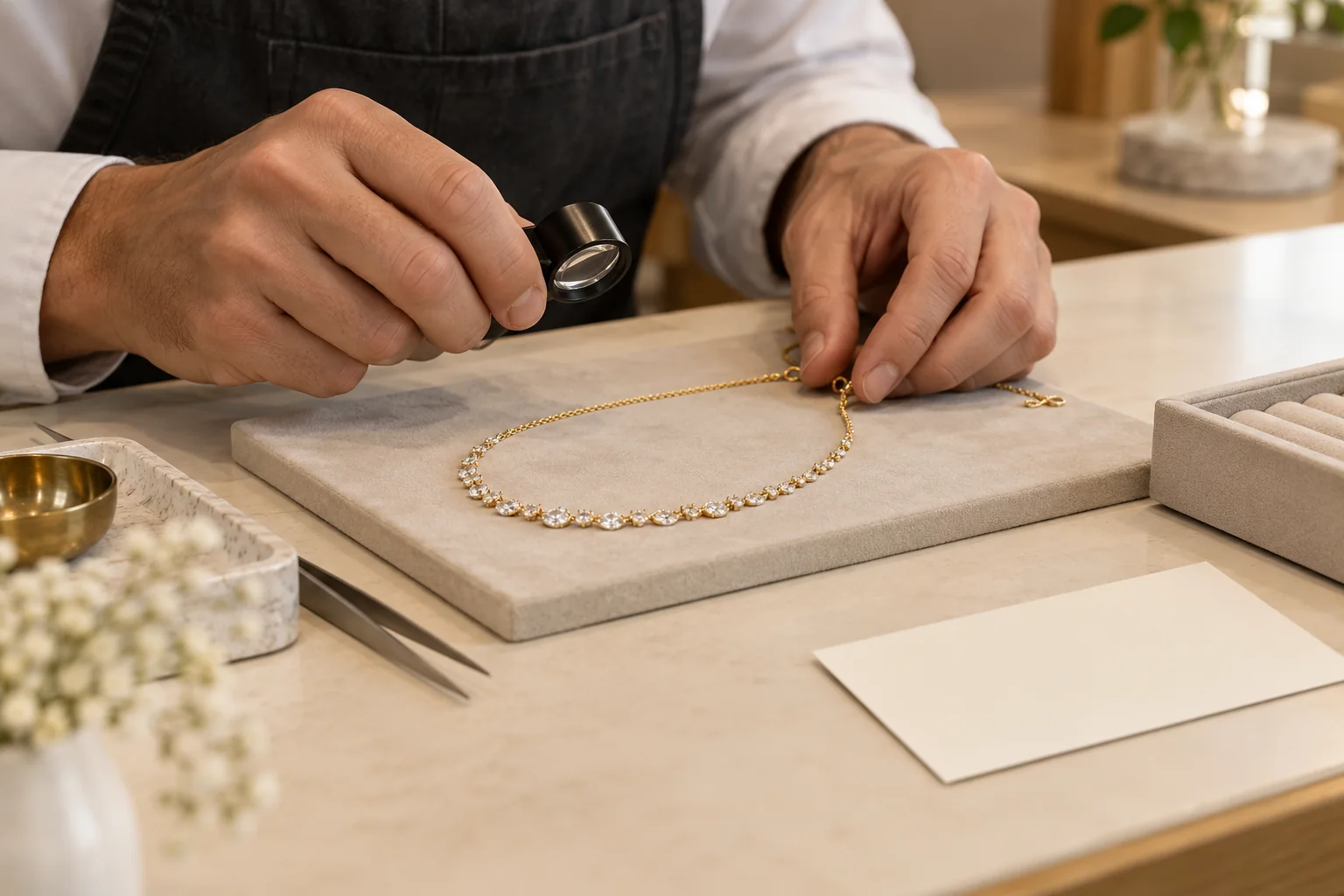
I bring the necklace and its supplied material information to the consultation. I explain the fit I want and whether I hope to keep the original clasp, extender and central pendant position. I ask the jeweler to assess the complete piece instead of assuming that removing a few links is always a simple task.
I keep another brand's service information within its proper scope. Tiffany says it can alter the length of most of its necklaces and bracelets and asks customers to confirm their selected style, timing and price.2 I use that as an example of item-specific assessment. It does not establish that Tiffany will alter my unrelated necklace or that Zolay offers the same service.
I ask how the work may affect appearance and future options. I want to know whether the remaining chain will still look balanced, whether the pendant will sit centrally and whether I will lose the supplied adjustment range. I also ask if restoring the old length later would require new work or new parts. I do not assume that keeping the removed section makes every alteration reversible.
I request a written description before I approve the job. The description should identify my item, the agreed target and any replacement component. I ask how removed parts will be handled and whether I should collect them. I also read the service provider's own current terms. A clear request helps both of us distinguish the work I asked for from a different improvement I did not intend to authorize.
When is a different necklace the better choice?
I can spend more time finding a workaround than wearing the piece. I want to compare the finished result with a necklace that already has the right length.
I compare the total alteration or accessory cost, handling, appearance and future adjustment needs with a complete alternative. I keep the original unchanged if the tradeoffs do not suit me. I check current return or exchange terms before assuming that wearing or altering it leaves those options open.

I choose between complete outcomes
I compare what I would actually receive at the end of each route. A shortener may leave a tail and an extra closure. A permanent alteration may give a cleaner result but remove a length option I still want for other clothes. A different complete necklace may offer the intended length without changing the one I already own. None of these outcomes is automatically the most sensible for every piece.
I include the use I expect in the decision. If I only want a shorter look for one outfit, I may prefer an existing necklace that works with it. If I want the current piece to become my usual choice, I may value a professionally assessed alteration more. I do not turn those preferences into a claim that an accessory or alteration will be suitable before the exact construction is checked.
| Route I compare | Tradeoff I keep visible |
|---|---|
| I use the intended adjustment | I keep within the supplied range |
| I consider an added component | I accept its extra handling only if it fits |
| I consider permanent work | I confirm the finished result in advance |
I also allow myself to stop. A necklace can be attractive and still be the wrong length for the role I want. Our guide to choosing without overbuying helps me compare a useful change with another item that adds work. I choose the option I can explain clearly, use comfortably and care for without a chain of improvised fixes.
Conclusion
I check the intended adjustment first, confirm compatibility before adding a shortener and agree on the finished result before any permanent change.
- Tiffany & Co., Necklaces and Pendants Size Guide. I use the string comparison as a visual aid, not a complete wear test. ↩
- Tiffany & Co., Can My Necklace Be Lengthened or Shortened?. I use this example only for the brand's stated item-specific assessment. ↩
Images are AI-generated editorial illustrations. They do not identify or verify a specific product.