
Can I Add a Pendant to a Chain I Already Own?
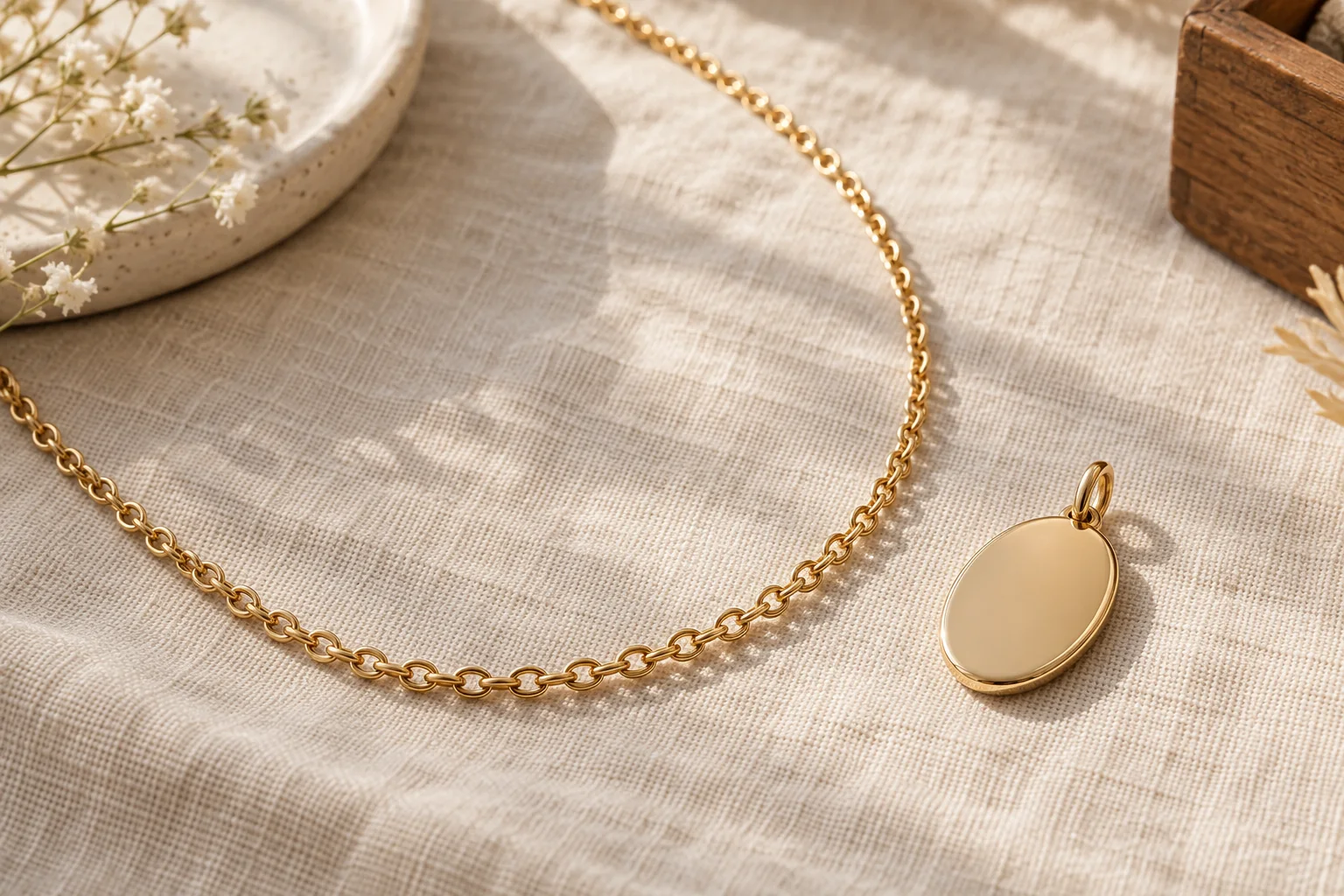
I can like a pendant and expect it to slide onto my favorite chain. The opening, end fittings and construction can make that pairing unsuitable.
I add a pendant only when its intended attachment method suits my chain and the makers confirm any unclear compatibility. I check the pendant opening, the chain end that must pass through it and the finished construction. I do not force a tight fit or remove hardware as a shortcut.
I write the Zolay Nights Journal to make everyday jewelry decisions clearer. This guide considers a pendant and chain I want to combine. I keep it separate from a color pairing or length decision, because a pleasing look does not establish a workable connection.
Is the pendant actually meant to be removed or added?
I can see a loop near a pendant and assume it opens. A decorative connection may be part of the finished necklace.
I check whether the pendant is a separate component, a removable part or a fixed part of a finished necklace. I follow its intended attachment method. I ask the seller when the construction is unclear instead of trying to open a ring or detach a decorative part.
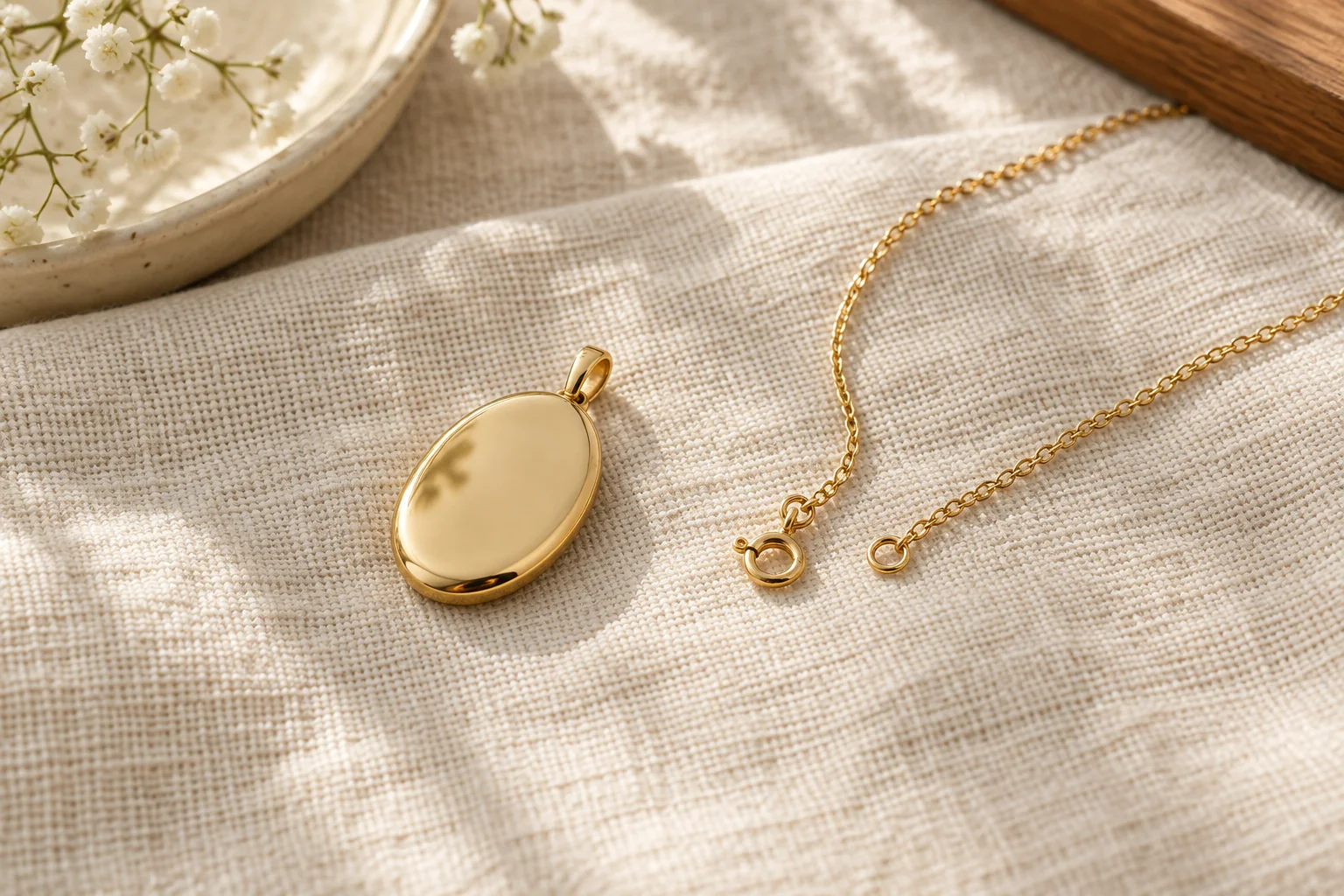
I identify the connection before I handle it
I begin with the actual item description. I look for a clear statement about what is included and what can be removed. I do not infer removability from the way a pendant hangs in a photograph. A loop visible near the top can be part of the setting, while another piece may have a separate attachment intended to move.
I inspect the supplied images without pulling the parts apart. I look at the chain route and the pendant connection. I notice whether the seller shows the pendant separately or only as a finished necklace. I still ask for confirmation if the images do not explain the method. I do not treat a gap in a photograph as a ready-to-open fastening point.
| Detail I identify | Decision it helps me make |
|---|---|
| Separate pendant | I can ask about an appropriate chain |
| Removable pendant on a necklace | I can ask for the intended removal method |
| Fixed connection | I can keep the finished piece together |
I keep Zolay Nights product facts narrow. The current Sculpted Stone Pendant Necklace description identifies a setting and chain, but does not establish that its pendant is freely removable. I do not recommend swapping its components on the basis of the product name. I ask about the exact piece and option first.
I also check whether a seller's optional chain is the same as a chain I own. An image of a compatible pairing only establishes the arrangement it actually shows. I do not assume that every other chain will work with the pendant, or that a chain is included because it appears in a styling scene.
What must pass through a fixed pendant opening?
I can compare the chain links with the pendant opening and miss the larger fitting at the end. A thin chain can still fail that check.
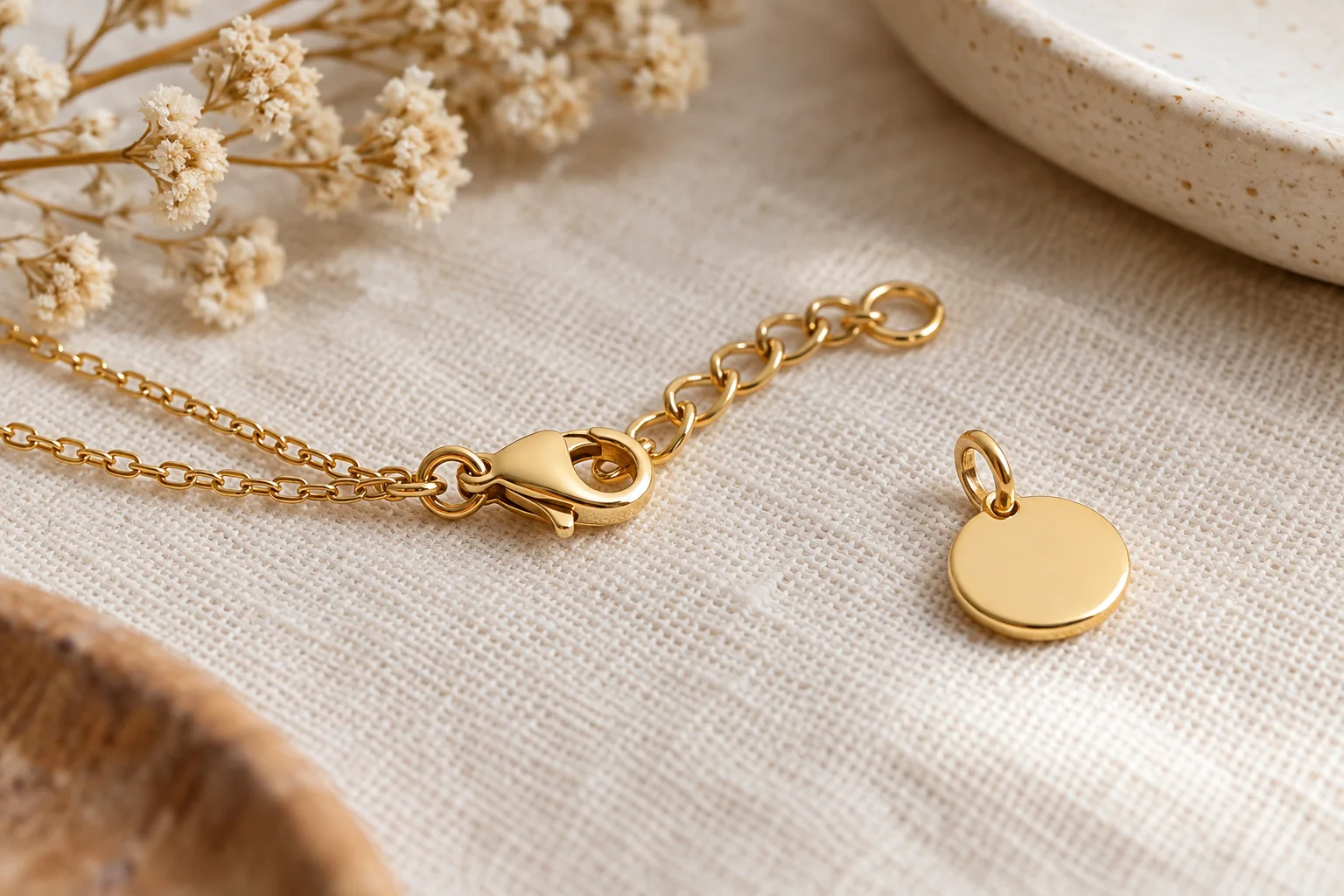
I check the usable opening of a fixed pendant loop, called a bail, against the chain and the fittings on the end I would thread. I ask which dimensions a listing supplies. I do not compare an outside measurement with an inside opening or assume equal numbers mean enough room.
I ask for comparable information
I read a stated dimension with its label. I want to know what the number measures, where the measurement was taken and which unit it uses. I do not treat every bail-size figure as an inside opening measurement. I also do not judge a small clearance from an enlarged photograph alone. I ask when the description leaves the measurement method unclear.
I look at the ends of my chain without taking them apart. I notice the clasp, receiving ring and any end fitting. I consider the route the maker permits for attaching the pendant. I do not automatically choose the end with the clasp if another intended route is described. I keep the question about passage separate from a repair or alteration.
Gothicrock's own pendant-fit guide explains why a fixed bail must accommodate the fittings on the chain end being threaded, as well as the chain itself.1 I use that physical distinction as context. I do not transfer its pendant sizes, materials, weights or purchase terms to a Zolay Nights item.
I can send the seller a clear photo of each actual component and the measurements I have. I explain where the figures came from. I do not turn an approximate ruler reading into a promise of fit. If the clearance is close or the shape is hard to judge, I ask for an assessment of the actual pieces.
I stop before testing an uncertain pairing with force. A failed passage check is useful information. It does not give me a reason to compress the fitting, stretch the bail or remove a closure that was not designed to detach.
Does a pendant that fits the opening suit the chain?
I can establish that an end passes through a loop and assume the pairing is complete. The finished chain still has a separate job to do.
I treat opening clearance as one compatibility check. I also ask whether the chain's construction is intended to carry the chosen pendant and whether the arrangement follows both items' care instructions. I do not use a universal weight ratio or a photograph as a strength guarantee.
I compare the completed arrangement
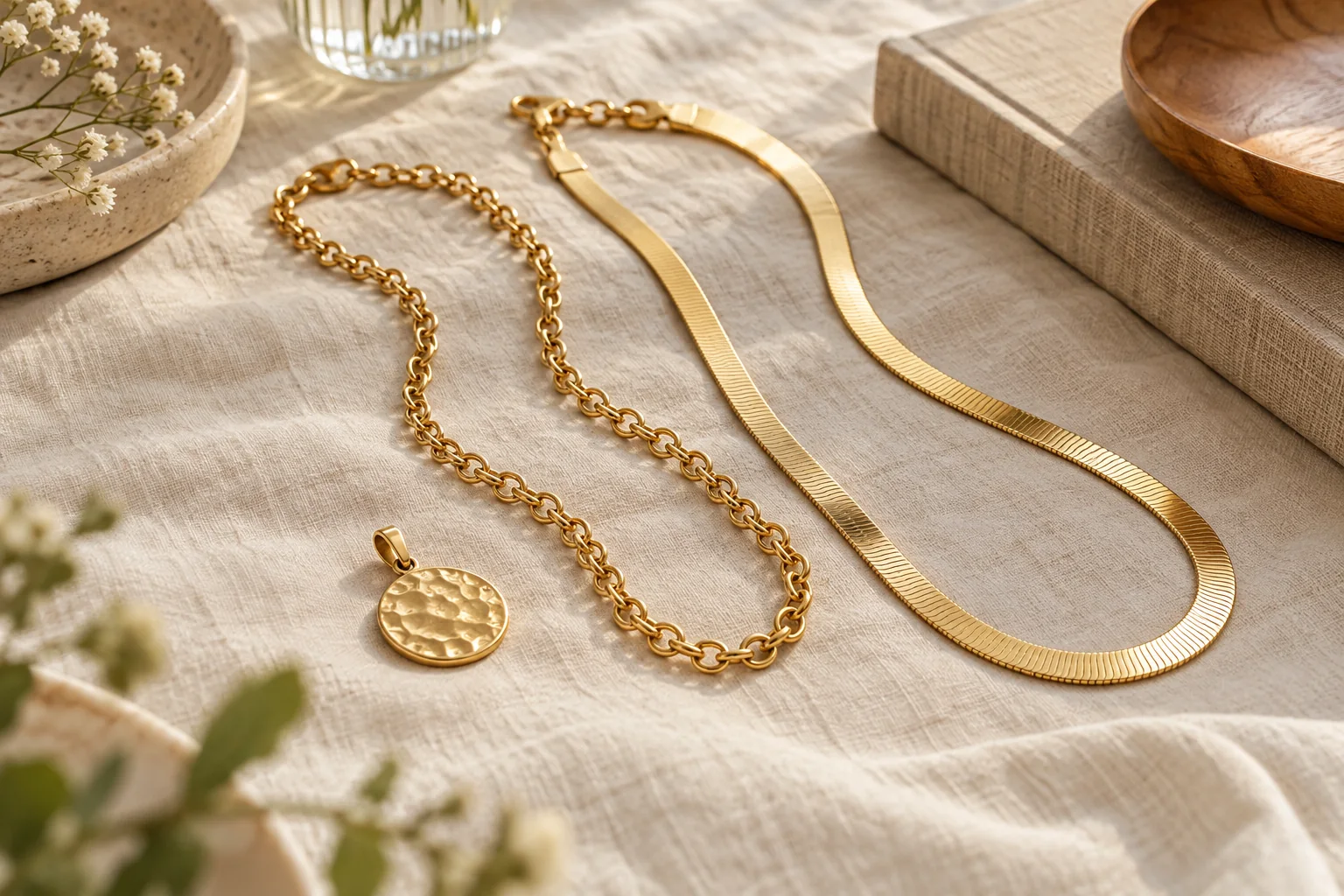
I look at the actual chain profile and the maker's stated use. I do not assume that every chain is meant to carry an added pendant. A chain chosen for its own visible shape may have different handling limits from a piece sold as a pendant chain. I ask about that distinction before I combine items simply because their colors match.
I keep the pendant's stated dimensions and weight with its option details when those figures are available. I do not estimate weight from a product photograph. I also avoid a rule that tells every reader to choose a chain a fixed number of times heavier than the pendant. The construction and the actual connection need an item-specific answer.
| Check I keep separate | Question I ask |
|---|---|
| Opening passage | Can the intended chain end pass freely? |
| Chain construction | Is the piece intended for this added pendant? |
| Finished arrangement | Can I follow both items' use and care limits? |
I use the flat chain handling guide when the chain has a broad flat profile. I do not treat its handling discussion as approval to add a pendant. I want the actual maker to tell me whether the proposed addition suits that construction.
I inspect how the pendant would rest only after compatibility is established. I do not keep forcing a hanging position that makes the chain twist or catch. I can choose a different chain or leave the pieces separate. I keep the desired appearance in the decision without letting it replace the connection and construction checks.
What should I ask before buying a separate pendant?
I can send a seller the question will it fit and receive an answer that lacks context. The actual components make the question easier to resolve.
I name the pendant and chain, identify the selected options and explain the attachment method I want to use. I ask about the opening, end fittings and intended load. I keep unclear measurements unresolved and request item-specific guidance instead of asking for a blanket compatibility promise.
I provide the details that change the answer
I prepare the product names and option information first. I include the chain's own description when I have it. I do not describe it only as a thin gold necklace, because that phrase leaves its construction and finish unclear. I want the seller to assess the pieces I am considering rather than a guessed category.
I explain what I intend to do. I may want to thread an existing chain through a separate pendant's fixed loop. I may be asking whether a removable pendant can be moved from one finished necklace to another. Those are different tasks. I do not combine them into one question about whether a pendant is adjustable.
I ask for dimensions that are useful to compare. I check the units and whether the number describes an inside opening, an outside size or a different part. I also ask what construction limits apply after the passage check. I do not need to demand a guaranteed lifetime result to obtain a clear answer about the intended use.
I browse the Jewelry collection by the current selected item details. I do not assume that a numbered chain option accepts every pendant in another collection. I keep a reply about one option separate from the descriptions of other options that look similar.
I retain the answer with the product information. I do not rely on a remembered phrase from an old chat. If the seller cannot establish the proposed combination, I can choose a finished necklace that already meets my aim. I do not need to complete a component swap to make a useful jewelry choice.
What can I do when the pieces do not match?
I can be tempted to squeeze a fitting through the opening because I already own both pieces. A forced attempt can create a new problem.
I keep the pieces separate when the permitted connection does not fit or compatibility remains unclear. I ask a qualified jeweler about an assessment if I want to explore an alteration. I do not use pliers, cutting or a forced pull as an ordinary attachment method.
I distinguish pairing from alteration
I set the pieces down where their ends and attachment points are visible. I do not keep trying the same tight connection from several angles. I can describe the point that does not pass and ask whether another suitable chain is a clearer choice. I do not treat ownership of both pieces as a reason they must be used together.
I separate a normal attachment method from a change to the hardware. Removing and reattaching a clasp can be a different task from threading a chain through a loop. I ask about the actual construction, finish and effect on the piece before I consider an alteration. I do not copy a forum repair method that was used on a different necklace.
I keep storage simple while I decide. GIA's general jewelry-care guide discusses careful handling and separate storage.2 I use that as storage context, rather than as a recipe for cleaning or modifying a pendant connection. I follow each finished item's own instructions and keep the parts from rubbing or tangling together.
| Option I consider | Question I keep in view |
|---|---|
| I choose another chain | Does it suit the actual pendant and method? |
| I seek an assessment | What changes would an alteration involve? |
| I keep the pieces separate | Can each still serve its intended use? |
I use the necklace length guide when a different compatible chain changes the resting position. I treat length as the next comparison after the connection question. I do not promise a free alteration, a repairable component or a certain outcome. I choose the next step with the actual item information in front of me.
Conclusion
I check attachment, opening clearance and chain construction before adding a pendant. I keep uncertain pairings separate and ask about the actual pieces instead of forcing a fit.
- Gothicrock: Pendant bail and chain end fittings. I use its distinction between chain links and end fittings, not its product specifications or guarantees. ↩
- GIA: Tips on Caring for Jewelry. I use its general handling and separate-storage context, not a component-alteration method. ↩
Images are AI-generated editorial illustrations. They do not identify or verify a specific product.