
How Do I Choose a Necklace Clasp I Can Use Easily?
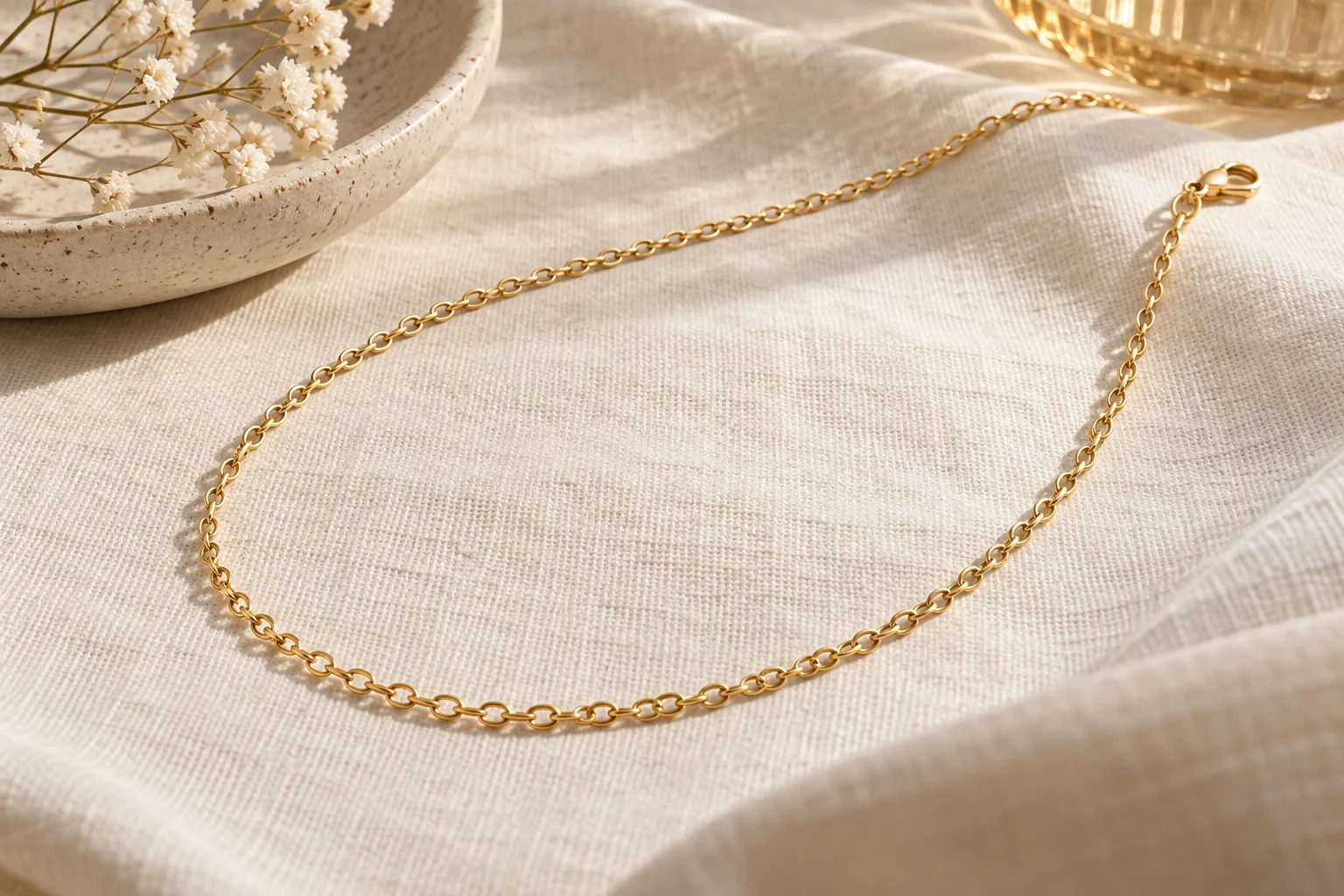
I can choose a necklace for its pendant and struggle with its closure. A small clasp can turn ordinary use into a frustrating task.
I check the actual necklace clasp, receiving ring and operating method before buying. I compare the access and movements I need, rather than assume one clasp type suits everyone. I ask for a clear demonstration when details are missing and avoid changing the mechanism without qualified advice.
I write the Zolay Nights Journal to make everyday jewelry choices easier to understand. This guide focuses on operating the closure. I keep that task separate from choosing a chain length, building a stack or caring for a flat chain.
What do I need to see before I choose a clasp?
I can see a clear pendant photo and almost no view of the closure. A familiar clasp name does not fill in the missing detail.
I ask for a close view of the actual clasp and the ring or part it joins. I check the intended opening and closing method, not just the style name. I confirm that the image represents my chosen necklace option rather than another piece in the collection.
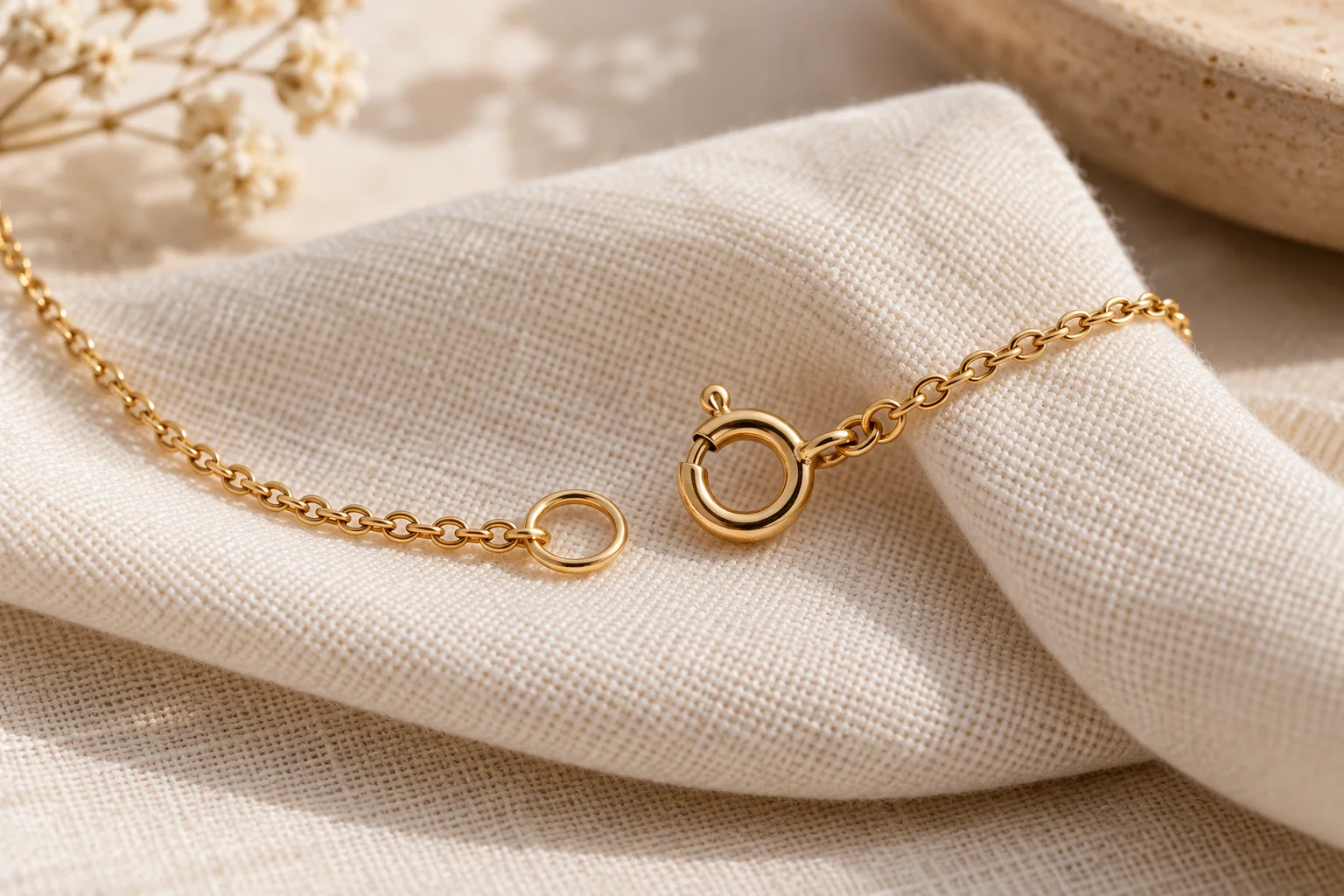
I compare the whole connection
I start with the selected product and option. I look for an image that shows both ends of the chain. I need to see the closure and the part that receives it. I do not decide from a cropped photo of the clasp alone. The space near the ring can matter as much as the mechanism I press or pull.
I ask how the maker intends the closure to operate. I do not guess by twisting a part that looks movable. I can ask for a short demonstration or a clear instruction image. I want to know where the moving part is and how the closed position should look. I avoid improvised tests that require force.
| Detail I request | Question I answer |
|---|---|
| Actual option image | Am I comparing the necklace I will receive? |
| Both joining parts | Can I see the space where they connect? |
| Operating instructions | Do I understand the intended movement? |
I separate the design name from a claim about ease. Two clasps with the same name can have different proportions. I also do not treat a larger photograph as a larger physical part. I ask for useful dimensions when I cannot judge the scale clearly.
I use the FTC's online-shopping guidance as context for checking purchase details and the seller's stated policies.1 I do not infer a seller's return terms from that advice. I resolve the missing product detail before I make a choice, rather than count on being able to return an unsuitable closure later.
How do I compare the movements I need to make?
I can open a clasp on a tabletop and still find joining it behind my neck difficult. I want to compare the actual task.
I consider opening the mechanism, holding it open, aligning the receiving part and releasing it into the closed position. I compare those movements with how I normally put on a necklace. I do not assume that opening the clasp once proves the full routine will feel easy.
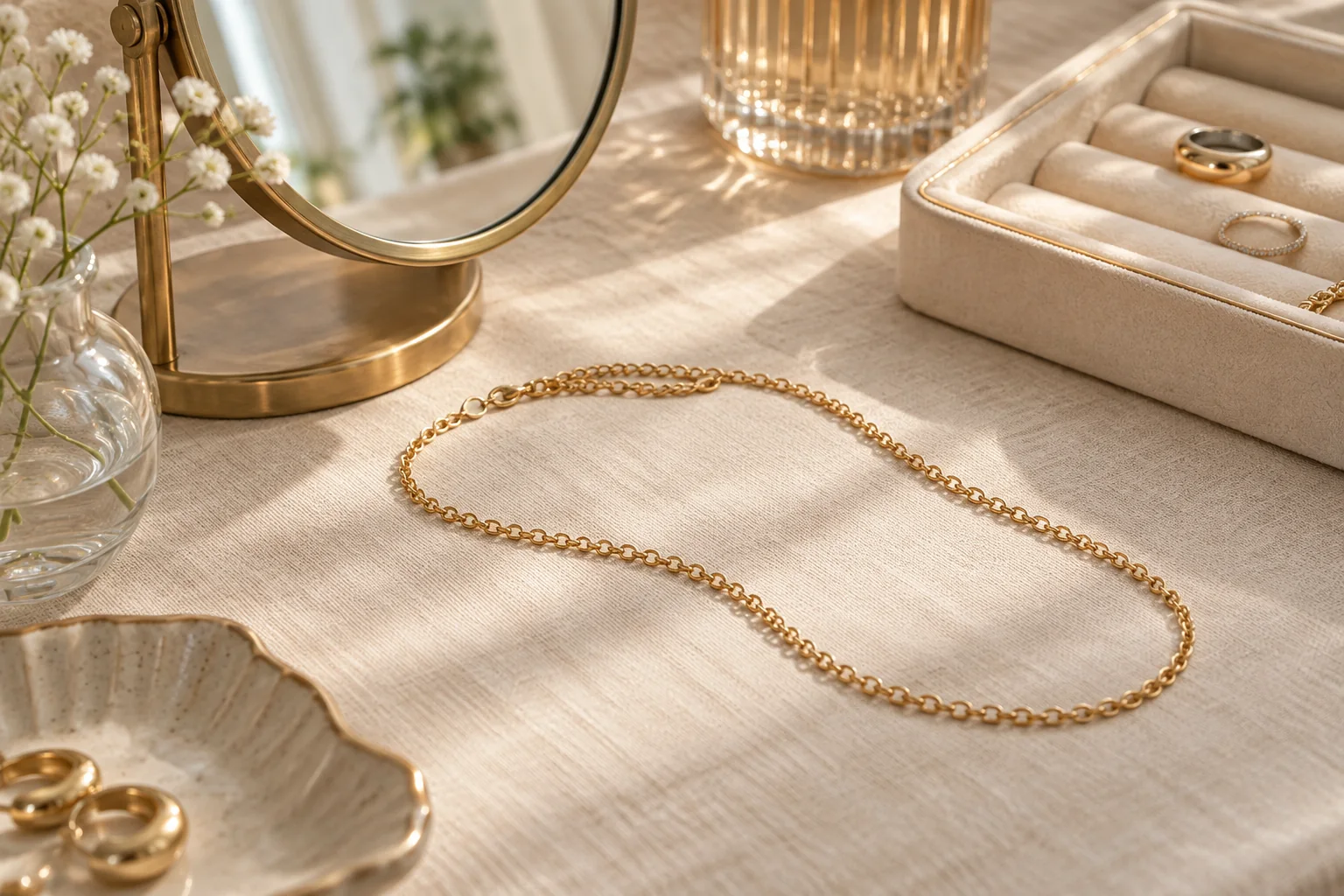
I break the task into clear steps
I think about where I will handle the necklace. I may use a mirror or place the piece on a clear surface before fastening it. I do not make speed the test. I want to understand the sequence and the access I need for each part. I also want to remove the necklace without pulling on the chain.
I compare the movement with a closure I already know how to use. I describe what helps me clearly. I may want more room near a receiving ring or a mechanism I can see without turning the chain. I do not need to make a medical claim to explain an ordinary handling preference.
I keep the chain's construction in view. A piece that resists rotation should not be repeatedly twisted to bring the clasp forward. I follow the finished item's instructions. I do not solve a closure-access problem by dragging the necklace against clothing or pulling a pendant around my neck.
I use the necklace length guide when I need to judge where the piece rests. I keep length separate from closure access. A longer necklace may sit differently, but that does not establish a better mechanism. I also do not assume that a necklace can be slipped over my head unless its design and dimensions allow that method.
I check removal as carefully as fastening. A closure that I can join with help may still be inconvenient when I want to remove the piece alone. I compare the whole routine, including where I set the necklace down after opening it, before I decide it suits my use.
What should I ask when the product description is incomplete?
I can read adjustable or easy to wear and still lack the detail I need. A narrow question can produce a more useful answer.
I name the exact necklace option and ask about the closure, receiving part, dimensions and operating method. I explain the handling feature I need without asking for a universal guarantee. I keep an unanswered detail open rather than infer it from the word adjustable or from another listing.
I make the question easy to answer
I write the product name and selected option first. I do not ask whether all necklaces in a collection are easy to put on. I ask what closes the specific piece and whether the seller can show both joining parts. I want an answer tied to an item, rather than a broad statement about a category.
I describe the task that feels difficult. I may want to know whether the mechanism needs a small lever to stay pressed while I align a ring. I may need a clearer image of the available space. I do not request a guarantee that the clasp will work for every person or situation. I ask for observable details that help me decide.
| Question I send | Information I seek |
|---|---|
| Can I see both ends? | I want a complete view of the connection |
| How does this option open? | I want the intended method |
| What dimensions are provided? | I want a reliable sense of scale |
I check the reply against the selected option. I do not treat an image of another necklace as confirmation. I also keep a distinction between a closure and a slider. A part that adjusts a drop does not automatically describe how a chain opens. I ask about both when the construction makes that unclear.
I browse the Jewelry collection using the current item details. I do not assert a specific clasp type for a Zolay Nights piece when its written description does not establish it. I keep that gap visible and ask before buying, rather than let an attractive photograph stand in for missing operating instructions.
Should I add a clasp helper or extender?
I can see a helper advertised as a quick fix and overlook what it changes. Another connection needs its own compatibility check.
I check the necklace maker's guidance before adding a helper or extender. I consider the receiving ring, added length, weight and connection method. I do not assume a helper fits every chain, preserves the intended fit or guarantees security, and I avoid altering parts with household tools.
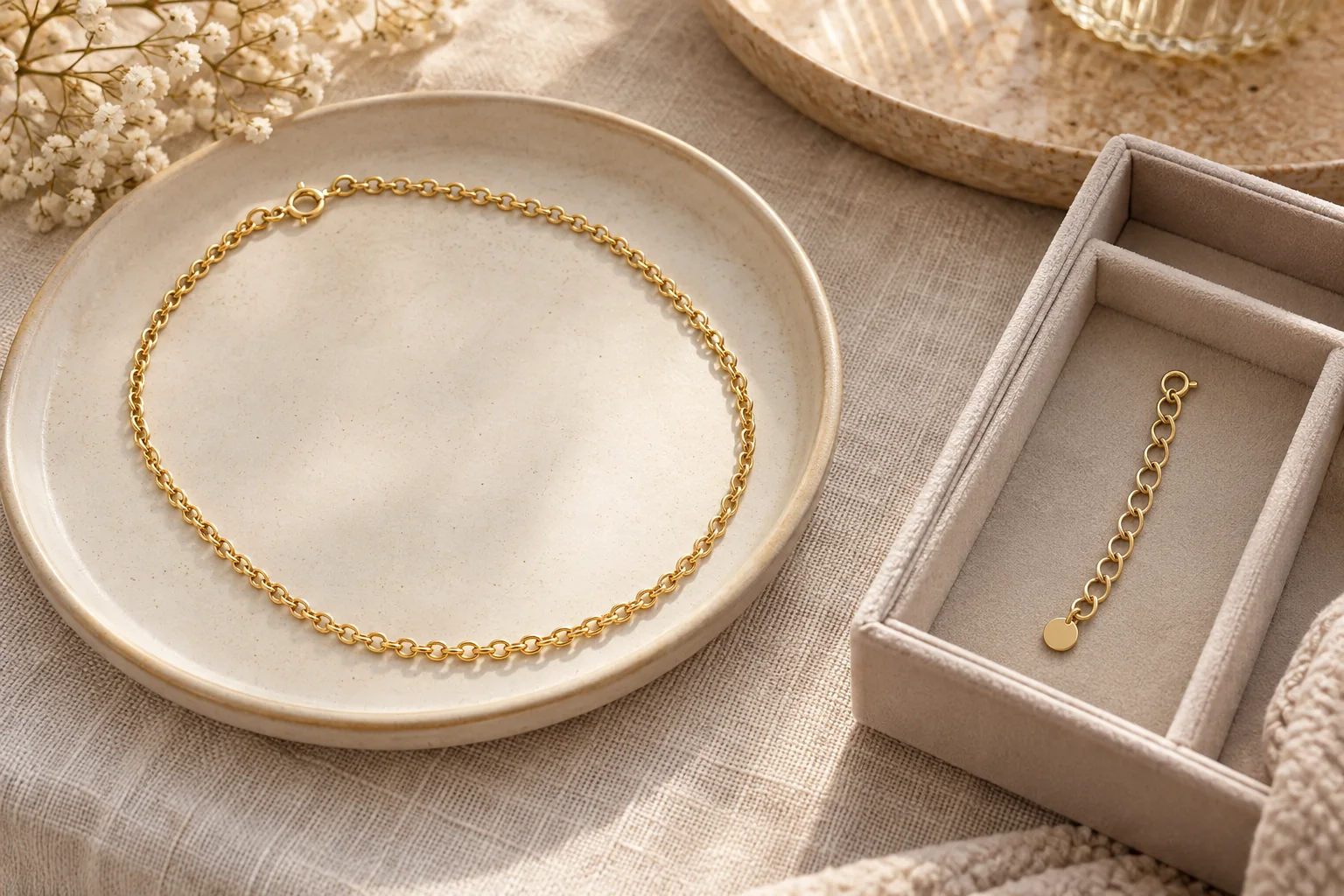
I compare the changed piece
I treat the proposed addition as a change to the necklace. I ask what parts connect and whether their dimensions suit each other. I do not force a connector through a ring that is too small. I also do not enlarge the ring with pliers just to make an advertised accessory fit. I ask the maker or a qualified jeweler about the actual construction.
I consider where the necklace will sit after the addition. An extender can change the position of the pendant or closure. I do not assume that the extra length is too small to matter. I compare the intended arrangement with my outfit and the piece's own handling limits before I choose a solution.
I keep claims about ease separate from claims about security. A helper may change the movement needed for fastening, but that does not prove it will stay closed in every situation. I read its own instructions and limitations. I do not repeat a marketplace promise that every necklace becomes secure or easy through the same addition.
I compare the helper's handling instructions with those of my necklace. I do not add a component simply because it is marketed as easier to use. I want the actual connector dimensions and intended method before I change the finished piece.
I use the necklace spacer compatibility guide when I need to compare another type of added connection. I do not treat a spacer as a clasp helper by default. The useful decision is whether a specific addition suits the exact piece and task, rather than whether another accessory is popular.
When should I stop trying to operate the clasp?
I can keep pulling because I think I have misunderstood the mechanism. Resistance is a reason to inspect, not a reason to add force.
I stop if the clasp resists its intended movement, looks bent, fails to close or has a changed connection. I support the necklace and document what I can see. I ask the seller or a qualified jeweler for advice before using tools, oils or an improvised repair.
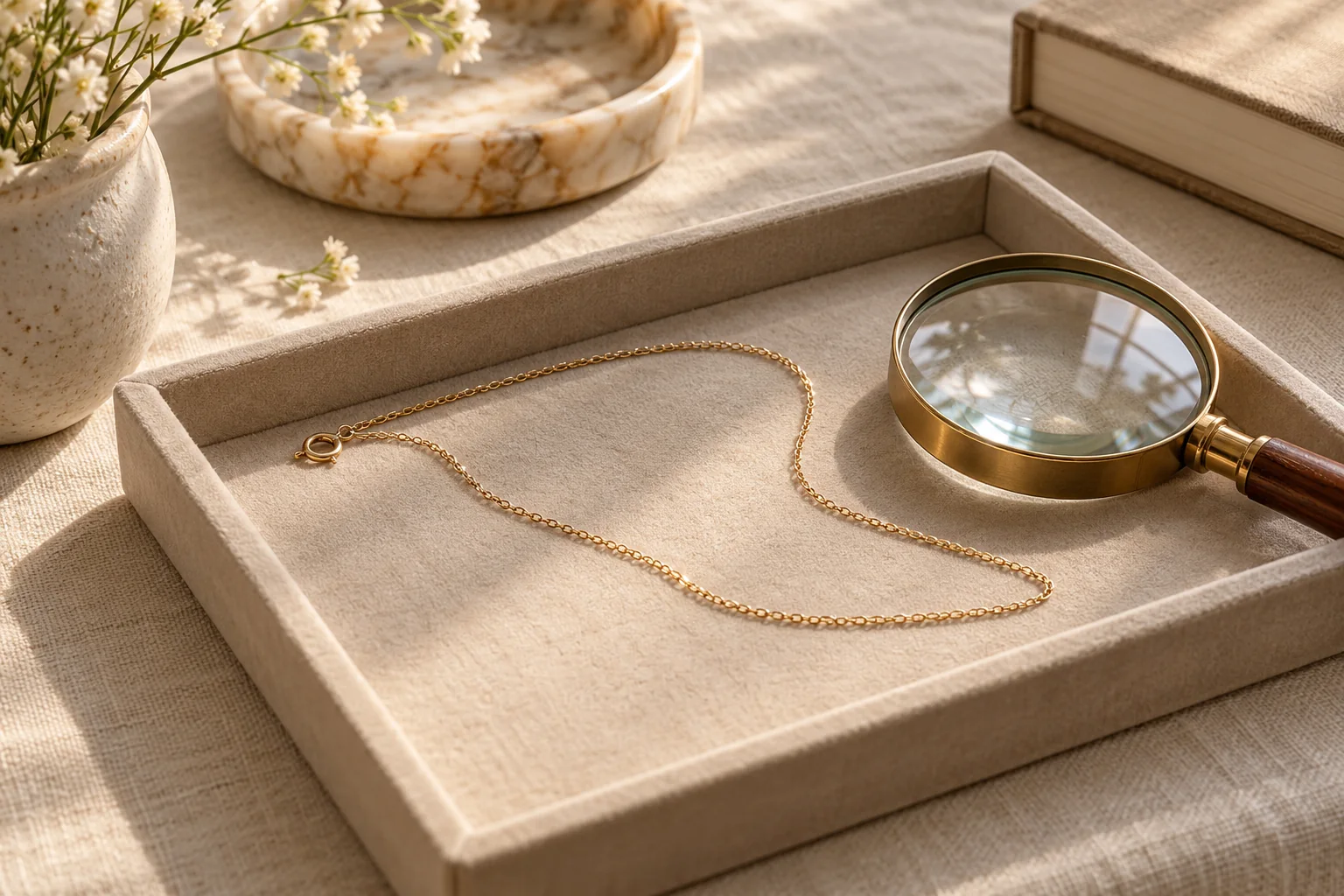
I preserve a clear view of the problem
I set the necklace on a clean surface where I can see the closure. I compare what I see with the supplied instructions. I do not keep twisting the clasp simply because the last attempt failed. I also do not pull the chain to hold a tiny mechanism still. I want to identify the part that resists movement without creating another problem.
I check whether the receiving ring and connections look changed. I do not assume that a closed-looking clasp proves the surrounding parts are sound. If I see a gap or a bent connection, I stop wearing the piece while I seek advice. I do not invent a cause from one photograph or claim that I can assess its repairability myself.
| Condition I notice | Next action I choose |
|---|---|
| I cannot identify the opening method | I request the actual instructions |
| I notice resistance or a changed part | I stop forcing the mechanism |
| I need a repair assessment | I ask about the specific construction |
I keep photos simple when I contact the seller. I show the whole piece and a close view of the affected area. I include the selected option and describe what happened if I know. I avoid filters or a dramatic pull to demonstrate the problem. I keep the order question separate from any proposed repair.
I use GIA's jewelry-care guidance as general context for handling pieces carefully and keeping them separate in storage.2 I do not borrow a cleaning method for another metal or gemstone to free a clasp. I follow the actual piece's care limits while I wait for a clear, item-specific answer.
Conclusion
I choose a clasp by its actual connection and operating method. I compare the full routine, ask about missing details and stop when the mechanism needs force.
- FTC: What to know before you buy something online. I use its advice to check details and policies, not a promise about a particular seller's terms. ↩
- GIA: Tips on Caring for Jewelry. I use its general handling and storage context while following the actual item's care instructions. ↩
Images are AI-generated editorial illustrations. They do not identify or verify a specific product.