
What Do I Check Before I Open a Delivered Accessory?

I can open a new accessory before I check which style arrived. A quick pause can keep a simple order question from becoming harder to explain.
I compare the delivered parcel with my order, inspect the outer packaging and any visible product seal, and read the current return terms before opening the accessory. I keep records and photograph concerns. I contact the seller about an unclear or damaged delivery before wearing, washing or altering the item.
I write the Zolay Nights Journal to help with everyday decisions before and after a purchase. This guide starts at delivery. I separate checks I can make without opening the product from checks that require access to it, because opening and trying on are different from leaving packaging intact.
Which order details do I check first?
I can receive a parcel that looks familiar and forget the selected option. A collection with several styles needs a more exact comparison than its name.
I check the order number, selected style, finish, quantity and delivery record before I open the accessory. I compare any visible label with those details. I do not infer the contents from a generic collection name or a photograph of a different option.

I compare the selected option rather than the category
I open the order confirmation and identify the exact option I chose. I look for a numbered necklace style, a finish, or a specific bonnet construction. I do not stop at a broad collection name. Two pieces can share a collection page while having different shapes, dimensions or colors. I want my comparison to reflect the option on my order.
I keep the confirmation and delivery record together. I note the tracked delivery date because the current Zolay Nights policy uses it for the change-of-mind window. I do not replace that date with the day I finally open the parcel. I also check the quantity against what I ordered. If the outside label gives no useful detail, I leave the contents as unknown rather than guessing.
| Record | What I compare |
|---|---|
| Order confirmation | I compare the selected style, finish and quantity |
| Visible parcel or product label | I compare any clear identifying information |
| Delivery record | I note the recorded delivery date |
I save a copy of the product description if I need it for a question. The FTC recommends retaining online purchase records, including order details and communications.1 I use that general record-keeping habit without treating it as a statement about a guaranteed return. I keep my own private record instead of posting a full shipping label publicly.
I ask about a mismatch as soon as I can describe it. I do not need to accuse the seller or explain a cause I cannot know. I can state the option on my confirmation and the different information visible on the parcel. A clear comparison gives the seller a useful starting point for checking the order.
What can I inspect without opening the product packaging?
I can confuse an opened shipping carton with an unopened product. The distinction matters when an accessory has its own sealed or protective packaging.
I inspect the parcel exterior and any product packaging I can see without breaking its seal or removing protection. I look for visible damage, moisture or a mismatched label. If I am unsure whether opening the outer package affects return eligibility, I ask before proceeding.
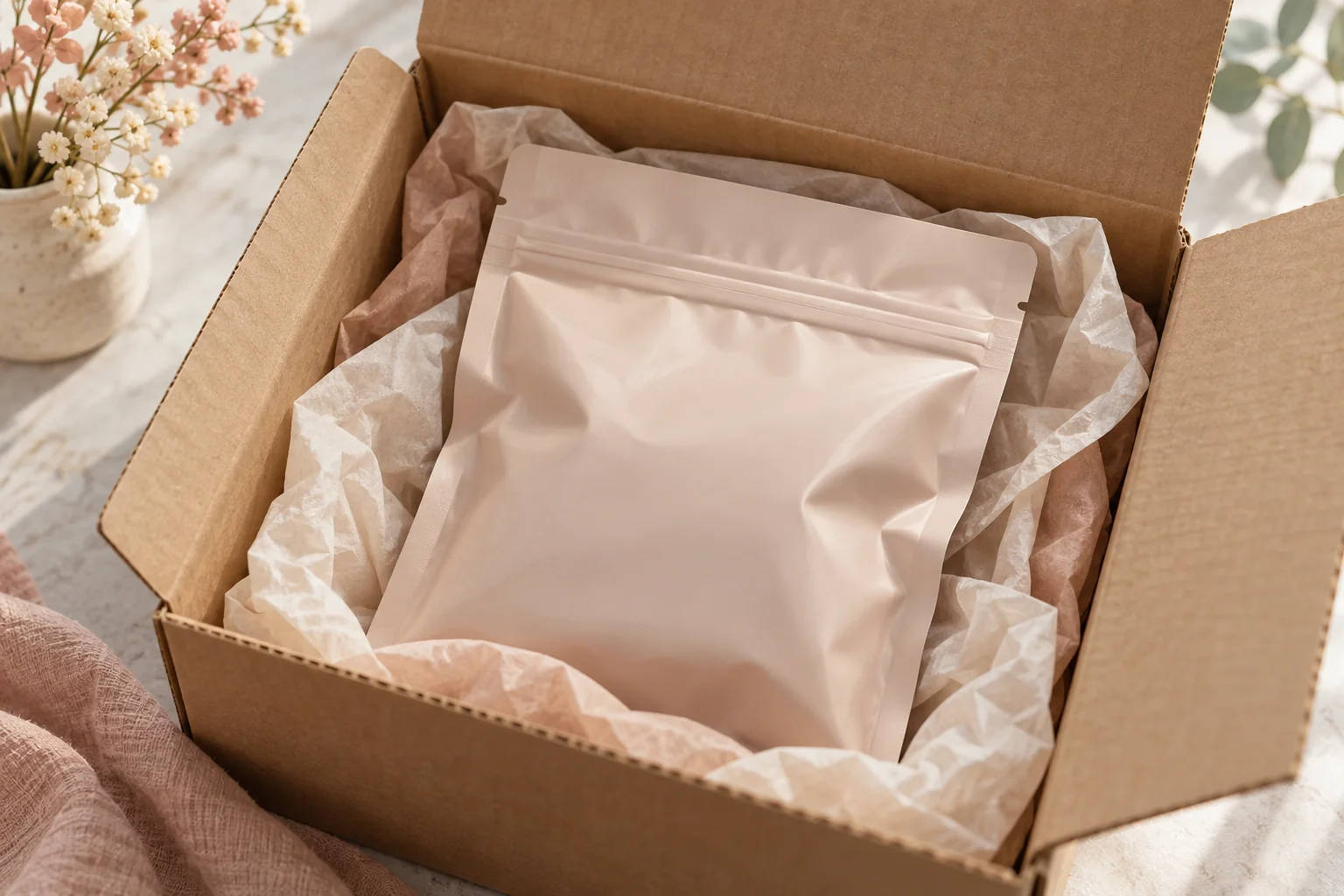
I stop at the point where the condition would change
I look at the parcel in good light on a clean, dry surface. I notice a crushed corner, a tear or a damp patch. I photograph a concern before I move packaging around. I do not assume that outer damage proves the product inside is damaged. I also do not assume that a tidy box proves the accessory has no issue. I describe only what I can see at this stage.
I check whether I can see an identifying label without opening the product. If the package is opaque, I cannot inspect the chain, clasp, seams or lining through it. I leave those checks for later, after I decide whether to keep and open the item. I do not shake or squeeze a sealed pouch to guess the contents. I do not peel back a seal and then press it into place again as if nothing changed.
I distinguish the outer shipping package from the product's original packaging, but I do not promise that every seller treats them in the same way. If a particular package arrangement makes the policy unclear, I ask for guidance. I keep any product seal intact while I wait. I do not offer a universal opening method that could conflict with the item's actual packaging.
I keep protective inserts and labels with the parcel. I do not discard them during the first check. They can show which option arrived and help me describe the packaging condition. I do not treat ordinary packaging marks as proof of prior use. If a detail worries me, I state the observation and ask the seller to assess it rather than invent a story about where the accessory has been.
How do I decide whether to open or try on the accessory?
I can plan a quick fit check and overlook a hygiene condition. Trying an item on can change its eligibility even when I intend to return it.
I read the current policy before opening, wearing or trying on an accessory. Zolay Nights currently requires unopened, unworn, unused items in original packaging for a change-of-mind return within 30 calendar days of tracked delivery. Faulty, damaged or incorrect orders follow a separate process.

I choose before I change the product's condition
I read the current return policy at the time I need it. I do not rely on a memory of another store's fitting window. The Zolay Nights policy applies the same unopened, unworn and unused condition to jewelry and hygiene-sensitive sleep products. It excludes opened, tried-on or worn items from change-of-mind returns. I keep that distinction visible before I decide to open a bonnet or necklace.
I ask any remaining pre-opening questions while the product is still in its packaging. I can compare the listed measurements with a piece I already own. I can check the selected finish on the order confirmation. I cannot fully judge the feel of a sealed bonnet without wearing it, and I do not pretend that I can. I make the decision with that limit in mind.
| My situation | My next step before opening |
|---|---|
| I selected the wrong option myself | I check change-of-mind eligibility and request instructions |
| The visible label does not match my order | I contact the seller about the possible mismatch |
| I am unsure whether I want the item | I review the description and policy before trying it on |
I do not wash a new bonnet as a way to inspect it while expecting an unopened return. I do not adjust jewelry with tools before asking about a possible issue. I also do not describe the policy's hygiene restriction as a limit on rights that cannot legally be excluded. The current policy expressly keeps those rights separate.
I keep this guide practical rather than turn it into legal advice. A delivery problem can need a different assessment from a change of preference. I contact the seller and provide the facts instead of deciding that one label determines every possible remedy.
What do I record if the parcel or accessory seems wrong?
I can send a vague message that says the order is bad. Clear records make it easier to show the actual concern without changing the item further.
I keep the order number, delivery date, a short description and clear photographs of the product and packaging where accessible. I show the whole package and the specific concern. I avoid filters, repairs or further use, and I ask the seller for the next steps.

I explain the observation and leave the cause open
I take a broad photo first. I want it to show which package or item I am discussing. I then take a closer photo of the concern. I use ordinary light and a plain background if I can. I do not edit the color to make a finish difference look stronger. I also do not bend a link or pull a seam apart to create a more dramatic image.
I write a short description with the order number and selected option. I state whether I noticed the issue before opening, after opening, or during permitted ordinary handling. I keep that sequence honest. I do not describe a worn item as unopened. If I cannot access the product without opening a seal, I explain that limit and ask how the seller wants me to proceed.
I follow the current Zolay Nights instruction to contact care@zolaynights.com promptly for faulty, damaged, materially different or incorrect goods. I include the order number, description and clear photos of the product and packaging where I can obtain them appropriately. I use the contact page to confirm the current support route. This guide does not send a message or open a claim for me.
I keep a copy of what I send and any reply. The FTC's complaint guidance recommends explaining the problem clearly and including relevant records.2 I use that narrow communication advice. I do not import its example remedies as promises from this store. I can say what outcome I am asking about, but the seller still needs to assess the specific issue under its policy and the law that applies. I do not ship the item back before I receive return instructions.
What do I keep after I decide to use the accessory?
I can discard the instructions as soon as I like the item. A small record helps me care for the actual construction after the delivery decision is over.
I keep the order details, the item's care instructions and any useful material information. I store the accessory according to its own guidance after I choose to open and use it. I keep unresolved delivery concerns separate from routine cleaning, fitting or styling.
I move from receiving the item to caring for it
I save the care information where I can find it again. I note the exact product and selected option so that I do not later use instructions for a different bonnet or necklace. I keep a clear material statement if one is supplied. I do not rely on color or shine as proof of composition. A gold-tone necklace and a silk-looking bonnet both need actual product information.
I choose a clean, dry place for the accessory. I separate necklaces so that chains do not rub or tangle together. I store a bonnet only when it is clean and fully dry. I follow its washing method when washing becomes appropriate. I do not treat unboxing as a reason to use an unsupported cleaner or wash every material the same way.
| Information I retain | Why I retain it |
|---|---|
| Exact product and selected option | I can find the correct guidance again |
| Material and care statement | I can avoid borrowing another item's method |
| Order and support record | I can explain an unresolved question clearly |
I use the Materials & Care page for orientation, then return to the finished item's instructions. I separate product care from my delivery record. If a concern remains unresolved, I avoid further use or changes while I ask for the appropriate next step. I do not try a home repair and then assume the original condition will still be clear.
I also keep packaging only as long as it has a useful purpose for the order or storage. I do not promise that keeping a box alone preserves return eligibility after use. My main decision happened before opening: I checked what arrived, read the current terms and chose whether to proceed. The records help me remember that decision and communicate accurately if a later question appears.
Conclusion
I check the order and current terms before opening. I record concerns clearly, keep the item's condition honest, and follow specific care instructions after choosing to use it.
- FTC: Online Shopping. I use its purchase-record guidance, not a guarantee of return eligibility. ↩
- FTC: Sample Customer Complaint Letter. I use its advice to explain a problem clearly and retain relevant records. ↩
Images are AI-generated editorial illustrations. They do not identify or verify a specific product.