
Should I Repair My Broken Necklace or Replace It?
I can feel rushed to replace a broken necklace and regret losing the original. I want a clear assessment before I spend money or attempt a fix.
I keep the pieces together, record the problem and ask whether the exact construction and materials can be repaired. I compare the proposed result, cost, time and personal value with a replacement. I do not use the purchase price alone to decide or assume a repair kit suits the item.
I treat this as a decision guide, not instructions for joining metal or resetting stones. I want to know what I am approving and what I can reasonably expect to wear afterward.
What should I keep and record before anything changes?
I can lose a small part or alter a broken connection while trying to explain it. I keep the original condition easy to inspect before taking another step.
I stop wearing the necklace, place the pieces in a separate padded container and photograph the whole item and visible problem. I keep detached parts with it. I avoid pulling, opening links, applying glue or cleaning away details before the seller or jeweler has assessed the piece.

I preserve the starting point
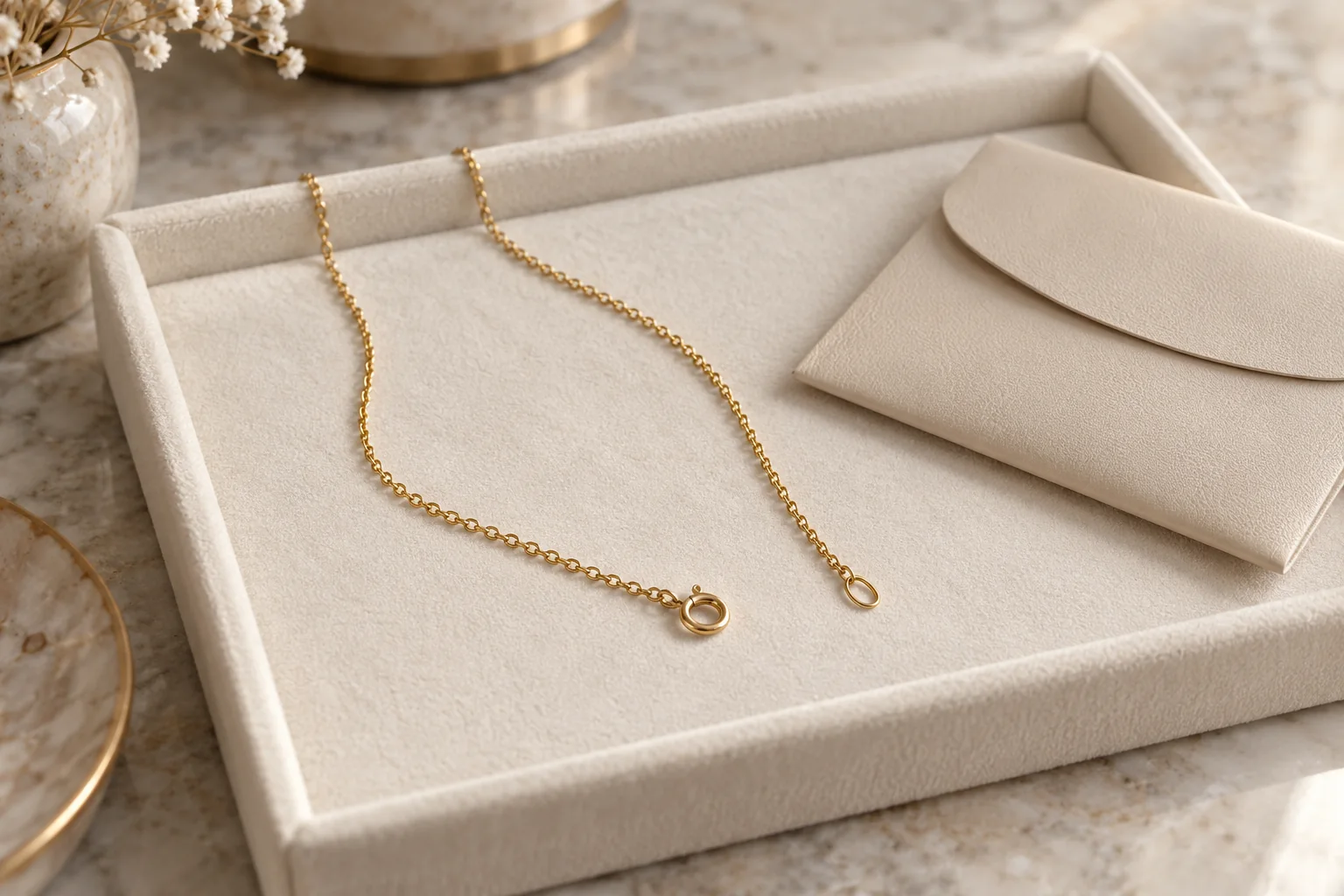
I first make a clear place for the necklace. I use a shallow container so that a clasp, ring or detached decoration does not roll away while I handle the larger pieces. I keep that container separate from necklaces I still wear. I do not put a broken chain back in a shared drawer where its loose ends can catch other items.
I take a whole-item photograph before a close view. The whole view helps a repairer understand where the problem sits. The close view shows what I can see without bending the chain into a new position. I include a size reference beside the item when useful, but I do not rest a heavy object on the jewelry to hold it still.
| Record I keep | Question it helps answer |
|---|---|
| I photograph the whole piece | I show where the problem is located |
| I photograph the affected area | I show the visible starting condition |
| I keep detached parts | I let the repairer assess what remains |
I describe what happened only as far as I know. I can say that I found two separated ends after removing a sweater. I cannot establish an internal metal fault or assign responsibility from that observation alone. I keep any earlier photographs that show the item intact. Our product-detail record guide helps me connect those records with the right style and order. I also note any work already attempted, because an accurate history is more useful than presenting a changed item as untouched.
Which material and construction details matter to the assessment?
I can call an item gold or stone because of its color. That shortcut can hide details a repairer needs before choosing how to work on it.
I bring the supplied metal, finish, stone and care descriptions, plus any previous repair history. I mark unknown materials as unknown. I ask the repairer to inspect the actual chain, clasp, setting and connections rather than choose a method from a product photo or color name alone.

I distinguish a description from a material identification
I start with the maker's own description for my selected option. Gold-tone describes an appearance; it does not give me a karat value. A decorative stone name does not show how it is held in place. I keep any claimed base material and finish as separate fields so that I do not accidentally omit a coating when I explain the item.
I tell the repairer which facts I can support. I may have a product description, an order record and a care card. I may have no reliable material information at all. In that case, I say so. I do not borrow specifications from a similar necklace or assume that a mark, photograph or weight figure gives me a full identification.
I also ask what the visible failure involves. A clasp mechanism, an open connection, a broken link and a missing decoration are different problems. I can point to the area without naming the repair method. The repairer can decide whether the surrounding parts also need attention after examining the piece.
GIA's discussion of fine-chain repair explains that chain structure and design affect the work and that direct heat can fuse nearby fine links.1 I use that limited technical point to understand why an assessment matters. I do not copy the bench procedure at home or assume that it applies to an unknown coated chain. Our jewelry-label guide helps me read the information I have without turning appearance words into unsupported claims about the material.
What should a useful repair estimate tell me?
I can receive a price without understanding what it buys. I want the repair's scope and likely result explained before I decide whether the quote makes sense.
I ask which part will be repaired or replaced, what the finished item should look like and which uncertainties remain. I request the total quoted cost, timing and approval process for extra work. I also ask about any change to length, finish, movement or the original closure.

I ask for a result I can recognize
I want the estimate to identify my necklace and the proposed work in plain language. A line saying repair chain may not explain whether damaged links will be removed, a section replaced or another component changed. I ask the repairer to describe the visible and functional result so that I can compare it with the item I hope to keep.
I ask about the complete cost before approving. I want to know which work is included and whether another step needs a separate quote. I also ask when the repairer will contact me if examination reveals more damage. I do not treat a preliminary photograph-based suggestion as a final promise about a piece that has not been inspected.
| Part of the estimate | Detail I want in writing |
|---|---|
| I read the work description | I identify the part and proposed change |
| I read the price | I check the included work and extra-work process |
| I read the expected result | I check visible differences and remaining limits |
I keep brand services within their actual scope. Tiffany's broken-chain guidance describes assessment and an estimate for its own products.2 I use that as an example of a process that separates evaluation from a decision to proceed. I do not infer that another seller offers the same service, price or shipping arrangement. I ask the provider handling my item for its current terms, and I approve only the work I understand. If the answer remains unclear, I can request clarification without asking the repairer to begin in the meantime.
How do I compare repair with replacement fairly?
I can reject a repair because it costs more than the old purchase price. I can also approve expensive work because I feel I have no other choice.
I compare the proposed wearable result with a replacement I would actually choose, including its current cost and suitability. I keep personal meaning separate from resale value. I can prefer preserving the original, choose a different item or keep the broken piece safely without deciding to wear it again.
I compare the next outcome rather than the old receipt
I begin with what matters about the necklace. I may value its appearance, its connection to a person or the fact that it already works with my clothes. A replacement may reproduce the look but not the history. A repair may keep the original piece but change a visible part. I put those differences on the page instead of pretending that only one price comparison matters.
I then compare actual alternatives. I look at the repairer's proposed result and a complete replacement with known specifications. I include any separate component or additional work needed to make either option usable. I do not compare a complete repair with the price of an unfinished pendant that still needs a chain.
I also consider how much uncertainty I accept. The repair may preserve a component while leaving other worn parts that need future attention. A replacement can introduce different handling or care requirements. I ask about these issues rather than treat new as a guarantee or repaired as equivalent to new. I do not invent an expected lifespan for either choice.
I can use a short decision sentence: I would pay this amount to keep this specific result because the original matters to me. Or I would prefer the alternative because it better suits how I now wear jewelry. Our guide to choosing without overbuying supports that practical comparison. I do not have to discard a meaningful object simply because I decide against making it wearable again.
What do I check when I collect a repaired necklace?
I can collect a repaired piece and put it straight into my bag. I want to understand the completed work while the person who handled it can explain it.
I compare the finished necklace with the agreed work description and ask the repairer to demonstrate its normal closure. I check any stated length or replacement part, collect supplied care instructions and ask about concerns before leaving. I do not pull the chain to test the repair's strength.

I check the agreed work without turning it into a stress test
I bring my estimate or approval record when I collect the item. I ask the repairer to point out the area that changed and explain any visible difference I should expect. I compare that explanation with the work I agreed to. If I requested the original clasp or a particular finished length, I confirm those details while the item is still on the consultation tray.
I operate the closure only in its normal way, with guidance if the mechanism changed. I do not tug at the repaired point, twist the chain or hang an object from it. Those actions would not give me a useful everyday guarantee and could damage the necklace. If I see an unexpected gap, rough area or change in the pendant's position, I ask about it before wearing the piece.
| Detail I review | Action I take |
|---|---|
| I inspect the work area | I ask about any unexpected visible change |
| I check the closure | I use its normal operating method |
| I receive new instructions | I keep them with the service record |
I keep the invoice, completed-work description and any returned parts together. I ask what I should do if a concern appears after collection and read the provider's current service terms. I avoid assuming that a repair creates a lifetime guarantee or removes the need for ordinary care. If I remain unhappy with the proposed result before work begins, I can decline it. If I collect the finished item, I want an accurate record of what was done and a clear understanding of how I will use it.
Conclusion
I preserve the pieces, seek an item-specific assessment and compare complete outcomes. I approve a repair when its result and tradeoffs make sense to me.
- GIA, Bench Tip #5: Repair a Fine Chain with a Soldering Technique. I use its construction and heat limitations as professional context, not a DIY procedure. ↩
- Tiffany & Co., Can I Repair My Broken Tiffany & Co. Chain?. I use the assessment-and-estimate example only within that brand's stated service scope. ↩
Images are AI-generated editorial illustrations. They do not identify or verify a specific product.