
How Do I Check Whether a Necklace Extender Will Fit?
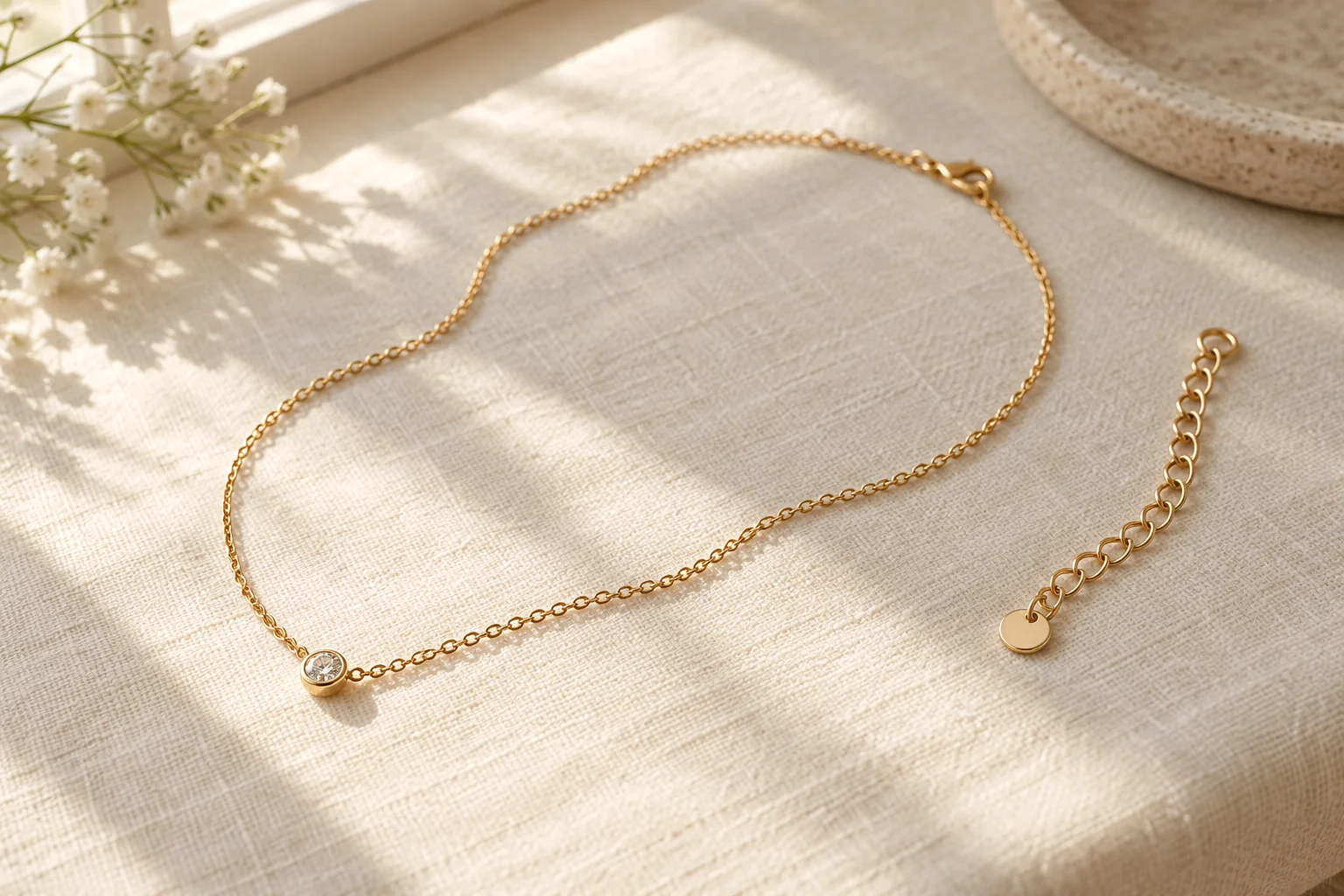
I can buy an extender to gain a little room and find that its clasp does not connect. The length alone does not establish a fit.
I check whether my necklace already adjusts, identify both connection points and confirm the extender's intended use. I then compare the usable added length, materials and care needs. I keep an uncertain pairing separate and ask the maker or a jeweler before wearing it.
I write the Zolay Nights Journal to help turn small jewelry questions into clear checks. Here I focus on adding length to one existing necklace. I keep this task separate from choosing a layering spacer, adding a pendant or repairing a broken clasp.
Does my necklace already have enough adjustment?
I can overlook a short adjustment tail and buy another component. I first need to know what the existing necklace can already do.
I inspect the maker's stated length and the necklace's intended fastening points. I distinguish a built-in adjustment tail from a separate extender. I use the existing range only as instructed and ask about any part whose purpose is unclear.
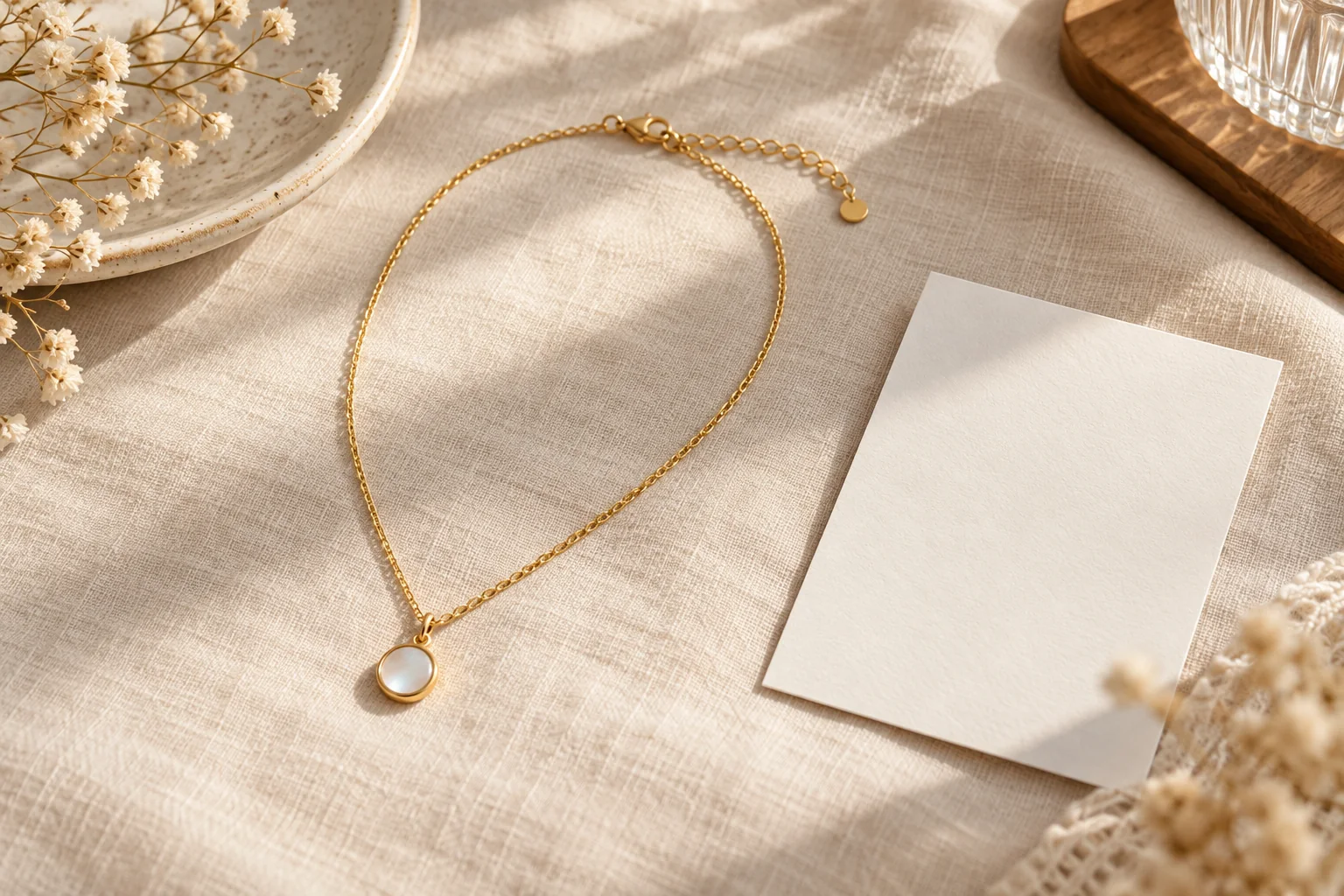
I establish the starting length before adding parts
I lay the necklace on a clean, soft surface and look at the closure without pulling it. I compare the actual piece with its product details. I want to know which ring is intended to receive the clasp, whether several links offer adjustment, and whether a small decorative tail has another purpose. I avoid treating every visible link as a fastening point.
I read a length statement with its full wording. For example, the current Sculpted Stone Pendant Necklace lists approximately 40 cm plus a 5 cm extender. I treat that as the stated range for that item. I do not assume a second removable extender is needed, or that this specification applies to another chain in the collection.
| Starting detail I check | Decision it helps me make |
|---|---|
| I identify the base length | I know my starting comparison |
| I identify the intended adjustment range | I can assess the existing options |
| I identify a decorative tail | I avoid guessing its fastening role |
I compare the current range with the position I actually want. I can use the necklace's intended adjustment first if it meets that need. I do not need to add hardware simply because an extender appears in a styling tip.
I keep a small note of the current product specification and the option I own. I include the unit and whether the figure includes the clasp. If I cannot establish those details, I ask before I compare a new component with an uncertain starting measurement.
Will both ends connect and close as intended?
I can check one clasp and forget the second join. A removable extender adds a connection at each end of the new section.
I check the extender's clasp against my necklace's receiving point, then my necklace's clasp against the extender's receiving point. I confirm that both parts are intended to connect and close fully. I do not force a small opening, bend a ring or assume every clasp style is interchangeable.
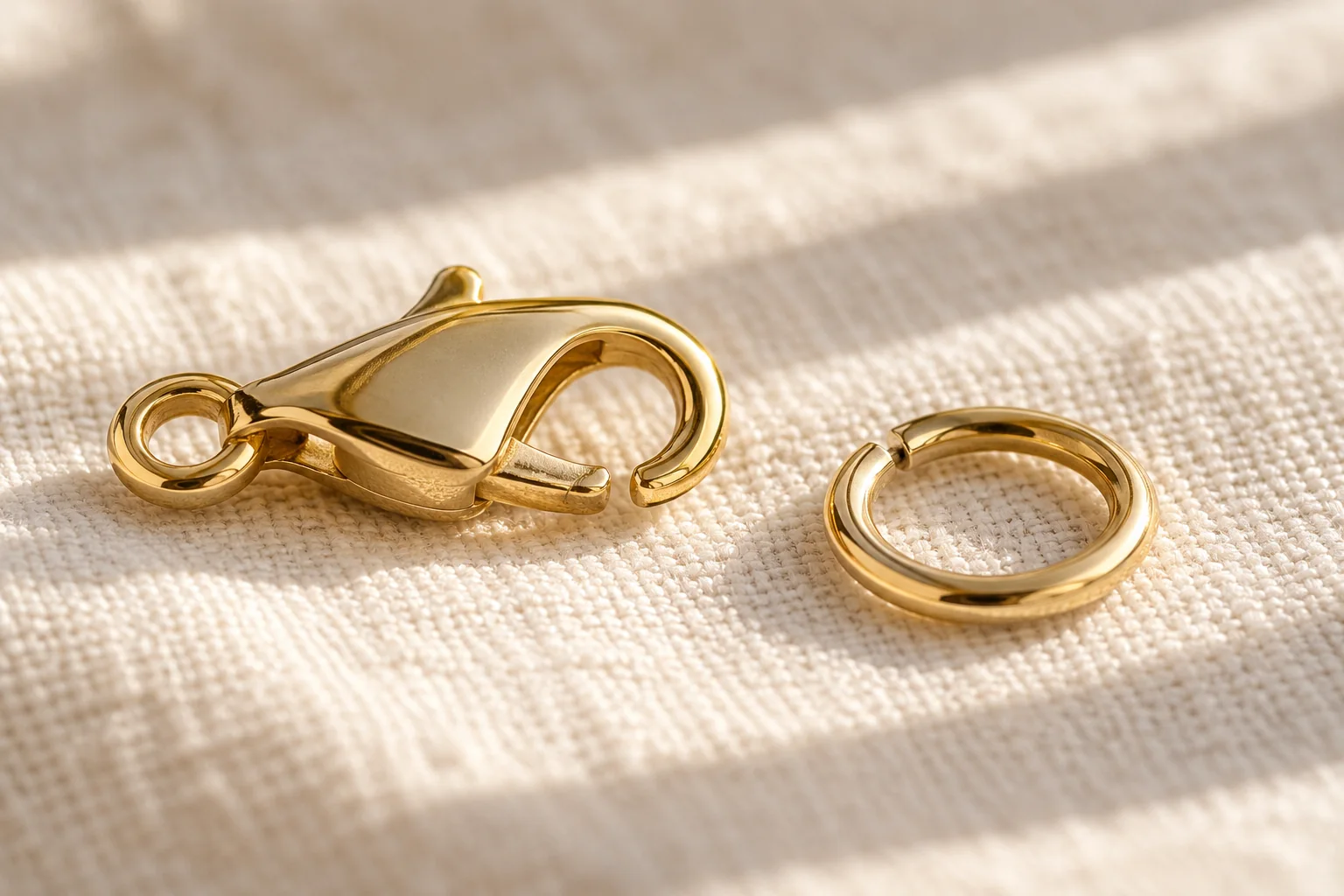
I inspect two joins instead of one product name
I identify the fastening method first. A lobster clasp and receiving ring present a different question from a box clasp, barrel clasp or fixed closure. I do not assume that a product called a necklace extender can attach to all of them. I look for the actual connection details in the listing and ask for a close image when those details are missing.
I compare the usable opening with the part that must enter it. I keep inside clearance separate from the outside size of a clasp. I also consider whether the receiving point is intended for that use. I do not use a thin decorative loop just because a hook can catch it.
I read Tiny Tags' own adjustable extender page as one concrete example: that item identifies a lobster claw clasp.1 I use the named construction to frame a compatibility question. I do not treat the example as an endorsement for a Zolay necklace, or copy its materials and dimensions onto a different product.
I support the parts on a soft surface while checking them. I stop if a closure cannot move freely or a fitting seems too large. I do not file, squeeze or pry a component to complete the pairing. Those actions would change the piece and require a separate assessment.
I ask a jeweler about an unusual or valuable clasp when the connection cannot be established from the maker's information. I can send clear images of both ends and explain which parts I want to join. I keep the necklace unworn with the added section until the connection question is resolved.
How much useful length will the extender add?
I can choose a number from a listing and expect the pendant to move down by that amount. The necklace's full route makes that comparison incomplete.
I check how the seller measures the extender and which links can receive the clasp. I compare the resulting wearable length with my own neckline. I do not assume that the added chain length equals the same vertical drop at the front.
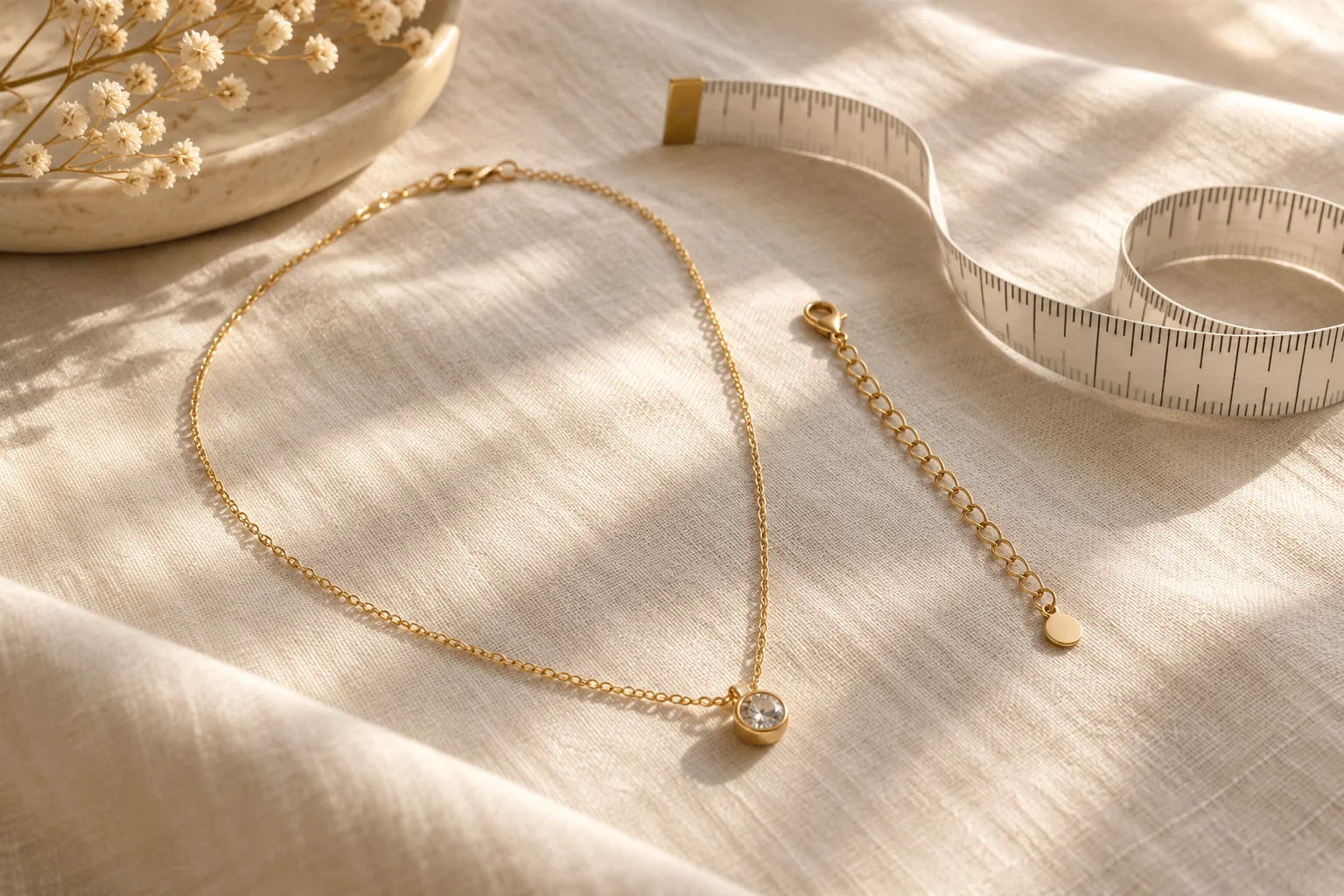
I compare the complete wearing position
I read the measurement description before using the number. I want to know whether the stated size covers the chain alone, the whole component or the maximum adjustment. I check whether I can fasten at several intended links or only at one receiving point. I do not assume every link in a short chain is large enough or meant to receive the clasp.
I keep centimeters and inches separate until I make a deliberate conversion. I also keep approximate dimensions marked as approximate. A product image that enlarges a tiny clasp does not supply a useful scale by itself. I ask for a measurement if the listing only shows an enlarged photograph.
| Measurement I compare | Question I keep separate |
|---|---|
| I check the full component length | I ask what the number includes |
| I check the usable fastening range | I ask which links are intended for use |
| I check the worn position | I compare the result with my neckline |
I use the necklace length guide to compare the actual position against clothing and movement. I do not promise that a certain added length will suit every neck or place every pendant in the same spot. The necklace's shape and the garment both affect the result I see.
I also look at the remaining tail behind the neck. I consider whether it lies comfortably with a collar, scarf or hairstyle. I can decide that a necklace made in the right length offers a simpler arrangement than a long extension with an unused tail. I keep that choice open before buying another part.
What should I check before wearing the completed pairing?
I can focus on extra room and miss an uncomfortable or unclear connection. A connected pair still needs a calm inspection before wear.
I confirm both closures, check the stated materials and care limits, and look for catching, twisting or uncomfortable placement. I do not use a hard pull as a strength test. I stop using the addition when a fitting fails to close or the arrangement feels uncertain.
I check ordinary use without inventing a load test
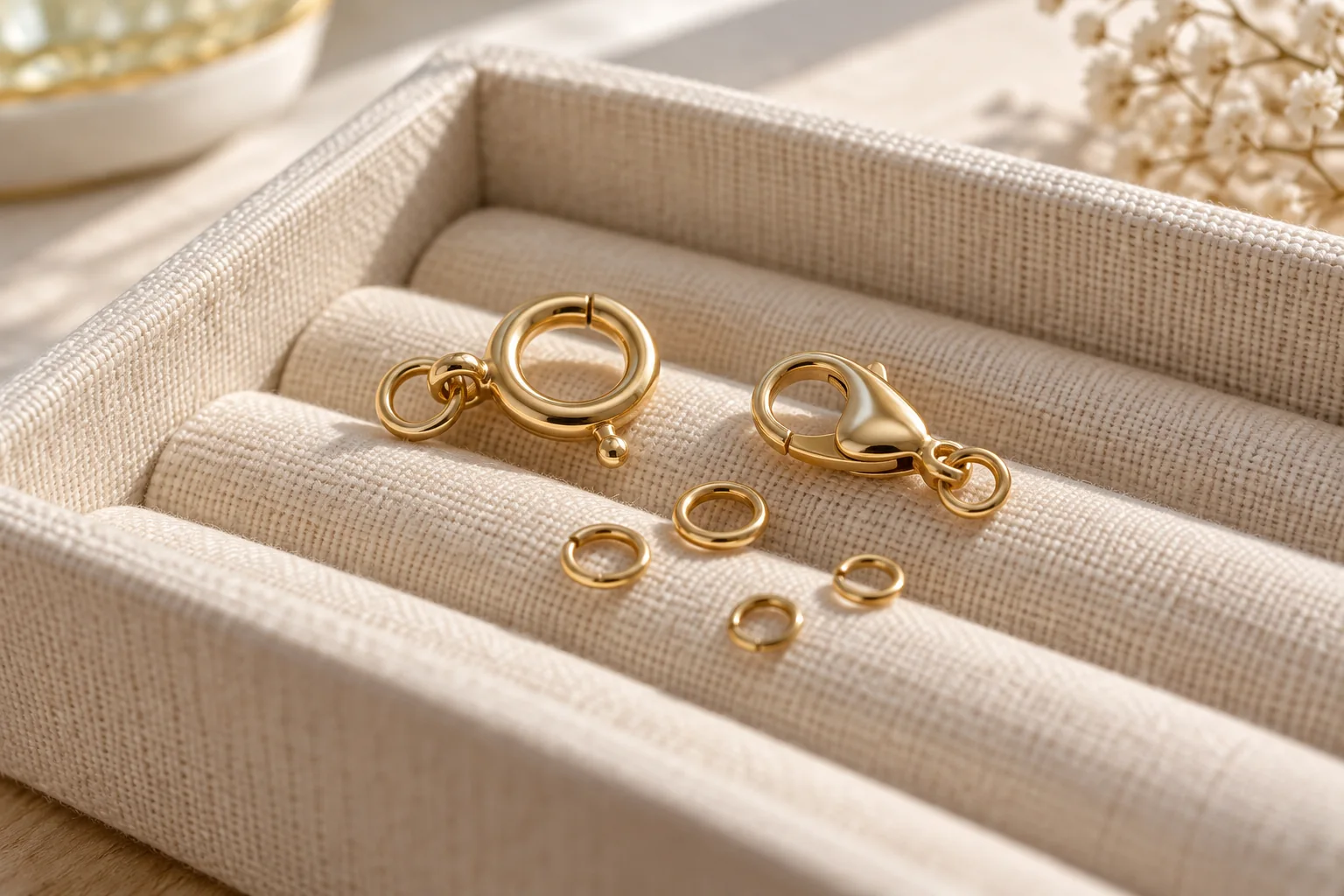
I inspect each closure in good light. I want to see the moving part return to its intended closed position without another link holding it open. I check the receiving points as well as the clasps. I do not conclude that a connection is secure merely because the pieces stayed together while resting on the table.
I keep the extender's material description with the necklace's description. I distinguish a color match from a material match. Two gold-tone pieces can have different bases, finishes and care requirements. I ask the maker about the proposed use instead of assuming that matching color establishes compatibility or a personal skin response.
I bring the necklace's own construction into the decision. A broad flat profile may have handling limits that differ from a rounded-link chain. I do not allow an added component to twist the existing necklace while I fasten it. I keep the piece supported and use the method its maker describes.
I use GIA's general handling and separate-storage guidance as context for keeping jewelry from being knocked or tangled.2 I do not treat that guide as a certification of my extender, a pull-test method or a promise about a clasp's carrying capacity.
I make an ordinary comfort check only after the maker has established the intended pairing. I notice whether the new section catches at a collar or places hardware where it presses. I remove the necklace if the result is uncomfortable or uncertain. I do not continue wearing it to see whether an unreliable closure will eventually settle into place.
What can I choose when an extender is unsuitable?
I can feel committed to an extender after buying it. A different length or an expert assessment may solve the original problem more clearly.
I keep unsuitable parts separate. I consider a necklace with the needed length, use existing adjustment as intended, or ask a jeweler about an item-specific option. I treat alteration as a separate decision and avoid building a longer chain from unverified adapters.
I return to the reason I wanted more length
I state the original problem before choosing the next step. I may want more room at the neckline, a different position for a pendant or a length that works with one shirt. Those aims do not always require the same solution. I do not keep adding parts if the resulting necklace no longer serves the purpose I started with.
I compare an existing longer necklace when I have one. I can check its intended length, shape and care requirements without changing the shorter piece. I keep the pieces separate while I make that comparison. I do not join two necklaces together simply because both have clasps that appear to connect.
| Option I consider | Question I ask |
|---|---|
| I use the built-in range | Does it already meet my need? |
| I choose a longer finished necklace | Does its complete design suit the task? |
| I request a jeweler's assessment | What would a proposed change involve? |
I use the everyday necklace selection guide when the better answer is a different finished piece. I keep the discussion about purpose and construction, rather than treating an accessory purchase as the only way to use something I already own.
I ask about any proposed alteration before it begins. I want to understand which parts would change and what care would apply afterward. I do not promise that a particular necklace can be altered, that an adjustment will be free or that a certain result is guaranteed. I can leave the necklace as it is while I gather that information.
Conclusion
I check existing adjustment, both connections and useful added length before choosing an extender. I keep uncertain pairings separate and choose a clearer solution when needed.
- Tiny Tags: Adjustable extender. I cite its identified clasp as a construction example, not proof of cross-brand fit. ↩
- GIA: Tips on Caring for Jewelry. I use general handling and storage advice, not an extender strength assessment. ↩
Images are AI-generated editorial illustrations. They do not identify or verify a specific product.