
Should I Cover Hair Rollers With My Silk Bonnet?
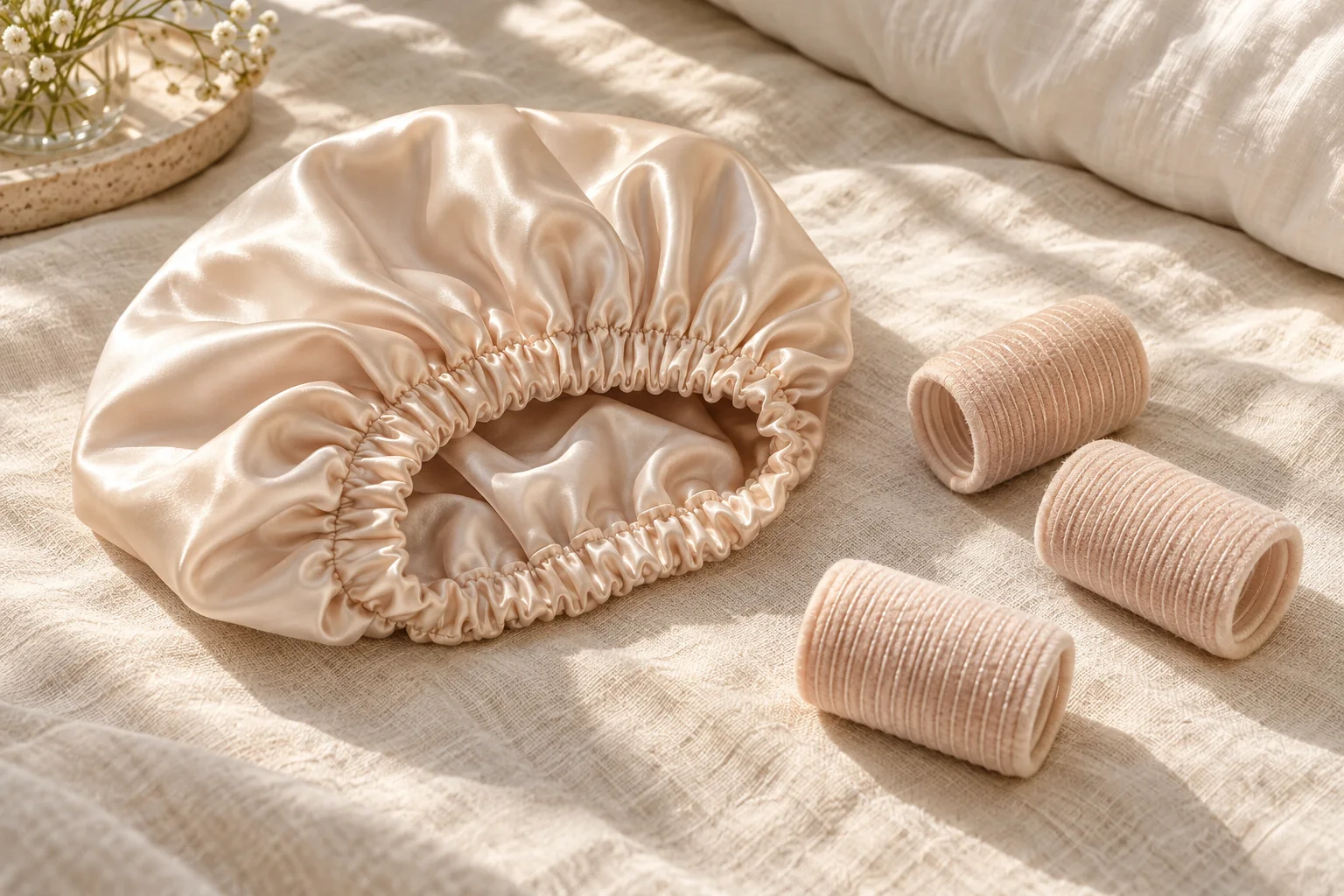
I can add a bonnet to my rollers and expect an easier night. Extra bulk can leave me with pressure and a harder removal routine.
I combine rollers and a silk bonnet only when both items' instructions allow the intended use and the bonnet fits without compressing the rollers or pulling my hair. I check the whole setup while awake. I choose a simpler routine if it feels uncomfortable or needs extra tension.
I write the Zolay Nights Journal to help readers separate useful coverage from an unsuitable setup. This guide considers the added objects inside a bonnet. It does not promise a curl result or turn every styling roller into an overnight tool.
What should I check in the roller instructions first?
I can see a soft-looking roller and assume it belongs in bed. Its intended method matters before I put another layer over it.
I check the roller maker's instructions for wearing time, moisture, heat and overnight use. I keep the bonnet's directions separate. I do not treat the word heatless, a soft surface or a social video as permission to sleep in the combined setup.
I read two sets of directions
I identify the rollers I actually own. I check their packaging, model name and supplied guide. I look for a clear description of the intended use. I do not borrow directions from a roller that only looks similar. A smooth cylinder, a foam roller and a surface that grips hair can require different handling. I want the actual maker to explain its method.
I read the bonnet instructions as a second task. A sleep bonnet's intended use does not establish what another object can safely do inside it. I do not use its material name as proof that the combined setup is suitable. I also keep heating and drying equipment outside this decision unless the maker expressly describes that combination.
| Question I ask | Detail I need |
|---|---|
| Can I use these rollers overnight? | I need the actual roller instructions |
| Can I add a covering? | I need guidance for the intended method |
| Does the bonnet need extra tension? | I need to reconsider the combined fit |
I note any unclear instruction before I begin. I can ask the seller a narrow question that names the roller and bonnet. I explain whether I mean a short awake styling session or overnight use. Those are different situations. I do not rely on a vague answer about all hair types.
I use the American Academy of Dermatology's styling guidance as general context for gentle handling and avoiding unnecessary tension.1 I do not treat that page as an approval of my rollers, bonnet or sleeping arrangement. I keep the question about the finished setup with the item's maker.
Does my bonnet have room for the added roller shape?
I can fit my hair inside a bonnet and still struggle after adding rollers. A larger outline changes the space I need.
I compare the bonnet's usable crown space with the arranged rollers, without stretching the opening to solve a crown-space problem. I check whether the fabric rests around the setup rather than squeezes it. I remove the bonnet if it pushes rollers into an uncomfortable position.
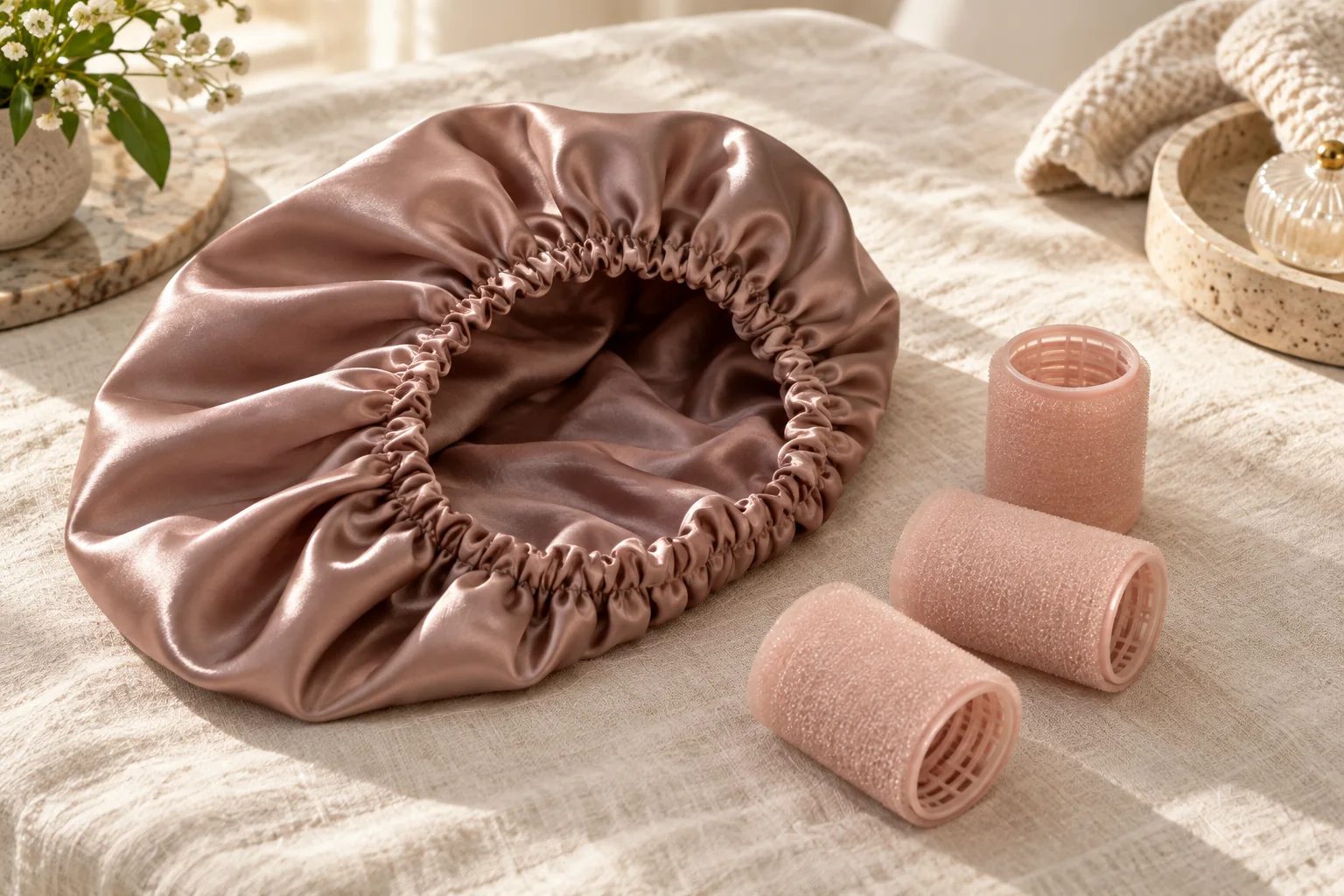
I separate room from hold
I start with the bonnet's actual shape. I look at its crown depth, opening and any internal seams. I do not assume that a long pouch offers the same room in every direction. A shape made for loose hair can behave differently around objects with a fixed outline. I check that distinction before I choose a size.
I arrange the rollers using their own directions. I do not flatten the arrangement simply to get it under a bonnet. I notice whether a clip or roller sits close to the opening. I also check whether the fabric catches on an edge during placement. I stop instead of pulling the fabric harder when it resists.
I use the bonnet capacity guide to understand the difference between crown room and opening fit. I keep this decision more specific. Here, I am adding objects that may not move like loose hair. A general capacity description cannot verify compatibility with my chosen rollers.
I can compare two possible arrangements while awake if both follow the supplied directions. I change one detail at a time so I can see what changed. I do not tighten the band when the problem is pressure from the crown. More hold at the opening does not create additional interior room.
I ask for the useful measurements if the listing does not provide them. I describe the shape of the roller arrangement rather than ask whether a bonnet is simply large. I do not infer roller suitability from a model photograph, a hairstyle label or the word roomy.
Where might clips and edges catch the bonnet?
I can focus on the bonnet band and miss a clip beneath the fabric. I want to see contact points before I move around.
I check clips, roller surfaces and seams before covering them. I place and remove the bonnet slowly without dragging it across a catching edge. I stop if the setup needs force, and I follow the roller maker's removal method instead of pulling both layers away together.
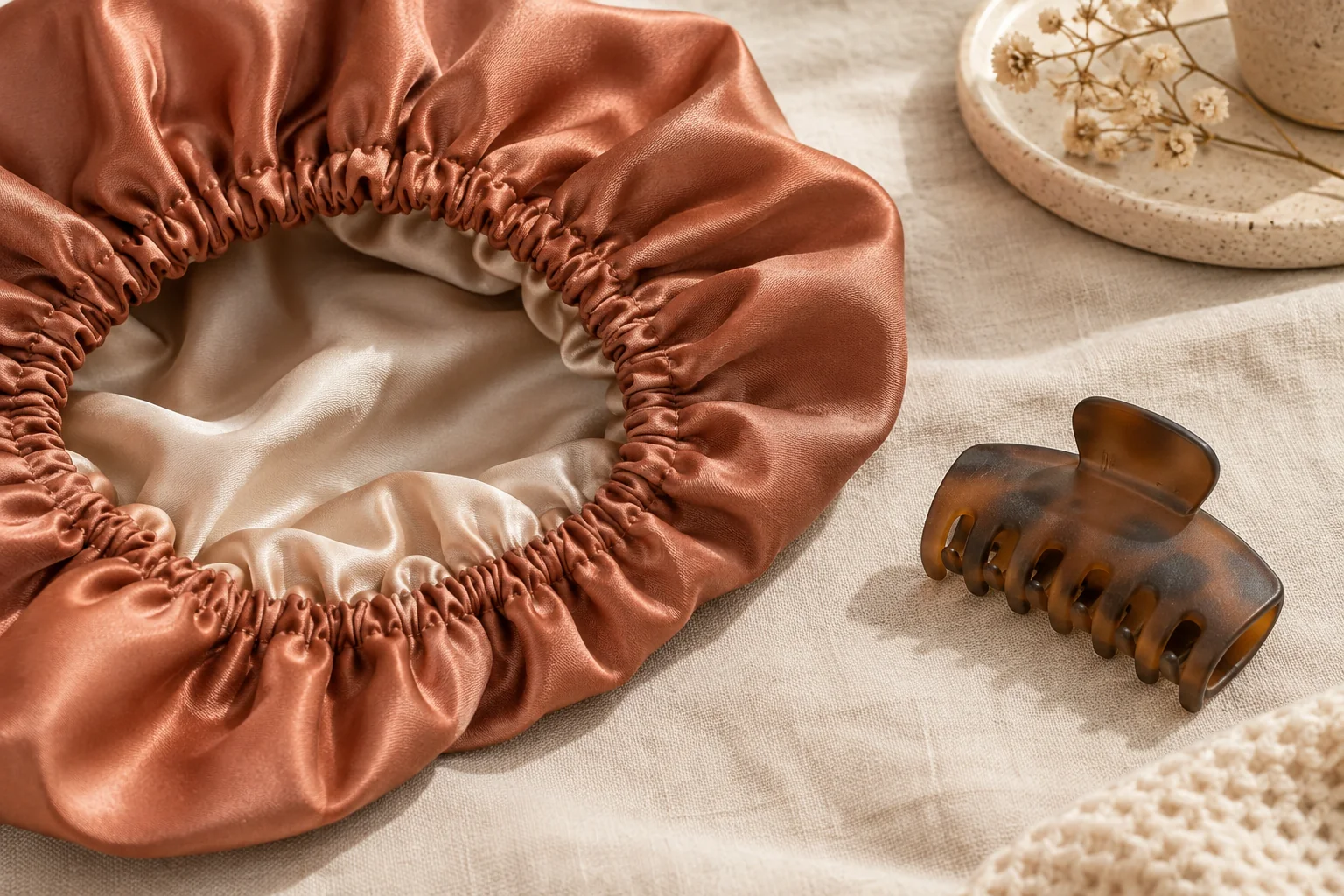
I plan removal before coverage
I look at the parts that will touch the fabric. I check a roller's fastening pieces and any exposed clip ends. I do not test those parts by scraping them against the bonnet. I use a clear view and the maker's description first. I want to know whether the covering can be placed without passing over a catching surface.
I consider the sequence of removal. I need to be able to lift the bonnet away before I remove the rollers in their intended order. I do not gather the bonnet, hair and rollers into one pull. If the fabric catches, I pause and locate the contact point. I do not keep tugging at the band while I cannot see what holds the crown.
| Contact point I inspect | Action I choose |
|---|---|
| A clip near the opening | I check its position before coverage |
| A roller against a seam | I check for catching without scraping |
| Resistance during removal | I pause and locate the obstruction |
I keep the fabric's care limits in view too. GINETEX explains care symbols as instructions for the textile's permitted care processes.2 I use the finished item's own label. I do not assume that silk can be treated in a particular way after a clip leaves a mark. I do not add heat, a cleaner or a home repair to hide a problem.
I check the bonnet after removal. I notice a pulled seam or changed edge before I use it again. I describe that condition to the seller if I need help. I keep a styling question separate from a fabric-care question.
How do I judge comfort before I commit to the routine?
I can ignore an awkward first fit because I want the routine to work. An awake check gives me a chance to change it.
I check the permitted setup while awake, including the opening, crown and contact with my pillow. I stop if I feel pulling, pinching or uncomfortable pressure. I do not use more tension to keep a bulky setup still or assume I will stop noticing it after sleep begins.
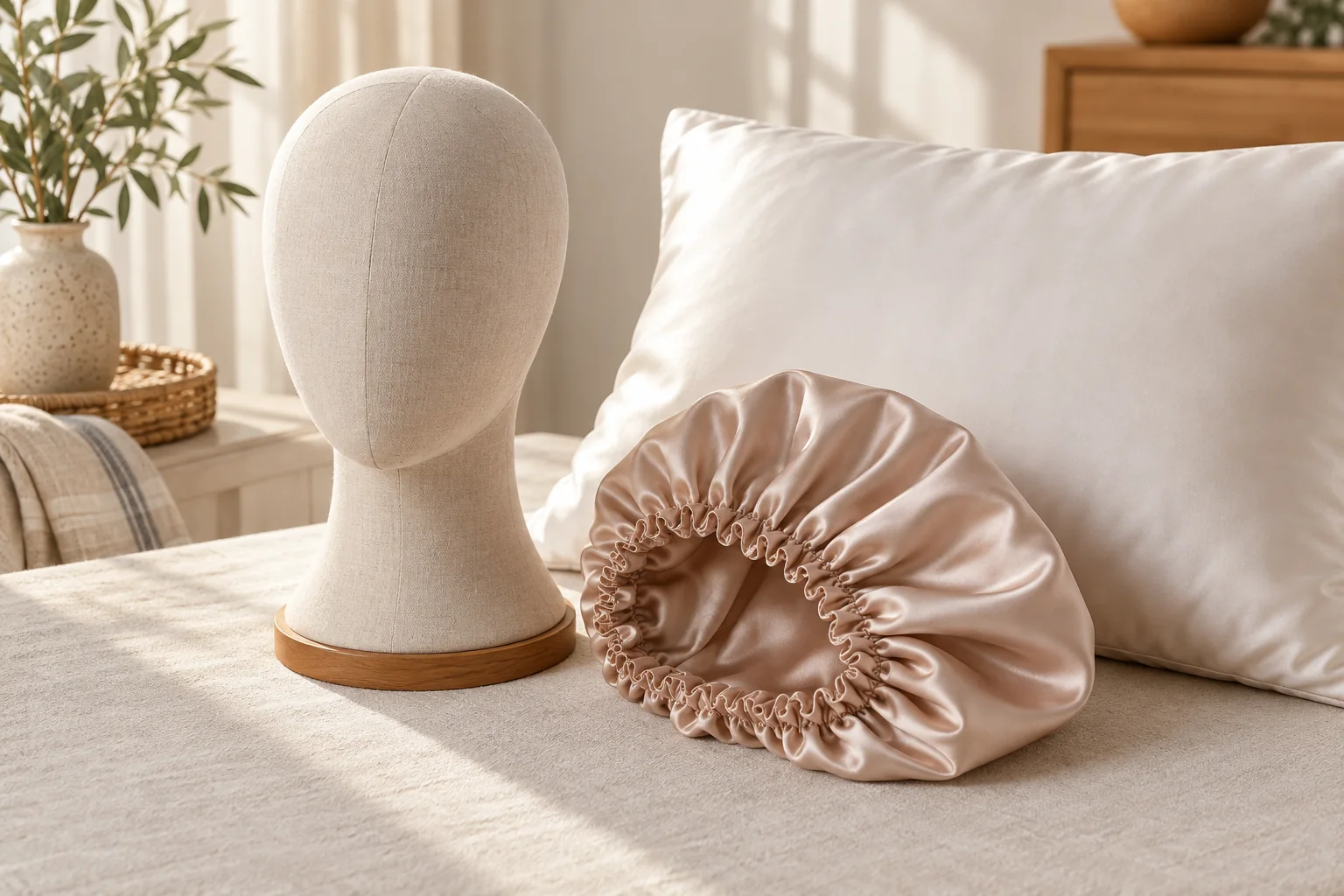
I make comfort a condition
I assess the arrangement in the position where I intend to use it. I do not judge it only while standing in front of a mirror. If the instructions allow overnight use, I notice how the arrangement meets my pillow while I am awake. I do not continue with a setup that feels wrong simply because its appearance looks neat.
I distinguish the bonnet opening from the objects beneath the crown. A comfortable band does not tell me how a roller or clip presses elsewhere. I check each part without trying to hold everything still through extra tension. I also avoid adding another wrap as a quick response to movement. Another layer changes the setup again.
I use the bonnet closure guide when I need to understand elastic, ties or a drawstring. I do not treat any one closure as a universal solution for rollers. I follow the chosen item's directions and keep loose ends arranged as instructed.
I decide what would make me stop before I begin the routine. I can choose to remove the bonnet, remove the rollers according to their method, or leave the combination for another time. I do not need to finish a styling experiment to justify the purchase.
I keep expectations narrow. This check helps me notice fit and handling problems. It cannot predict every movement during sleep or guarantee that a style will hold. I use my own comfort and the actual instructions as conditions for the decision, rather than a promised morning result.
What can I choose when the combination does not work?
I can keep adjusting two unsuitable items and add more steps. A simpler choice may fit my routine more clearly.
I choose a permitted roller routine without the bonnet, a bonnet routine without rollers, or another method suited to my needs. I follow each item's directions. I do not buy a tighter bonnet or add clips merely to force a combination that lacks room or comfort.
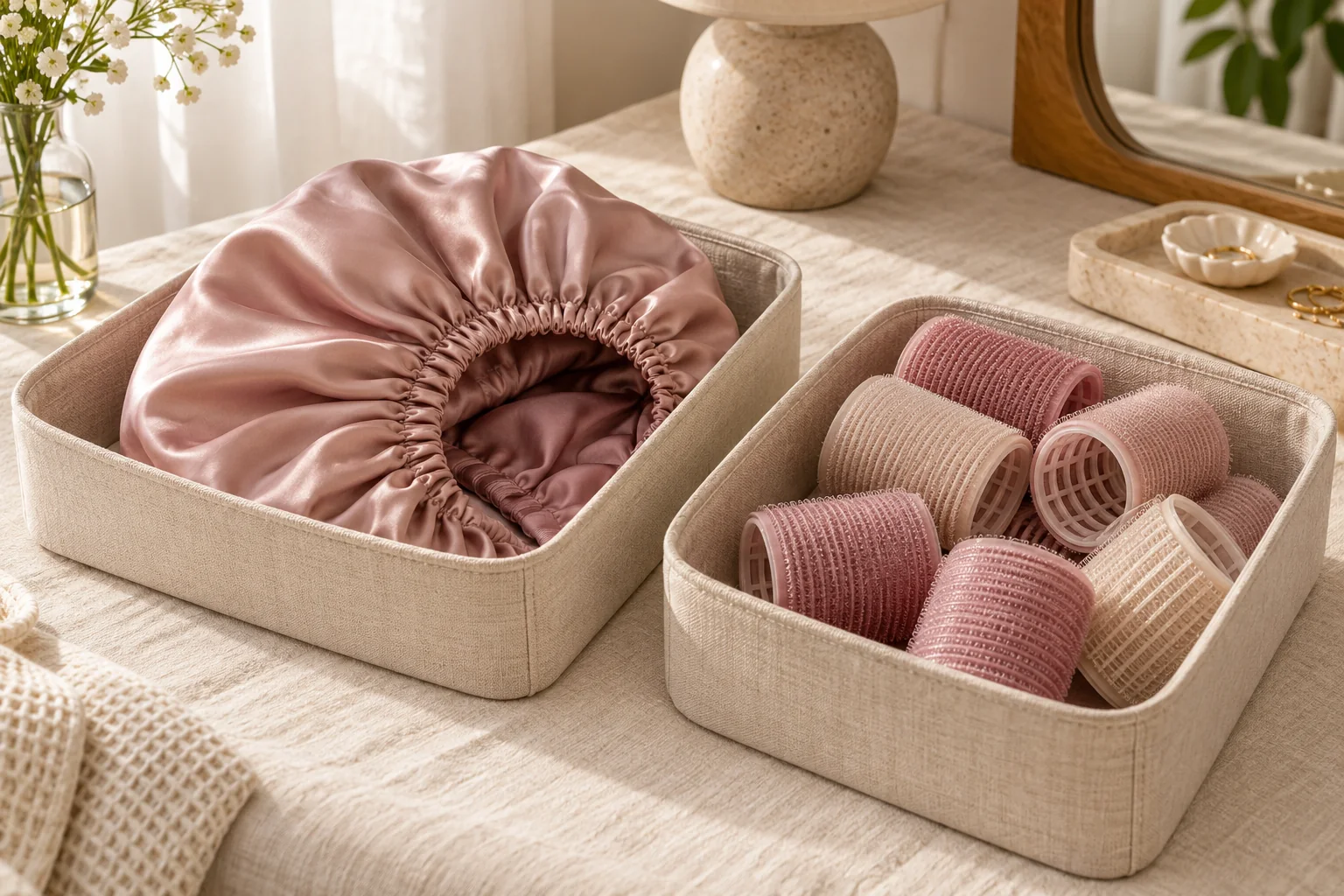
I compare the task I actually need
I ask what I wanted the combination to achieve. I may want to keep loose hair contained, maintain a chosen style or use a particular roller method. I write that aim in plain terms. I do not assume that combining accessories is the only way to meet it. I can compare a smaller number of steps before adding a new item.
I separate a styling session from a sleeping routine. A method that is manageable while awake may not suit the place or time where I want to use it. I do not turn a short-use instruction into an overnight instruction. I also do not treat an unsuccessful combination as proof that the bonnet or rollers are faulty.
| Choice I compare | Question I ask |
|---|---|
| I use the bonnet alone | Does it suit my loose-hair routine? |
| I use rollers as instructed | Can I follow their method without added coverage? |
| I choose another routine | Does it reduce the handling problem I noticed? |
I browse the Home & Rest collection by the stated use of each item. I do not read a silk description as a promise about rollers. I ask a product-specific question when I cannot tell how the shape will fit my needs. I keep the decision about space and handling separate from color or styling preference.
I leave room to change my mind. I can use a bonnet for its intended loose-hair purpose even if I do not combine it with rollers. I do not need a more crowded routine just because I own both items. I choose a method I can follow comfortably and remove without force.
Conclusion
I check instructions, space, contact points and comfort before combining rollers with a bonnet. I choose a simpler routine when the setup needs force or extra tension.
- American Academy of Dermatology: Hair styling without damage. I use its general handling guidance, not an endorsement of a particular roller and bonnet combination. ↩
- GINETEX: Care symbols. I follow the finished textile's own care label rather than infer a process from the fiber name. ↩
Images are AI-generated editorial illustrations. They do not identify or verify a specific product.