
How Do I Choose a Silk Bonnet for My Hair and Fit?
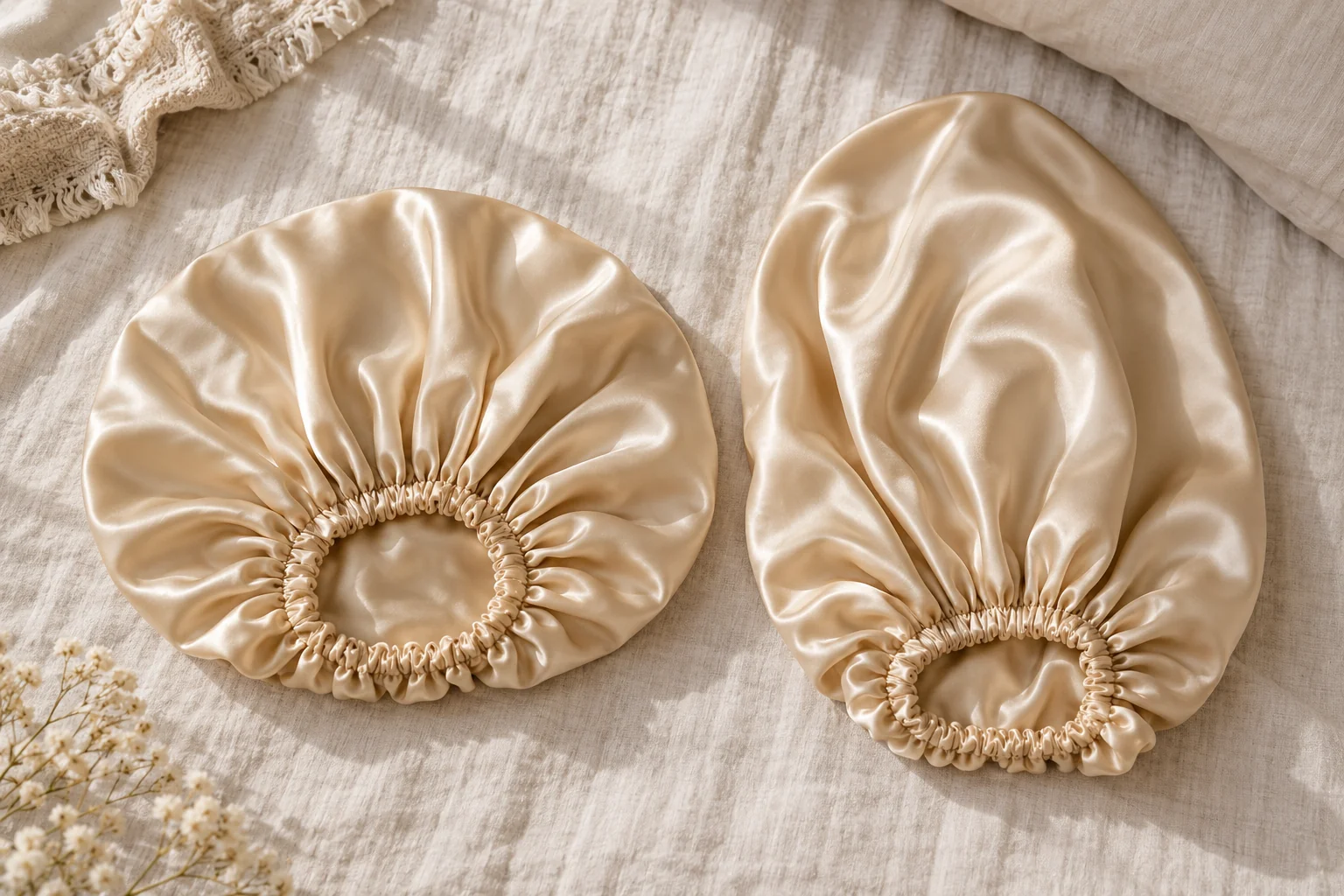
I can read many bonnet descriptions and still feel unsure about fit. A good fabric claim does not tell me whether the opening or crown suits my hair.
I choose a silk bonnet by comparing opening range, crown shape, closure and stated materials. I consider hair length and volume separately. I check comfort while awake and read the care instructions before making the item part of my routine.
I start with the problems I want to avoid: slipping, crowded hair and pressure. Community experiences show why those questions matter.1 I use a small comparison table rather than expect one size or one design to suit everyone.
Which measurements do I compare first?
I would not buy from a size name alone. Words such as large and roomy can mean different things across sellers and bonnet shapes.
I compare the stated opening range and crown dimensions. I check how the seller measures them. I do not compare a flat width with a circumference or assume a large crown has a large opening.
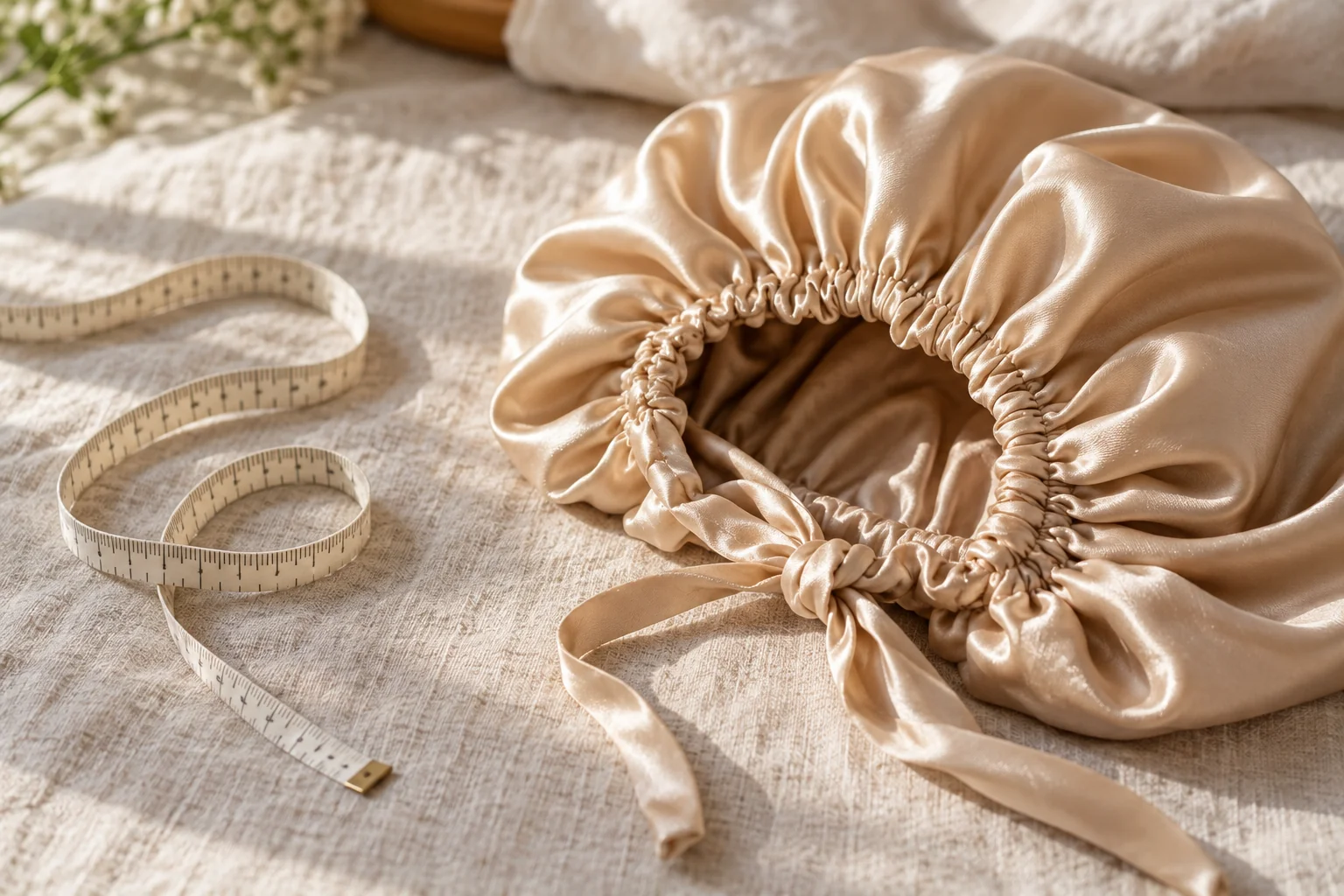
I match each measurement to a part
I would write down which measurement describes the opening and which describes the crown. I would also check whether the opening figure is relaxed, stretched or adjustable. These details matter when I compare two listings. A number without its method can make a product appear larger or smaller than it will feel in use.
I would follow the seller's measurement instructions for my head. If the instructions are missing, I would ask for them. I would not guess the route of the tape and then treat my result as a precise fit match. I would also ask whether the stated range describes the opening's intended use rather than its maximum possible stretch.
I leave room for comfort
I would not choose a size only because I can stretch it over my head. I want comfortable contact around the opening. I would check for pinching, uneven pressure and hardware in the place where my head meets the pillow. I would stop an uncomfortable awake trial instead of assume that the fit will feel better after several nights.
| Measurement | What I need to confirm |
|---|---|
| Opening range | I need its relaxed or adjustable meaning |
| Crown width | I need the shape and measurement method |
| Crown length | I need room for the way I place my hair |
I would use these measurements to narrow the choice, not to promise a perfect result. A size table helps me compare products, but the finished construction and my own comfort still decide whether the item suits my routine.
How do I compare hair length with crown shape?
I would not treat long hair and thick hair as the same need. A crown can offer room in one direction without offering the volume I want.
I compare the crown with both the length and volume it needs to hold. I look for a shape that lets me place my hair gently inside. I also check where spare fabric rests when I lie down.
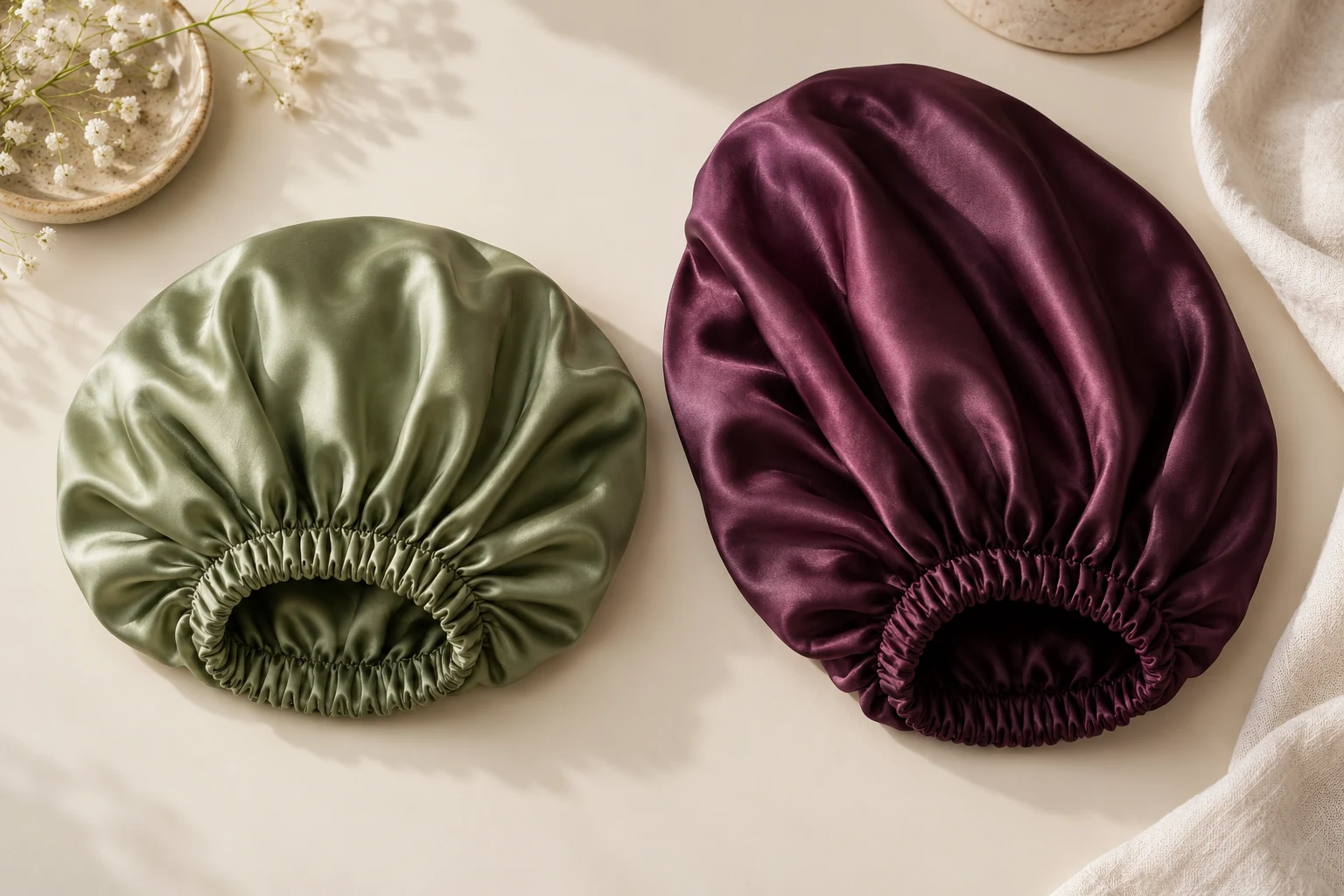
I consider the arrangement I can use comfortably
I would think about how I normally prepare my hair before bed. I would not create a tight bundle just to make a small crown work. I would also avoid introducing a tight hairstyle as a fix for a bonnet opening that does not fit. I want to choose the accessory around a comfortable routine, rather than build the routine around an unsuitable accessory.
I would try placing the hair inside while awake. I would notice whether the crown fills without force and whether that changes the opening position. If the edge pulls upward after I fill the crown, I would investigate space and placement. I would not immediately tighten the band because the movement could have a different cause.
I compare the shape against the pillow
I would lie down in my usual positions and notice where the fabric gathers. A longer crown may place spare fabric beside the neck. A rounder crown may gather around the head. I would compare those arrangements with what feels comfortable to me. I would not describe either shape as the best choice for every person with the same hair length.
I would also consider how easily I can put the bonnet on without pulling the hair. I would check the opening and seams as part of that movement. A design that takes several awkward steps may not suit the simple routine I want.
I keep the AAD's guidance about avoiding damaging tension in mind when arranging hair.2 I do not use that source to claim that a specific crown prevents hair loss. I use it to keep my trial focused on gentle handling and comfortable placement.
Which closure and material details belong in my comparison?
I would not stop at the word silk. The hair-facing layer, band and adjustment parts may answer different comfort and care questions.
I check each stated material and the closure's intended use. I compare slip-on, tie and drawstring designs by fit range, ease of use and resting position. I do not expect a closure name to guarantee overnight security.
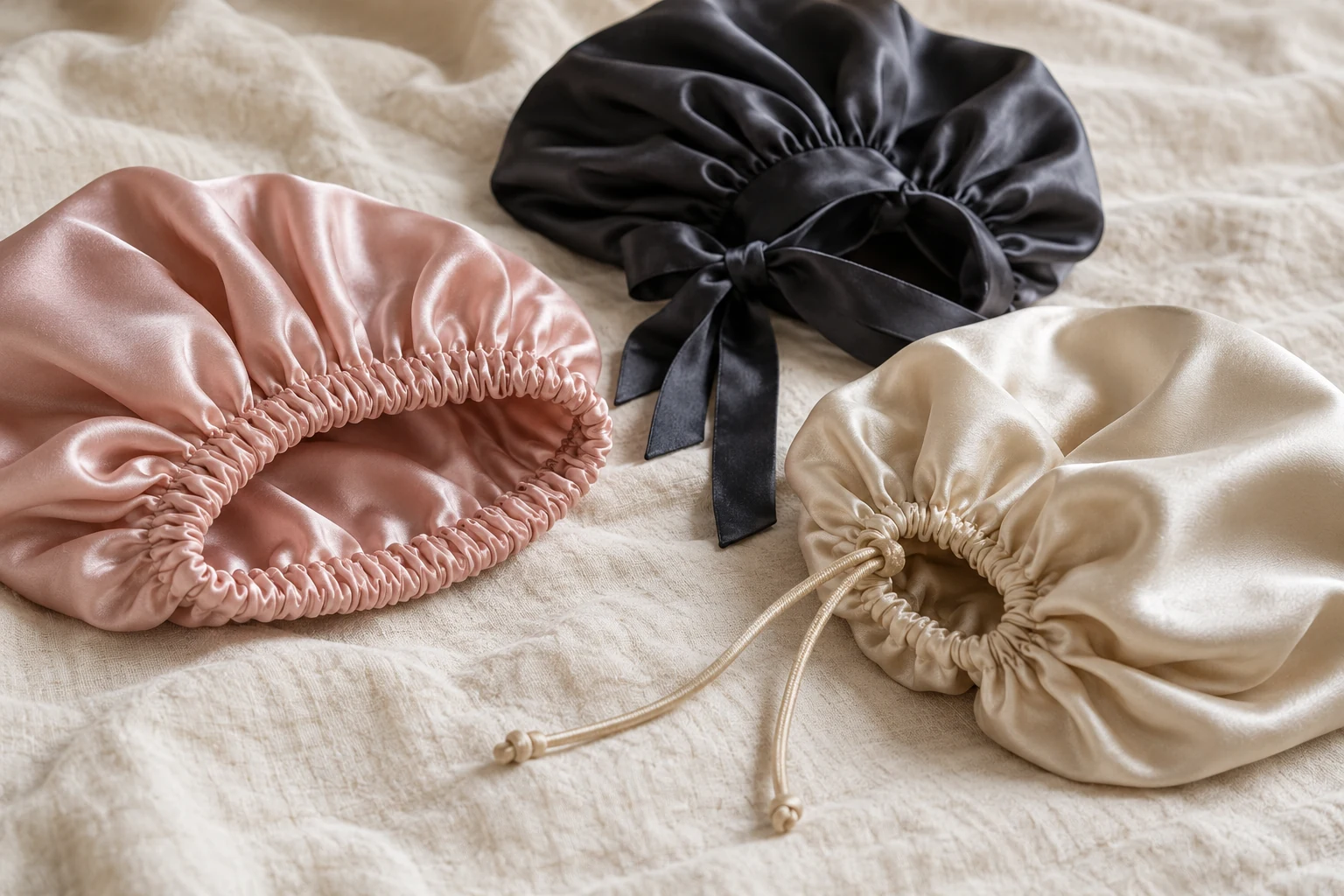
I read the item as a complete accessory
I would look for the fiber description of the inner layer as well as the outside. I would also check whether the band and ties have their own material description. A silk crown does not establish that every component is silk. I would ask for a close photograph of the inside when the listing leaves it unclear.
I would treat layer count and fabric weight as separate specifications. I would not call a double layer better without knowing what both layers contain. I would not choose a momme value as a substitute for opening measurements. Each detail helps with one part of the decision, and I want to keep those parts visible.
I compare adjustment in a resting position
I would read the closure guide before choosing a design. I would check whether I can make a comfortable adjustment and whether the hardware or tie rests where I do not want it. I would also check how easy the adjustment is to repeat. A setting I cannot reproduce makes a fit trial harder to interpret.
| Detail | Why I include it |
|---|---|
| Inner-layer fiber | I want to know what faces my hair |
| Band construction | I want to check contact around the opening |
| Closure position | I want to check comfort against the pillow |
I would compare these facts with the problem I am trying to solve. If the item slips, I would investigate fit. If the knot presses, I would investigate placement. I would not ask the fiber name to answer both questions.
How do I make the final choice practical?
I would not want the right-looking bonnet to become an item I rarely use. Care, comfort and daily handling need to fit my week.
I read the care and return information before buying. I plan an awake comfort check and note what I want to observe. I choose from clear facts and a routine I can maintain.
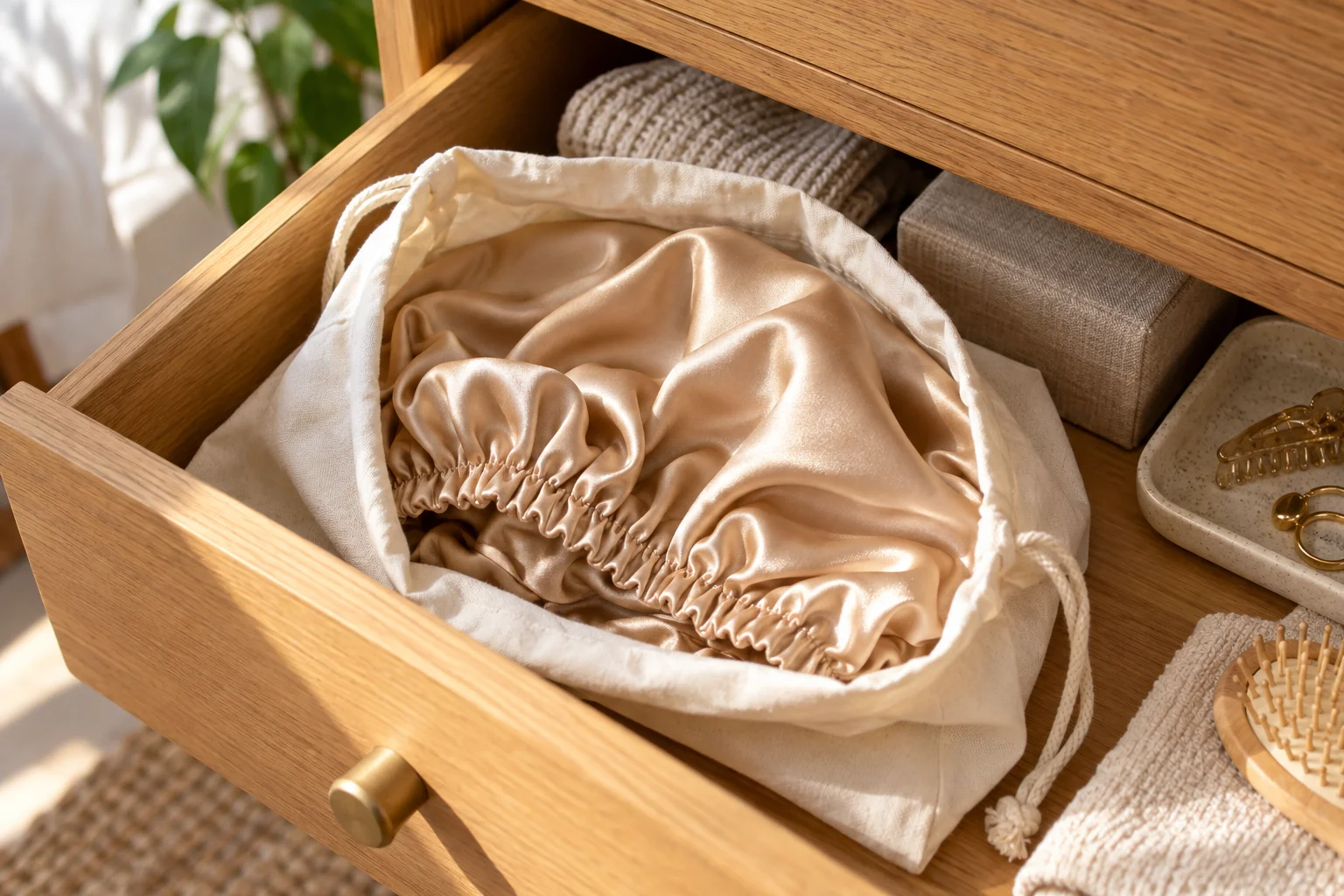
I compare the maintenance before the price
I would read the approved washing and drying methods. I would also check whether the instructions cover the completed item and its adjustment parts. I would not buy a material I prefer and then invent a care method because the instructions feel inconvenient. Maintenance belongs in the comparison before the purchase.
I would set a budget after considering those facts. I would not use the highest price as proof of the best fit. I would prefer a clear description and a suitable construction to a more expensive item with missing dimensions. I would also read return conditions before wearing the bonnet, rather than assume that every fit trial qualifies for a return.
I define the trial before bedtime
I would use the slipping guide if staying on is my main concern. I would record opening comfort, crown room and closure position separately. I would then compare morning observations without changing several details at once. A single night gives me one observation, not a universal product verdict.
I would use the Home & Rest collection to compare the current listed options with those questions. I would check the exact item's details rather than transfer one product's specifications to another. I would also keep expectations about hair appearance realistic. A bonnet can fit comfortably and still leave a section needing restyling.
I would stop an uncomfortable trial and reconsider the fit. I want an accessory that makes sense in my routine, with details I understand and care steps I can follow. That decision is more useful than a general claim that one design is right for every hair type.
Conclusion
I choose from opening measurements, crown shape, closure, materials and care. I use a comfortable trial to check the finished fit and keep expectations about results realistic.
- Reddit: varied bonnet experiences. I use the discussion to identify fit and comfort questions. ↩
- AAD: hair styling without damage. I use its handling and tension guidance without treating it as a bonnet test. ↩
Images are AI-generated editorial illustrations. They do not identify or verify a specific product.