
What Should I Do If My Necklace Keeps Catching My Hair?
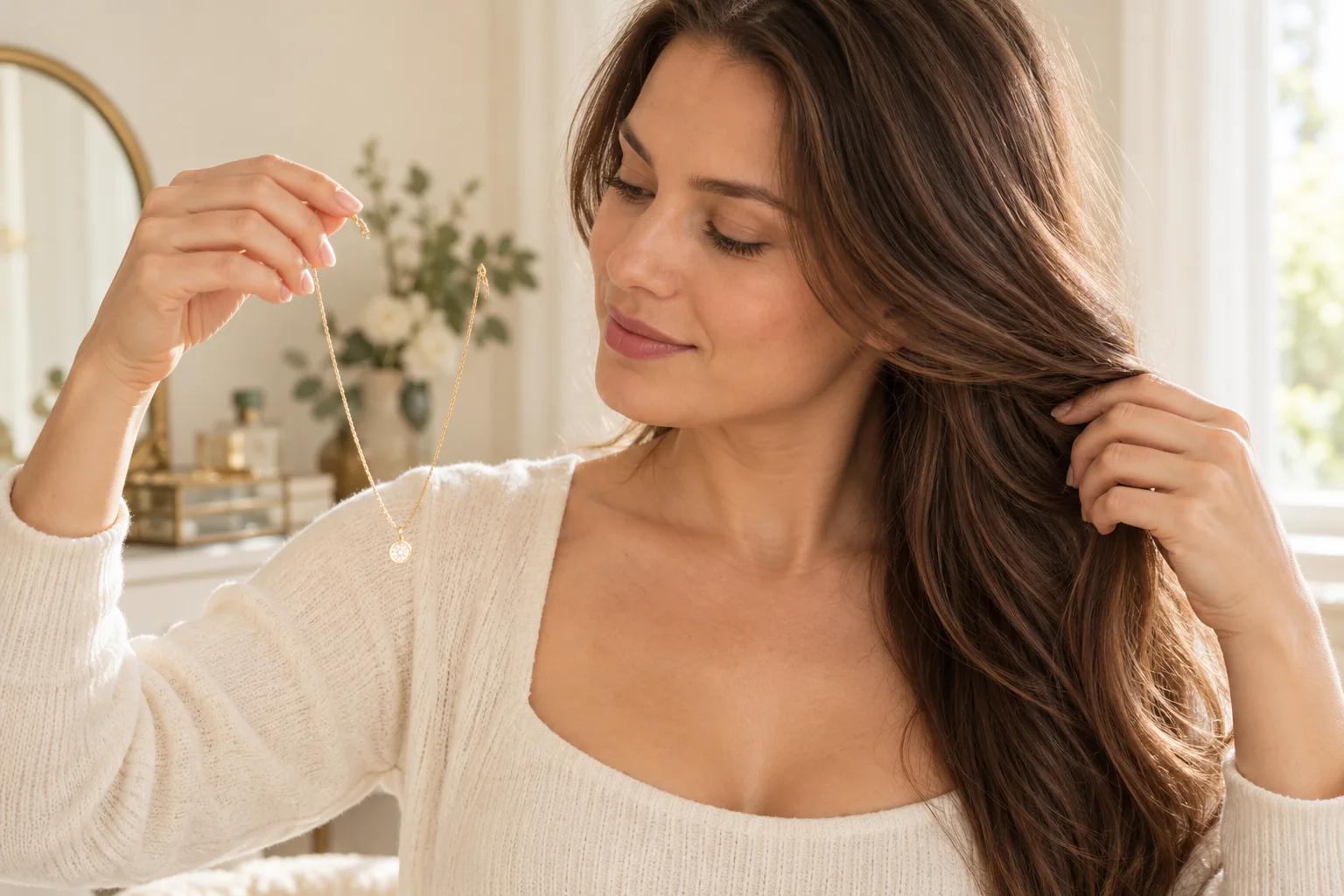
I can enjoy a necklace's look and dread the moment it grabs my hair. I want to stop the pulling before trying another quick fix.
I stop moving the necklace against my hair and remove it calmly if I can do so without pulling. I then inspect the unworn clasp and chain and note where the catch occurred. I seek help when it remains caught, and I avoid heat, chemicals or improvised jewelry repairs.
I focus on a practical wearing decision. I do not use this guide to diagnose hair loss or claim that a particular chain style can never catch hair.
What should I do when I first notice a catch?
I can pull at a necklace because I want it off quickly. I want to reduce tension instead of turning a small catch into a harder knot.
I pause, support the necklace and keep my hair from being pulled. I use the clasp only if I can reach and open it normally. I ask for help when I cannot see or release the catch comfortably, and I do not tug to test whether it will come free.
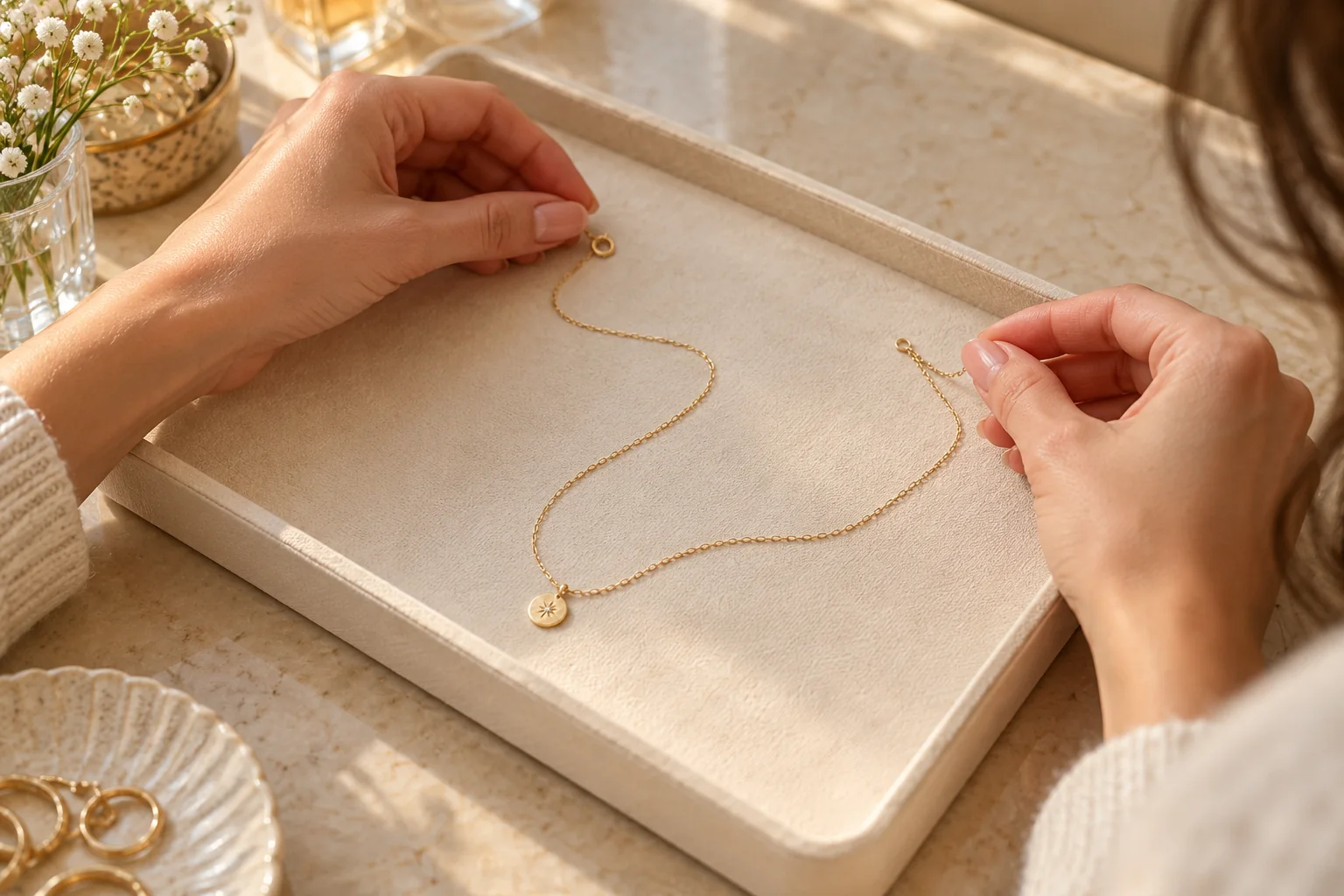
I make room for a calm removal
I stop the movement that brought the problem to my attention. I do not keep turning my head while pulling the chain in the opposite direction. If I can support the hanging part of the necklace with one hand, I do that gently. I want to avoid adding more tension while I decide whether I can open the normal closure.
I keep the task within what I can actually see and reach. A clasp behind my neck can be hard to inspect without help. I do not assume that a mirror gives me a clear view of every strand. If I cannot release the piece without discomfort, I ask someone to help me see it rather than work blindly with a tool near my neck.
| Situation I notice | Action I choose |
|---|---|
| I can open the clasp normally | I support the piece while removing it |
| I cannot see the catch | I ask for help rather than pull blindly |
| I feel tension increase | I stop the movement |
I do not bring a flame, solvent or improvised cutting tool to the necklace while I wear it. I also avoid forcing a clasp that will not open in its normal way. Once the piece is off, I place it on a clear tray so that it does not drop into a sink or disappear among other items. I can then inspect the jewelry separately from the immediate problem of hair and chain pulling against each other.
Where does my hair meet the clasp or chain?
I can blame the whole necklace when one small area keeps catching. I need a clearer location before deciding what to ask the seller.
I note whether the catch was near the clasp, an end ring, a particular link or the pendant attachment. I inspect the unworn piece under good light. I record a visible gap or rough-looking area, but I do not file, bend or close it myself.
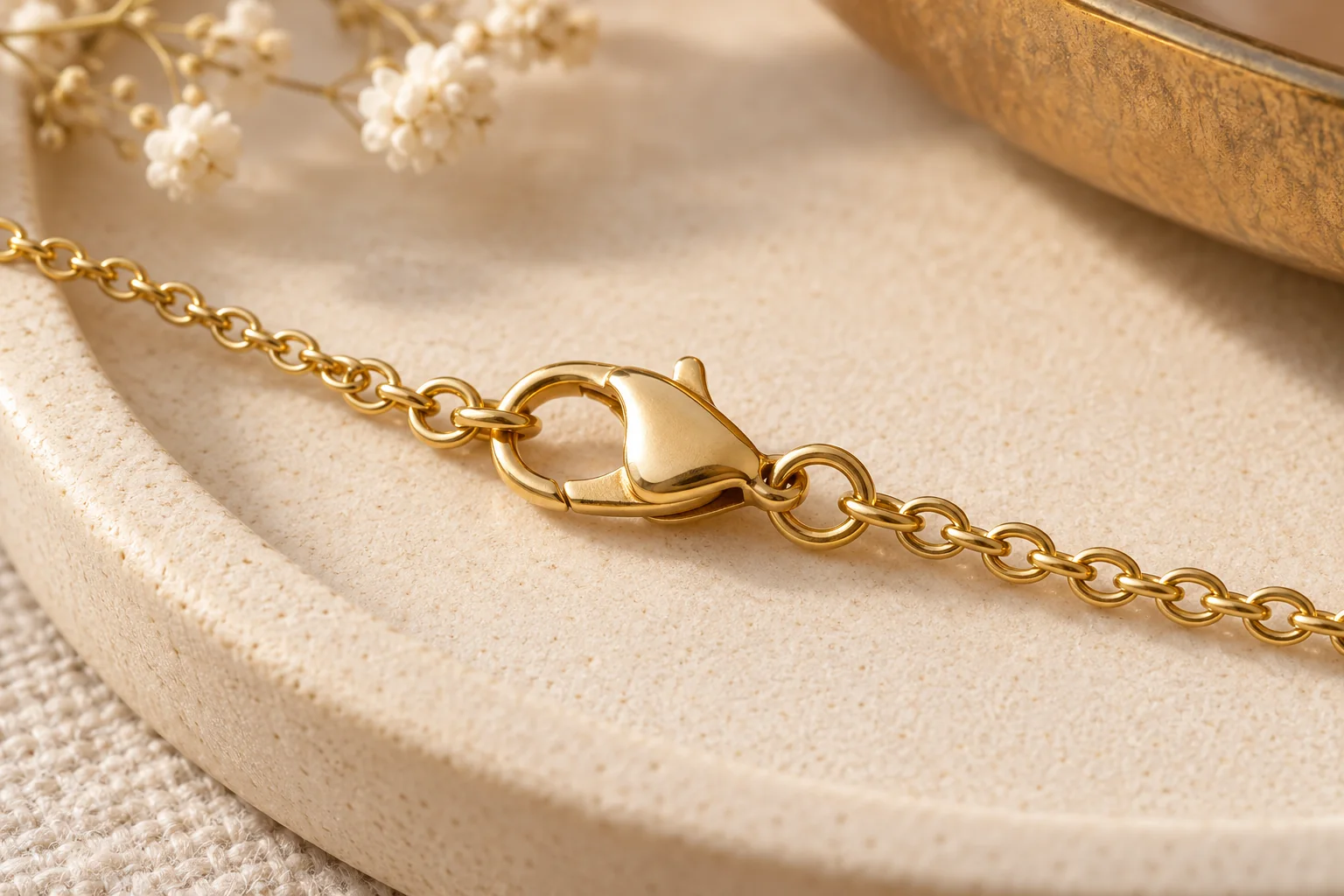
I look for a useful location without making a diagnosis
I support the necklace so that I can look at one section without suspending its full weight from a fine link. I keep any loose hair that remains in the piece visible. I do not try to clean away the evidence before I understand where it sits. A clear photograph may help the seller identify the part that needs a closer assessment.
I distinguish a clasp from its end ring and from the first chain link. Those pieces can sit very close together, but they are different parts of the necklace. I describe the location in simple words if I do not know its name. I can say that hair collected beside the closure, rather than claim that the clasp spring has failed.
I note whether the issue appears in the same place each time. I do not repeatedly wear a catching necklace just to create a larger sample. One clear observation can be enough to ask for advice. If I have already noticed a change after a pull or impact, I include that history without assuming it proves the cause.
| Location I photograph | Detail I include |
|---|---|
| I see hair beside the closure | I include the clasp and end ring together |
| I see hair along the chain | I show the neighboring links |
| I notice a visible gap | I record it without bending the part |
I also keep other catching problems separate. Our necklace-and-knitwear guide covers contact with clothing, which is a different question from releasing hair. I do not test a suspected rough spot by dragging it across my hair or a delicate garment. I want a professional to see the original condition rather than a part that I have tried to smooth or reshape at home.
What can I change in my dressing routine without altering the necklace?
I can start adding covers and adapters before checking how I put the necklace on. I first look for a simple choice within my normal routine.
I keep loose hair clear while I fasten or remove the necklace, then let it fall naturally before deciding whether to wear the piece. I remove jewelry before applying hair products. I do not tie my hair more tightly or accept repeated pulling just to keep one necklace in use.

I keep the routine comfortable enough to repeat
I give myself a clear place to put the necklace before I start dressing. I avoid holding it in one hand while I reach through clothing or search for another accessory. I want enough time and space to use the normal closure. If I need help fastening it, I include that in my decision rather than rush and leave a connection half closed.
I keep my hair clear of the closure while I fasten it. I can then let my hair return to its ordinary position and decide whether the complete setup feels comfortable. I do not treat a hairstyle that I would otherwise dislike as a required solution. I also do not assume that putting fabric between hair and chain will suit every necklace or outfit.
I leave hair products out of the jewelry experiment. GIA notes that substances such as hairspray and perfume can affect some jewelry materials.1 I use that as a reason to keep the tasks separate, not as a claim that a particular product will damage every metal. I do not use conditioner or oil as a lubricant for an unknown necklace construction.
I remove the necklace before bed rather than expect a daytime adjustment to work through sleep. Our bedtime-necklace guide covers that separate routine. I want the daytime decision to remain small: I can fasten the piece with hair clear, check how it feels naturally and choose not to keep wearing it if the catching starts again.
What should I ask before a repair or a clasp change?
I can replace a clasp and still have hair caught in the chain. I want the proposed work to address the actual location I observed.
I give the seller or jeweler the complete necklace, the catch location and any clear photographs. I ask which part needs assessment and what a proposed change would alter. I do not assume that a different clasp, added sleeve or new chain will solve every case.

I ask about the whole piece and the limits of the work
I include the product reference and any previous changes to the necklace. I say whether I noticed the problem from the first wear or after a particular event. I keep the wording factual. I do not need to label the design defective or identify its metal to explain that hair catches near a certain connection and that I do not want to keep pulling it free.
I ask how the part would be assessed before anyone changes it. A proposed replacement may change length, appearance, ease of use or the way I remove the necklace. I want to know those details as well as the cost. Our clasp-choice guide helps me think about handling, but it does not establish compatibility for a specific replacement.
I look for the maker's own service route when the piece is from a named brand. Tiffany's care page, for example, separates material-care information from its service and assessment options.2 I use it as one brand-specific example of asking through an established route. I do not transfer its services, prices or guarantees to a Zolay order or an unrelated necklace.
I also ask whether the suggested fix is meant for ordinary wear and how I should check it afterward. I do not add an online sleeve or converter merely because it fits around one part. I want to understand how it closes, what it touches and whether it introduces another awkward connection. A smaller part does not automatically mean a simpler wearing routine.
How do I compare another necklace without a no-snag promise?
I can replace one catching chain with a style advertised as smooth and face the same uncertainty. I want a comparison based on the complete piece.
I compare the exact chain, clasp, attachments and normal wearing position. I check the maker's details and any permitted way to assess fit. I do not treat a chain-style name or smooth photograph as proof that it will never catch my hair, and I keep comfort ahead of repeated trials.
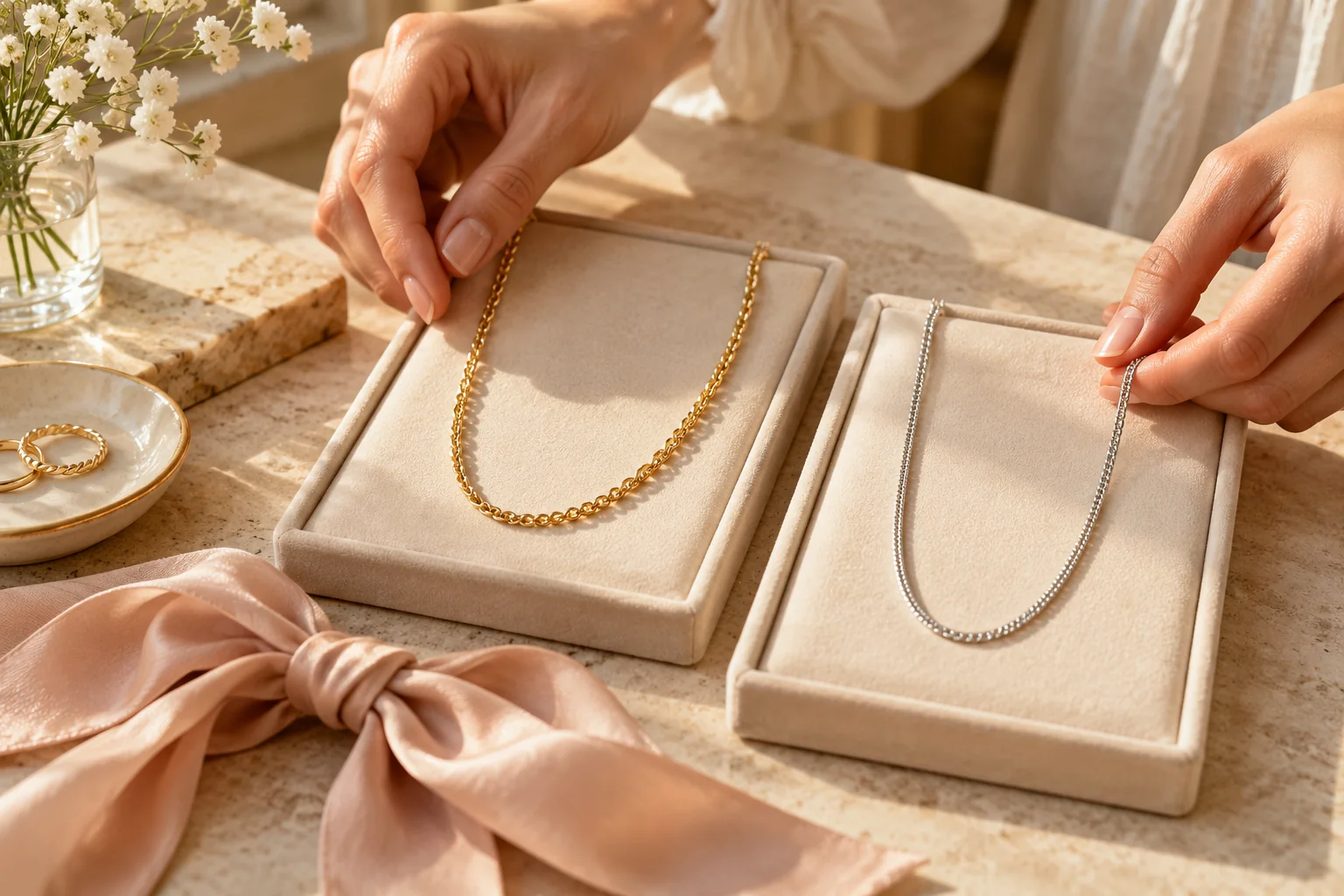
I decide what I need before choosing another piece
I write down the feature I would actually change. If the catch occurred near a closure, I want a clear view and description of that area on the alternative. If it occurred along the chain, I need to consider more than the clasp. I do not assume that a generic style label tells me the exact shape and condition of every link.
I compare pieces already available to me when that is practical. I can inspect them unworn first, without drawing them through my hair. I keep the same ordinary outfit in view so that I am not changing several choices at once. I still do not call a short comfortable wear a guarantee about future use.
| Information I compare | Limit I keep visible |
|---|---|
| I inspect the exact closure | I cannot judge all links from that part |
| I read the chain description | I do not infer a no-snag result |
| I consider my usual hairstyle | I do not accept pulling to keep the look |
I check current terms before assuming I can return a worn item. I ask the seller how I may assess the piece within those terms. I can also choose a different accessory or leave my neck free of jewelry for the day. I do not need to find a universal winning chain. I need a choice that I can handle, wear and remove without making repeated hair release part of my routine.
Conclusion
I stop the pulling, locate the contact and ask about the complete necklace. I choose a comfortable routine without heat, improvised repairs or a no-snag guarantee.
- GIA, Tips on Caring for Jewelry. I use its material-dependent chemical-care guidance; I do not prescribe a universal cleaning or hair-release method. ↩
- Tiffany, Day-to-Day Product Care. I use its separate care and service routes as a brand-specific example, not a Zolay service promise. ↩
Images are AI-generated editorial illustrations. They do not identify or verify a specific product.