
What Should I Do About a Pulled Thread on My Silk Bonnet?

I can notice a loop on my bonnet and reach for scissors. I pause because a quick trim could change the fabric before I understand the problem.
I support the bonnet on a clean surface, leave the loose thread alone and record what I can see. I check the care instructions and ask the seller or a suitable textile repairer about the exact item. I do not cut, burn, stretch or glue a thread I cannot identify.
I use this guide to preserve a useful starting point. I separate a snag question from routine washing and from a seam that simply feels uncomfortable.
Am I looking at a loose loop, an open seam or something else?
I can call every raised thread a snag and choose the wrong fix. I describe the visible change before deciding that I know how it happened.
I look without pulling. I note whether the change sits within the cloth, along a seam or at the edge, and whether I see a loop, a line or a gap. I keep those observations separate from a diagnosis of broken fibers or a manufacturing fault.
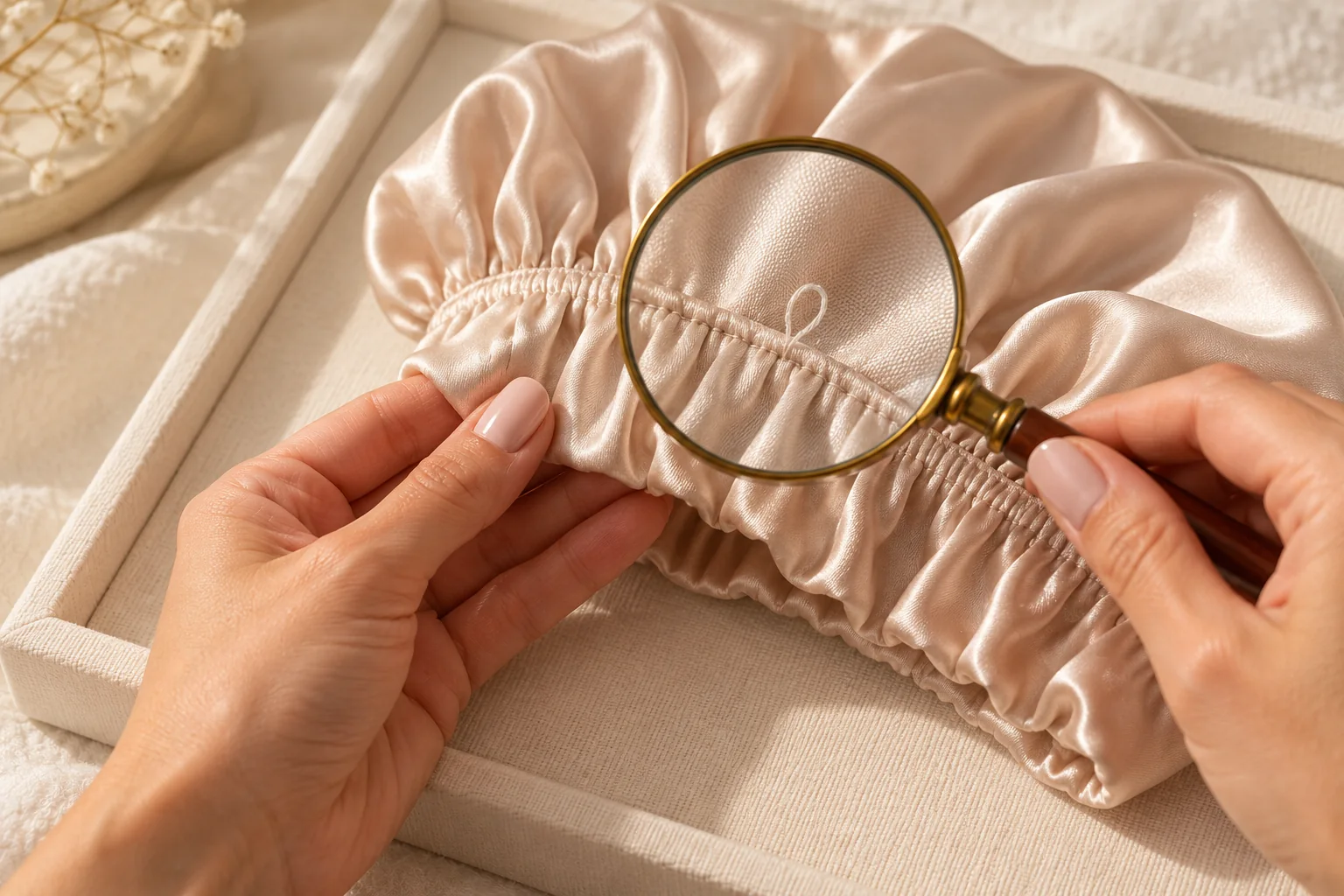
I locate the change before naming it
I lay the bonnet on a smooth, clean support. I let the fabric rest in its ordinary shape rather than stretch it flat under tension. I look at the affected area in clear light and note whether it is near a seam, the band or the middle of a panel. That location helps me explain what I see without having to name a textile repair technique.
I distinguish my observations carefully. A loop rising from the surface is different from two fabric edges separating at a seam. A pale line is different from an actual opening through the cloth. I cannot establish the full condition from one angle, so I keep the reverse view if I can see it without forcing the cap inside out.
| Change I notice | Description I keep |
|---|---|
| I see a raised loop | I note its location and surrounding cloth |
| I see separating edges | I note the nearby seam or opening |
| I see a line but no gap | I avoid calling it a hole without evidence |
I avoid cutting a loop to make the surface look tidy. The thread may be part of the cloth or stitching rather than a removable piece of lint. If I cannot tell, I leave it in place. Our inside-out comfort guide covers a different question about intended orientation. I do not reverse, pick or stretch the bonnet simply to make a suspected snag disappear before someone can assess it.
What should I record before asking for help?
I can send a close-up that hides where the thread sits. I want a record that lets someone understand the whole item and the affected area together.
I photograph the complete bonnet, the affected area and an accessible reverse view. I keep the product name, selected option, care instructions and any known handling history. I state what I observed and when, without claiming that a photograph proves the material, cause or responsibility.

I keep the evidence clear and limited
I begin with a whole-item photograph. It shows whether the area is near the crown, band or fastening and helps connect the close-up with the right item. I then take a close view in plain light. I avoid filters that change the contrast or make the line appear more dramatic. I can place a size reference beside the cloth without pinning or marking the bonnet.
I add the information I already have. I keep the order's selected option, the supplied material description and the care card together. If I noticed the loop while unpacking, after wearing or after washing, I say so. I include the actual care method used if that is relevant. I do not invent a cause because the timing makes one explanation feel likely.
I also disclose any step I have already tried. If I pulled the cloth, used a tool or washed it after noticing the change, I record that fact. An accurate account helps the person assessing the item understand its current condition. It is more useful than a cleaner-looking story that leaves out a change I made.
Our product-detail record guide helps me keep the correct item and date attached to those facts. I send only the information needed for the question and follow the seller's normal support channel. I want a clear reply about the item in front of me, not a generic repair recipe chosen from a picture of a different fabric.
How can I keep the area from catching again while I decide?
I can keep handling a loop to check whether it has changed. That gives the area more opportunities to catch before I receive any useful advice.
I set the bonnet aside on a clean, smooth support and keep jewelry, exposed zips and rough objects away from it. I avoid repeated rubbing, brushing and stretch tests. I leave the raised thread visible for assessment instead of covering it with glue, tape or another improvised treatment.

I reduce unnecessary handling
I choose a place where the cap will not be squeezed among other objects. I keep it away from a bag opening with an exposed zip and from jewelry left on the same surface. I do not drag the cloth across a rough drawer edge to put it away. I support the cap as I move it, rather than lift it by the affected section or pull it through my fingers.
I use conservation advice within its scope. The Canadian Conservation Institute advises careful handling and removing jewelry that could snag textile threads.1 Its guidance concerns collection care. I borrow the narrow handling principle; I do not assume that my everyday bonnet needs museum storage equipment or a collection-treatment procedure.
| Situation I can change | Practical step I take |
|---|---|
| I have jewelry on the tray | I move it to a separate place |
| I keep checking the loop | I use the saved photograph instead |
| I need to move the cap | I support the cloth rather than the thread |
I resist the urge to brush the spot until it looks smooth. The same institute's specialist surface-cleaning note excludes certain fragile textiles with broken threads from that process.2 I use this as context for asking about condition before extra cleaning. I do not vacuum, scrub or brush a bonnet based on a museum instruction. My immediate aim is modest: I keep the present condition easy to inspect and avoid adding an untested treatment while I decide what to do next.
What should I ask the seller or textile repairer?
I can ask how to fix silk and receive advice for another weave or garment. I need the reply to address the finished bonnet and its actual condition.
I ask whether the thread is part of the fabric, seam or trim, whether the item should be set aside and what assessment is needed. I request the proposed result and any visible change before repair. I do not assume that a method for another silk item suits this one.

I ask for a defined outcome
I share the record before asking for a method. I explain where the loop sits and which details remain uncertain. I ask whether photographs are enough for an initial reply or whether the person needs to see the item. I do not turn a general online suggestion into approval to push a needle through the cloth myself.
I want to know what the proposed work would achieve. The answer may concern securing a seam, reducing a visible pull or assessing whether the cloth is damaged. Those outcomes are different. I ask whether the work could leave a visible mark, change the shape near the band or affect how the item can be cared for afterward.
I also ask about cost, timing and consent for extra work. I want the person handling the item to contact me if inspection changes the plan. I keep any instruction from the seller in writing and check that it identifies my selected style rather than a general material category. I do not infer a free repair, replacement or return from the fact that I asked for advice.
I can decline a proposed treatment if I do not understand its result. A clear assessment can still be useful when it tells me that the original appearance may not be restored. I would rather make that decision with the condition explained than expect an invisible repair from a phrase such as easy fix. I keep the original photographs so that I can compare the completed work with the plan I actually approved.
How do I decide whether to use the bonnet again?
I can focus on whether the loop is still visible and miss a change in the seam or band. I check the complete item before returning it to my routine.
I compare the assessed or repaired area with the agreed plan, then check the bonnet's opening, seams and supplied care instructions. I stop if a gap, rough area or uncertain connection remains. I keep the repair record and ask about concerns before wearing or washing the item again.

I separate appearance from usable condition
I ask the person who assessed the item to explain what I should expect. A thread may remain visible even when the intended work is complete. A spot may look tidier without giving me enough information about the surrounding cloth. I do not use either appearance alone as proof that the bonnet is ready for the way I want to wear it.
I check the normal handling task. I look at whether I can open, place and remove the cap in its intended way without catching the area. I do not pull against the repair to test its strength. If the band, seam or trim changed, I ask whether its adjustment or care instructions changed too. I keep that answer with the item rather than rely on memory.
| Check I make | Question I keep in view |
|---|---|
| I compare the work with the plan | I ask whether the result matches what I approved |
| I inspect the whole cap | I look beyond the original close-up |
| I read the updated instructions | I avoid assuming the old routine still applies |
I use our washing and drying guide only after the item's condition and instructions are clear. Routine care guidance is not a repair assessment. I can decide to keep the cap aside or stop using it if the remaining uncertainty does not suit me. I do not need to hide the thread or erase the history to make a practical decision about the item I now have.
Conclusion
I leave an uncertain thread intact, support the cloth and record the problem. I choose any repair only after its purpose and limits are clear.
- Canadian Conservation Institute, Basic Care: Textiles. I use its careful-handling and snag-prevention principles, not a museum treatment plan for a bonnet. ↩
- Canadian Conservation Institute, Mechanical Surface Cleaning of Textiles. I use its condition-assessment limitation, not its specialist cleaning procedure. ↩
Images are AI-generated editorial illustrations. They do not identify or verify a specific product.