
Why Does My Necklace Clasp Keep Moving to the Front?
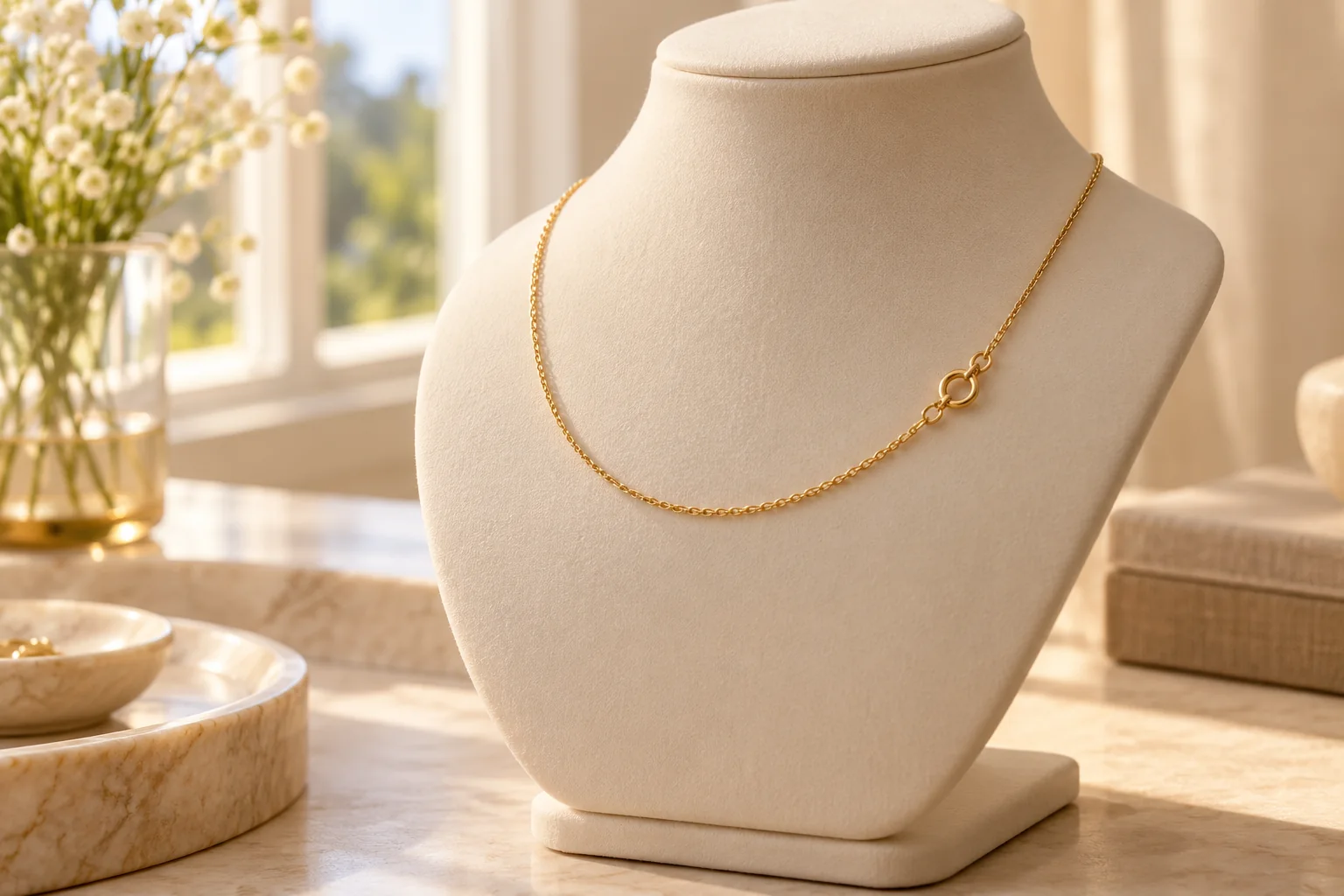
I can straighten a necklace and find its clasp beside the pendant again. That repeated adjustment makes me want to understand the movement before changing the piece.
I first check whether my necklace rotates around my neck, my pendant slides along the chain, or both happen together. I compare the construction, fit, clothing contact and added parts. I do not assume a heavier pendant, shorter chain or added weight will keep every clasp at the back.
I separate an annoying position from a faulty connection. I can often learn more from a calm look at the whole necklace than from another quick adjustment. I use that distinction to choose a useful next step.
Is my necklace rotating or is only the pendant turning?
I can call every change a clasp problem and miss the part that moves. I need to identify the motion before choosing a fix.
I compare the clasp, pendant and chain as separate reference points. I distinguish a chain rotating around my neck from a pendant flipping on its own attachment. I also check whether a free-moving pendant slides along the chain while the clasp changes position.
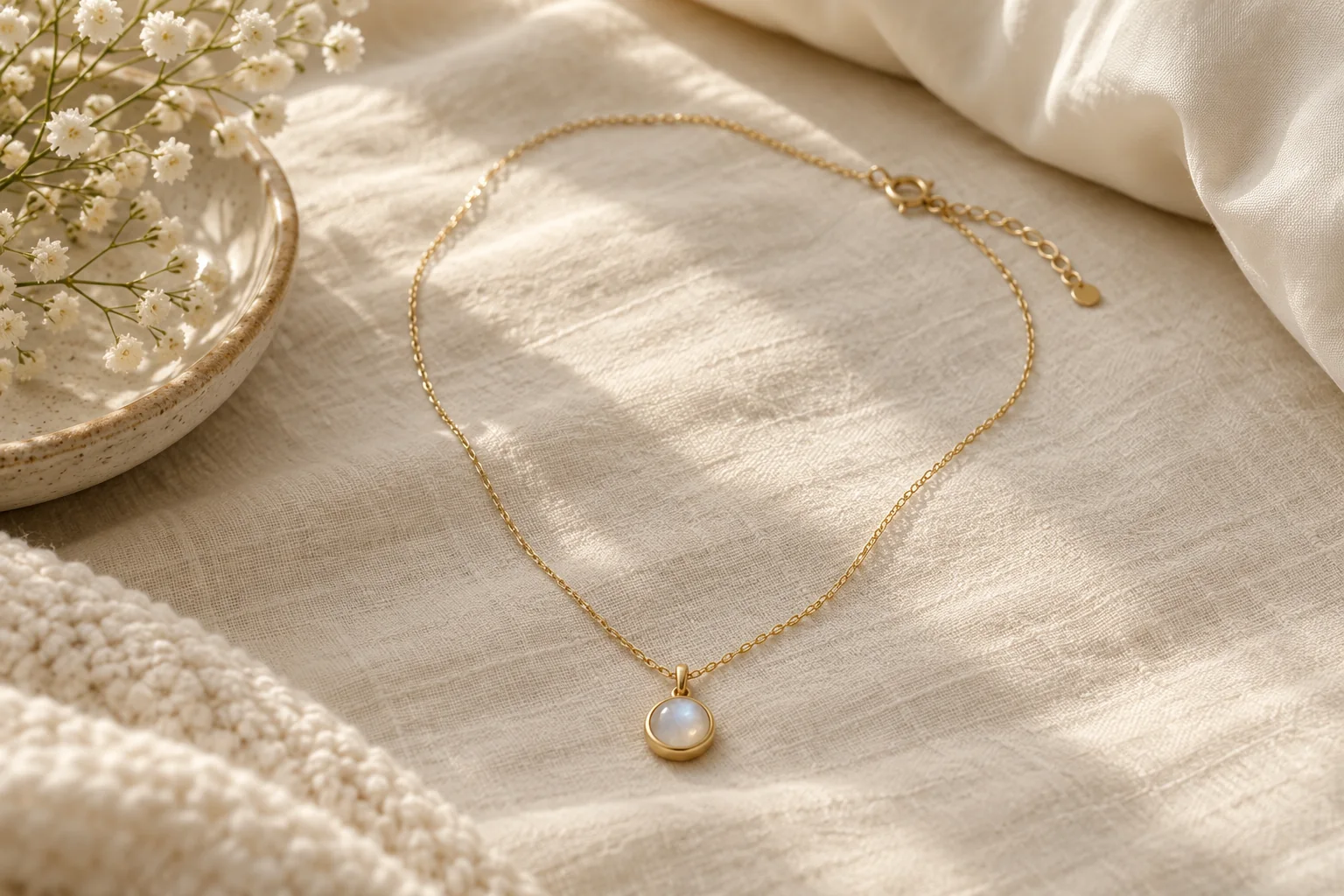
I name the movement before I change anything
I look at the necklace as it is designed to sit. I note where the clasp starts, where the pendant rests and how the pendant joins the chain. I do not pull the necklace around to create a demonstration. I want to understand an ordinary change in position without adding force or twisting a chain that needs careful handling.
I check whether the pendant faces backward while the clasp remains near the back. That observation points to a different question from a clasp that has moved beside a forward-facing pendant. I also look for a chain caught near a collar or a separate piece. I keep those visible details distinct instead of assigning one cause to every necklace.
| Change I notice | Question I ask |
|---|---|
| I see the clasp at the front | I ask whether the chain rotated |
| I see the pendant's back | I inspect how the pendant hangs |
| I see the pendant off center | I check its movement and nearby contact |
I describe the observation in plain words if I contact the seller. I can say that the clasp reaches the pendant during ordinary wear, rather than announce that the clasp is too heavy. I cannot establish that cause from its appearance alone. I use the clasp access guide if my actual problem is opening or closing the connection. I keep that handling task separate from understanding why an intact necklace changes position.
Does a fixed pendant behave differently from a sliding pendant?
I can add a pendant and expect it to hold everything in place. I first need to know whether that pendant can move independently along the chain.
I check whether the pendant is fixed to the chain at set points or hangs from a bail that can slide. A fixed arrangement changes how the pendant and clasp move relative to each other. I do not treat it as a guarantee that the whole necklace will never shift.
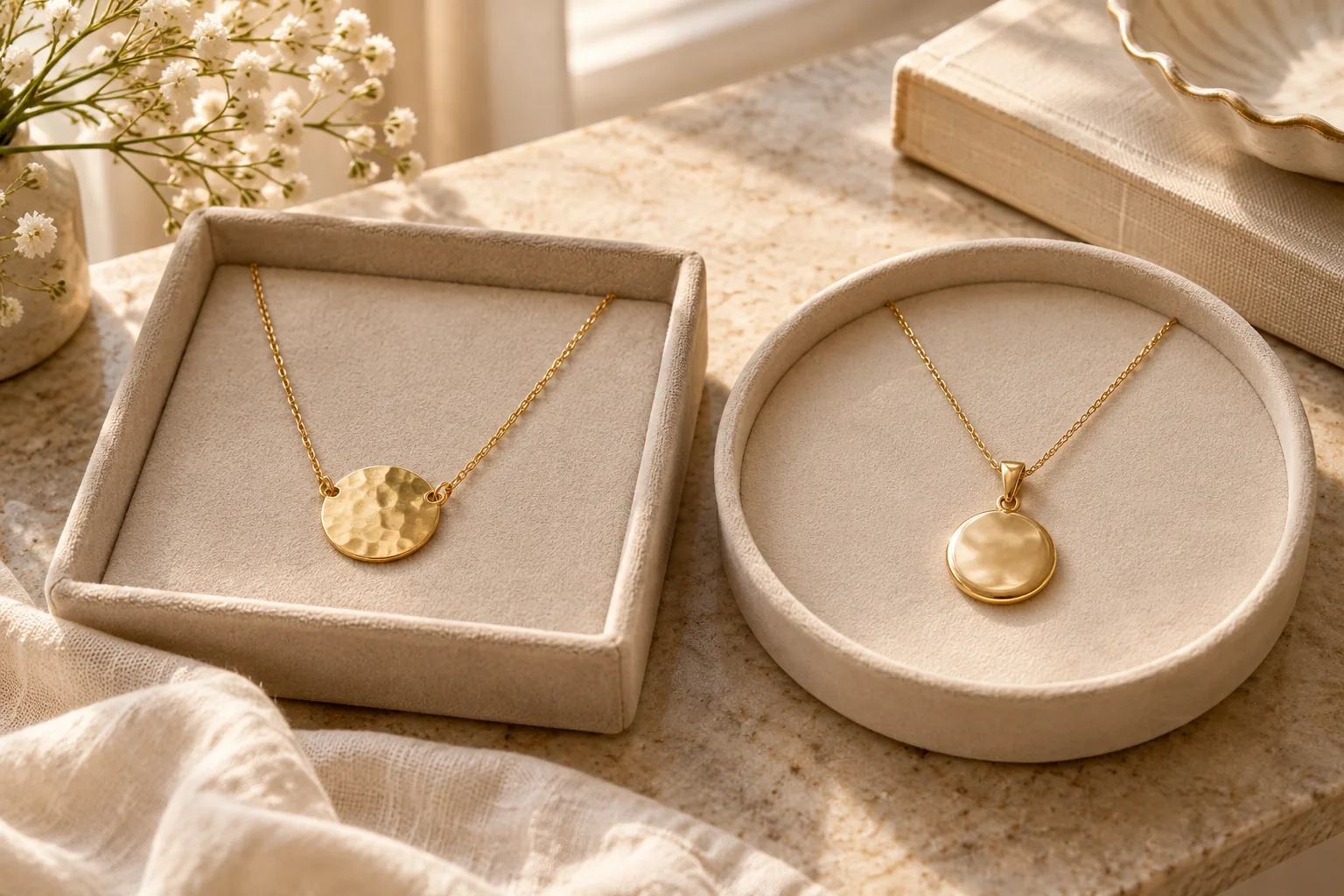
I examine the connection rather than just the shape
I look for the actual attachment points. I may see chain sections joined to each side of a pendant, or a pendant hanging from a loop through which the chain passes. I do not decide from the pendant's size alone. I also do not assume that a close photograph shows whether the chain moves freely through a hidden attachment.
I use Brent Miller Jewelers' explanation of stationary pendants as context. Its article describes how fixing a pendant at the center keeps a set relationship between the pendant and clasp.1 I apply that narrow distinction when reading a design. I do not turn it into a promise about every necklace or claim that a fixed pendant cannot move with the entire chain.
I ask for a clear image when the arrangement is unclear. I want to see the whole piece and the points where the chain meets the pendant. I keep an adjustable drop separate from a sliding pendant bail. A part that changes a Y necklace's proportions does not automatically tell me how its main chain will sit during wear.
I do not glue, crimp or solder a pendant into place myself. A change to the connection needs an assessment of the actual chain, pendant and finish. I use the pendant and chain compatibility guide when I am considering a different combination. I check the construction before buying another part because a heavier-looking pendant does not establish a reliable solution to rotation.
Can my neckline or other necklaces affect what I notice?
I can blame the chain while its edge keeps meeting the same collar. I want to compare the surrounding outfit before I change the jewelry.
I check whether my necklace touches a collar, scarf, hair or another chain when its position changes. I compare ordinary wear with a clear neckline when practical. I treat that comparison as a clue about my own setup, not proof of a universal cause or cure.
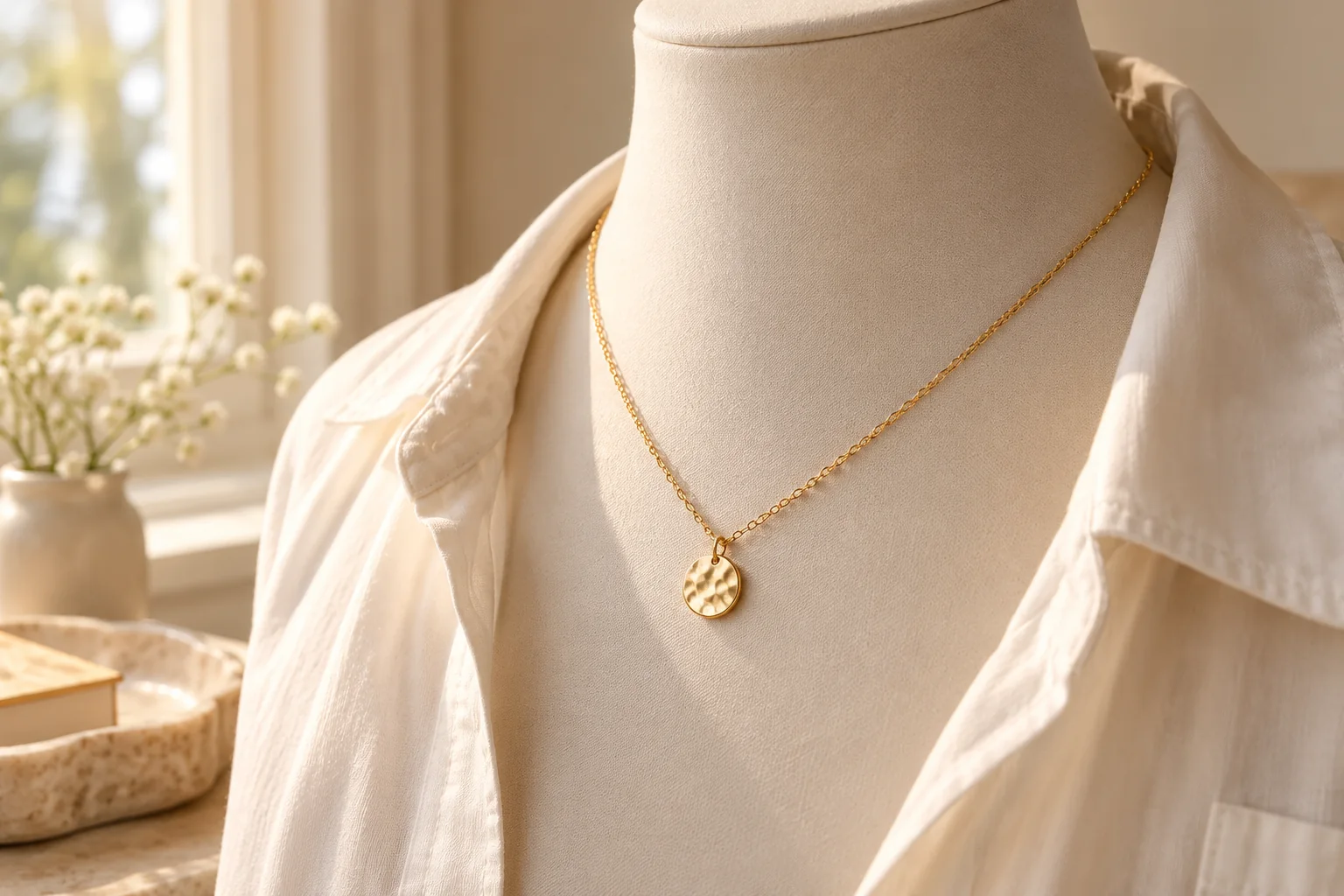
I compare one ordinary condition at a time
I look at where the chain rests against my clothes. I may see a collar edge lying over one side or a pendant meeting a seam. I do not need to drag the necklace across the fabric to decide whether the two touch. I can note the contact and compare another ordinary outfit that gives the piece more space.
I keep the rest of the arrangement simple during that comparison. I may wear the necklace alone rather than in a stack. I want to see whether the position still changes when another chain is absent. I do not infer that layering always causes rotation. I also do not claim that a bare neckline keeps a clasp still for every wearer.
| Condition I compare | Observation I record |
|---|---|
| I wear one necklace | I note the clasp and pendant positions |
| I add a second chain | I look for contact between the pieces |
| I change the neckline | I check whether the chain rests differently |
I use the necklace length guide when I need to understand where a piece meets my clothes. I do not shorten it blindly to stop movement. A different length changes the fit and may bring the piece closer to another contact point. I follow the chain's intended adjustment method and stop if it resists handling. I can choose a more suitable neckline or arrangement without pretending that one outfit comparison establishes the mechanics of every necklace I own.
Should I add an extender, weight or clasp accessory?
I can find a quick fix advertised for every necklace. I need to ask what the extra part changes before I attach it to mine.
I check the maker's guidance and the actual connections before adding any accessory. I consider added length, weight and handling. I do not attach improvised counterweights, glue the chain to clothing or assume a new clasp accessory will hold the original clasp at the back.
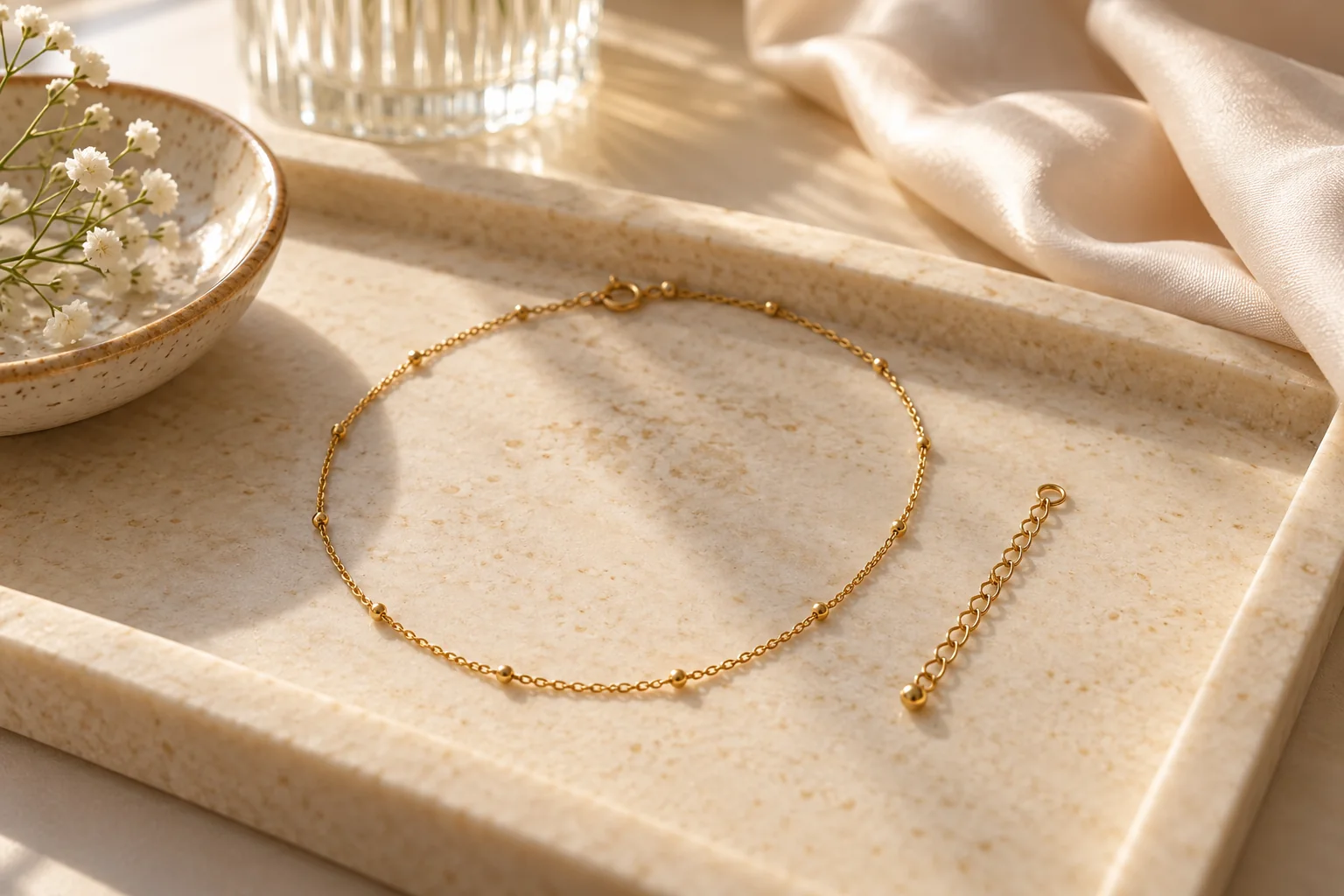
I assess the changed necklace as a whole
I start with the reason for the proposed addition. I may need extra length, easier access or a different way to connect several chains. Those are separate goals. I do not buy a component for one purpose and assume it also prevents rotation. I ask the seller what the accessory is designed to do and what pieces it can join.
I compare the actual receiving rings and attachment method. I do not force a larger connector into a small ring or open a ring with household tools. I also do not treat a photograph of two gold-colored parts as evidence that their materials and dimensions are compatible. I need information about the specific pieces rather than a broad claim that the accessory fits everything.
I consider the new resting position. Extra length can change where the pendant sits and where the closure meets my clothing. Extra parts also create more connections to inspect. I do not assume that changing the weight at the back will balance every chain, pendant and movement pattern. I keep that proposed change separate from a repair assessment.
I choose to leave the necklace as supplied when I cannot establish compatibility. I can ask a qualified jeweler whether a different construction would better suit my preference. I explain that I want less repeated repositioning, rather than request an untested modification. I keep the possibility of a different necklace design open instead of treating every moving clasp as a problem I must solve with another attachment.
When does a moving clasp need professional attention?
I can keep adjusting a necklace and overlook a changed ring or reluctant closure. I want to separate a position preference from a connection that needs assessment.
I stop wearing the piece if I see an open connection, bent part or clasp that does not close as intended. I support it and ask the seller or a qualified jeweler for advice. I do not diagnose damage from rotation alone or force a reluctant mechanism.
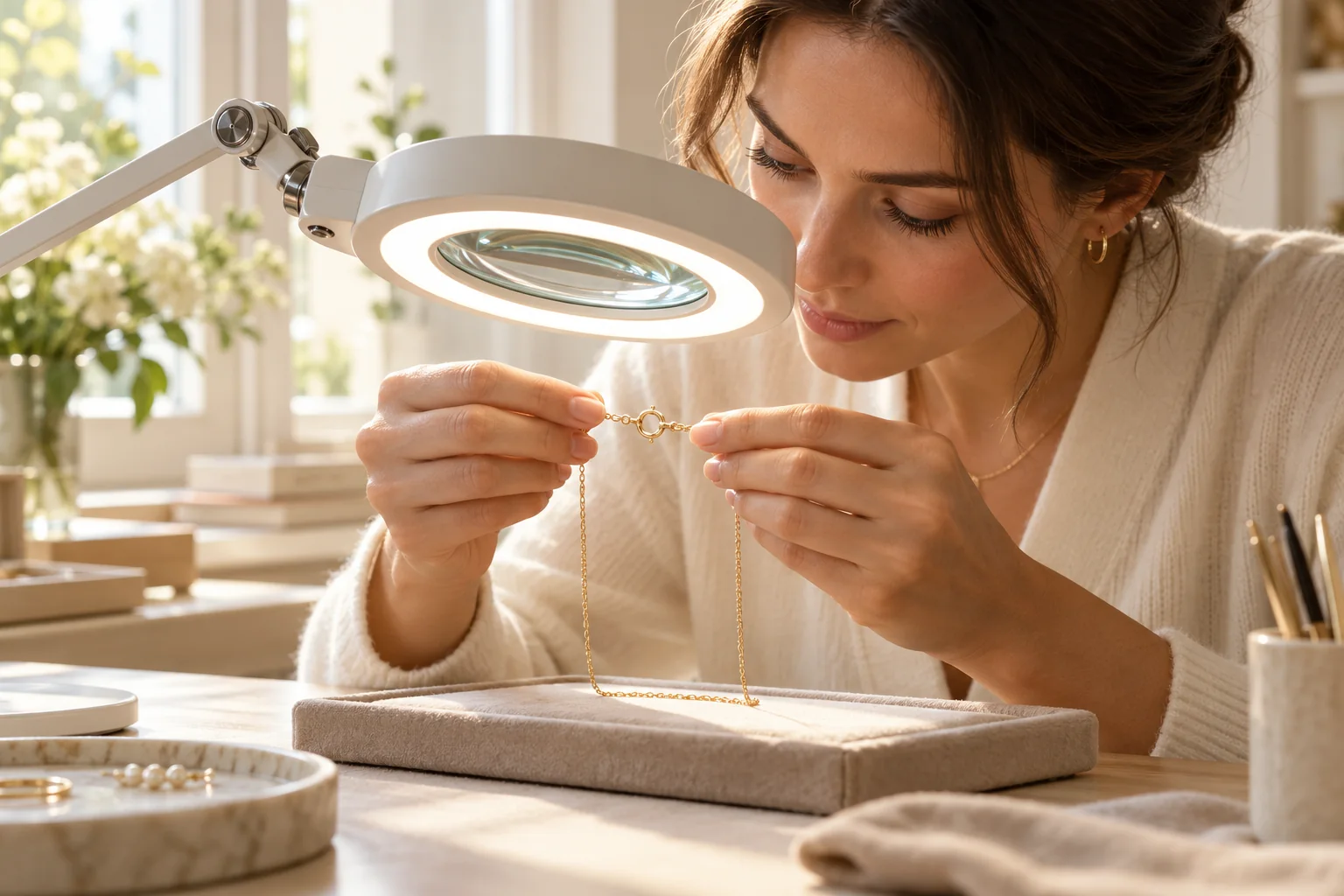
I document the part without stressing it
I place the necklace on a clean, padded surface and look at the clasp and nearby connections. I compare their appearance with any supplied instructions or clear product image. I do not pull both ends to see whether a gap becomes larger. I want to preserve the piece while I ask about what I can actually observe.
I take a whole-piece photograph and a close view if I contact the seller. I describe whether the clasp opens and closes normally and whether I noticed a change. I avoid saying that the movement proves a defect when I have only seen the clasp at the front. I also avoid calling a visibly changed part harmless because the necklace still appears wearable.
| Condition I see | Next step I choose |
|---|---|
| I see position changes only | I review construction and ordinary contact |
| I see a gap or bent connection | I stop wearing it and request assessment |
| I cannot close the clasp normally | I avoid force and ask for instructions |
I use GIA's jewelry-care advice for general context on careful handling and separate storage.2 I follow the actual item's instructions instead of using a cleaner or oil to make the clasp move. I also keep the piece separate while I wait for advice, so I do not confuse a storage tangle with the original issue. I can then make a decision based on the condition and construction, rather than the frustration of another adjustment.
Conclusion
I identify the movement, inspect the construction and compare ordinary contact first. I avoid improvised fixes and seek advice when the connection looks changed or needs force.
- Brent Miller: Why Are Some Pendants Stationary?. I use its explanation of the pendant's relationship to the clasp, without a universal no-movement promise. ↩
- GIA: Tips on Caring for Jewelry. I use its handling and separate-storage guidance, not a repair method for a particular clasp. ↩
Images are AI-generated editorial illustrations. They do not identify or verify a specific product.