
Where Should I Place My Silk Bonnet Bow for Sleep?
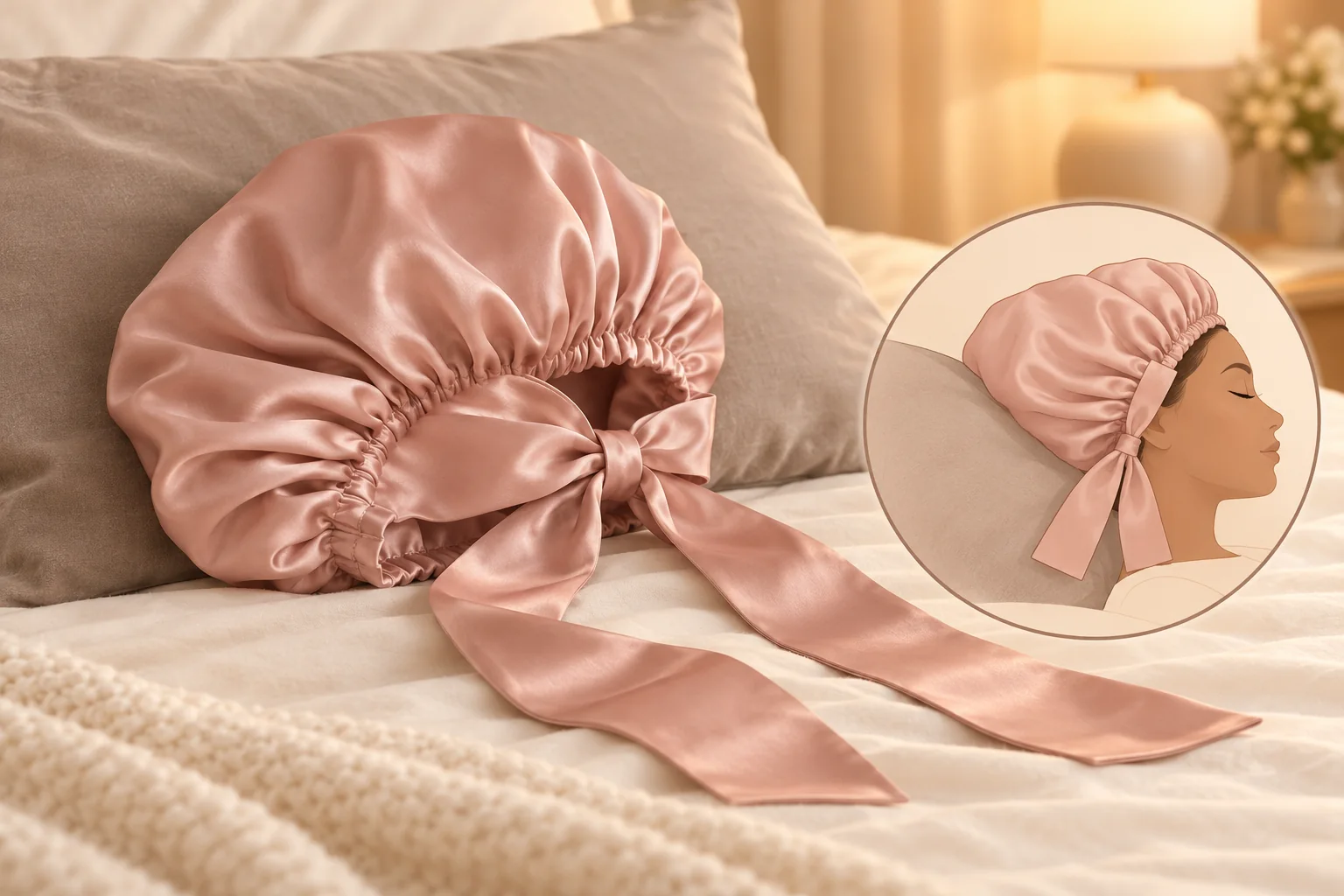
I can tie a bonnet comfortably while sitting and feel its knot as soon as I lie down. A small placement problem can interrupt bedtime.
I place my silk bonnet bow where the item's intended ribbon route keeps it away from my usual pillow contact. I keep the ribbons flat and the hold gentle. I check the position while awake, and I remove the bonnet if the bow, band or loose ends feel uncomfortable.
I write the Zolay Nights Journal to make small accessory decisions clearer. This guide focuses on the bow I rest against, rather than choosing between every closure type. I separate the knot, the wrapped band and the crown so that I can see which part needs attention.
Why can a comfortable bow feel different against my pillow?
I can blame the whole bonnet when only a folded ribbon presses against the pillow. I need to locate the contact before I adjust anything.
I check where my pillow meets the bow and wrapped ribbons in my usual resting position. A knot adds local bulk, and a twisted ribbon adds a raised edge. I inspect both before changing the opening, because moving the knot does not correct every fit problem.
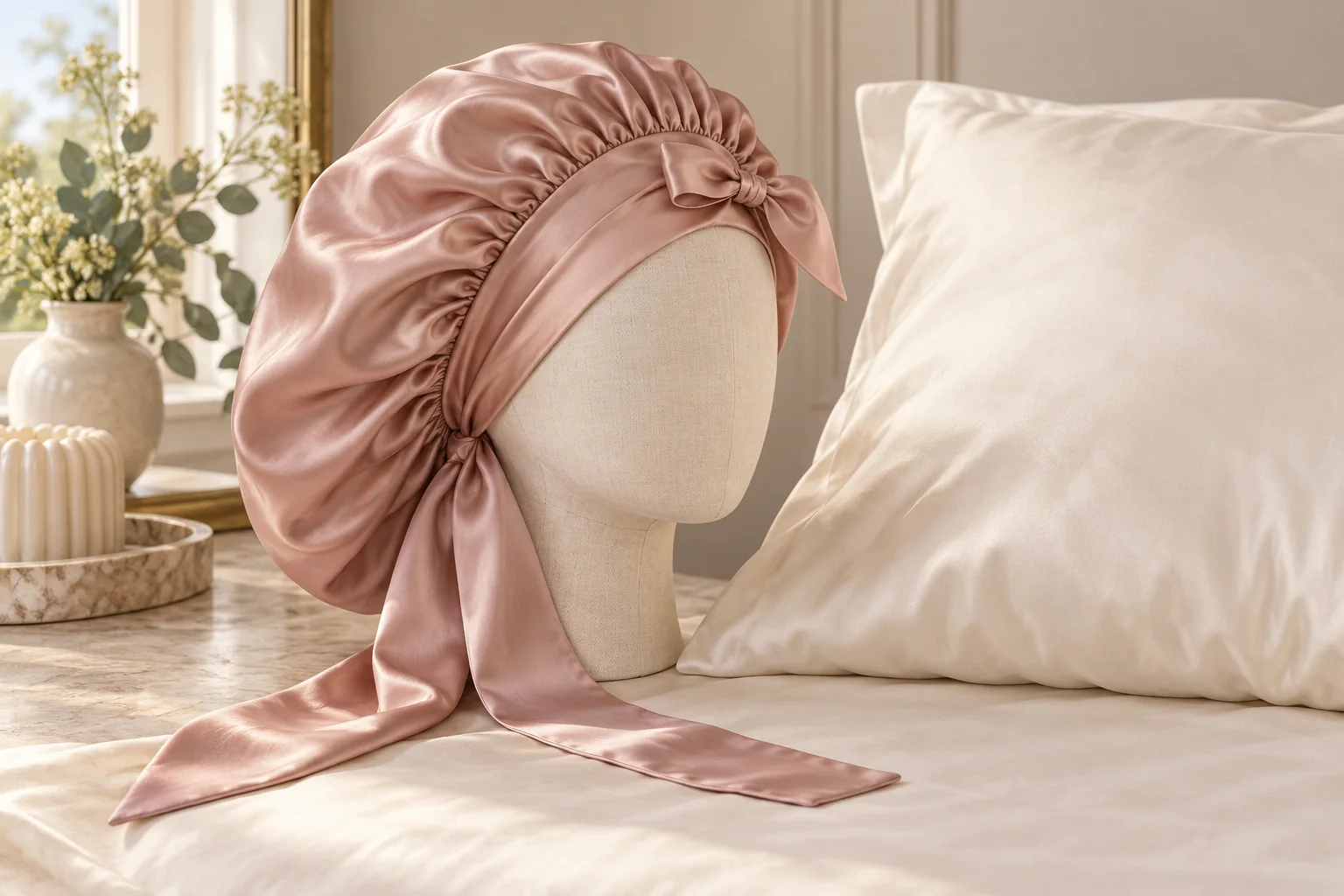
I separate three kinds of contact
I first notice whether I feel one small point or pressure around the whole opening. A single point near the knot makes me inspect its position. A broad strip makes me inspect the wrapped ribbon. A bonnet that lifts when I gather my hair makes me inspect the crown. I would not treat these observations as a diagnosis. They are simple ways to describe what I feel while awake.
I use the same pillow I normally use. I sit first, then rest briefly in the position I usually start with. I turn gently if that is part of my normal routine. I do not judge a bow only from the mirror, because a neat front view cannot show contact behind my head. I also do not replace the pillow just to make an unsuitable knot tolerable.
| What I notice | What I inspect first | What I avoid assuming |
|---|---|---|
| One raised point | I inspect the bow's location | I avoid assuming the whole band is too small |
| A narrow line of pressure | I inspect twisted ribbon edges | I avoid assuming silk must feel comfortable |
| The opening lifts with my hair | I inspect crown room | I avoid blaming the knot alone |
I keep the opening at a comfortable setting during this check. I stop if I feel pulling, pain or pressure that I cannot remove through the intended adjustment. The American Academy of Dermatology advises against hairstyles that cause painful pulling.1 I use that warning as a reason to avoid forcing hair into a tight arrangement. I do not use it as evidence that a particular bonnet prevents hair loss.
How do I check the intended route of the ribbons?
I can copy a tying trick from a different bonnet and create extra bulk. A ribbon route needs to match the construction I actually own.
I read the item's instructions before wrapping its ties. I keep broad ribbons flat, avoid twisting them into cords, and use only supported placements. I ask the seller about unclear routes or loose-end handling instead of adding knots, cutting ties or inventing a new fastening method.
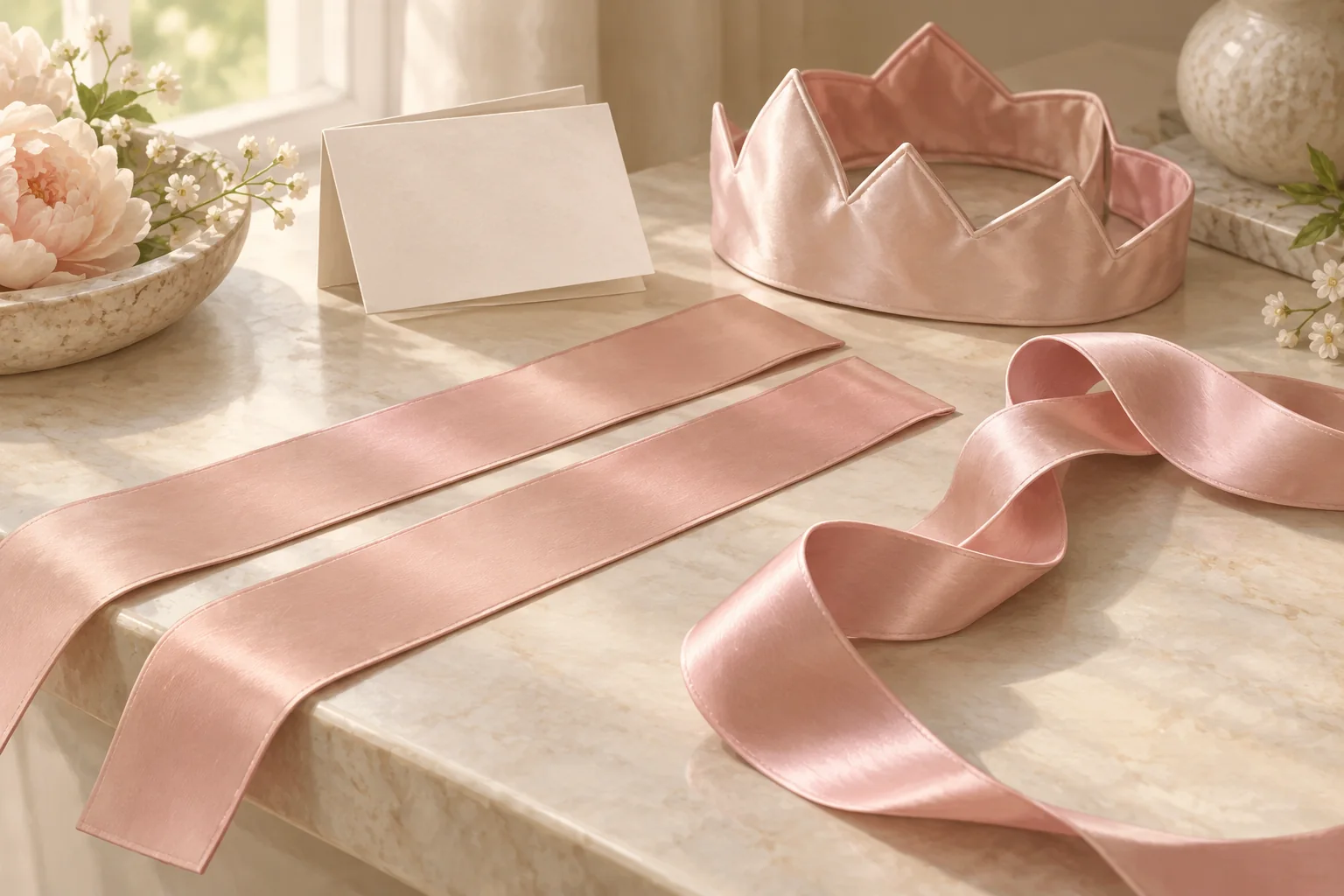
I follow the construction before the styling idea
I inspect where the ribbons join the crown. I look for the edge they are meant to follow and any different material used in the ties. I do not assume that the crown and ribbons have the same stretch. A soft knit tie and a broad woven silk ribbon can need different handling. The product description needs to tell me what the finished item uses.
I check our closure comparison if I am still choosing a mechanism. That guide compares elastic, fabric ties and drawstrings. Here, I already have a tie design and want to understand the route that places its bow. I keep that narrower question separate from whether another mechanism would suit me better.
I read the current Zolay Nights tie-bonnet instructions as an example. The 19 momme ribbon design allows a front, side or back placement according to comfort. The knit-tie design asks me to keep its wrapped ties flat and loosen them if I feel pressure. I do not transfer either instruction to a different maker's bonnet. I also do not infer that every one-size tie item will fit every head.
I smooth one ribbon at a time before tying. I check that its edge has not rolled into a narrow ridge. I use the intended bow or knot without adding several wraps to increase grip. I leave enough access to undo it easily. If the ties seem unusually long or their route is unclear, I ask for instructions before using them for sleep. The FTC recommends reading the full product description when shopping online.2 I use that habit to check the actual ribbon instructions. I do not shorten, stitch or attach them to other accessories as an improvised fix.
Should I choose a front, side or back bow?
I can move a back knot to the side and find that I lie directly on it. A different location helps only when it suits my movement.
I compare permitted bow positions with my own pillow contact. A front bow may avoid the back of my head, and a side bow may suit another resting position. I do not choose a universal best location. I check turning, ribbon bulk and comfort with the actual bonnet.
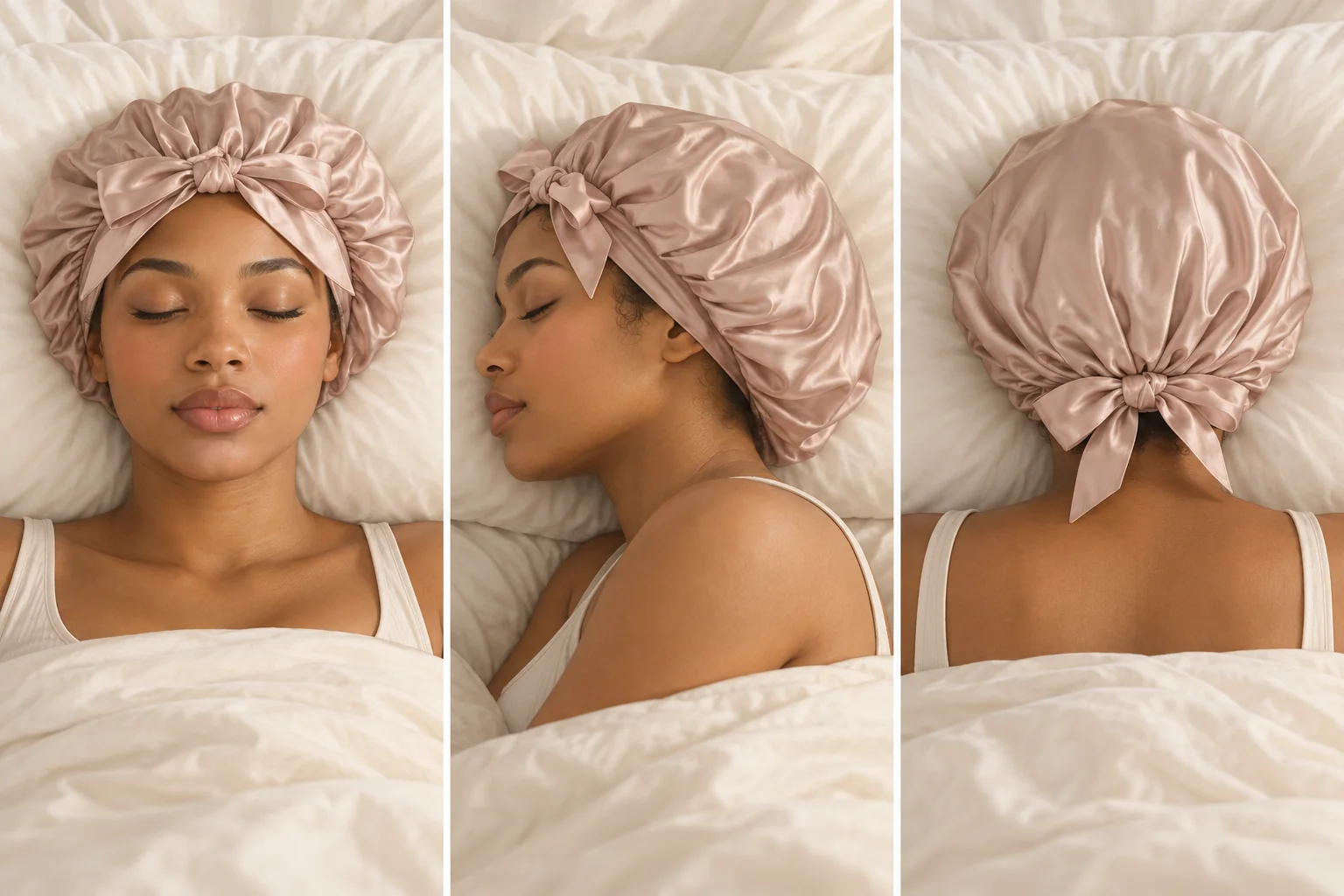
I compare locations without ranking sleepers
I start with the location allowed by the instructions that seems least likely to meet my pillow. If I usually lie on my back, I inspect what sits behind my head. If I usually lie on one side, I inspect the side that touches the pillow. If I turn often, I check more than my starting position. I do not assume that my first position is the only one I will use all night.
I also check the band between the bow and crown. Moving the bow forward can still leave crossed ribbons behind my head. A side bow can leave a folded edge near an ear. I look at the entire route rather than declaring the problem solved as soon as the knot moves. A mirror can help me see the route, but my comfort decides whether the placement is usable.
| Permitted location | Question I ask while awake | Limit I keep in mind |
|---|---|---|
| Front | I ask whether the bow distracts me near my forehead | I still inspect the wrapped ribbons behind me |
| Side | I ask whether I turn onto this side | I cannot predict every sleep movement |
| Back | I ask whether the knot meets my pillow | I do not accept local pressure for a neat look |
I have seen a recent community discussion where users describe moving ties toward the front. I treat this as a shared question, not a tested method or proof of overnight security. I do not copy suggestions to add eye masks, clips or tighter wraps as fastening aids. I want one accessory to fit on its own intended terms. If no permitted location works comfortably, I consider another design rather than build a more complicated sleep setup.
How do I check my silk bonnet bow without overtightening it?
I can change the bow, crown and opening together and lose track of the problem. A small check gives me a clearer comparison.
I check my silk bonnet bow while awake and change one permitted setting at a time. I keep my hair loose inside the crown, smooth the ribbons, and test brief pillow contact. I undo the bow if I need extra tension to make the position feel secure.

I make a brief check that I can repeat
I begin with the bonnet clean and dry and my hair arranged without a tight bundle. I gather the lengths gently and give them room inside the crown. I set the opening according to the item's instructions. I tie the bow where I planned, then check that I can undo it without pulling hair into the knot. I do not use a tightly secured hairstyle underneath to make a poor opening behave differently.
I note the starting arrangement in ordinary words. I might write that the bow is at the front and the ribbons lie flat across the back. I then describe the contact I actually feel when I rest briefly. I change only the bow location if the instructions allow that change. If I also tighten the opening, I cannot tell whether location or tension changed the result.
I use the crown-capacity guide when my hair pushes the bonnet upward. A larger hair bundle can alter where the opening sits. Moving a knot cannot create missing crown room. I check that separate question rather than make the same bow increasingly tight.
I leave an unsuccessful check as useful information. I do not need to prove that I can make every design work. If the bonnet feels comfortable while sitting but uncomfortable against the pillow, I have learned something specific about resting contact. If the band itself presses everywhere, I have learned that the problem is broader than a bow location. I stop rather than run repeated trials through discomfort. I do not call a short awake check an overnight test or a guarantee that the bonnet will stay on.
What do I do if the bow or loose ends still bother me?
I can spend more time managing ribbons than settling into bed. A design that needs constant fixing may not suit the routine I want.
I stop using a tie setup that keeps causing pressure, pulling or distracting loose ends. I follow the maker's end-management instructions and choose another suitable design if needed. I do not cut ties, add sleep clips or accept a painful knot to prevent slipping.

I keep the next step simple
I ask whether the problem is handling or resting contact. If I cannot tie the bow easily, I may prefer a design with fewer steps. If I can tie it but always feel its bulk, I may prefer a different closure or ribbon construction. These are practical preferences. I do not need a dramatic claim about the material to explain why one design feels unsuitable for me.
I inspect loose ends before sleep. I follow the item's own instructions for where they should rest. I do not leave long ties trailing toward my neck, and I do not add a new loop around another accessory. If I cannot manage the supplied ends comfortably through the intended method, I ask the seller before continuing. I keep a clear path to undo the fastening.
| Persistent issue | My next step |
|---|---|
| The knot meets my pillow in every permitted position | I consider a different closure |
| The ribbons stay twisted or folded | I check their route and construction |
| The ends need an improvised fastening | I ask for the intended instructions |
I compare the current Home & Rest options by their descriptions rather than assuming that any replacement will stay on all night. I check the opening, crown and closure together before ordering. I also read the return terms before opening or wearing a new item. I do not use an overnight trial as a way to preserve change-of-mind eligibility when the policy requires an unopened item.
I can choose a simpler bedtime arrangement if headwear keeps distracting me. I do not promise that changing a bonnet will improve sleep or hair health. My goal here is smaller: I want to understand bow contact and stop treating extra tightness as the only answer.
Conclusion
I choose my silk bonnet bow position through the intended ribbon route and real pillow contact. I keep the fit gentle and stop when the design remains uncomfortable.
- AAD: Hairstyles that pull can lead to hair loss. I use its warning about painful pulling, not a claim about bonnet outcomes. ↩
- FTC: Online Shopping. I use its advice to read the full product description, not as a rule about bonnet construction. ↩
Images are AI-generated editorial illustrations. They do not identify or verify a specific product.