
Should I Choose a Silk Bonnet or a Silk Pillowcase?
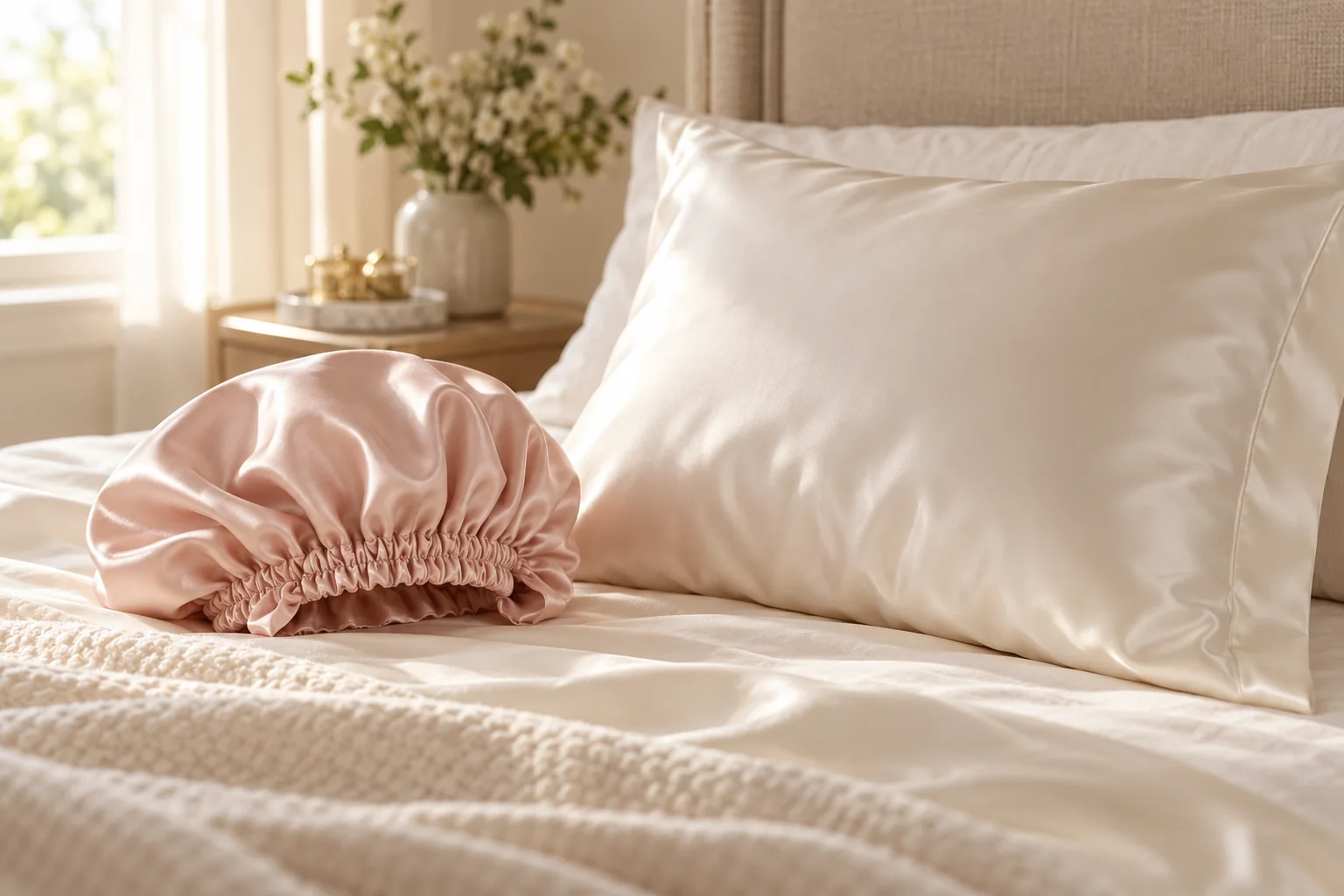
I can buy another sleep accessory and still dislike bedtime. I need to choose between containing my hair and changing the surface beneath it.
I choose a silk bonnet when I want loose hair held inside a wearable cover. I consider a silk pillowcase when I want a different pillow surface without headwear. I compare comfort, actual fiber content and care before deciding. Neither choice guarantees a particular morning result.
I start with the task I want the item to do. I do not need a collection of sleep products to answer that question. I can compare the two designs, check the details that matter and choose one clear starting point.
Do I want to contain my hair or change my pillow surface?
I can mistake two smooth-looking products for the same solution. I get a clearer choice when I separate coverage from the surface underneath me.
I use a bonnet as a cover that holds hair inside its crown. I use a pillowcase as the covering of a pillow. I do not expect a pillowcase to gather loose lengths, and I do not assume a bonnet changes every surface my face touches.
I define the physical job first
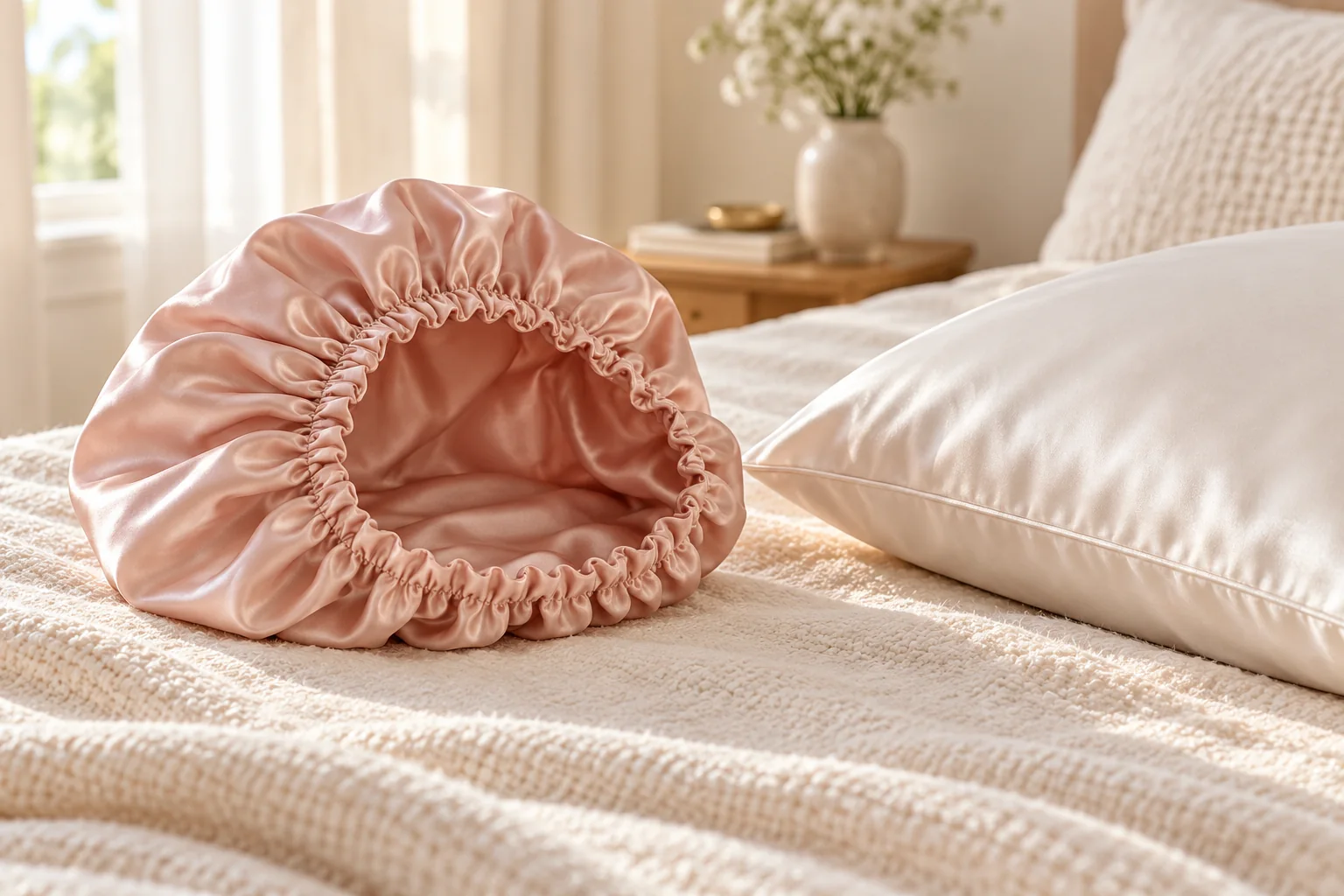
I picture where my hair rests when I lie down. I may have short pieces near my face, loose lengths across the pillow or ends that extend beyond it. I cannot treat all of those positions as the same contact point. I look at the area an item actually covers before I judge whether it suits my reason for buying.
I check a bonnet's crown and opening separately. I need enough room for the hair I plan to place inside. I also need a comfortable edge. I do not solve a small crown by making the opening tighter. I use the bonnet capacity guide when I need to compare space for longer or fuller styles.
| Task I have in mind | Feature I compare |
|---|---|
| I want loose lengths contained | I check the bonnet crown and opening |
| I want a different pillow covering | I check the pillowcase size and fabric |
| I want fewer bedtime steps | I compare the full routine I will follow |
I consider my actual pillow arrangement too. I may use more than one pillow or turn away from the one I planned to cover. I do not assume a case changes every contact surface in my bed. I also do not make hair containment a promise about keeping a hairstyle unchanged. A cover can hold the lengths together while my hair still takes on a different shape. I choose the design for its physical role and keep that role separate from a claim about results.
What if I dislike wearing something around my head?
I can focus on a product's appeal and ignore its edge against my skin. That small discomfort can make the whole routine harder to keep.
I give comfort a clear place in the choice. I consider a pillowcase when I do not want headwear. If I choose a bonnet, I check the edge, seams, closure and crown without pulling the opening tight to keep it in place.
I judge the routine while I am awake
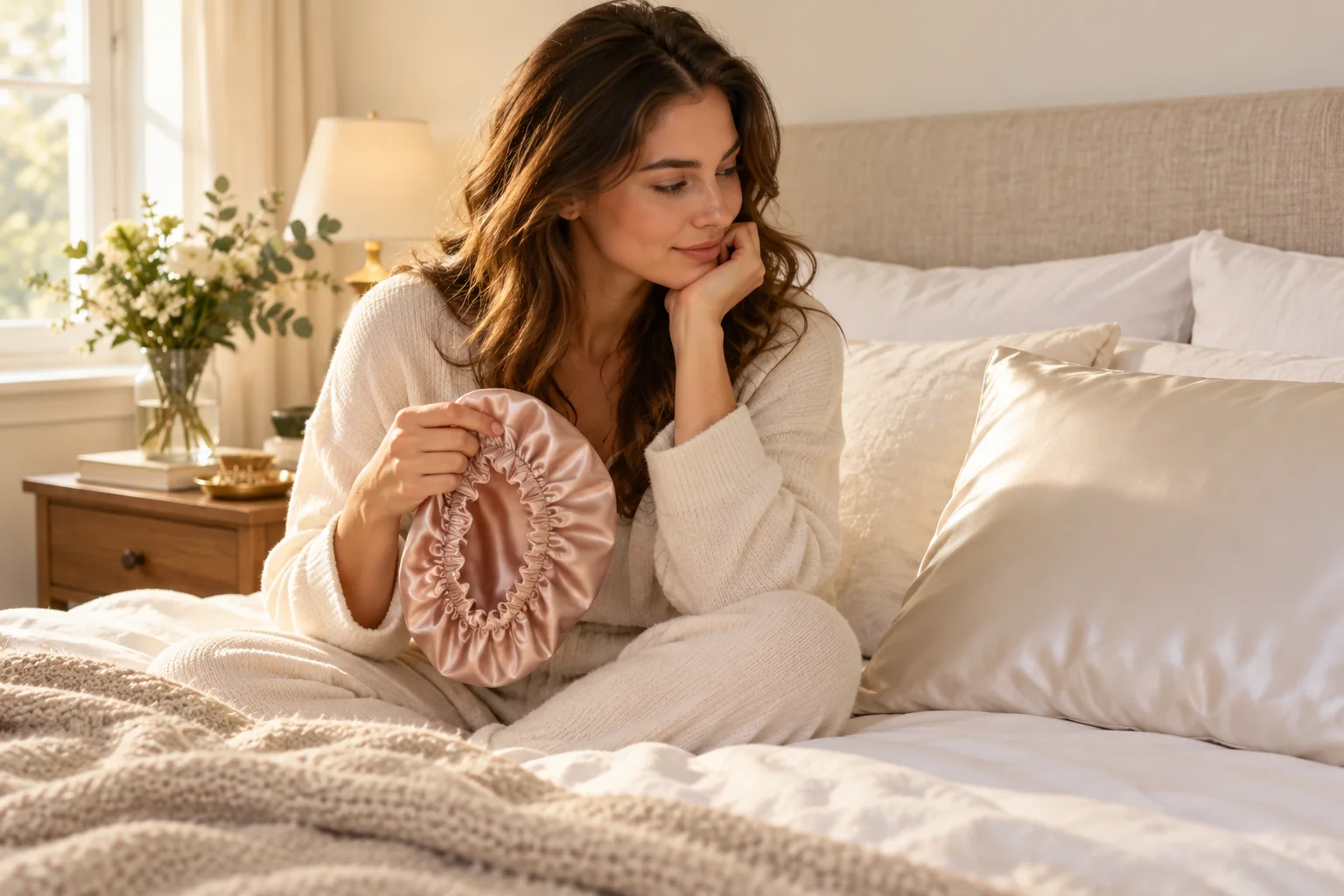
I start with what I already know about my preferences. I may dislike an edge near my ears or a knot where I rest my head. I can describe that preference without claiming that every bonnet causes discomfort. I look at the finished construction rather than assume the word silk settles every part of the fit.
I consider the way I normally rest. I check where a closure would sit and whether I can loosen it easily. I do not add clips or pins to hold a sleep cover in place. I also do not pack my hair into a tight style just to make it fit. The American Academy of Dermatology's styling guidance gives me a reason to avoid pulling hair tightly; it does not prove that a bonnet or pillowcase produces a better outcome.1
I distinguish a tolerable brief fitting from an enjoyable routine. I ask whether I want to gather my hair, place the cover and check the closure each night. I may decide that a pillowcase is a better starting point because I prefer to avoid those steps. I still need to check the case's fit and care requirements.
I use the bonnet slipping guide if containment matters to me but my current cover moves. I do not treat that guide as a reason to keep tightening an uncomfortable opening. I can reconsider the design or decide that wearing headwear does not suit me. I keep my choice tied to comfort and use, rather than a rule that I must tolerate one accessory.
How do I check whether either item is actually silk?
I can see a glossy surface and read satin in a title. Those details do not tell me which fiber touches my hair.
I read the stated fiber content for the part I will use. I keep silk, a fiber, separate from satin, a fabric construction. I check the shell, lining and other parts when a bonnet uses mixed materials, and I ask when a description leaves those details unclear.
I compare the same kind of information
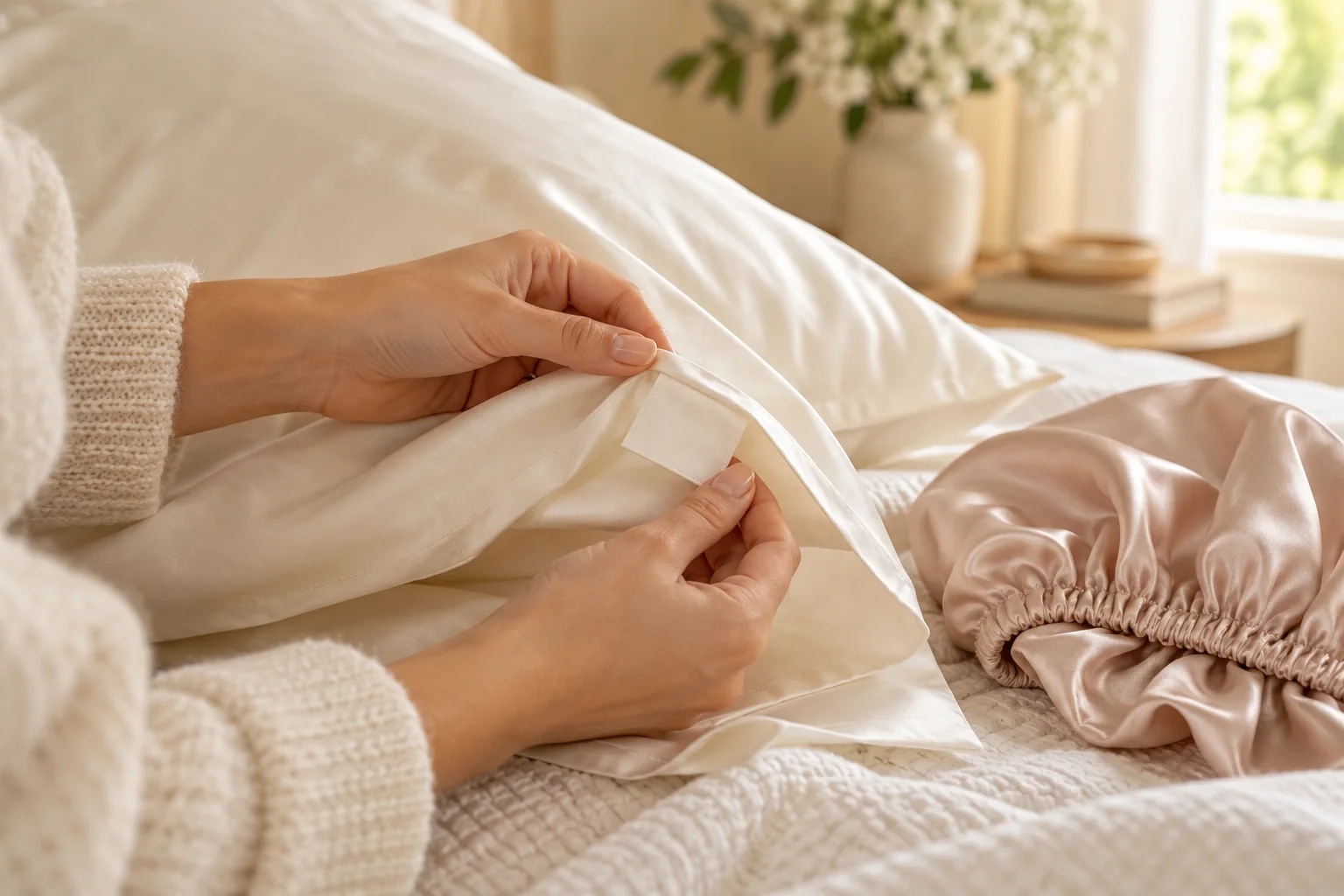
I look for a clear material statement on each selected item. I do not compare a bonnet's silk crown with a pillowcase described only as silky. I also do not treat a shiny photograph as a fiber test. Lighting, surface finish and image editing can change the way fabric looks on a screen. I want a written description tied to the actual option.
I read a mixed construction carefully. I may see a silk crown, knit ties or another material in a lining. I ask which surface touches the hair and which components need different handling. I do not describe the full finished item as all silk when that is not what the seller states.
| Wording I find | Detail I still check |
|---|---|
| I read silk | I check the stated content and covered parts |
| I read satin | I ask which fiber the fabric uses |
| I read silk lining | I check the outer fabric and other components |
I use FTC textile guidance as context for understanding fiber information.2 I do not turn that guidance into a claim that every type of headwear has the same legal label requirements. My practical question is what the actual finished item contains. I keep missing information visible instead of filling it in from a nearby product.
I also separate fabric weight from fit. I do not assume a momme number tells me the opening size, crown capacity or comfort of a bonnet. I check pillow dimensions as their own detail. I want both candidates described clearly enough that I can compare their actual construction, rather than choose the one with the most impressive-looking title.
Which option fits the care routine I can maintain?
I can enjoy a fabric's feel and leave its washing instructions unread. An accessory becomes less useful when its care does not fit my week.
I compare the finished item's washing, drying and storage instructions before buying. I make room for the care each item needs. I do not transfer a pillowcase's machine settings to a bonnet or assume that every silk item accepts the same detergent, temperature or drying method.
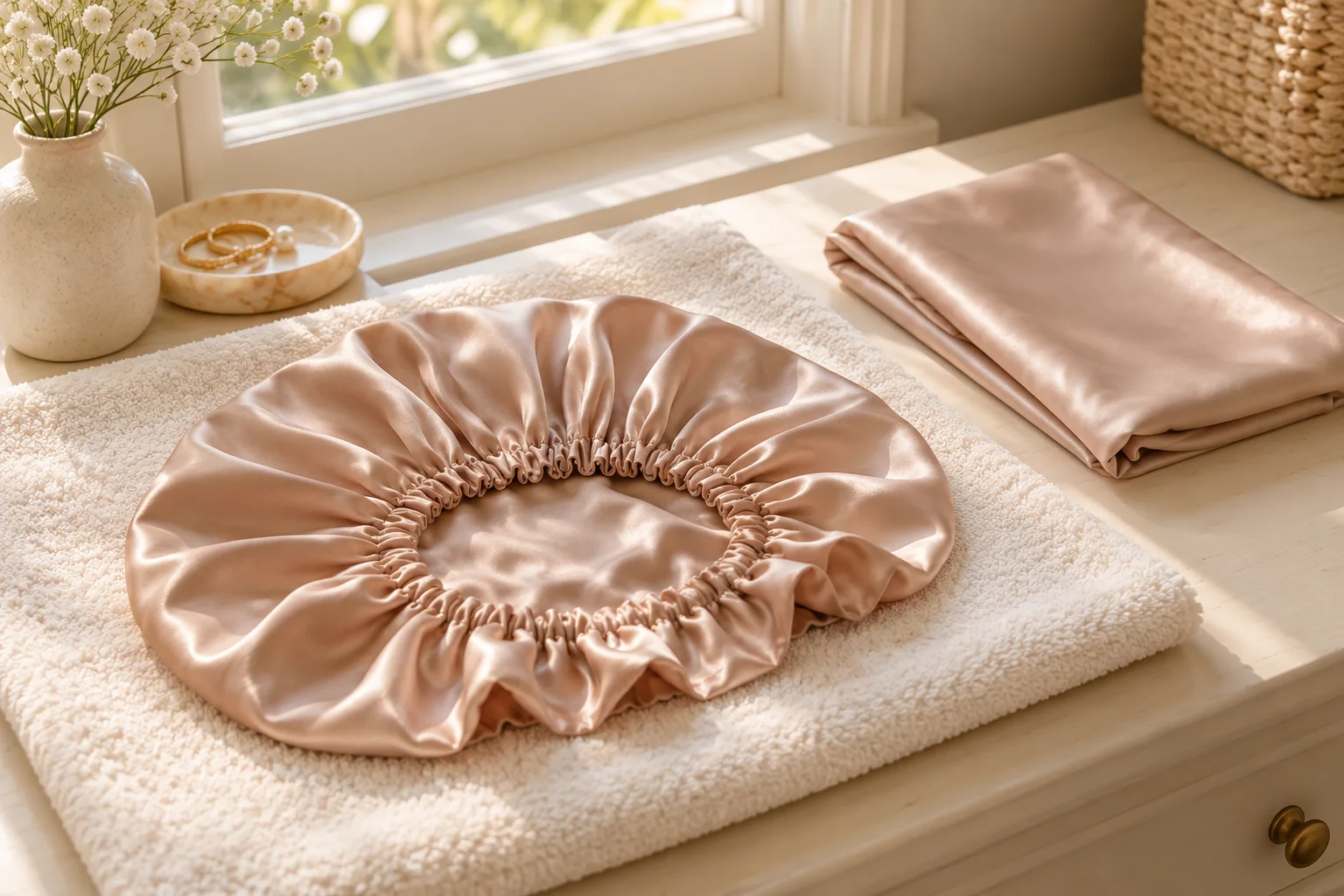
I count the steps I will actually take
I read the care instructions before I decide which item feels simpler. I consider where I will wash it, how I will support it while it dries and whether I have a clean place to store it. I do not count only the few seconds needed to put a bonnet on or pull a case over a pillow. I include the work that keeps the item ready for use.
I check the whole construction. A bonnet may include elastic, ties or an adjuster in addition to its fabric. A pillowcase may have a closure and seams that need careful handling. I follow the instructions supplied for that finished piece. I ask the seller when those instructions are missing or conflict across the listing and label.
I use our silk bonnet washing guide for a clear way to read and follow bonnet care. I still use the selected item's directions to choose the actual method. I do not borrow a household stain recipe or apply heat just because another silk item tolerated it.
I also think about availability during drying. I may use an existing clean pillowcase while another dries or keep my bedtime routine simple without a cover. I do not need to buy a second item before I know that I like the first. I check whether the care schedule is practical before I add more things. I want an accessory I can keep clean and ready without turning a small choice into an ongoing chore.
Do I need both a silk bonnet and a silk pillowcase?
I can read that two products make a complete routine and feel pushed to buy both. I first need to know whether I have two different needs.
I start with the item that addresses my clearest need. I consider both only when I have a separate reason for each and can care for both. I do not assume that combining them doubles any benefit or makes an uncomfortable bonnet suitable for me.
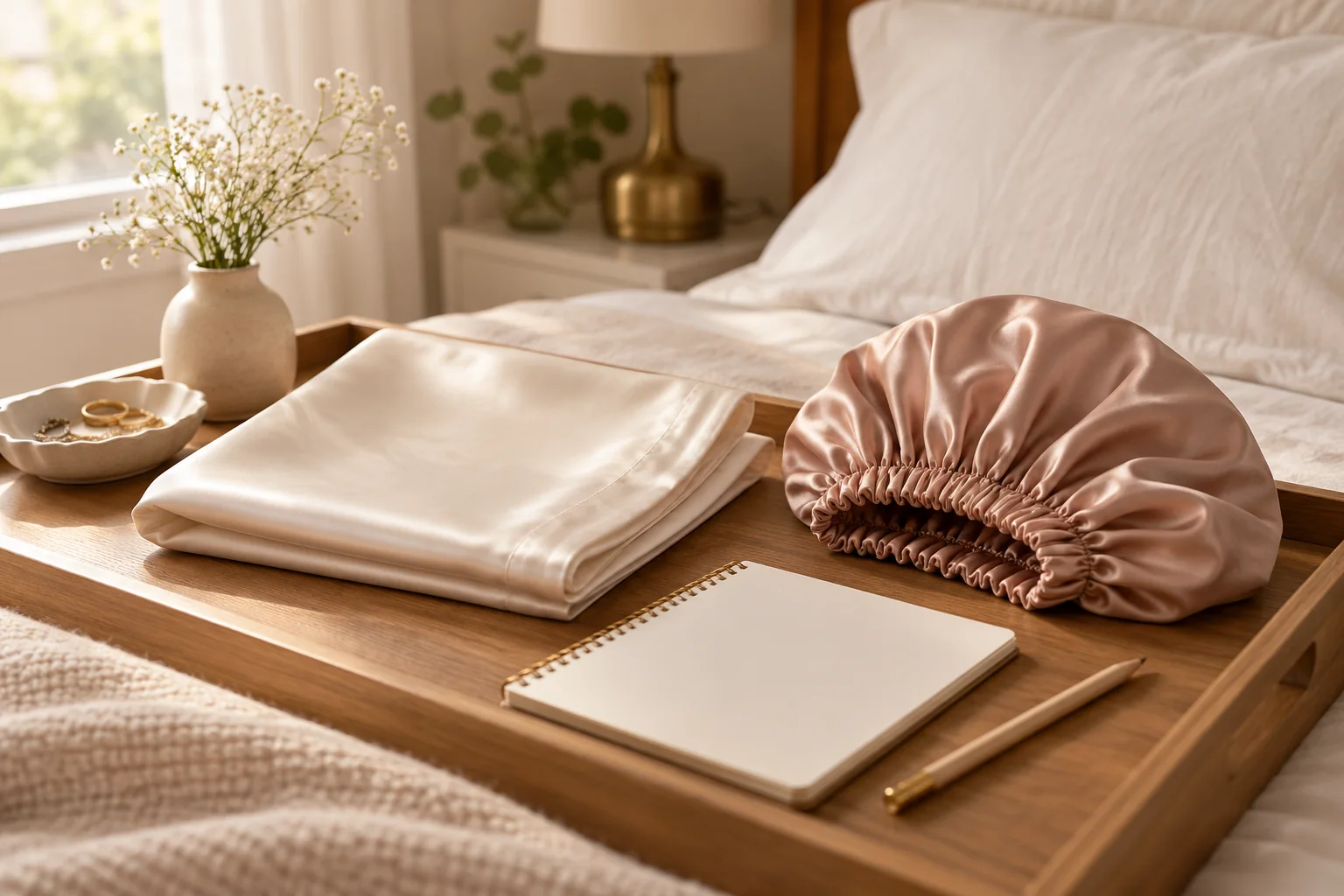
I make one useful choice before adding another
I write down the problem in ordinary words. I may want my loose lengths contained, or I may want to change my pillow covering without wearing anything. I choose the product role that matches that statement. I avoid starting with a promise about perfect morning hair because I cannot use that promise to judge the physical design.
I keep other parts of the routine steady when I assess my preference. I do not change my hairstyle, pillow arrangement and several accessories at once and then assign the result to one purchase. I pay attention to comfort, the steps I follow and whether I keep using the item. I treat those observations as my own practical feedback, not a controlled test or evidence for everyone else.
| Question I ask myself | Decision I can make |
|---|---|
| I want hair gathered inside a cover | I compare bonnet fit first |
| I want to avoid headwear | I compare pillowcase details first |
| I have a clear separate use for each | I consider both within my care routine |
I can add another item later if I can explain the new job it would do. I may also decide that neither purchase is needed right now. I do not treat a product comparison as a requirement to buy. I keep the focus on what I will use, how it feels and what I can maintain. I can then describe my choice clearly without inventing a universal winner between two different designs.
Conclusion
I choose by the job I need done: hair containment or a different pillow surface. I check comfort, materials and care before adding anything else.
- AAD: Hair styling without damage. I use its gentle-handling context, not as proof of bonnet or pillowcase performance. ↩
- FTC: Textile and wool labeling guidance. I use its fiber-information context and keep product exemptions in view. ↩
Images are AI-generated editorial illustrations. They do not identify or verify a specific product.