
Why Is My Silk Bonnet Leaving Color on My Pillowcase?
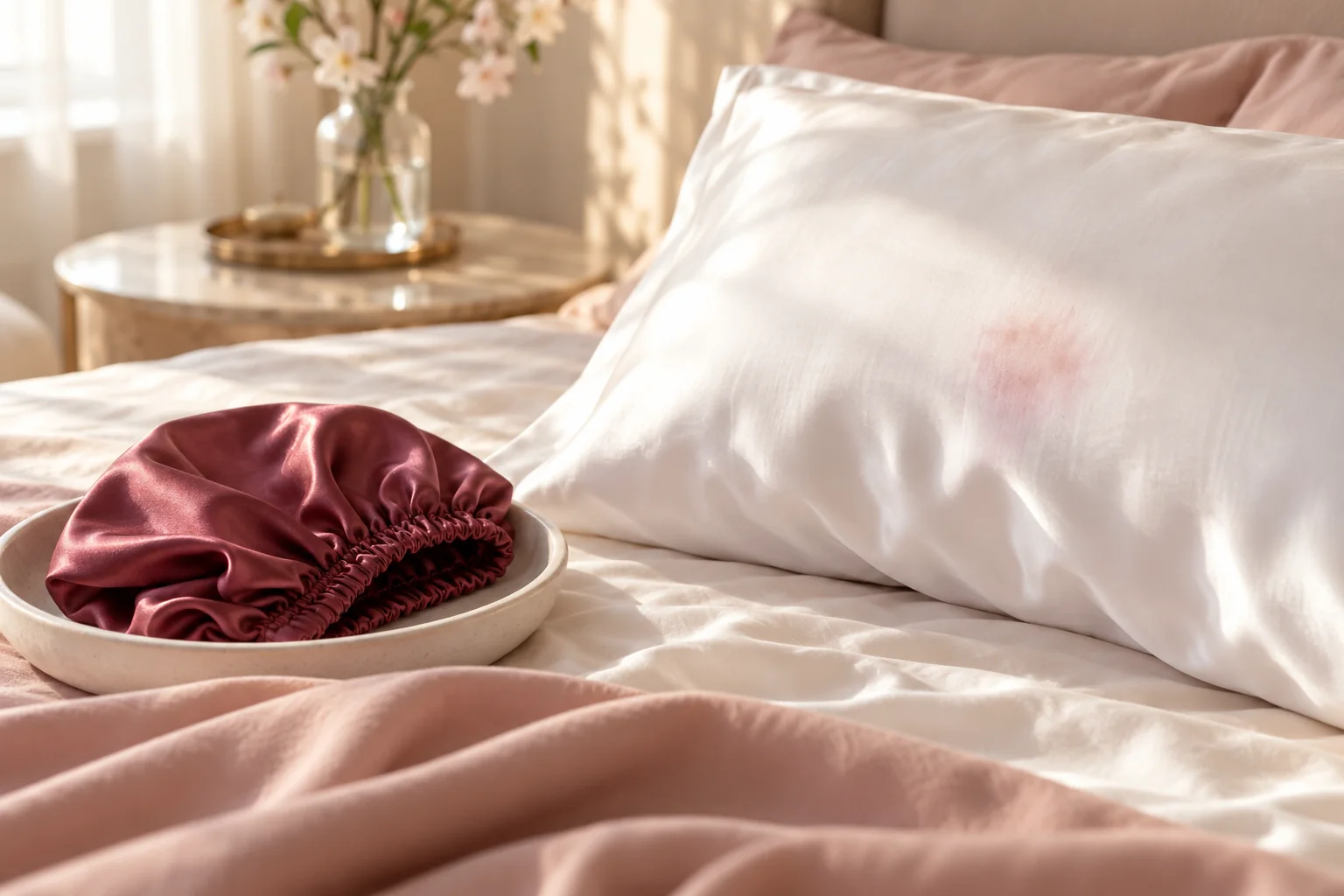
I can wake to a colored mark and reach for a strong cleaner before understanding it. I need to separate the fabrics and check their care first.
I consider possible color transfer from the bonnet, hair products or another textile, but I cannot identify the source from a mark alone. I separate the fabrics, check both care labels and ask about the item before choosing treatment. I do not assume a home remedy will fix it.
I want to protect the bonnet and the pillowcase while I work out what happened. I keep the two care decisions separate so that a treatment suitable for one fabric does not become a new problem for the other.
What should I do when I first notice a colored mark?
I can spread a mark or change its appearance by rubbing before I take a closer look. I give myself a clear starting point instead.
I stop using the bonnet against that pillowcase, keep the fabrics separate and photograph the mark in ordinary light. I note whether either item was damp or recently treated. I do not rub the two fabrics together, heat the mark or start an unverified soaking treatment.

I pause the contact before changing the evidence
I move the bonnet to a clean separate place that suits its current condition. I do not leave a damp item bundled on another light-colored fabric. I keep the pillowcase available for inspection and read its care label before deciding what to do next. I avoid putting both items into a shared wash because I want to understand and handle them separately.
I take one clear photograph of the full area and another of the mark. I use ordinary light and keep any editing off. I do not need to create a dramatic image or make the stain look more intense. I want a useful record that I can compare with the item after any maker-approved care.
| Detail I notice | Action I take |
|---|---|
| I see a fresh mark on the pillowcase | I separate it from the bonnet |
| I notice damp fabric | I avoid leaving it folded against another textile |
| I have not treated the mark | I record that starting condition clearly |
I also check whether the color appears on my hair products, another accessory or a recently changed bedding item. I keep those possibilities open without naming one as the cause. I can describe what touched the marked area and what changed recently. I do not need a complete diagnosis before pausing the pairing. I want to prevent repeated contact while I collect enough information to ask a precise question and choose a care method that fits the actual fabrics.
How do I tell what might have caused the mark?
I can see a pink or dark patch and assume the bonnet's dye is responsible. I need a short history of the contact rather than a guess from appearance.
I record the bonnet and pillowcase materials, recent washing, hair-color or styling-product use, moisture and the location of the mark. I keep possible sources separate from confirmed causes. I do not use a rubbing test on valuable bedding or chemical testing to identify the color at home.

I build a useful record without claiming certainty
I begin with a timeline. I note when I first used the bonnet and whether the pillowcase was new or freshly washed. I record any recent change in the washing product, hair treatment or storage arrangement. I keep the account simple and factual. I do not add a suspected explanation to every observation.
I describe the position of the mark. I may see it where the bonnet rested, near the hairline or in a different area of the pillow. I can use that detail to explain the situation to the seller or a textile-care professional. I do not treat location alone as proof that the bonnet caused the mark, especially when other colored products were in contact with the same area.
I note any care I already attempted. I include the product name, dilution or dose if known, water conditions and drying method. I do not hide an unsuccessful treatment because I hope for a simpler answer. A person advising on the textile needs to know what has already touched it before suggesting another step.
I use our product-detail record guide to keep the original description and care information together. I keep my order reference private when I contact the seller. I do not need to post personal order information in a public discussion. I want a record tied to the exact item and option, with observations clearly separated from assumptions about dye, material quality or the way every bonnet of the same color behaves.
Should I wash the bonnet again or try to set the color?
I can find salt, vinegar and repeated-wash suggestions online and assume they suit silk. I need instructions for the finished bonnet before adding another treatment.
I follow the bonnet's own care instructions and ask the maker about unexpected color transfer. I do not add salt, vinegar, bleach or a dye-setting product as a general fix. I pause an unclear treatment instead of assuming repeated washing will make the item suitable for contact with light bedding.
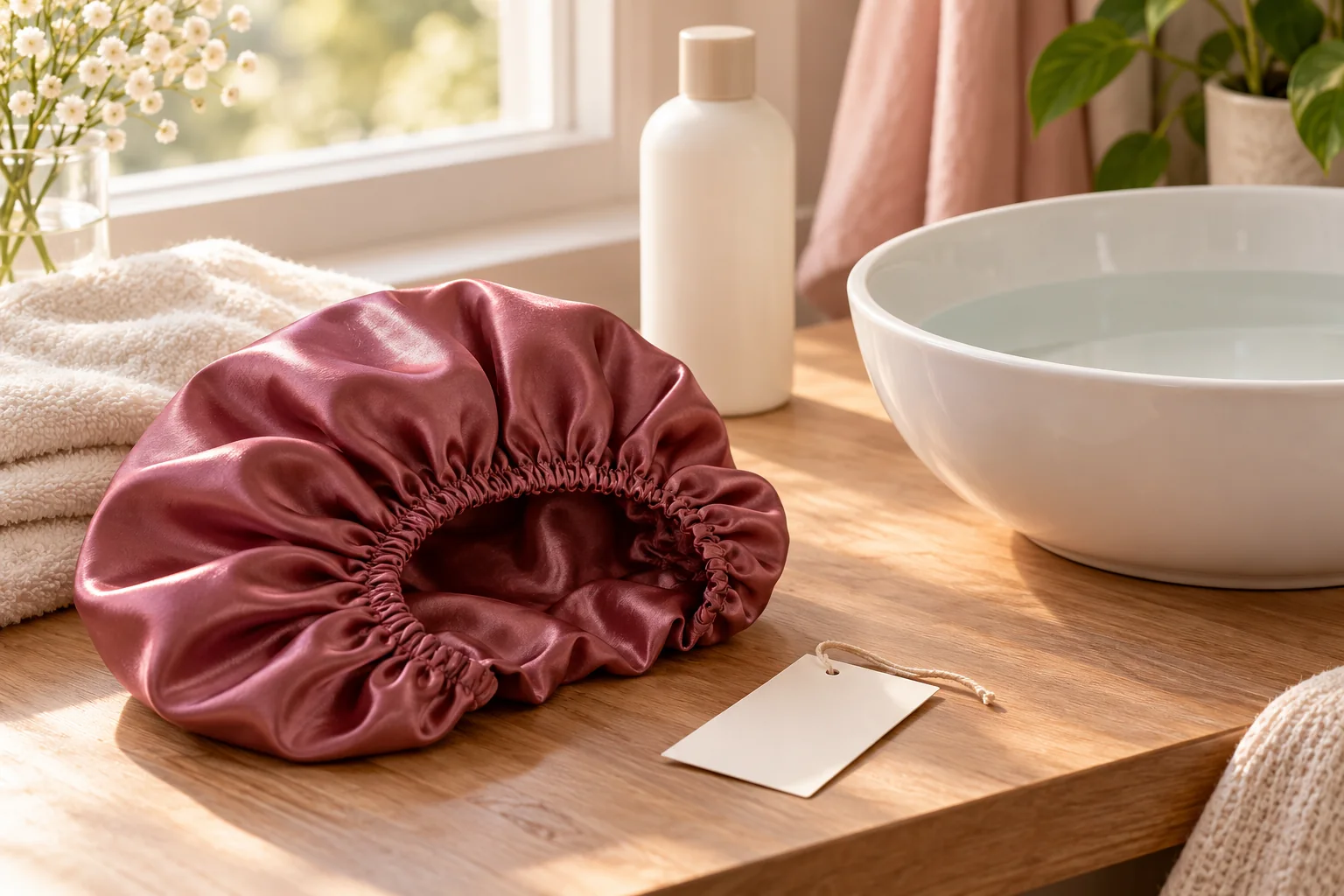
I keep cleaning separate from an unsupported repair
I read the complete care information, including drying and bleach restrictions. I do not stop at a washing temperature. GINETEX's care-symbol guidance separates washing, bleaching, drying, ironing and professional care.1 I use that structure to check which actions the actual label permits. I do not take a symbol for one operation as permission for a different operation.
I also check the item's construction. I may have elastic, a lining, ties or several fabrics to consider. I do not assume that a treatment described for a plain silk swatch suits the finished bonnet. I want the maker's advice to cover the actual item and the problem I observed.
| Suggestion I encounter | Question I ask before acting |
|---|---|
| I am told to wash repeatedly | I ask whether the maker recommends that response for this item |
| I am told to use a dye-setting remedy | I ask whether it is approved for the complete bonnet |
| I see a bleach suggestion | I check the item's restrictions rather than treating bleach as a default |
I use our bonnet washing and drying guide when the care method itself is clear. I keep this unexpected mark as a separate issue that may need maker advice. I do not promise that a clean-looking rinse or an unchanged fabric color proves future colorfastness. I would rather stop an uncertain process than keep adding products until the bonnet has been altered in ways that make both care and diagnosis harder.
How do I care for the stained pillowcase separately?
I can protect the bonnet and still damage the bedding by using a treatment meant for another fabric. I read the pillowcase's own instructions before choosing a response.
I identify the pillowcase's fiber and care restrictions, then use only a compatible stain-care method. I keep the bonnet out of that treatment. I seek textile-care advice when the mark or material is unclear, and I do not assume that white fabric can safely tolerate bleach or strong color remover.

I give the bedding its own care decision
I check the pillowcase label rather than assume it is cotton. I may have silk, a blend, a print or a finish that changes the care limits. I also read whether different parts of the bedding have different instructions. I do not transfer a method from a white towel to a pillowcase simply because both look pale.
I use the American Cleaning Institute's dye-transfer guidance for a narrow point: a stain treatment must follow the relevant product directions and be safe for the fabric.2 I do not use its general stain guide as a blanket instruction to bleach silk. I also do not copy a treatment intended for a different kind of stain when the source of this mark remains uncertain.
I keep track of what I apply and stop if the proposed method conflicts with the care label. I do not mix several cleaners or keep increasing their strength to chase a visible result. I can ask a suitable textile-care professional about an uncertain or valuable item before treating it. I explain both the suspected contact and any treatment already attempted.
| Bedding detail I check | Boundary I keep |
|---|---|
| I find a specific bleach restriction | I respect that limit even on a white pillowcase |
| I cannot identify the material | I ask for help before choosing a strong treatment |
| I have already applied a cleaner | I disclose it before asking about the next step |
I do not promise complete stain removal. I want the response to respect the textile as well as address the mark. I keep the bonnet separate until I have a clear answer about its continued use.
What should I ask the seller before I use the bonnet again?
I can send a vague complaint and receive a general washing reply that misses the problem. I make the question specific to the item and the contact I observed.
I send the item and option, a description, care history and photographs through the seller's support route. I ask which response is recommended and whether the bonnet should remain out of use. I do not assume a replacement, refund or particular treatment is guaranteed before the seller reviews the case.

I ask for a practical next step rather than a broad promise
I describe the problem in a few plain sentences. I explain that I noticed a colored mark after contact between the bonnet and bedding. I include the selected color, approximate timing and whether the fabrics were dry. I do not claim laboratory proof of a dye problem or describe an entire product range as defective based on one observation.
I attach the useful photographs and the care label if I have it. I include my actual washing history and any products already used on either item. I keep the message focused on the textile question. I do not need to add unrelated personal information or make a public post to start that conversation.
I ask whether the supplied care instructions need clarification and what the seller recommends before further wear. I can also ask how the seller wants an item concern documented. I read the current applicable policy rather than assume a remedy from an old screenshot or another shop's terms. I preserve the item and records while the question is being reviewed.
I use our silk care page for routine care context, while keeping an unexpected transfer concern separate from normal washing advice. I do not keep pairing the bonnet with light bedding to see whether the mark happens again. I want a clear response about the actual piece first. I can choose another suitable sleep setup while I wait, without treating that temporary choice as proof that the original item can or cannot be used again.
Conclusion
I separate the fabrics, record the mark and check both care labels. I ask about the actual item before choosing treatment or returning the bonnet to use.
- GINETEX's care-symbol guide explains separate textile-care operations and restrictions; it does not assess a particular bonnet. ↩
- The American Cleaning Institute's stain guide includes dye-transfer advice subject to directions and fabric compatibility; it is not a universal silk treatment. ↩
Images are AI-generated editorial illustrations. They do not identify or verify a specific product.