
Why Does My Necklace Feel Too Heavy to Wear Comfortably?
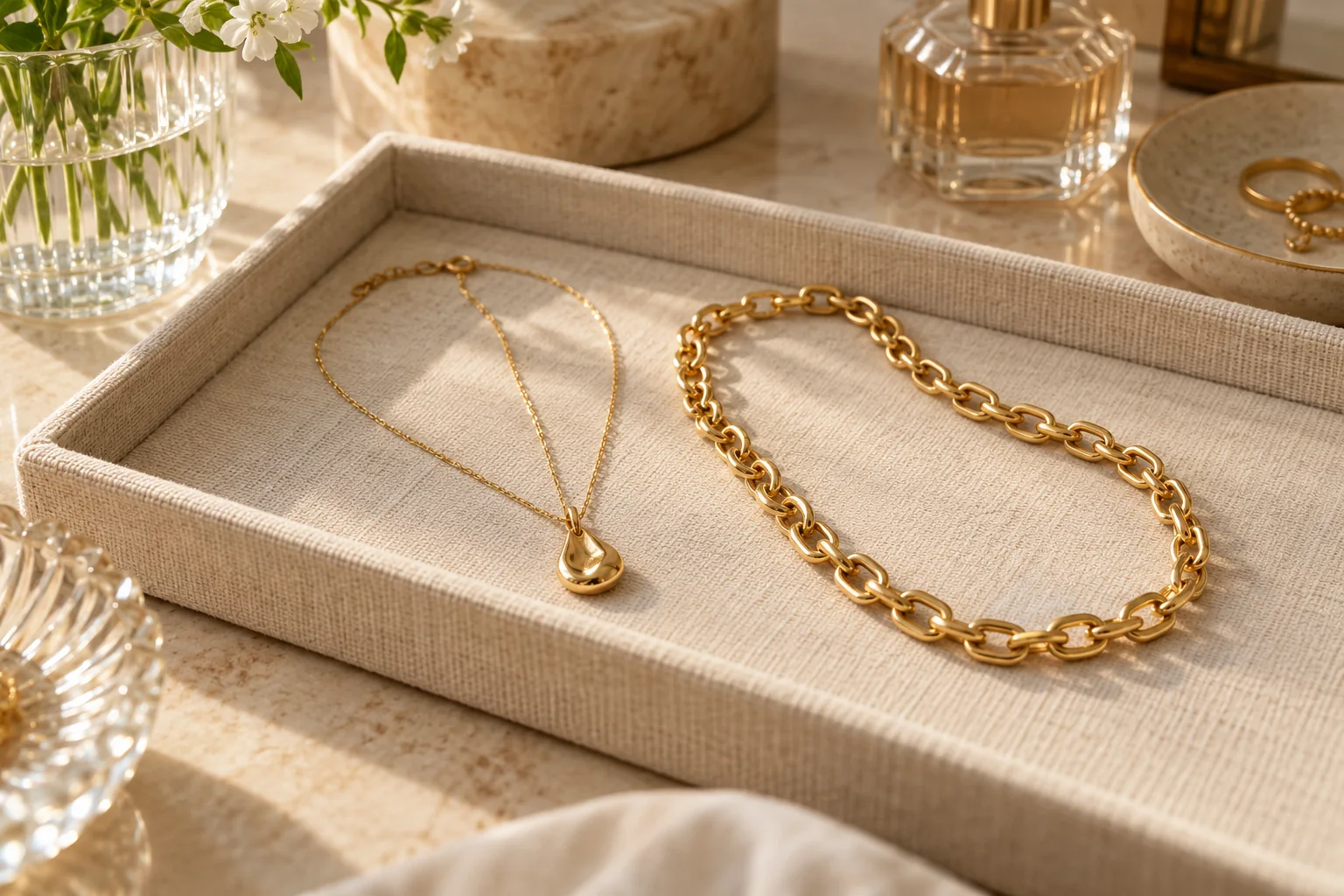
I can love a necklace's shape and keep wanting to remove it. I want to understand that mismatch before I buy another supposedly lighter piece.
I check the complete necklace's stated weight, where its chain touches me and how the pendant sits during ordinary movement. I treat weight as one comparison point, not a comfort guarantee. I remove an uncomfortable necklace rather than tighten it, add weight or force myself to get used to it.
I use this guide to make a buying or keeping decision. I separate personal comfort from the different question of whether a particular chain can carry an added pendant.
Does the listed weight describe the whole necklace?
I can compare two gram figures that describe different things. That can make a necklace seem lighter on paper than the complete item I actually receive.
I ask whether the figure covers the chain, pendant, clasp and any supplied extender together. I check the selected option and the unit. I do not compare a pendant-only figure with a complete-necklace figure or use a shipping weight as the jewelry's weight.
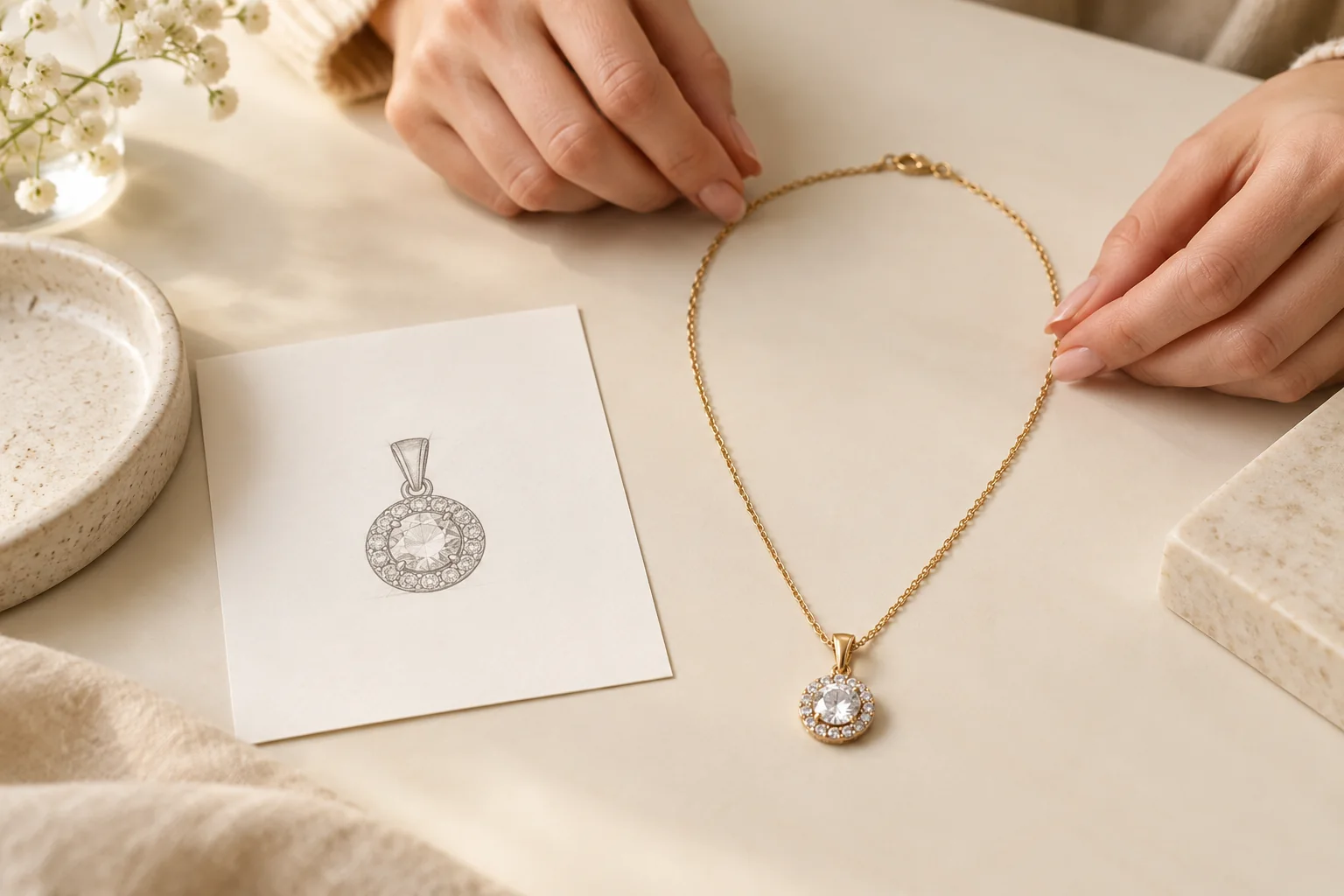
I make the comparison describe the same object
I begin with the wording beside the number. A listing may give the weight of a pendant, one component or the finished necklace. The selected stone or chain style may also have its own figure. I save the exact option name with the measurement so that I do not turn a collection-level statement into a specification for every version.
I keep grams and dimensions in separate columns. A pendant can look large because it has an open shape. A compact pendant can include several parts that the main photograph does not show clearly. I cannot establish either item's weight by looking at its size, shine or photographed color. I also avoid treating a seller's word lightweight as a standard with a shared numerical meaning.
| Figure I find | Detail I check |
|---|---|
| I see a pendant weight | I ask whether the chain is excluded |
| I see a complete-item weight | I confirm which option it describes |
| I see a package weight | I ask for the jewelry's own figure |
I use the number to narrow a comparison, not to set a universal limit for what anyone should wear. If I already own a necklace I find comfortable, I can note its supplied whole-item weight and construction as a personal reference. I still compare the actual shape and fit. My reference is one item I know, not a promise that another necklace with the same number will feel the same. Our product-detail record guide helps me keep the source and option attached to each figure.
Where does the necklace actually touch or pull?
I can call a necklace heavy when one small area bothers me. I look at the contact before assuming that the total gram figure explains everything.
I note whether I notice the chain at the sides or back of my neck, the pendant on my chest or a clasp against clothing. I distinguish weight from a sharp edge, trapped hair or a fit that feels too close. I stop wearing the item if it hurts.
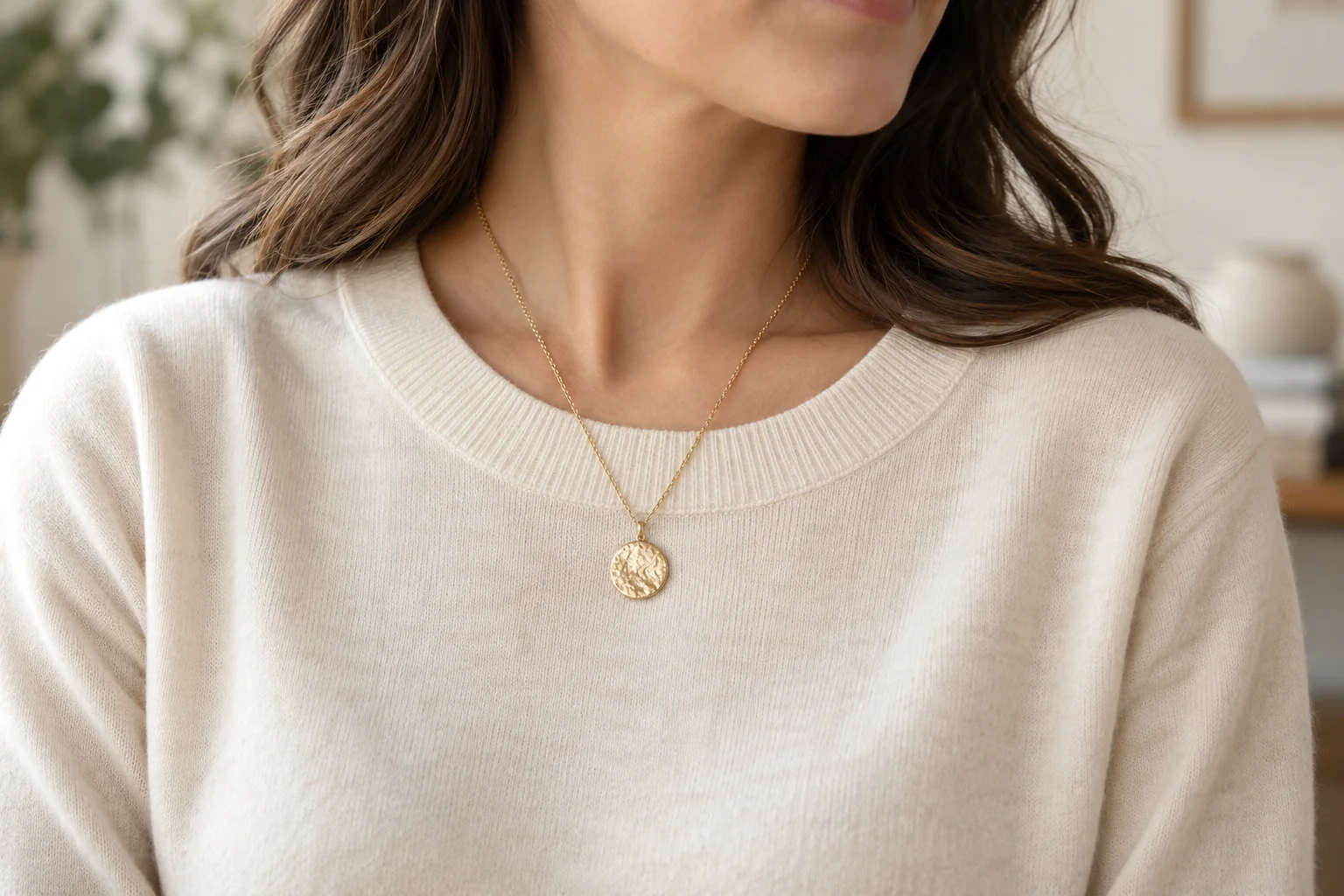
I describe the sensation without making a diagnosis
I remove the necklace before examining it on a clear surface. I look for an obvious bent part, a rough area or a connection that does not sit as expected. I do not rub the chain repeatedly against my skin to prove where the issue starts. I also do not use a photograph of skin marks to identify a metal or decide that a particular allergy is present.
I record the location in ordinary words. The chain felt close at the sides. The pendant pressed against the edge of my top. The back fitting caught my hair. These descriptions give me different questions to ask the seller. A general statement that the necklace is uncomfortable gives less information about what I would need to change.
I check the fit as a whole. Tiffany's necklace sizing guidance notes that neck circumference and pendant size affect where a necklace sits.1 I use that observation to look beyond the chain's advertised length. I do not use its sizing illustration as a measurement of my body or assume that a shorter necklace will solve a contact problem.
I keep the decision practical. If the item feels uncomfortable, I can choose not to wear it. I do not owe a necklace a longer trial because I like its appearance or because someone else finds a similar style easy to wear. I keep fit, surface condition and my own preference as separate notes. That separation helps me ask a precise question without claiming to know an unseen cause.
Does ordinary movement change what I notice?
I can like how a pendant sits in a mirror and find it distracting at my desk. A still photograph leaves out the movements in my day.
I consider sitting, standing and reaching in the clothing I intend to wear. I note whether the necklace stays comfortable or needs repeated attention. I do not run, tug or make sharp movements to test it, and I do not add a heavier component to control it.
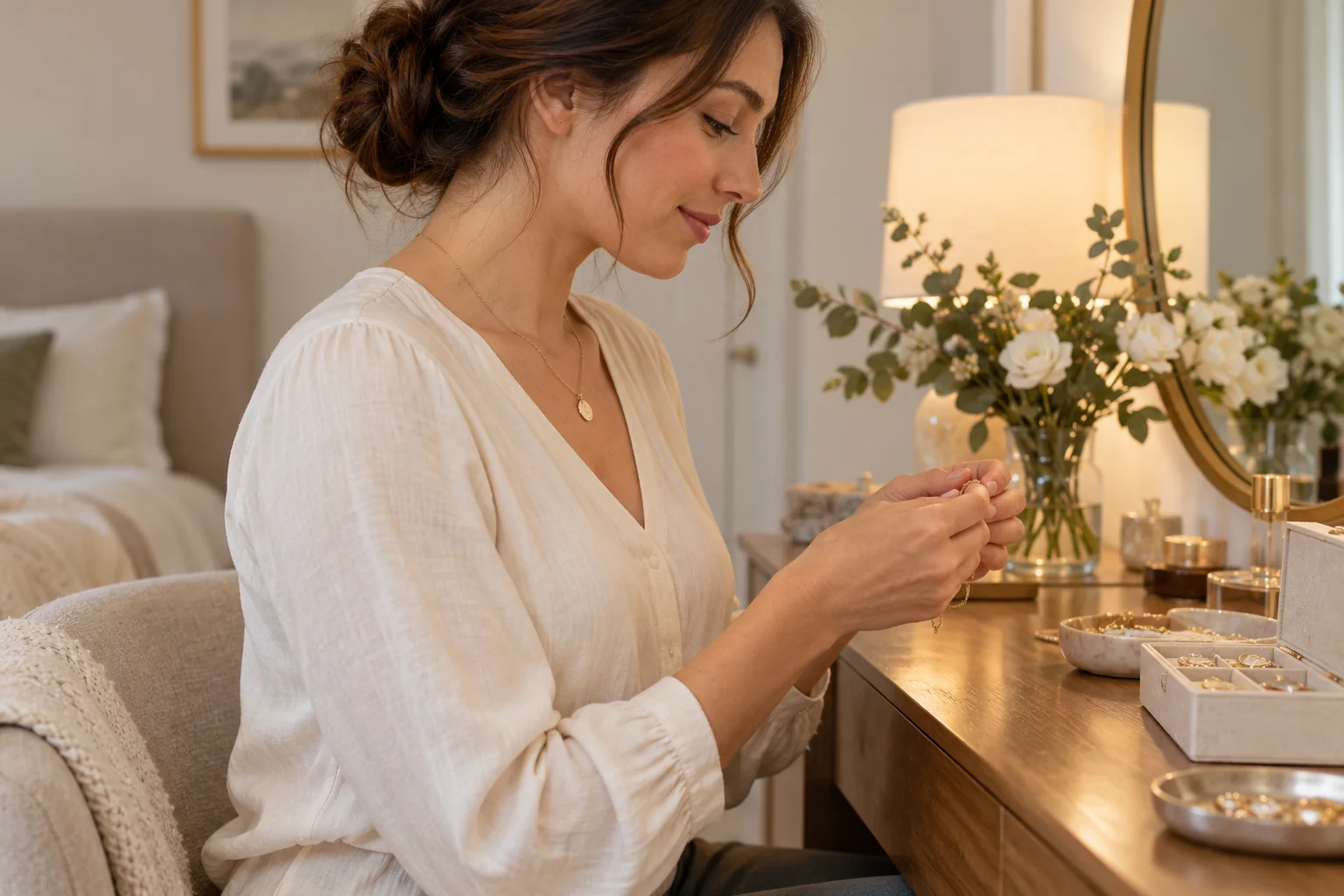
I compare my intended routine with a posed view
I first decide what the necklace is for. A piece I want for a quiet meal has a different role from something I hope to leave on through a busy workday. I do not call one role better. I want the choice to match the ordinary movements and clothing that matter to me, rather than a brief view in ideal light.
I use a few simple observations. I notice where the pendant rests while I sit. I notice whether a neckline pushes it to a different position. I notice whether my hand keeps returning to straighten it. I stop if I feel discomfort. I do not treat these observations as a durability test, a medical assessment or proof that the item will behave the same way for another person.
| Situation I consider | Question I ask myself |
|---|---|
| I sit at my usual desk | I ask whether the piece distracts me |
| I wear the intended neckline | I ask whether the fabric changes its position |
| I need repeated adjustments | I ask whether I want that extra task |
I keep a moving clasp separate from the feeling of a heavy necklace. Our clasp-position guide examines rotation and pendant movement in more detail. I do not use an added weight, extra pendant or improvised knot to solve either concern. A heavier assembly could also change the item I was trying to assess. I want to understand the original necklace before I consider a different setup.
How can I compare options without inventing a weight limit?
I can search for the lightest necklace and still choose one I dislike wearing. I need a comparison that includes handling and shape as well as grams.
I compare two complete options with the same set of fields: stated weight, length, pendant dimensions, closure and intended use. I mark missing facts instead of guessing. I use my own comfortable item as a reference when available, while keeping each option's construction and care needs separate.
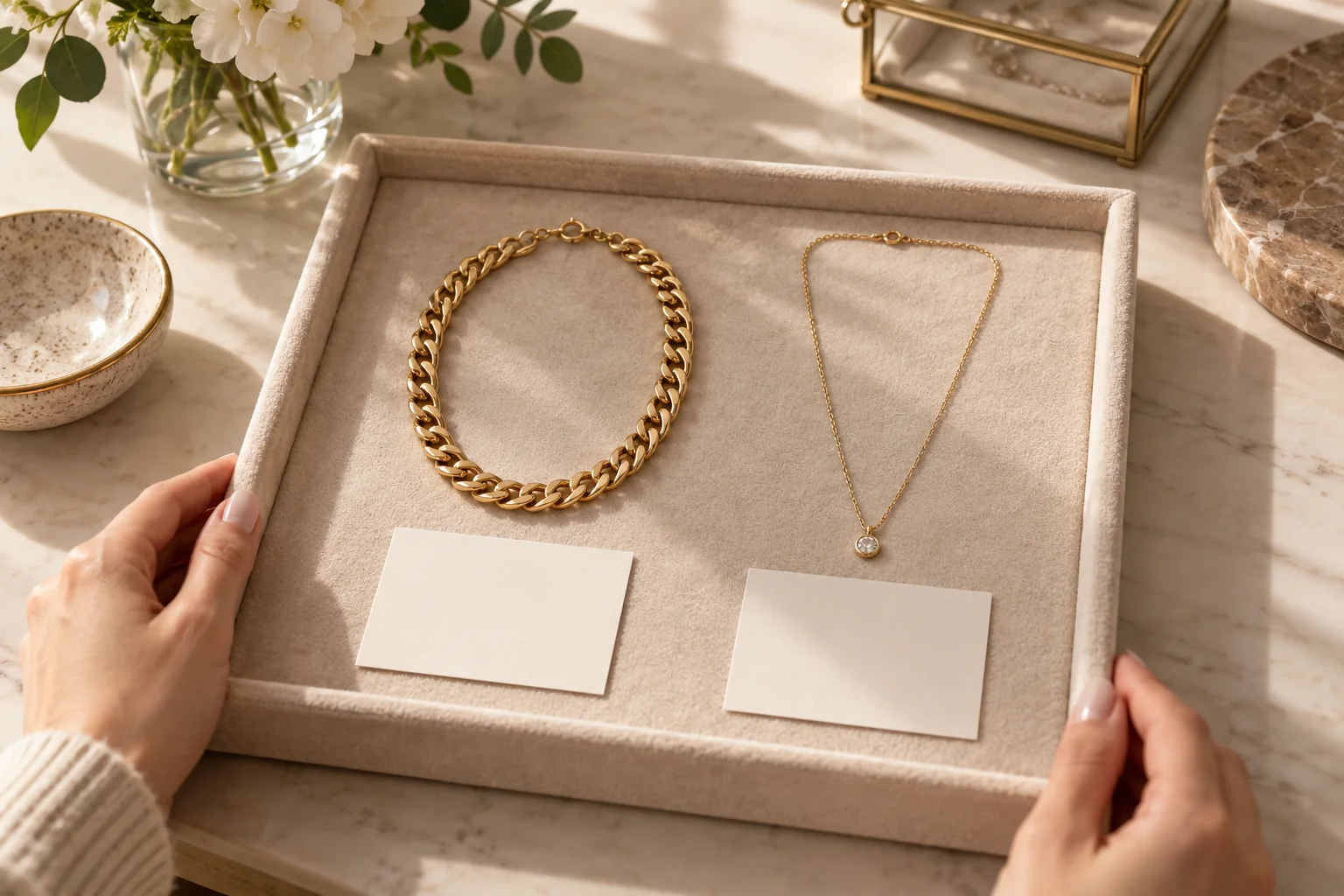
I choose a useful reference rather than a universal rule
I keep the comparison small enough to use. Two clear candidates often tell me more than a long list of necklaces described as dainty, bold or everyday. I write down what I know about the complete item. I leave an empty field where the seller has not supplied a weight or where the option image does not establish the closure.
I compare the handling task as well. I want to know whether I can operate the clasp easily and store the necklace without forcing its shape. I do not assume that a thin chain is easy to handle or that a broad one will feel heavy. I need details about the actual piece before either description becomes useful.
I also keep care information in view. GIA's jewelry care guidance explains that different gems and treatments can need different care.2 I use that as a reason to preserve the supplied material and care instructions, not as a cleaning recipe for an unknown necklace. An appealing weight figure does not remove those other responsibilities.
I can then write a concrete preference: I want a complete necklace with a smaller focal point, a closure I can manage and a supplied weight I can compare. That sentence gives me a better search direction than a bare request for something lighter. If I cannot obtain a missing specification, I can choose a more clearly described option. I do not need to turn missing information into confidence just to finish the purchase.
When do I keep, set aside or ask about the necklace?
I can keep adjusting an uncomfortable piece because I already paid for it. I want a decision that considers future use instead of the effort already spent.
I keep the necklace when its actual fit and handling suit the role I chose. I set it aside if it remains uncomfortable. I ask about unclear specifications or possible damage before changing hardware, and I check the seller's current terms before deciding whether an exchange or return is available.
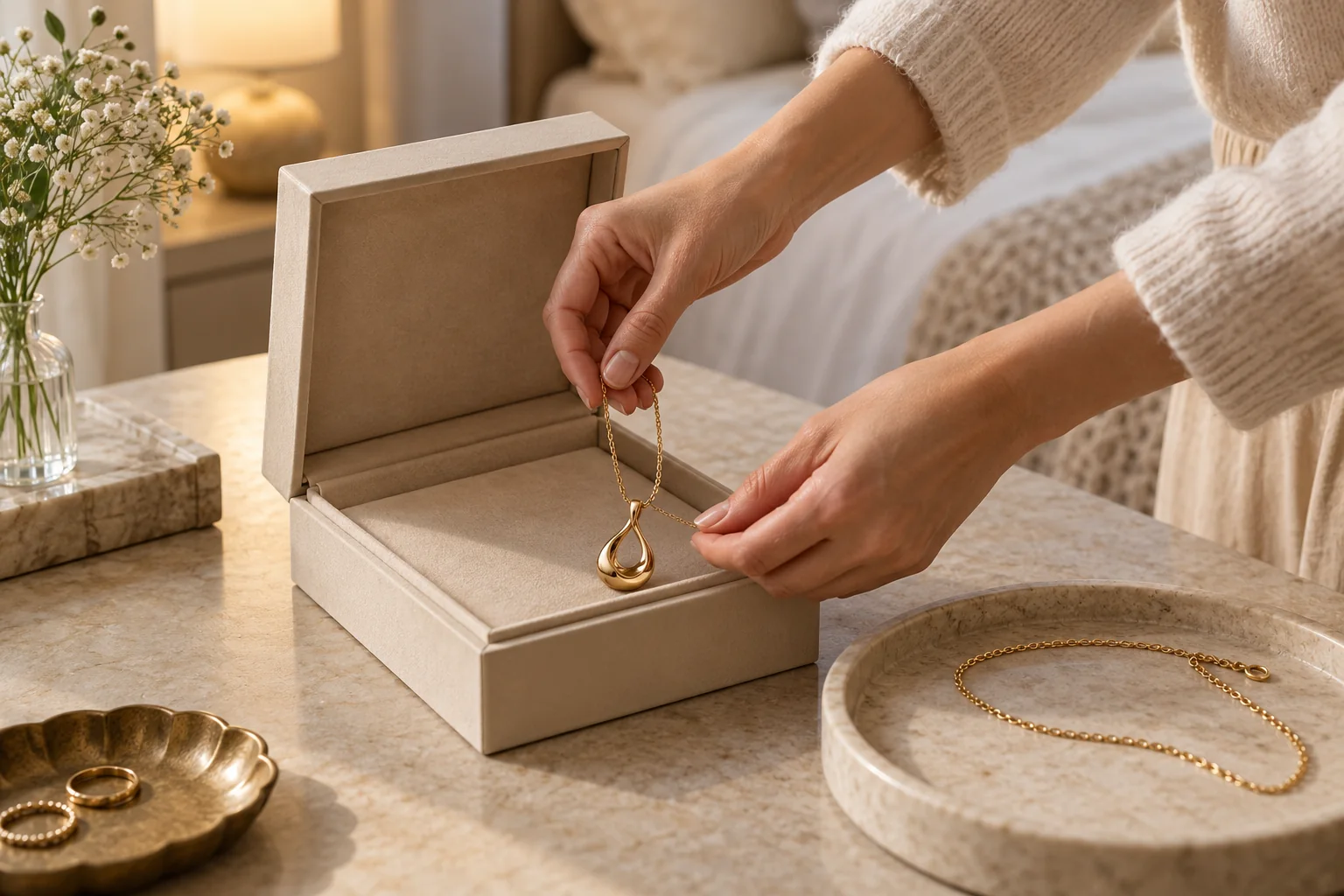
I decide what I would willingly wear again
I separate three outcomes. I may enjoy the necklace for a shorter occasion. I may prefer a different complete design. I may need the seller or a qualified jeweler to inspect a part that appears wrong. These outcomes require different next steps, so I do not frame all of them as a need to buy another chain.
I keep the original construction intact while I decide. I do not cut the chain, open a ring, remove a fixed pendant or add an improvised connector to make a trial possible. If I want an alteration, I ask whether the exact item can be altered and what would change. A service that suits one chain or metal does not establish that another item can receive the same work.
| Outcome I prefer | Next step I choose |
|---|---|
| I like its occasional role | I store it for that intended use |
| I still find it uncomfortable | I stop trying to force the fit |
| I notice a possible fault | I document it and ask for assessment |
I keep the order details and supplied instructions with the item. I read current terms before assuming that I can return something after wearing or changing it. I do not borrow another brand's policy or treat this guide as a Zolay service promise. Our everyday-necklace guide helps me judge whether a piece earns a place in my routine. My final choice rests on willing, comfortable use, not a number that I feel obliged to tolerate.
Conclusion
I compare the whole necklace, its contact and my ordinary routine. I use weight as useful information, and I choose comfort over repeated adjustment.
- Tiffany & Co., Necklaces and Pendants Size Guide. I use its fit factors, not a comfort threshold or another brand's product specifications. ↩
- GIA, Tips on Caring for Jewelry. I use its material-specific care context, not a universal cleaning instruction. ↩
Images are AI-generated editorial illustrations. They do not identify or verify a specific product.