
Should I Choose an Elastic, Tie or Drawstring Bonnet?
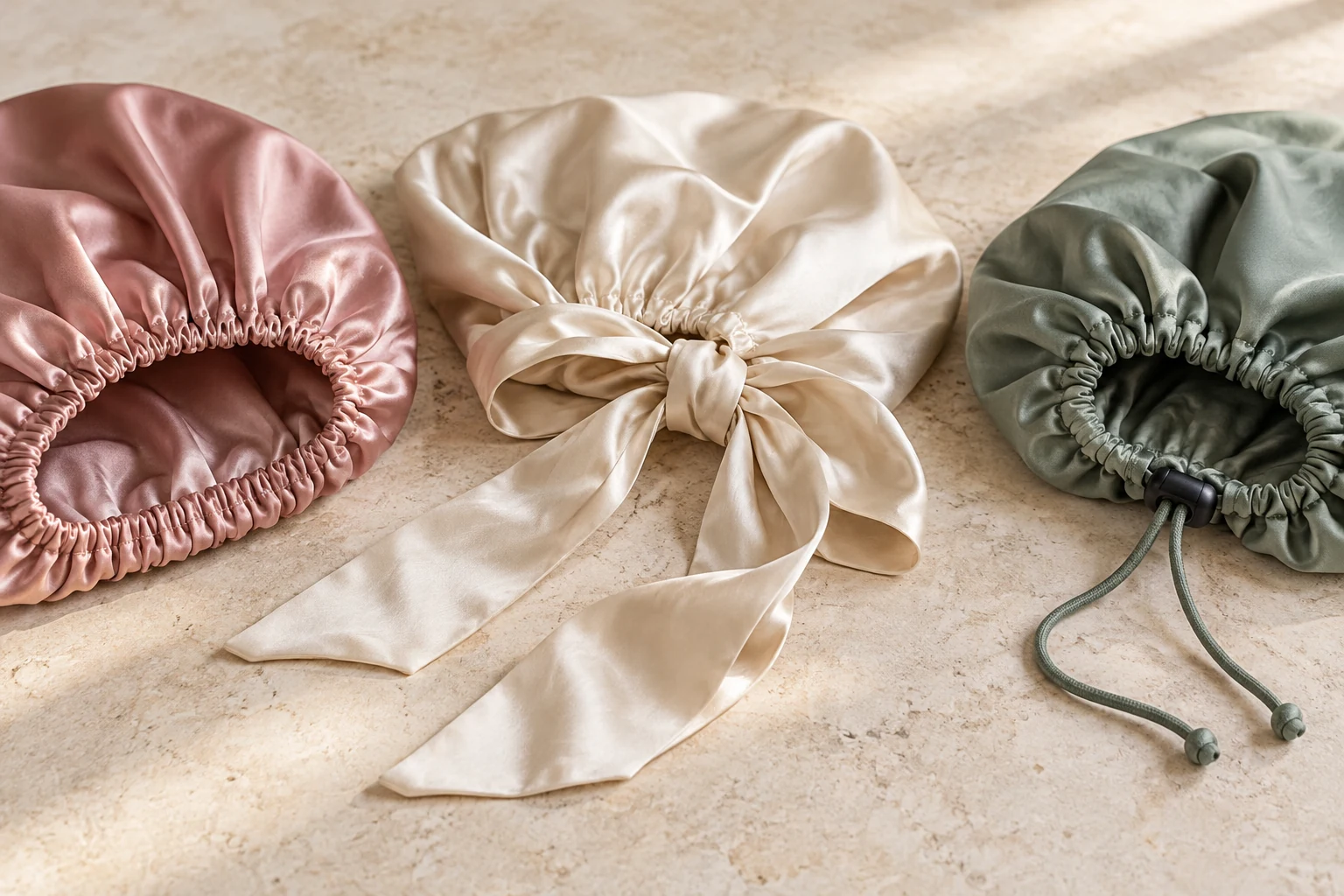
I can replace a slipping bonnet and still face the same problem. A different closure helps only when its fit and position suit the finished item.
I compare elastic, ties and drawstrings by opening range, adjustment control and comfort against the pillow. I choose a closure I can use gently and repeat easily. I do not assume that tighter contact or more hardware gives a better result.
I use the closure as one part of a fit decision. Community users report different outcomes even with ties.1 I would first check the crown and opening so that I do not ask a closure to solve an unrelated space problem.
When would I consider a slip-on elastic opening?
I like the idea of an easy bedtime step, but I would not accept a poor fit for convenience. An elastic opening still needs useful size information.
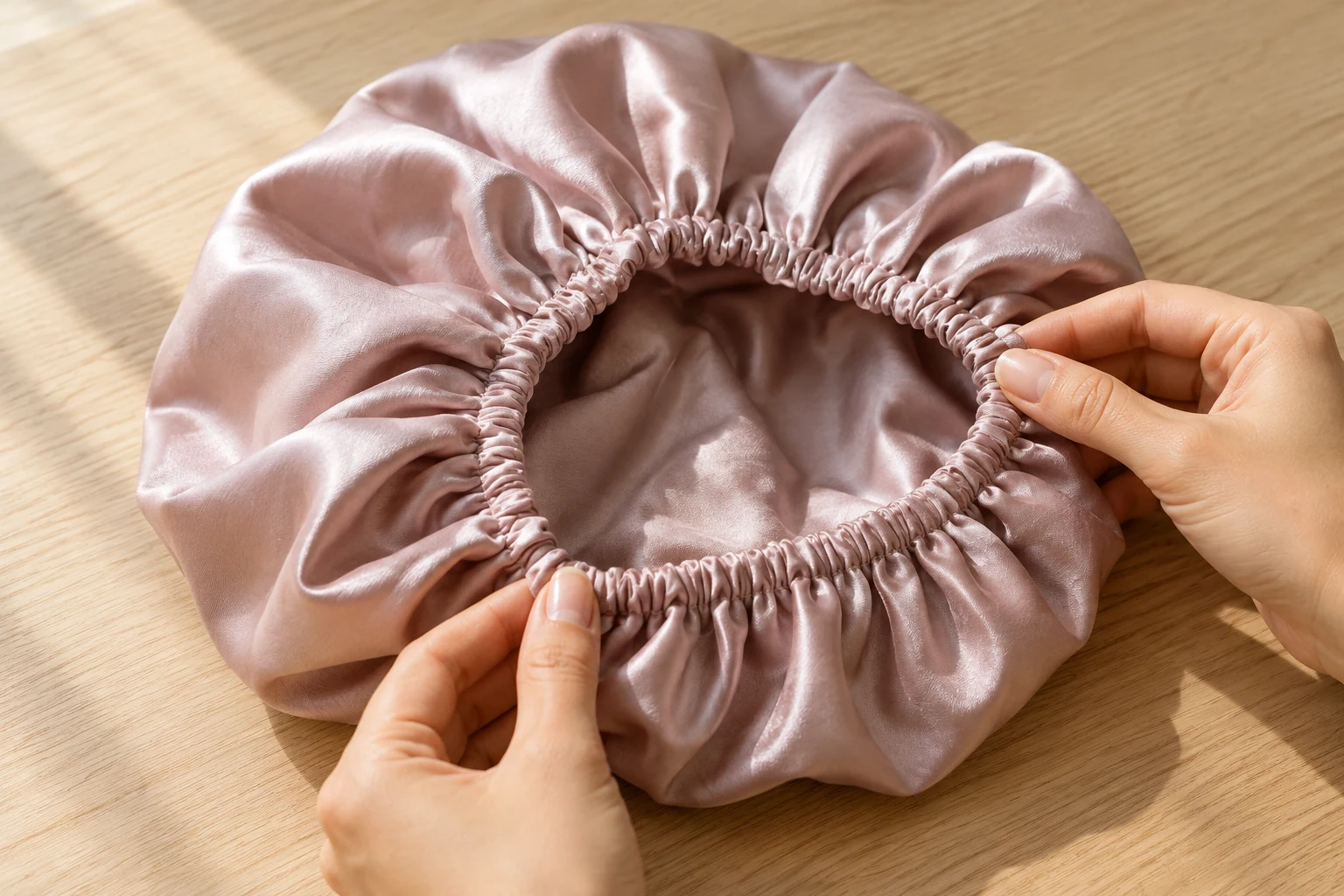
I would consider elastic when its stated range gives comfortable contact and the band suits my preference. I would check the complete opening rather than assume every slip-on bonnet adjusts to every head.
I ask what the range means
I would read whether the measurement describes the relaxed opening or an intended stretch range. I would also check how the seller measures it. A maximum stretch figure does not tell me that the opening will feel comfortable at that size. I would ask for the intended fit range rather than use the largest possible figure as a buying target.
I would look at the band width and how it joins the crown. I would also inspect the inside seam. A smooth crown does not answer whether the edge feels comfortable. I would check the whole opening while awake and notice whether pressure feels even or concentrated in one area.
I compare convenience with control
I would value a slip-on design if I can put it on without pulling the hair and keep its starting position consistent. I would also recognize that a fixed elastic opening may give me fewer adjustment choices. If I cannot achieve comfortable contact, I would consider another size or design rather than force the same opening to work.
| Elastic question | What I would inspect |
|---|---|
| What is the stated range? | I would inspect the measurement method |
| How does the edge feel? | I would inspect the band and inside seam |
| Can I repeat the fit? | I would inspect the starting position |
I would also check crown space before blaming elastic for movement. Hair packed into a small crown can change how the edge sits. I would compare that with the fit guide so that convenience does not hide the other parts of the decision.
What would I check on a fabric-tie bonnet?
I would not assume a tie guarantees security. A knot can add pressure or move to an awkward place if I use the design without checking its instructions.
I check the intended tying method, adjustment range and knot position. I would look for comfortable, repeatable contact. I would not use a tighter knot as the automatic answer to slipping.
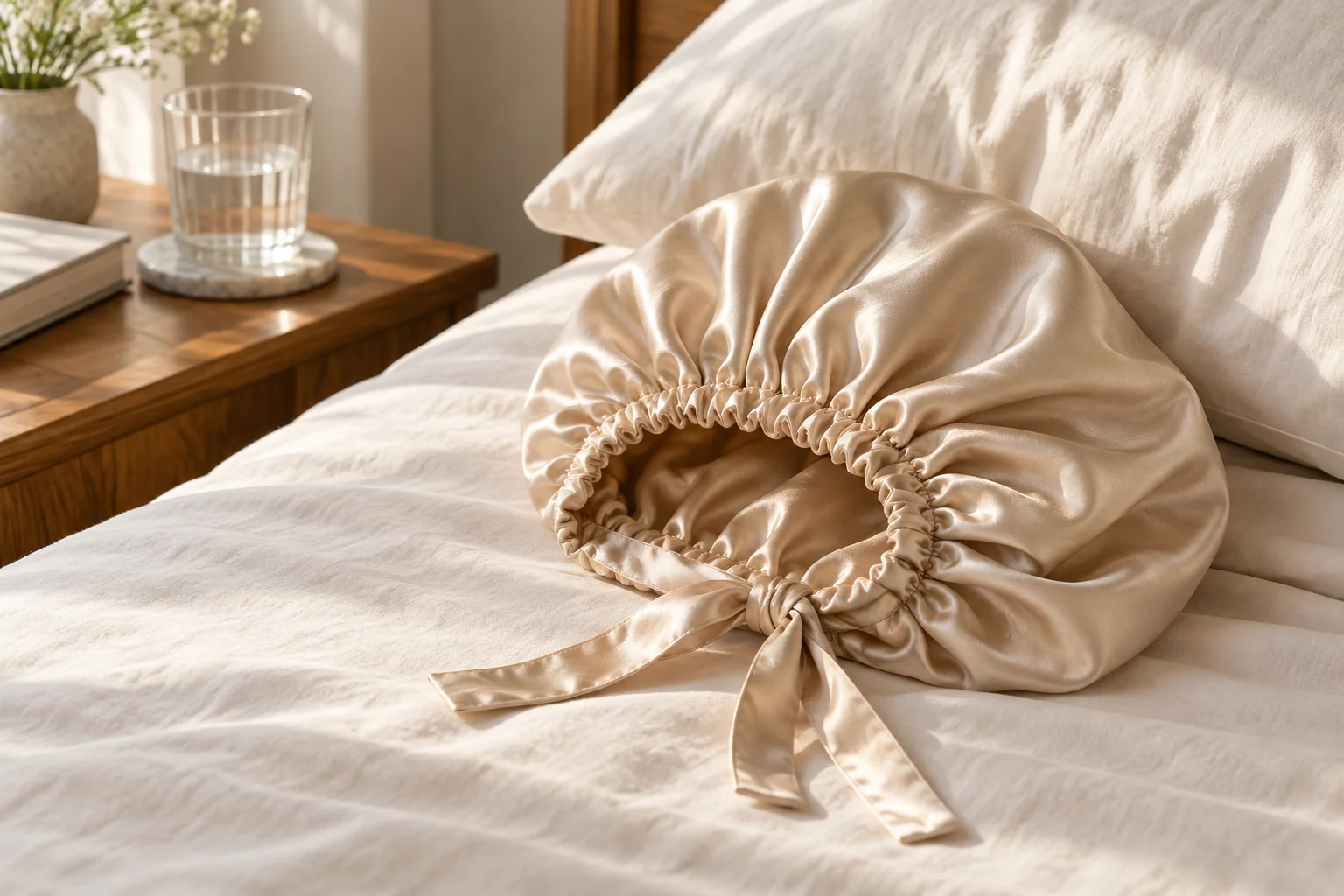
I follow the intended route of the ties
I would read how the seller intends the ties to wrap and fasten. I would not copy an unusual route from a photograph of a different product. The shape and length of the ties can differ. I would also check whether the tie fabric is described separately from the crown. A material statement for one part does not establish the material of every part.
I would make an awake trial in the intended position. I would check whether the knot rests against my usual pillow contact area. I would also notice whether loose ends get in the way of putting the bonnet on or removing it. I want a closure I can use calmly at bedtime rather than one that requires repeated improvisation.
I use adjustment to learn about fit
I would keep the setting comfortable while checking the opening. If the bonnet still shifts, I would investigate crown space and placement. I would not keep reducing the opening without checking those causes. A tie offers control, but that control is useful only when I use it to compare the right variable.
I would note how I fastened the ties so that I can repeat the arrangement. I would also note whether I felt pressure before sleep. If a comfortable setting does not suit the item, I would compare another design. I would not treat my ability to make a tighter knot as evidence that I should do so.
I use AAD guidance about painful pulling as a reason to stop an uncomfortable arrangement.2 The source does not rank bonnet closures. It supports my decision to keep tension out of the way I judge a useful fit.
How would I assess a drawstring or buckle?
I would look closely at hardware before choosing an adjustable bonnet. A useful adjustment range can still place a hard part where I do not want it.
I check the adjustment mechanism, its range and its resting position. I would make sure I can operate it without pulling the hair or pressing hardware against the pillow. I also check that its instructions are clear.
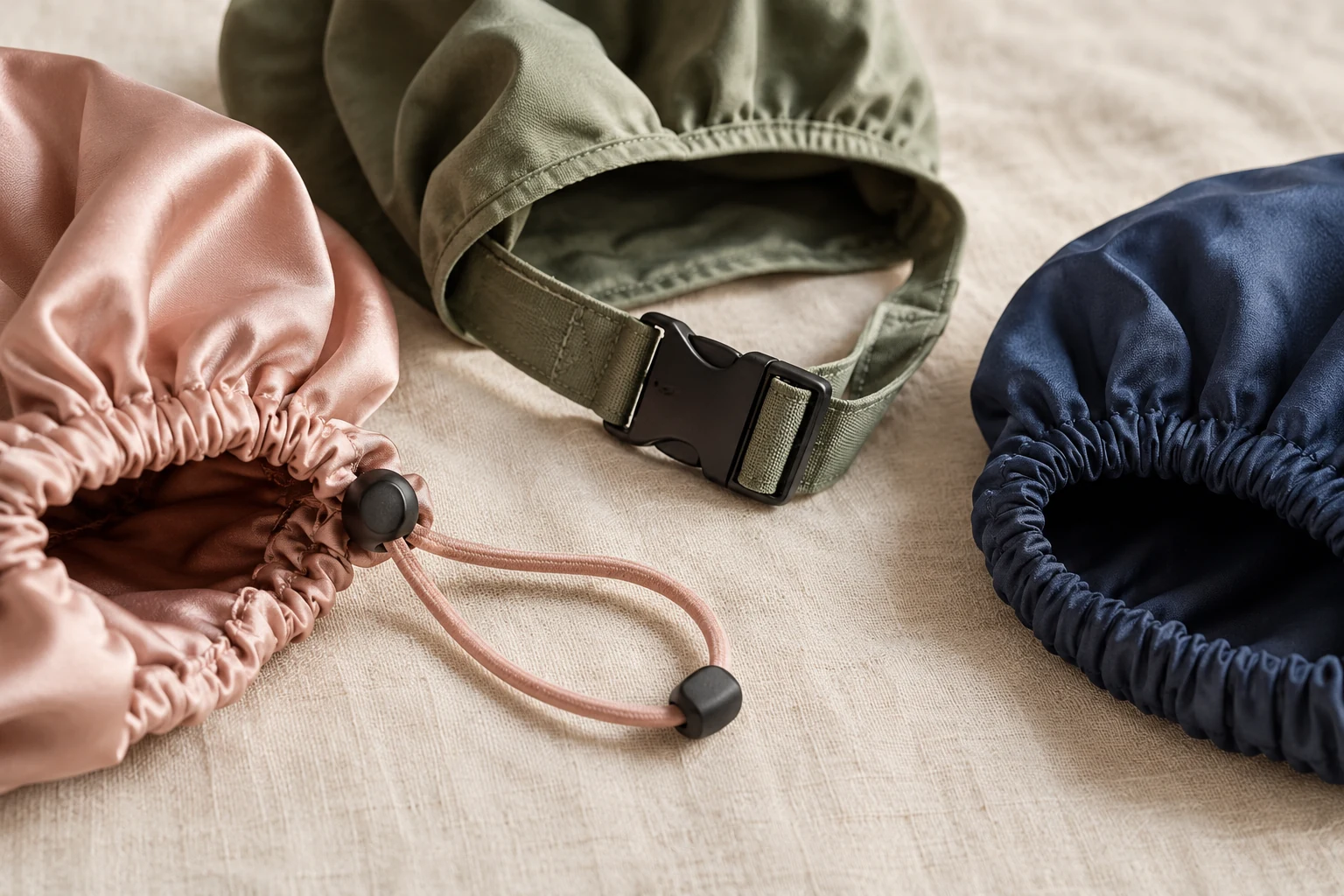
I inspect the adjustment parts
I would look for a photograph that shows the mechanism from the inside and outside. I would check how the cord or band moves through it. I would also check whether the seller gives a method for changing the setting. A word such as adjustable is useful, but it leaves questions about how the adjustment works in practice.
I would operate the closure while awake before using it at bedtime. I would notice whether the adjustment feels easy to control and whether I can return to a comfortable setting. I would avoid pulling on hair to hold the item still while I move the hardware. If the process feels awkward, I would consider whether another closure better suits my routine.
I compare the position with how I rest
I would lie down in the positions I normally use. I would notice whether the buckle or stopper presses at the back or side. I would also check whether spare cord rests where it feels distracting. I would follow the item's instructions for managing those parts rather than invent a modification.
| Hardware detail | Question I ask |
|---|---|
| Adjustment range | I ask whether it suits my measured fit |
| Stopper or buckle location | I ask where it rests against the pillow |
| Loose cord or band | I ask how the instructions manage it |
I would compare these facts with the slipping guide. I do not expect hardware to make a bonnet universally secure. I want the mechanism to support a comfortable opening while the crown has enough room for the hair I place inside.
How do I choose among the three without overcomplicating bedtime?
I would not want a nightly routine built around fixing an unsuitable closure. The best comparison is the one that helps me use the item comfortably.
I choose the closure that fits my opening range, resting position and preferred level of adjustment. I check crown space and care at the same time. I would stop a trial that causes pressure, pulling or repeated awkward handling.

I start with the problem I need to solve
I would name the issue before comparing closures. I might need a more useful opening range. I might dislike a knot at the back. I might want fewer steps when putting the bonnet on. Those are different priorities. I would not buy a more complex closure unless its specific features answer the priority I have.
I would compare the current options in Home & Rest using their actual descriptions. I would check the item rather than transfer a feature from another listing in the collection. I would also read its care and return information before an overnight trial. I do not want a useful fit choice to hide an unsuitable maintenance requirement.
I keep the trial small
I would check opening contact, crown space and hardware position while awake. I would then record a few observations after use. I would change one intended setting at a time. If I change several details together, I cannot tell which one mattered. I would also avoid making a broad conclusion from one night.
I would allow myself to choose a simpler design if it suits me. More adjustment is helpful only when I need it and can use it comfortably. I would also allow myself to change designs when a fixed opening is unsuitable. The decision does not need to favor one closure for every person.
I would keep the finished fit ahead of the category name. Elastic, ties and drawstrings each describe a mechanism. I still need a clear size range, enough crown space and a comfortable way to rest. Those details make the closure comparison useful in a real bedtime routine.
Conclusion
I choose closures by range, control and resting comfort. I check crown space alongside the opening and avoid using extra tension as a substitute for a suitable fit.
- Reddit: a silk bonnet with ties still slips. I use this discussion to identify fit questions rather than rank designs. ↩
- AAD: hairstyles that pull can lead to hair loss. I use its warning about painful pulling, not a claim about all bonnet closures. ↩
Images are AI-generated editorial illustrations. They do not identify or verify a specific product.