
How Can I Wear a Bonnet Without Flattening Fine Hair?
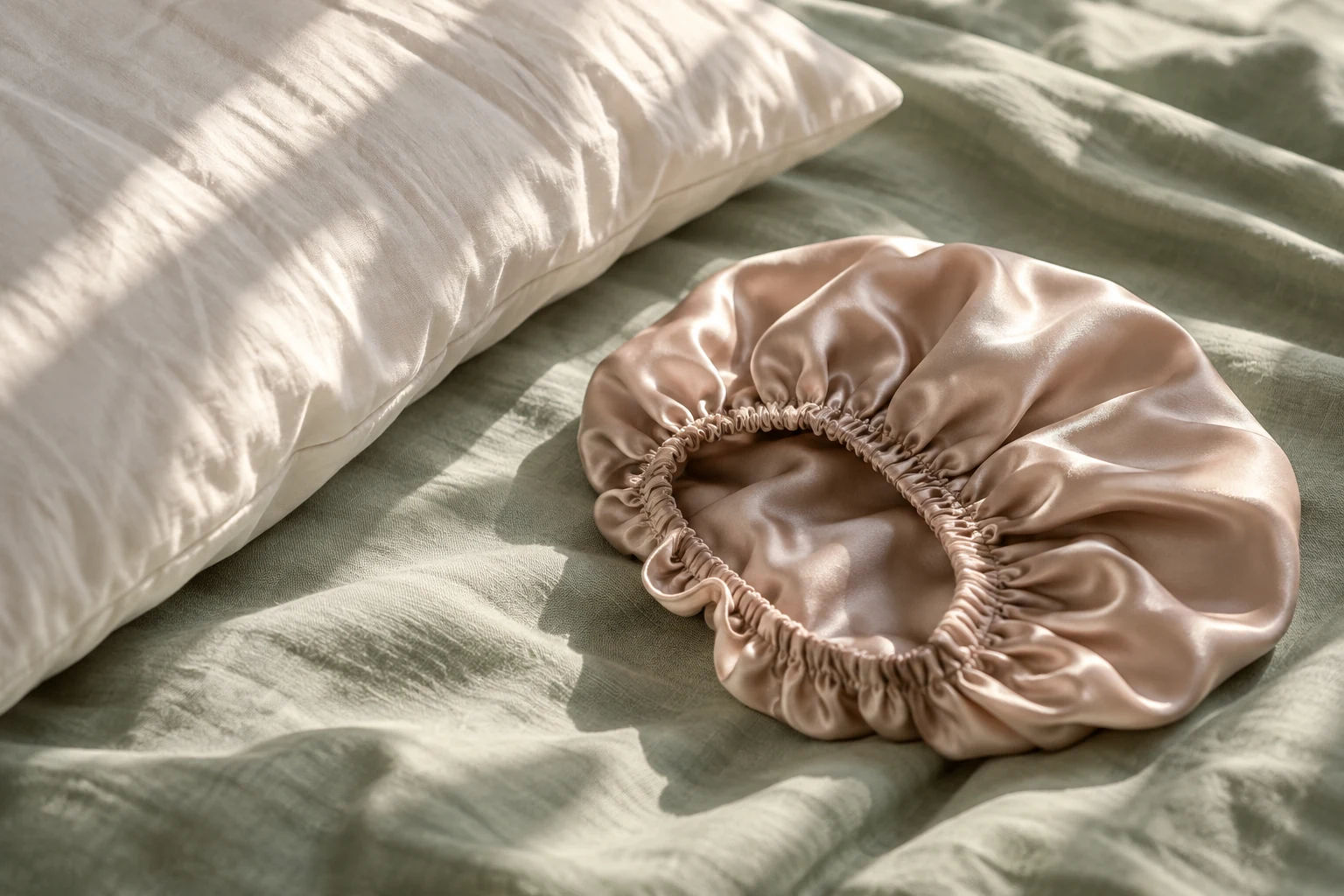
I understand why a bonnet can disappoint when the front looks flat in the morning. I would want easier hair care without another styling problem.
I would check band placement, crown space and how I arrange my hair. I would aim for comfortable contact without compressing the front. I would also allow for some morning restyling, because no bonnet design guarantees unchanged volume or shape.
I separate fit from appearance. Community reports include flatter roots, slipping and different comfort preferences.1 I use those reports to plan better questions, not to promise that my method will work for every head of fine hair.
How do I tell a fit issue from a shape change?
I would not assume that a flat section means the bonnet damaged my hair. I need to notice the fit and the morning appearance separately.
I check whether the bonnet causes pressure or pulling while I wear it. I record a change in shape as a different observation. I would stop an uncomfortable trial rather than tighten the band to preserve a hairstyle.
I observe the starting position
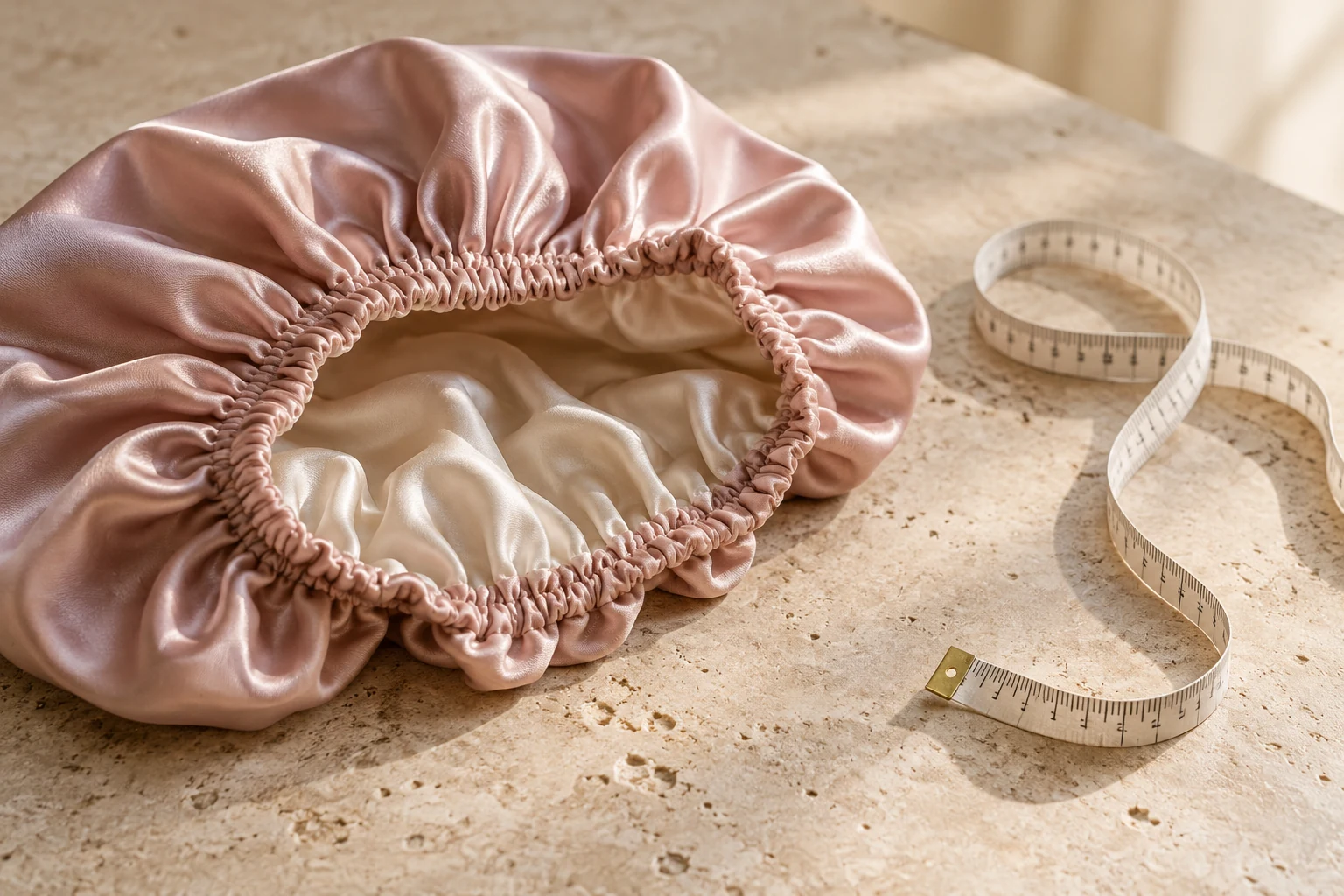
I would look at the front edge before lying down. I would notice whether the band sits over the section I want to keep lifted. I would also check whether the seam or gathered fabric presses in one place. A small difference in starting position can help me ask a more precise question about the design.
I would follow the item's placement instructions rather than move it far down the face because an online comment suggests that position. I would check whether the approved position feels secure and comfortable. If it does not, I would reconsider the item. I would not treat an awkward position as proof that I need to tolerate more pressure.
I keep the morning notes descriptive
I would describe what changed rather than use a broad label such as bad hair. I might notice a flattened front, a bent section or a different parting. I would also note whether the bonnet moved during the night. These observations can point to different questions. A band that stays in place and a crown that rotates do not describe the same fit issue.
| Observation | Question I would ask |
|---|---|
| A flatter front section | I would check where the band rested |
| A shifted bonnet | I would check opening fit and movement |
| Uncomfortable pressure | I would stop and reconsider the fit |
I would not use a bonnet to explain persistent hair loss or scalp symptoms. I would seek appropriate advice for those concerns. My aim here is to compare an accessory's fit and the styling tradeoffs I can observe during ordinary use.
How much crown space would I look for?
I would check space if I have to pack my hair into a small shape. A comfortable opening cannot make up for a crown that feels crowded.
I would look for enough room to place my hair gently inside the bonnet. I compare length and volume separately. I would avoid forcing a tight bundle just to make the crown close around it.
I choose a shape for the hair I have
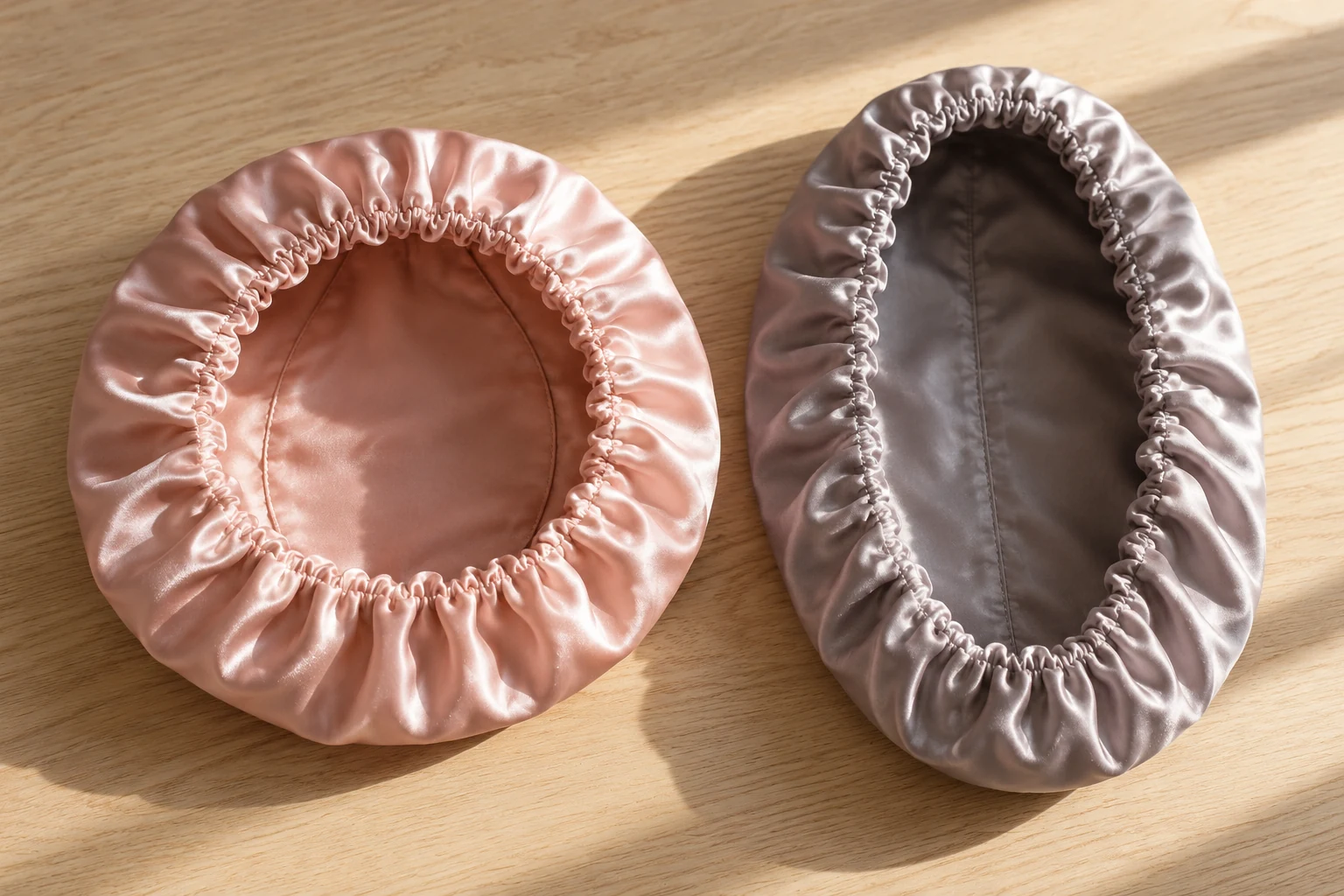
I would not assume that fine hair means short hair or little length. I would check the dimensions and shape that the seller provides. A long, fine hairstyle may need room in a different direction from a short style. I would compare the crown with the way I can place the hair inside comfortably.
I would try the bonnet while awake and notice whether filling the crown changes the opening position. I would also check where the extra fabric rests when I lie down. A very roomy crown can gather under the head even if it holds the hair easily. I would compare that feeling with the compactness I prefer rather than choose the largest item by default.
I avoid a forced arrangement
I would not twist the hair tightly because I need to fit it into the bonnet. I would also avoid introducing a tight hairstyle as a solution to a loose opening. Those changes mix two separate fit questions. I want the bonnet to suit a comfortable arrangement, rather than make the arrangement suit an unsuitable bonnet.
I use the bonnet fit guide to compare opening size and crown space together. I would keep a note of the shape I tried and how I placed the hair inside. If I choose another item, that note gives me something useful to compare.
I would judge the arrangement by comfort and coverage before judging the morning style. The AAD advises gentle handling and avoiding damaging tension in hair styling.2 I use that guidance as a boundary for my trial, not as proof that a particular bonnet preserves volume.
How would I test placement without changing everything?
I would struggle to learn from a trial if I changed the bonnet, hair arrangement and bedtime styling together. I need a repeatable starting point.
I would change one comfortable fit detail at a time. I would keep my notes simple and compare several observations. I would not treat one morning as a guarantee about the bonnet or my hair.

I make the trial repeatable
I would put on the bonnet in the intended way and check the band while sitting up. I would then lie down in my usual positions and notice whether it shifts. I would also check whether a knot or adjustment part presses against the pillow. I would make only a small change that the item allows, and I would stop if the change feels uncomfortable.
I would write down the starting arrangement in a few words. I would note the closure setting, the way I placed the hair and the position of the front edge. I would also note whether the hair was ready for my normal bedtime routine. I would not add a new treatment simply to make the trial seem more complete.
I compare the result with my actual priorities
I would record whether the bonnet stayed on and whether I felt pressure. I would then record the morning shape separately. I might prefer a fit that leaves a small section needing restyling to a fit that presses uncomfortably. I would decide that tradeoff from my own priorities rather than someone else's before-and-after photograph.
| Trial note | What I record |
|---|---|
| Starting position | I record the front edge and closure setting |
| Comfort | I record pressure or pulling if present |
| Morning appearance | I record which section changed shape |
I would not keep tightening a band after every unsatisfactory morning. I would first ask whether the change was about fit, the crown's shape or the hairstyle itself. That question helps me choose the next small test without making bedtime increasingly complicated.
What if I still dislike the morning result?
I would not want a useful idea to become a routine I dread. A bonnet should fit the way I want to care for and style my hair.
I would compare another crown or opening if the fit remains unsuitable. I would also consider a simpler routine if I dislike headwear. I would choose comfort and manageable styling rather than expect perfect overnight preservation.
I make the next decision specific
I would identify the one feature I want to change before shopping again. I might want less fabric around the front. I might want a different adjustment position. I might want more room for length. A specific request is easier to compare with a product description than a general search for the best bonnet for fine hair.
I would use the closure guide when the opening or adjustment seems to be the issue. I would use the Home & Rest collection to compare actual listed designs. I would not assume that every item in the collection has the same lining, band or crown dimensions.
I allow a small morning styling step
I would decide how much restyling I consider reasonable. I might be comfortable adjusting the front section after removing the bonnet. I might prefer a routine with fewer changes to my usual style. I would not call one preference wrong. The accessory needs to fit my morning as well as my evening.
I would also read return conditions before a trial. I would not assume that a worn item can be returned because its styling result is not what I expected. I would ask about sizing and construction before purchase, when those answers can still guide the choice.
I would keep my expectations tied to the finished item. A fabric description can help me understand what I am buying. It cannot promise that every root, parting and front section will look unchanged after sleep. I would choose the routine I can repeat comfortably and adjust when the evidence from my own use calls for a different fit.
Conclusion
I would separate comfort, fit and morning shape. I would test gentle placement and adequate crown space, then choose the routine whose styling tradeoffs I can manage.
- Reddit: first-night bonnet experience. I use these reports to understand questions about flat front pieces and varied fit experiences. ↩
- AAD: hair styling without damage. I use the guidance on handling and tension; the page does not test bonnet fit or volume preservation. ↩
Images are AI-generated editorial illustrations. They do not identify or verify a specific product.