
How Should I Wash and Dry a Silk Bonnet?
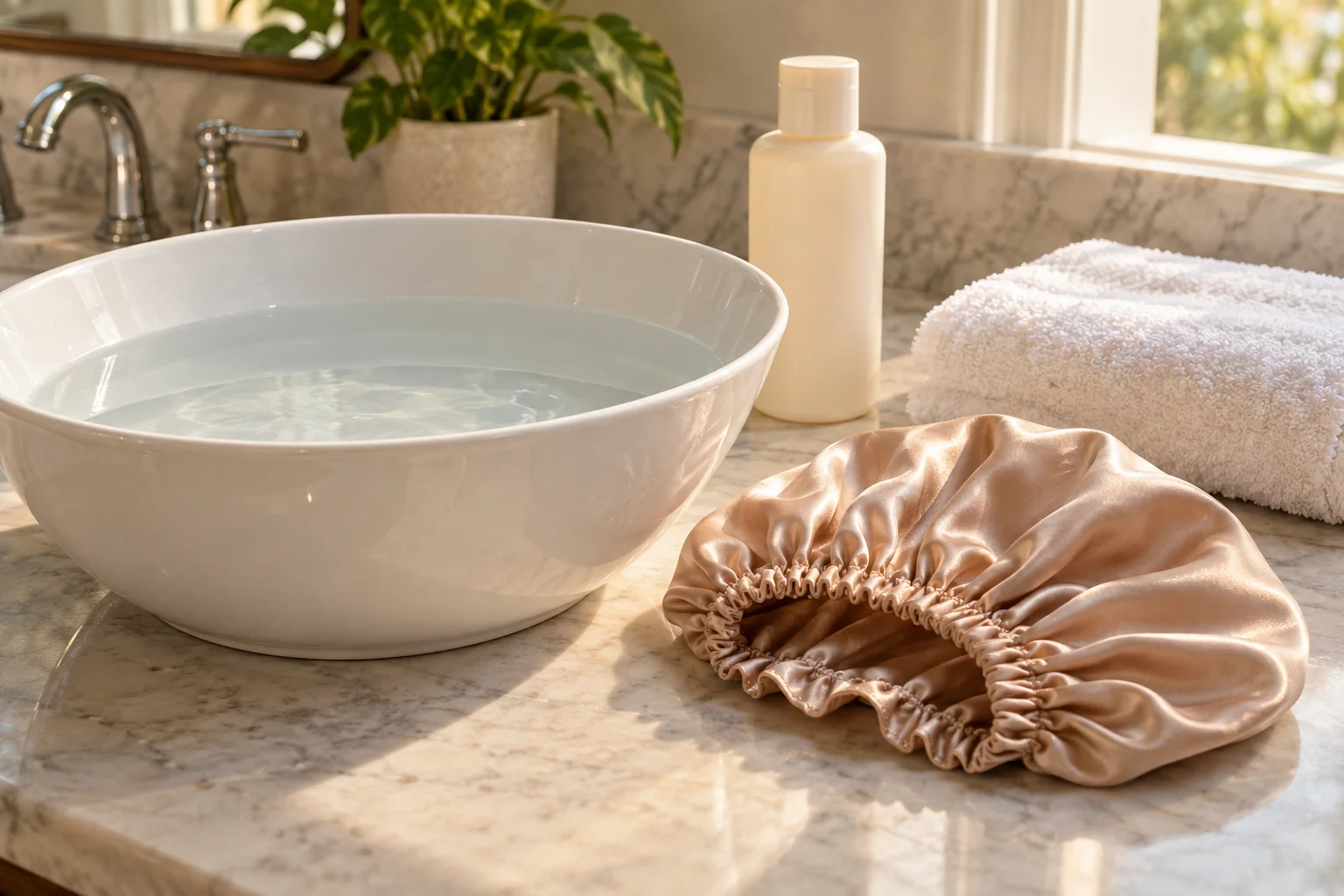
I understand the worry about changing a bonnet's feel during washing. Conflicting advice about detergent and household remedies can make a small care task confusing.
I follow the care instructions for the finished bonnet. I check the permitted washing method, cleaning product, drying method and any restrictions before starting. I avoid choosing a universal temperature or household mixture from the word silk alone.
I use a simple sequence so that I can follow the instructions without rushing. My Silk Care page is a starting point, but the exact item's instructions take priority when its construction needs different handling.
What do I check before the bonnet gets wet?
I would not start washing and look for instructions afterward. A band, lining or closure may need care that the main fabric description does not explain.
I read the item's care label and product-specific guidance first. I check every material and adjustment part that the instructions mention. If I cannot find a clear method, I ask the seller before choosing one.

I gather the information before the tools
I would keep the product name and order information ready when asking for care advice. I would describe the exact bonnet rather than ask for a method for all silk items. A seller can give a more useful answer when I identify the model, layers and closure. I would also mention any stain or change in the fabric that prompted the question.
I read each instruction as part of a sequence. A permitted wash method does not automatically approve every detergent. A permitted cleaning product does not automatically approve a machine cycle. I would check both. I would also check whether the instructions mention color separation, fastening closures or handling ties before washing.
I avoid replacing missing facts with a recipe
I would not add vinegar, baking soda or stain remover simply because another user recommends it. A community thread can reveal a common question, but it does not test the exact item's materials. I would ask whether a product is suitable for the fabric and follow its stated dilution when the care instructions approve its use.
| Before I start | What I want to know |
|---|---|
| Washing method | I want the method approved for this item |
| Cleaning product | I want the permitted type and stated use |
| Drying method | I want the supported drying instructions |
The FTC's care-label material explains the importance of a reasonable basis for instructions in the products covered by its rule.1 I use that as background, not a claim that every bonnet is covered. I still prefer specific instructions to a vague promise that silk is easy to clean.
How do I keep the washing stage controlled?
I can make care harder by using several treatments at once. I would rather know what I am applying and why the instructions allow it.
I prepare the approved method before I begin. I use the stated amount of a suitable cleaning product and the handling steps given for the bonnet. I avoid extra scrubbing, soaking time or machine settings that the instructions do not authorize.

I prepare a clear working area
I would use a clean area where I can handle the bonnet without catching it on sharp edges. I would keep the approved cleaning product and a suitable drying surface ready. I would also make time for the drying stage. I do not want to finish washing and discover that I have no place to lay or support the item as instructed.
I would follow a hand-wash method only when the item permits it. I would follow a machine method only when the item permits that method and its conditions. I would not switch between them because one sounds gentler in general. A finished accessory may have several materials, and I want the instructions to cover the whole item.
I change one care variable at a time
I would avoid adding a stain treatment during a routine wash unless the instructions explain that treatment. I would ask for specific help with a mark that ordinary approved care does not address. I would describe the mark rather than guess its cause. A color change, residue and a worn patch are different problems.
I would also keep the cleaning-product packaging available. I need to know whether its instructions match the item guidance. If those instructions conflict, I would pause and ask for clarification. I would not resolve a conflict by using more product or leaving the bonnet in the solution longer.
I use the Materials & Care page to keep those questions together. I would record the method I used so that I can repeat it if the result is satisfactory. A short note is more useful than trying to remember which of several suggested treatments I tried first.
What do I check during rinsing and drying?
I would not treat drying as an afterthought. Rough handling or an improvised heat method can undo the care I took during the wash.
I follow the item's rinse and drying instructions. I support the fabric and avoid adding heat or force beyond the approved method. I give the bonnet enough time to dry before I put it away or use it again.

I prepare for the weight of a wet item
I would handle the bonnet as a complete accessory. I would notice where the lining, band and adjustment parts need support. I would not pull on a narrow tie to lift the whole item. I would also avoid using the opening as a convenient handle when the bonnet contains water. I want to follow the handling method stated for the item.
I would check the instructions for removing excess water. I would not invent a twisting or squeezing step because it seems quick. If a towel is part of the approved method, I would use it as instructed. I would also check that the surface is clean and does not transfer color to the bonnet.
I leave room for drying time
I would choose a location that fits the stated drying method. I would avoid placing the bonnet near a heat source unless the instructions specifically permit that use. I would not use a hair dryer to make a late-night wash finish faster. If I need the bonnet that evening, I would plan the wash earlier rather than change the method at the last moment.
| Drying question | What I would inspect |
|---|---|
| Is the bonnet supported? | I would check the whole fabric and band |
| Is the surface suitable? | I would check cleanliness and possible color transfer |
| Is the item fully dry? | I would check the layers before storage |
I would not assume the outer surface tells me the whole item is ready. A layered construction gives me more than one area to check. I would wait until the item is dry according to its guidance before folding it or returning it to my bedtime routine.
How do I plan washing frequency and storage?
I would not choose a calendar rule without looking at use. Hair products, wear and the item's instructions can affect when the bonnet needs attention.
I use the care instructions and the bonnet's condition to plan cleaning. I inspect it for visible residue, marks and changes in feel. I store it clean and dry, and I ask for advice if a change persists after approved care.

I make the care routine easy to follow
I would choose a regular time to inspect the bonnet, even if I do not wash it at every inspection. I would check the areas that contact the hairline and the products I use. I would also check the ties or band for changes that affect fit. I treat this inspection as a way to notice the item, not a reason to clean it more often than its guidance supports.
I would keep the bonnet in a place where I can find it without compressing it under other items. I would make sure it is dry before storage. I would also keep it away from anything that can catch its fabric. I would not store it beside an exposed jewelry clasp or a sharp accessory simply because those items share a bedtime shelf.
I ask a precise question when care does not solve a problem
I would describe whether the change is a mark, a rough area, a loose band or an odor. I would include the method and product I used. That information helps separate a care question from a construction or wear question. I would not conclude that the fiber is fake just because the feel changed after one wash.
Community washing discussions show why people want simple instructions.2 I use those threads to understand the confusion. I do not use a vote count as approval for a chemical mixture. I would compare the seller's answer with the original item guidance before trying another treatment.
I would revisit the Home & Rest collection with care needs in mind when buying another item. I would choose a routine I can maintain and a product whose instructions are clear enough to support that routine.
Conclusion
I plan washing, handling, drying and storage together. I follow the finished item's instructions and ask for specific help instead of adding an unverified care recipe.
- FTC Care Labeling Rule. I use this source for the principle of supported care instructions within the rule's stated scope. ↩
- Reddit: washing a silk bonnet. I use this discussion as evidence of care questions, not proof that any treatment suits this item. ↩
Images are AI-generated editorial illustrations. They do not identify or verify a specific product.