
Why Does My Silk Bonnet Keep Falling Off at Night?
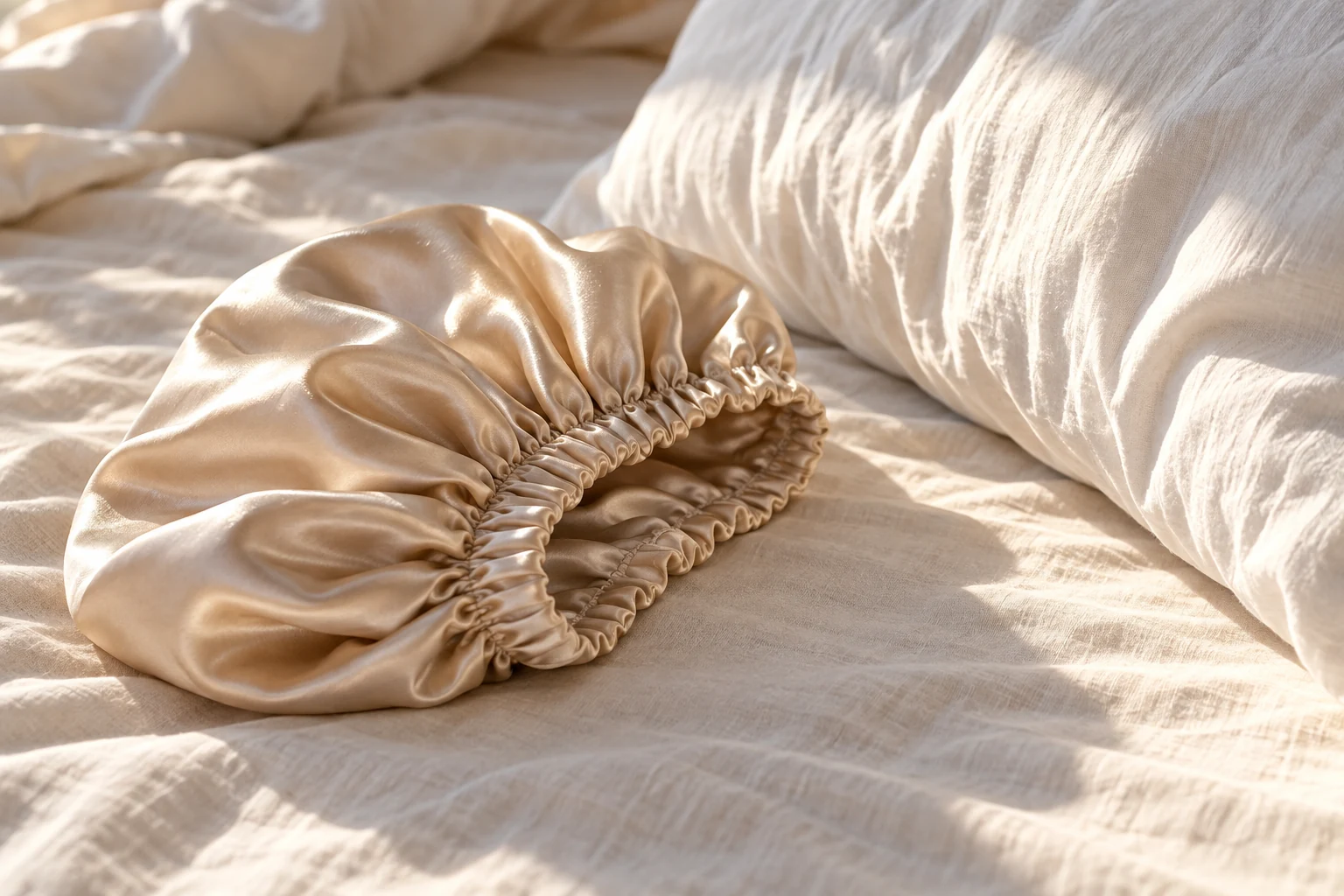
I understand the frustration of finding a bonnet beside the pillow. Repeated slipping can make a simple bedtime habit feel like another problem to solve.
I would check the opening size, space inside the crown, closure position and movement against the pillow. A bonnet can slip because it is too loose, but extra tightness is not always the answer. I aim for comfortable contact and enough room for the hair.
I use fit as the starting point. Community discussions show different experiences with ties, elastic and pillowcases.1 I cannot promise that one design will suit everyone. I can explain a method that helps separate the possible causes before another purchase.
Why do I check the opening before tightening the bonnet?
I would not keep tightening a bonnet that still slides. Extra pressure can replace one annoying problem with another, especially around the hairline.
I check whether the opening sits comfortably around the head before I adjust it. I want gentle, even contact without pulling, pinching or painful pressure. I treat the opening and the crown as separate parts of fit.
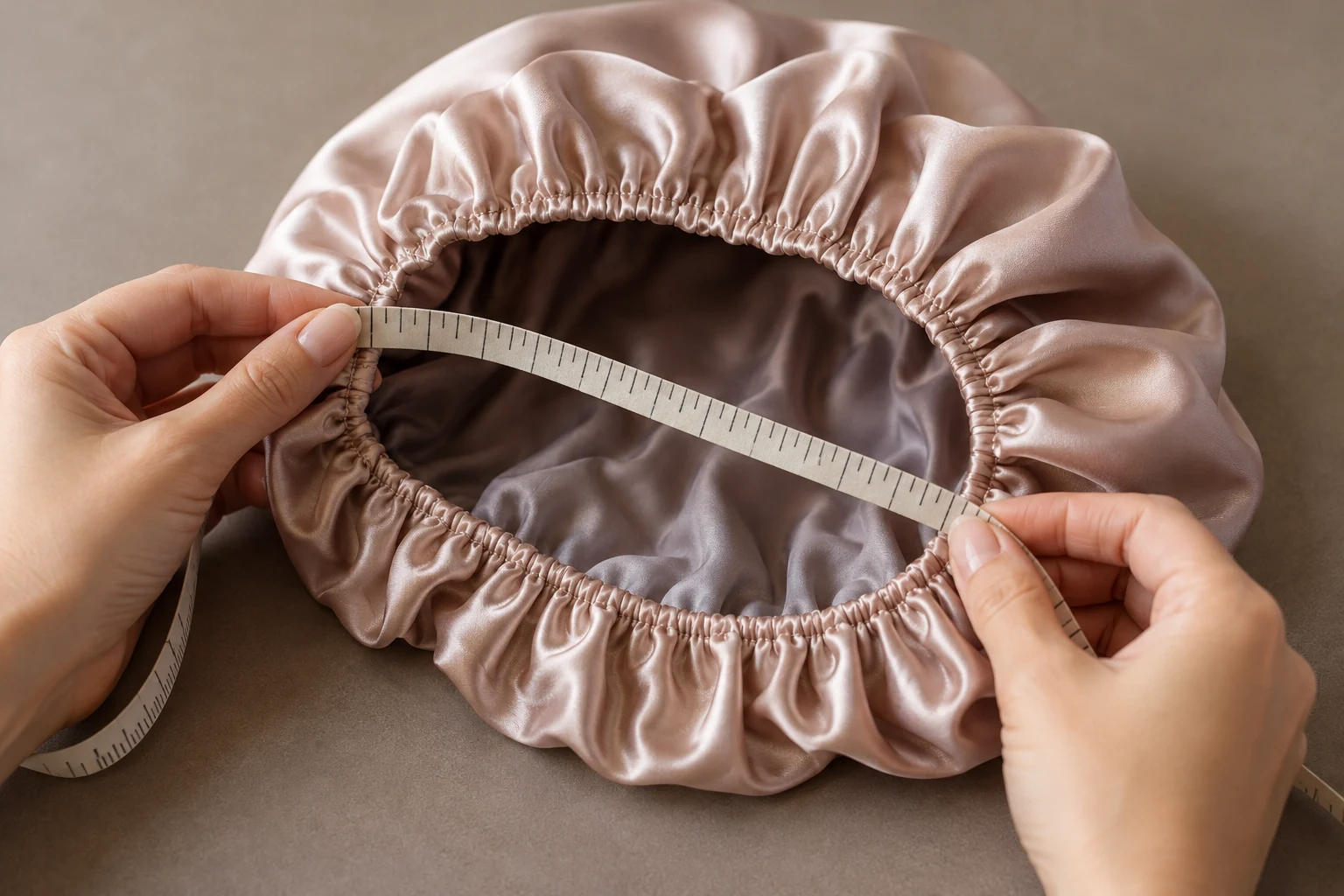
I separate the opening from the rest of the bonnet
I start by reading the size information on the finished item. I look for the opening range, the adjustment method and any instructions about placement. I do not assume that a large crown means a large opening. I also do not assume that a label such as one size tells me how the item will feel on a particular head.
I would measure according to the seller's stated method. If that method is missing, I would ask for it. A head measurement is useful only when I know what the product measurement describes. A flat fabric width and a stretched opening circumference are different figures. I would avoid comparing them as though they were the same measurement.
I use comfort as a decision point
I would try the bonnet while awake before wearing it for a full night. I would notice whether one part of the band presses more than another. I would also check whether the adjustment hardware sits where my head meets the pillow. A comfortable front edge does not tell me that the back closure feels comfortable when I lie down.
| What I notice | What I would check next |
|---|---|
| The whole opening moves easily | I would review the opening range and available adjustment |
| One area feels tight | I would check placement and uneven gathering |
| The front fits but the back presses | I would inspect the closure position while lying down |
I would stop a trial that causes pain or pulling. The American Academy of Dermatology identifies pain as a warning sign with hairstyles that pull.2 That guidance does not test every bonnet design, but it supports my decision to avoid using uncomfortable tension as a fit strategy.
Can the space inside my bonnet affect slipping?
I would check the crown if the opening seems comfortable. Hair packed into a small space can change how the bonnet sits around the head.
I compare the crown's shape and space with the hair it needs to hold. I look for room without forcing the hair into a tight bundle. I also check whether an oversized crown shifts or gathers awkwardly during movement.
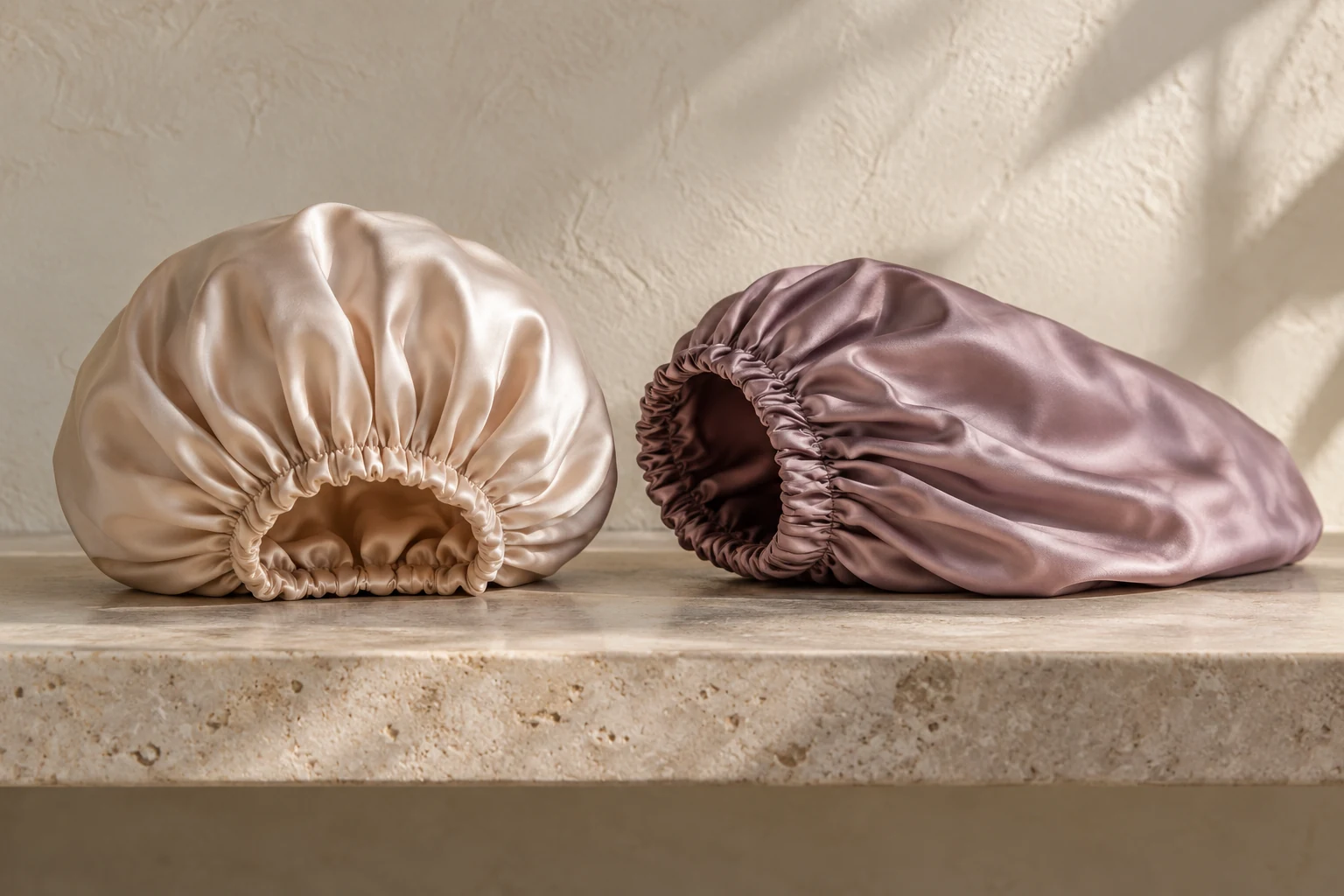
I consider length and volume separately
I use hair length and volume as two separate questions. Long hair may need a different crown shape from short hair with more volume. I would check the product's actual dimensions and shape before choosing. I would not use the word large as the whole basis for a decision.
I would place the hair inside gently and look at how the opening sits afterward. If filling the crown changes the front edge or pulls the back upward, I would treat that as useful information. I would also notice whether I have to stretch the fabric to close the bonnet. I would not force the hair into a smaller shape just to make the item fit.
I compare shapes with the way I rest
I would think about where the extra fabric goes when I lie down. A longer crown may offer space for length, but I would check whether its fabric gathers under my head or beside my neck. A rounder crown may feel simpler, but I would check whether it holds the hair without crowding it. I treat those as personal fit questions, not a ranking of designs.
| Crown question | Why I ask it |
|---|---|
| Can I place my hair inside without force? | I want to avoid making a tight bundle part of the fit |
| Does the opening move after I fill the crown? | I want to see whether hair placement changes the edge |
| Where does spare fabric gather? | I want to check comfort against the pillow |
I would use the silk bonnet fit guide to compare these features. I would choose the shape that fits the hair and feels comfortable during an awake trial, rather than the shape with the strongest marketing promise.
Which closure would I try if my bonnet slips?
I would be cautious about buying another bonnet based only on its closure. A tie, elastic band or drawstring still needs to suit the finished fit.
I choose a closure by its adjustment range, ease of use and position against the pillow. I would try a design that allows comfortable changes, but I would not expect any closure to guarantee that the bonnet stays on all night.
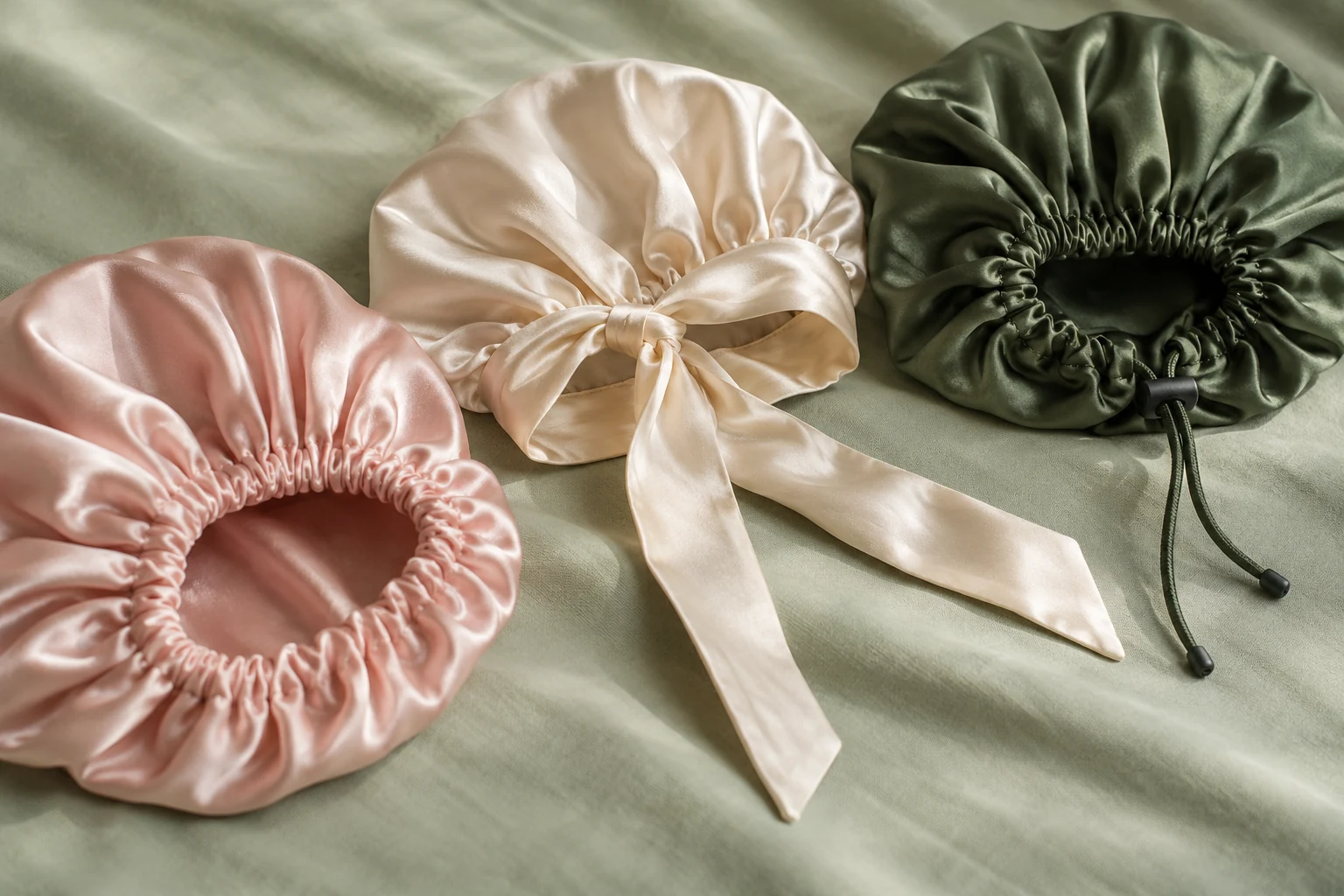
I check what the closure lets me change
I see adjustment as a way to test fit, not a reason to apply more pressure. A slip-on design may feel easy to use, but its opening gives me less control if the size does not suit me. A tie may let me change the fit, but I would check the tie's instructions and where it rests. A drawstring or buckle may offer another adjustment method, but I would check whether the hardware feels comfortable.
I would read the bonnet closure guide before comparing products. I would look for clear photographs of the opening and the adjustment parts. A photograph of the bonnet from the front may hide the feature that matters most when I lie on my back.
I check the whole construction
I would ask whether the band, lining and crown use the same material. I would also check the seams around the opening. I do not treat the fiber name as an answer to every fit question. A silk crown does not tell me how an elastic band behaves or where a buckle rests.
| Closure | What I would inspect |
|---|---|
| Slip-on elastic | I would inspect the stated opening range and band feel |
| Fabric ties | I would inspect the intended tying method and resting position |
| Drawstring or buckle | I would inspect the adjustment range and hardware placement |
I would avoid adding pins or clips as my first response to slipping during sleep. Those additions introduce another fit variable. I would first check whether the bonnet itself suits the head, hair and resting position. If I cannot get comfortable contact with the intended adjustment, I would consider a different fit rather than keep modifying the same item.
How would I test movement against the pillow?
I would avoid changing the bonnet, hairstyle and pillowcase together. A better night would tell me little about which change helped.
I would test one comfortable change at a time and keep a short note about the result. I would check the starting fit, my usual resting position and where the bonnet ends up. I would treat a single night as one observation.
I start with an awake movement check
I would put on the bonnet according to its instructions. I would then lie down and turn in the positions I normally use. I would notice whether the closure presses against the pillow, whether the crown catches under my head and whether the front edge shifts. I would make a small, comfortable adjustment only if the product allows it.
I would not treat this short check as proof that the bonnet will stay on overnight. It helps me identify obvious discomfort before a longer trial. It also gives me a clearer starting point. If the item already moves during gentle awake movement, I would review its fit before expecting it to behave differently for a full night.
I keep the notes useful and simple
I would record the closure setting in a way I can repeat. I would also note how I placed the hair inside and whether the band felt comfortable at the start. In the morning, I would record where the bonnet ended up and whether I noticed pressure. I would avoid judging the whole design from a vague memory of one night.
| Trial detail | What I would record |
|---|---|
| Starting fit | I would note the setting and any pressure point |
| Hair placement | I would note whether I changed the arrangement |
| Morning result | I would note whether the bonnet stayed on or moved |
I would be careful with claims about pillowcase materials. Community members report different experiences with smooth surfaces.1 I use those reports to identify a question worth testing, not to declare that silk on silk always slips or that a particular pillowcase always fixes the problem.
When would I choose a different bonnet or routine?
I would not want bedtime to become a repeated struggle with headwear. Comfort matters even when I like the idea of wearing a bonnet.
I would reconsider the item if its intended adjustment still leaves pressure, pulling, poor coverage or repeated slipping. I would compare a different opening or crown shape. I would also consider a simpler routine if I find headwear uncomfortable.
I define what a useful fit means to me
I would write down the result I actually want before shopping again. I might want the bonnet to hold long hair without a crowded crown. I might want an opening that feels gentle around the front. I might want a closure that does not sit under my head. These are clearer buying questions than asking for the best bonnet without describing the problem.
I would check the Home & Rest collection with those questions in mind. I would compare the stated shape, dimensions, layers and closure. I would also read the item's care information and return terms before a trial. I would not assume that a worn item can be returned simply because the fit does not suit me.
I keep appearance and comfort separate
I would note a change in morning hair shape separately from a fit problem. A bonnet staying on does not prove that I will like the way every part of my hair looks afterward. I would decide whether the tradeoff suits my routine. I would not keep an uncomfortable item only because another person describes excellent results.
| My main problem | What I would compare |
|---|---|
| The opening cannot fit comfortably | I would compare a different opening range |
| The hair feels crowded | I would compare crown space and shape |
| The closure presses against the pillow | I would compare its position and construction |
I would stop experimenting with tension if I notice pain or pulling. I would seek suitable professional help for persistent scalp or hair concerns. A fit guide can help me compare accessories, but it cannot explain every cause of discomfort or hair change. I would keep that boundary clear while choosing a routine I can use comfortably.
Conclusion
I would start with comfortable opening fit, enough crown space and careful observation. I would change one thing at a time and stop if the bonnet causes pressure or pulling.
- Reddit: first-night bonnet experience. I use this discussion as evidence of varied user questions and experiences, not product-test results. ↩ ↩
- American Academy of Dermatology: hairstyles that pull can lead to hair loss. The page supports avoiding painful pulling; it does not establish that every bonnet design causes or prevents hair loss. ↩
Images are AI-generated editorial illustrations. They do not identify or verify a specific product.