
How Do I Choose a Bonnet That Fits Long, Thick Hair?
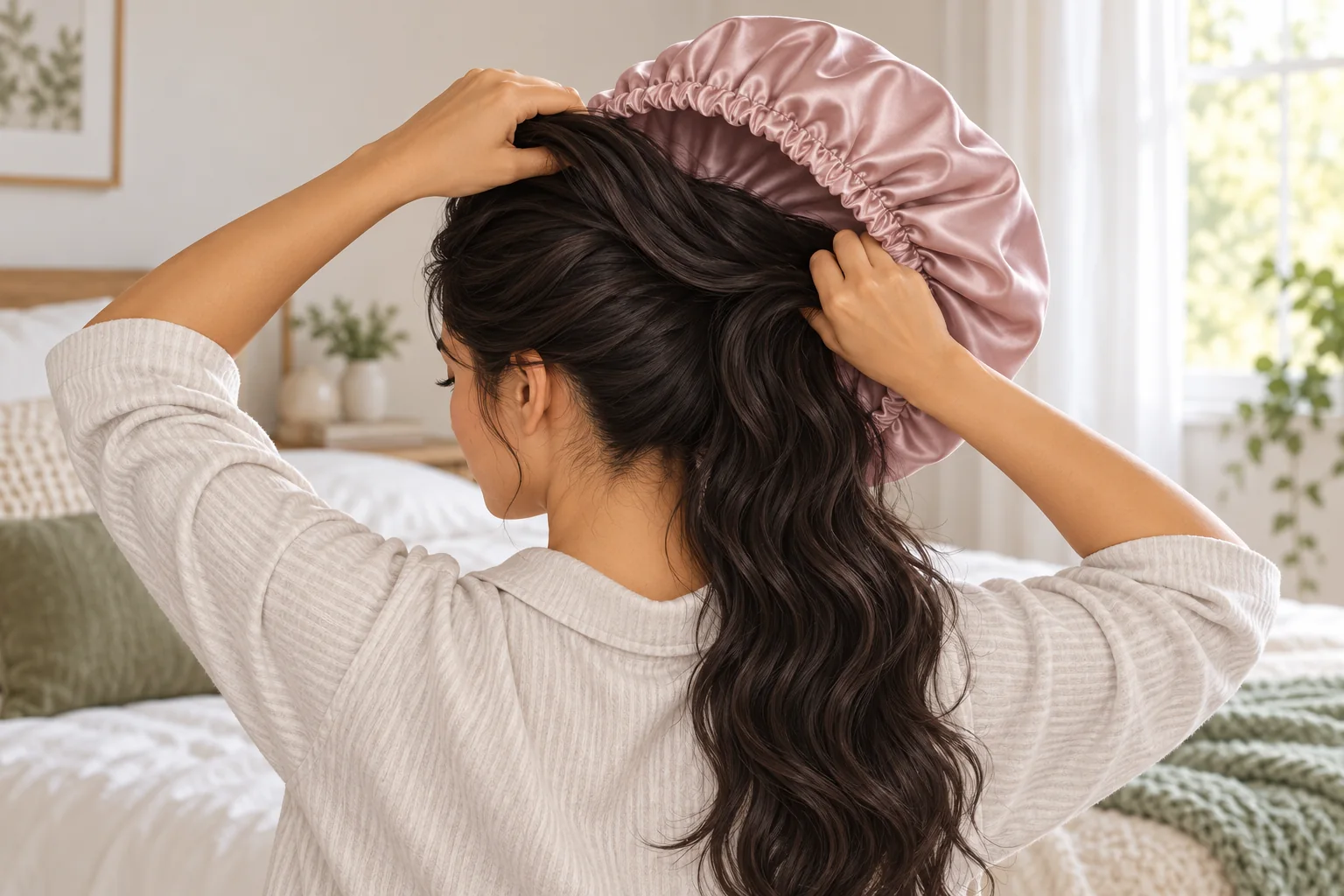
I know a bonnet can look large and still leave long hair crowded. I want a fit check that avoids another uncomfortable night.
I choose a bonnet for long, thick hair by checking crown capacity and band fit separately. I look for room for loose lengths, a comfortable edge, and a shape that suits my sleeping position. I never use tighter tension to make an undersized crown work.
At Zolay Nights, I want fit advice to explain the decision behind a purchase. I do not use hair length alone as a size chart. I will show how I would compare shapes, arrange the lengths, and check the result before committing to a nightly routine.
Why do I need to check crown room separately from band fit?
I can mistake a comfortable band for a complete fit. I still need to know whether the fabric gives my lengths enough room.
I treat the band as the part that sits around my head and the crown as the space that holds my hair. I need both to work. A wider opening does not prove that the crown can hold long or dense hair without crowding.
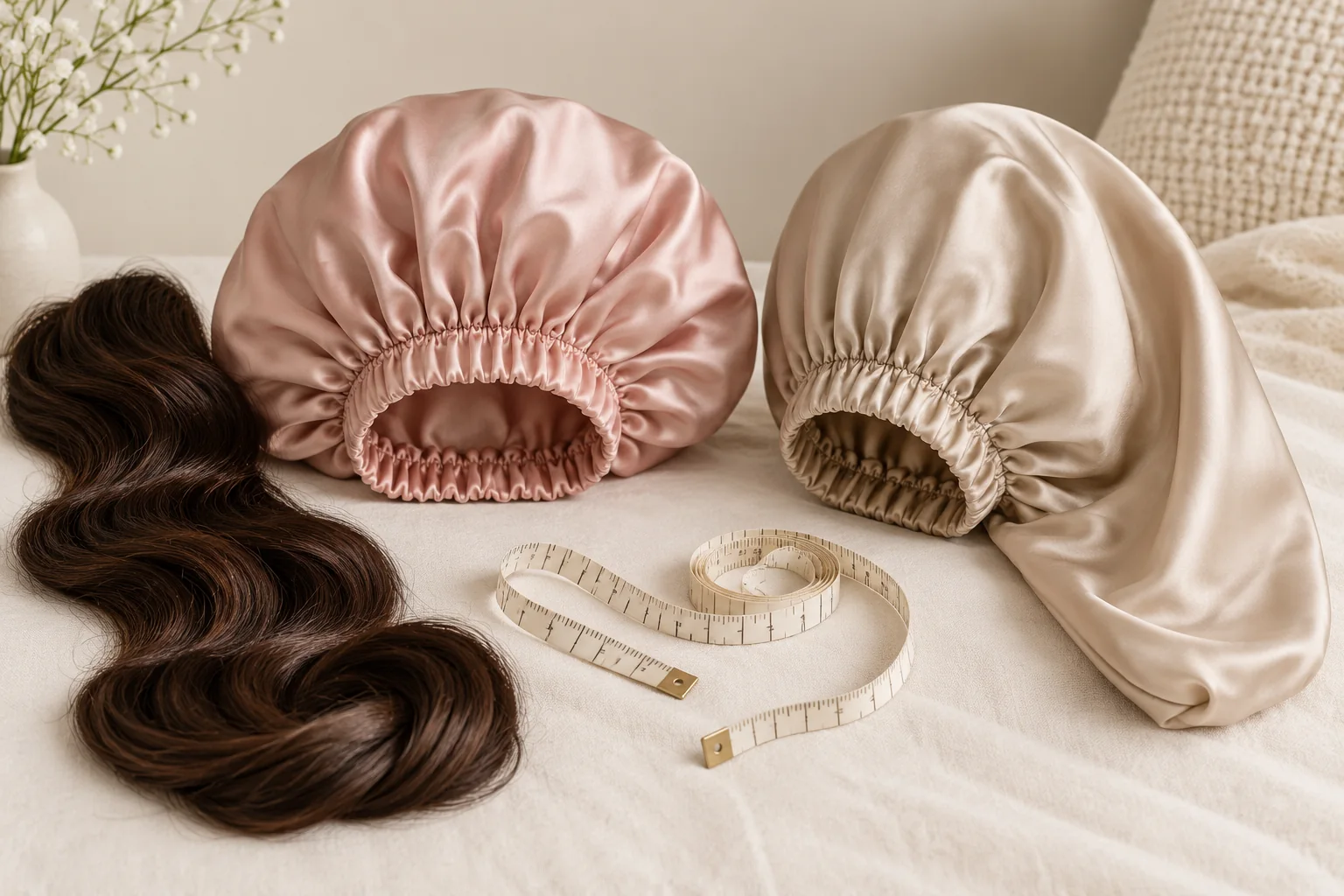
I compare two different jobs
I start by separating the edge from the fabric above it. I use the edge to judge contact around my head. I use the crown to judge how much hair the bonnet can contain in a loose shape. I do not assume that a product called extra large has a larger opening and a deeper crown. I ask what the seller actually measured.
I also separate length from bulk. I would not expect two people with waist-length hair to need the same crown. I consider the amount of hair, its natural shape, and the way the person wants to place it inside. I count a planned loose braid as a different arrangement from loose curls. I do not turn those differences into a universal size formula.
| What I notice | What I check next | What I avoid assuming |
|---|---|---|
| I feel a comfortable edge but a full crown | I check whether the lengths can move without pulling | I do not assume band adjustment adds fabric |
| I see spare fabric but feel a tight edge | I check the closure and opening range | I do not assume a roomy crown solves edge pressure |
| I feel a heavy bundle at one point | I check hair placement and crown shape | I do not assume more tension will balance the load |
I use my general bonnet selection guide when I still need to compare closures and fabric choices. Here, I keep the decision narrower. I want to know whether the crown can hold the arrangement I actually plan to wear. I would reject a promising band if I had to force the lengths into a hard bundle beneath it.
How do I assess the space my long hair actually needs?
I can buy from a dramatic product photo and still get the wrong shape. I need a more useful reference than a model's hair.
I assess my hair in its dry, usual bedtime state. I note length, bulk, and the loose arrangement I prefer. I compare those needs with the seller's crown dimensions and opening range. I ask for clarification when a listing gives only a size label.
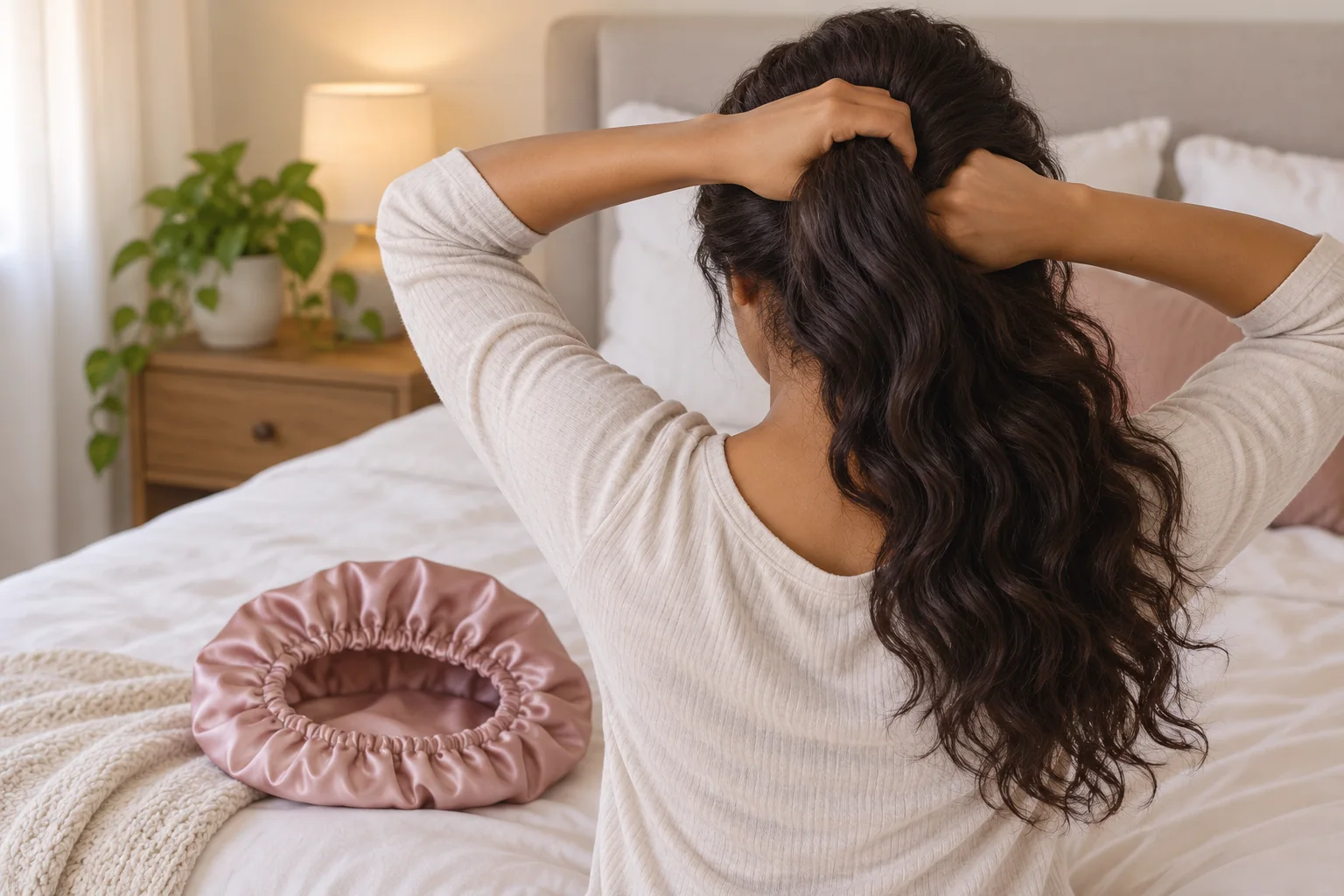
I use an arrangement rather than a guessed volume
I would start with the hair as it normally looks before bed. I would not judge capacity from wet lengths or from an unusually tight daytime style. I would gently gather the lengths in my hands and notice where the bundle naturally sits. I would note whether the hair forms a broad loose coil or needs a longer pocket behind the head. I would keep that observation as a practical reference, not as a lab measurement.
I would then read the listing for crown depth, crown width, and any stated length of an extended section. I would ask whether the measurements describe flat fabric or the usable interior shape. I would ask whether an adjustable band changes the opening only. I would also ask how a lining is constructed if the description does not explain it. I do not assume that a second layer gives me more usable room.
| Detail I record | Question I would send to a seller |
|---|---|
| I usually leave long curls loose | I ask how the crown is measured when open |
| I prefer a loose braid | I ask whether the back has an extended pocket |
| I dislike fabric beneath my neck | I ask where excess length rests in the intended fit |
| I need a broad opening | I ask for the relaxed and adjusted opening range |
I do not use a household container to measure hair volume. I also do not rely on a photo to infer inches. I would keep a short note with the measurements I receive so I can compare two listings on the same basis. I would regard an unanswered fit question as a reason to pause the purchase. I would not treat a long-hair keyword as a promise that the bonnet suits every long-haired person.
How do I place my lengths inside without a tight bundle?
I can make a roomy bonnet feel cramped by packing every strand at the crown. I want to change placement before judging the fabric space.
I gather my lengths loosely and let the bonnet support them without a tight tie underneath. I try a broad loose fold or a loose braid if it suits my hair. I stop if the arrangement pulls at my scalp or requires hard clips near my pillow.
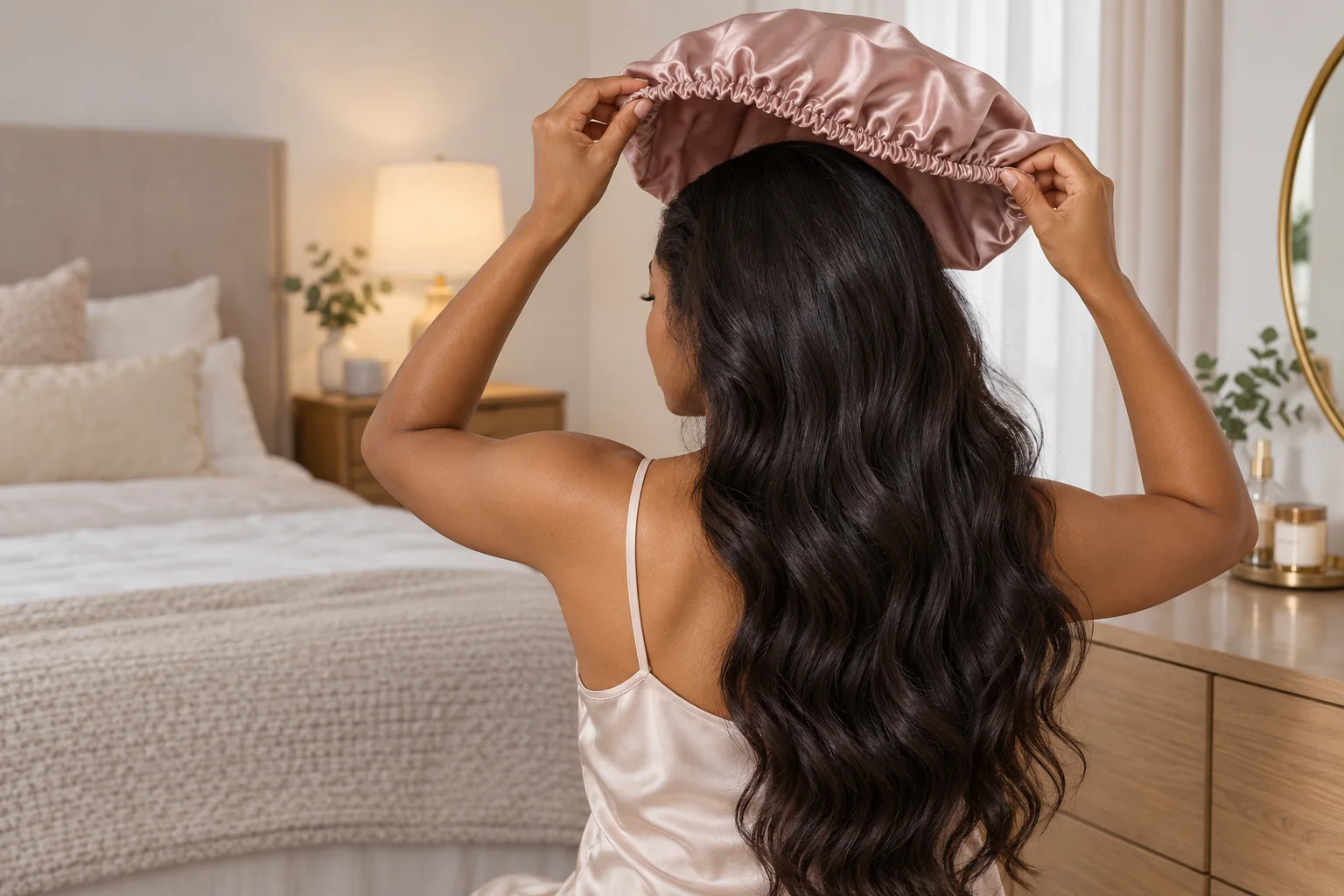
I leave the roots out of the packing problem
I would first check whether my chosen arrangement keeps the roots relaxed. I would not pull the front sections back hard to make the ends fit. I would support the loose lengths with one hand while placing the bonnet with the other. I would then let the fabric contain the hair instead of pulling the band against it. I would remove the bonnet and start again if the arrangement shifted into a tight lump.
I would compare a broad fold with a loose braid only if both suit my hair. I do not claim that one method is best for every curl pattern. I would judge the method by how it feels and where the lengths rest. I would not force a long braid into a sharp fold under a shallow crown. I would also avoid creating a bulky knot directly under the point where my head meets the pillow.
I take the American Academy of Dermatology's guidance on pulling hairstyles seriously.1 I use it to support a loose arrangement. I do not use it to claim that a particular bonnet prevents hair loss.
I would check the ends after loading, too. I would look for lengths caught beneath the edge and for fabric that is stretched against one section. I would open the bonnet gently rather than tugging a trapped strand free. I would not add a claw clip, pin, or hard roller just to keep everything inside. I would choose a different crown shape if the only workable arrangement required pressure or a hard object next to my head.
How do I check comfort in the position I sleep in?
I can feel comfortable while standing and discover pressure once I lie down. I need to check the bonnet where I will actually use it.
I make a short comfort check in my usual sleeping position before relying on a new fit overnight. I check the forehead, ears, neck, and hair placement. I loosen or remove the bonnet if I feel pulling, pain, or a hard bundle against the pillow.

I change one thing at a time
I would first sit with the bonnet in place and check whether the edge stays comfortable without repeated tightening. I would then lie in my usual position for a short check. I would pay attention to the point where the hair bundle meets the pillow. I would also notice whether an extended crown sits under my shoulder or neck. I would not assume that longer fabric is always easier to sleep in.
I would change one part of the arrangement at a time. I might spread the loose lengths more broadly before changing the band. I might move a loose fold away from the back of my head before trying a different shape. I would keep the opening comfortable during each change. I would not tighten the edge until the bonnet felt secure at the cost of pressure.
| What I feel during my check | What I would try |
|---|---|
| I feel a bulky spot behind my head | I spread the lengths or compare an extended shape |
| I feel pressure beside an ear | I adjust the edge position without pulling the hair |
| I feel the crown tug when I turn | I check capacity and placement before band tension |
I would record what changed rather than calling one night a controlled test. I would keep hair arrangement and band setting as clear as possible in that note. I would use the guide to a bonnet that keeps slipping if the main issue became movement rather than space. I would seek professional advice for ongoing scalp pain or hair loss. I would not keep trying stronger tension as a response to those concerns.
What do I ask before buying a larger bonnet?
I can spend more on a bigger-looking bonnet and repeat the same problem. I want the listing to answer a specific need before I buy.
I ask for usable crown dimensions, opening range, closure details, lining information, and the current return conditions. I explain my hair arrangement and the part of my present fit that fails. I choose clearer information over an unsupported claim that one size fits everyone.
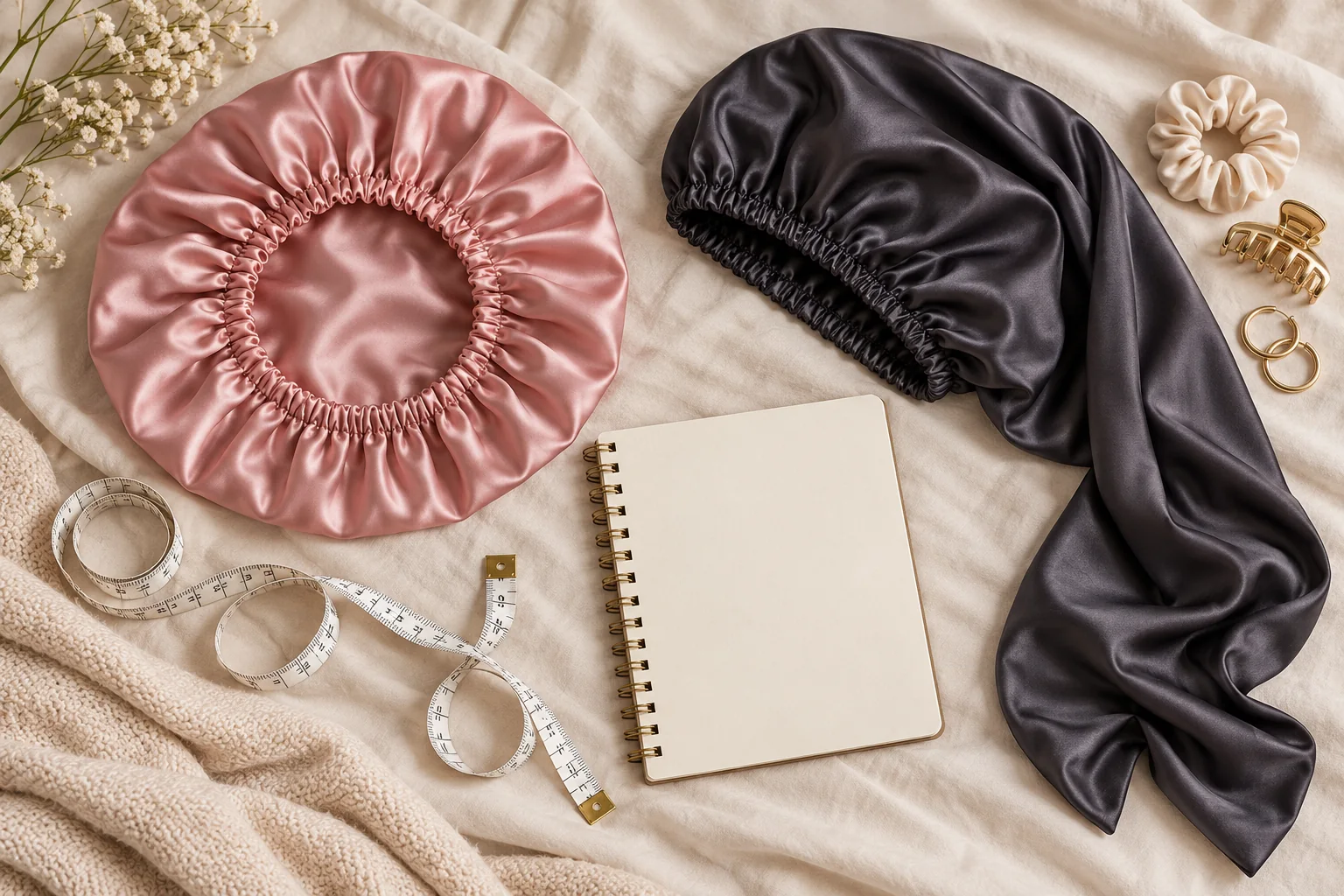
I make my question easy to answer
I would tell a seller whether I need more room above the head or more length behind it. I would describe my usual arrangement in plain terms. I might say that I leave my curls loose or that I prefer a loose braid. I would not ask a seller to guarantee a hairstyle result. I would ask for measurements and construction details that help me decide for myself.
I would read fiber information separately from fit information. I do not treat the word silky as a complete material description. I would also check which surface touches the hair if the bonnet has a lining. I would keep screenshots or written answers with the product details I used for the decision. I follow the FTC's online shopping advice to read descriptions carefully and retain relevant purchase records.2
I would then check the current return conditions before opening or trying a product. I would not assume that a worn sleep accessory can be returned because another store allows it. I would read the seller's actual terms and ask if a fit check is unclear. I would avoid turning a cautious question into a promise on the seller's behalf.
I would compare only the models that answer my fit problem. I would not pay for extra fabric if my current crown already has room and the edge alone feels wrong. I would also consider the guide to avoiding a flattened fine-hair arrangement if my main concern is root placement. I want the next purchase to address one defined issue, with enough information to explain why that choice makes sense.
Conclusion
I choose crown room and band comfort separately. I keep my lengths loose, check my sleeping position, and ask for measurements before buying a larger bonnet.
- I use AAD guidance for avoiding repeated pulling and tight styles. I do not treat it as a test of bonnet capacity or a promise of treatment. ↩
- I use FTC advice for checking descriptions and keeping purchase information. I still read each seller's current product and return terms. ↩
Images are AI-generated editorial illustrations. They do not identify or verify a specific product.