
How Do I Handle a Flat Chain Necklace Without Kinks?
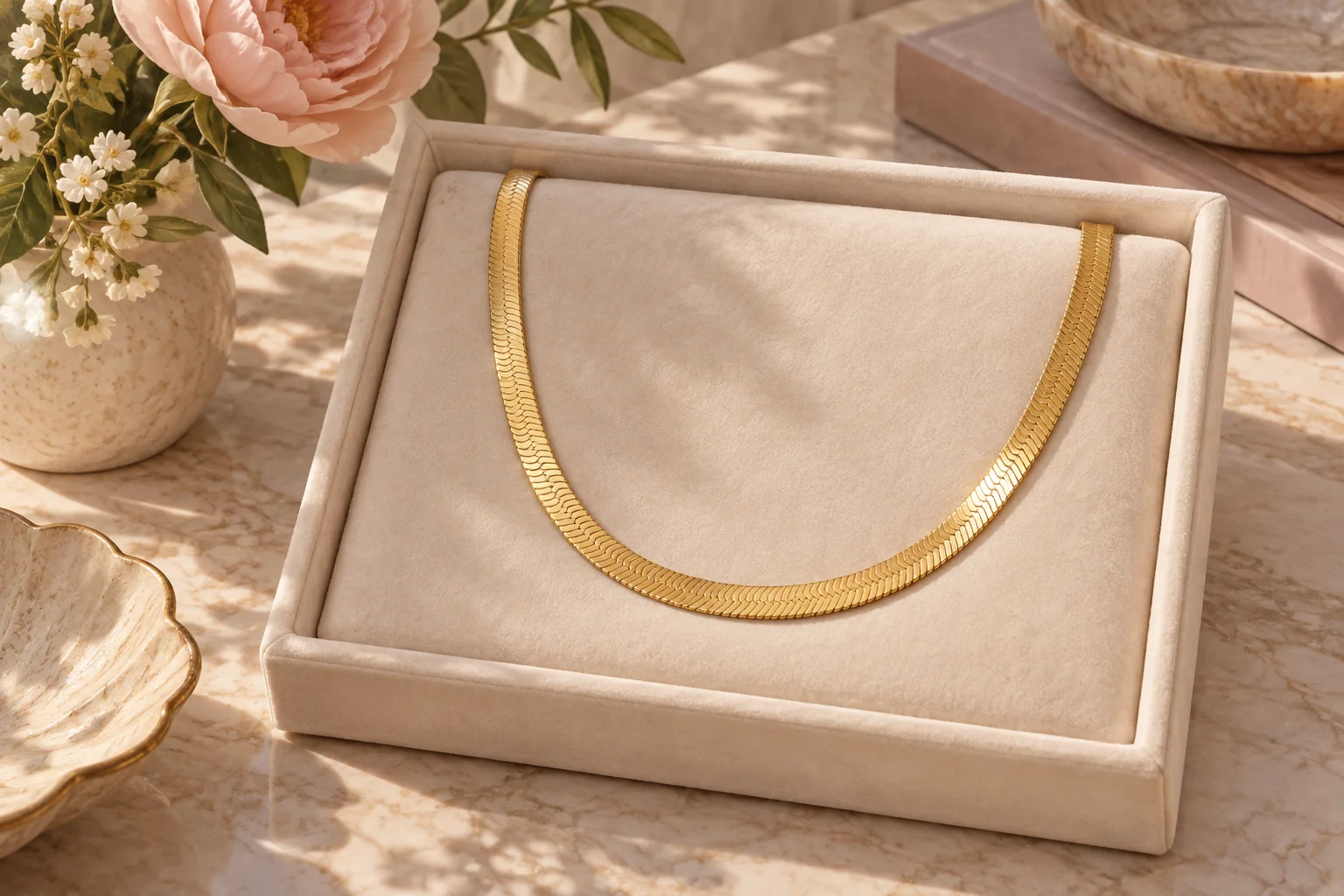
I can enjoy a smooth flat chain and gather it into my palm when I take it off. That quick habit can hide a sharp fold.
I handle a flat chain necklace according to its construction, keeping it supported in a broad natural curve. I use the clasp instead of pulling it over my head, avoid twisting or tightly folding it, and store it separately. I stop and ask for guidance if I notice a kink.
I write the Zolay Nights Journal to make everyday jewelry choices easier to use. This guide focuses on the shape of a flat chain during handling. I keep that question separate from metal color, shower exposure and packing several necklaces for a trip.
Is every flat chain necklace a herringbone chain?
I can see the same style words used for different chains. A familiar name can leave me guessing about how the actual piece moves.
I check the selected chain's description and close-up images instead of treating flat, snake and herringbone as interchangeable names. I separate link construction from base metal and finish. I ask for care guidance when the listing does not clearly describe the piece I selected.
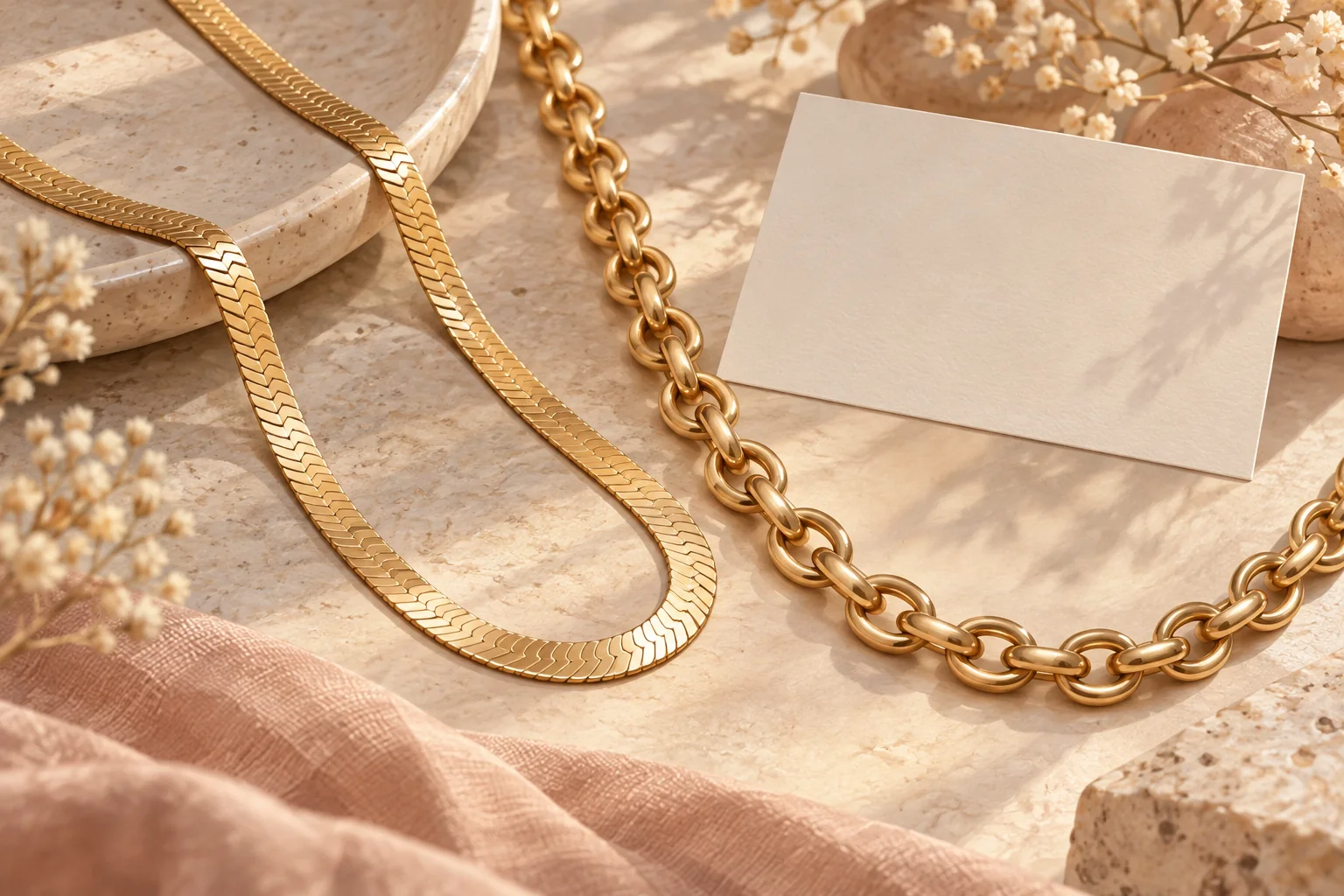
I compare construction before I choose a handling method
I look for a clear image of the selected style. I notice whether the chain has a broad flat surface or visible rounded links. I read the description for the actual option. I do not use shine alone to identify the construction. I also do not test the chain by bending it sharply to see which name fits.
I separate the name from the material. Herringbone describes a chain arrangement, while stainless steel or gold describes a stated material. Gold-tone describes color unless the seller says more. A flat profile does not establish a particular alloy, coating method or strength. I keep those questions separate when I read the listing.
| Detail I compare | What I avoid assuming |
|---|---|
| Selected style image | I avoid assuming every collection option is alike |
| Chain construction | I avoid treating all smooth chains as interchangeable |
| Base material and finish | I avoid judging composition from color |
The current Zolay Nights Textured Stainless Steel Chain Necklace Collection includes several profiles, including flatter herringbone shapes. I check the numbered option rather than transfer a shape from another image. I do not infer that all options bend the same way or accept the same added pendant.
Italian Fashions describes tight folding and sideways pressure as care concerns for its herringbone chains.1 I use that as construction-specific context. I do not transfer the seller's gold specifications, repair claims or guarantees to a Zolay Nights piece. I want the actual chain's instructions to tell me what handling it supports. If I cannot establish the construction, I ask before forcing it into a shape.
How do I fasten a flat chain without twisting it?
I can rush the clasp and rotate one end while the other hangs. A small pause gives me a clearer view of the chain's orientation.
I start with the chain supported on a clean surface, check its orientation, and handle the clasp without pulling the links. I keep the chain in a broad curve as I fasten it. I use the item's intended method and stop if the clasp or chain requires force.
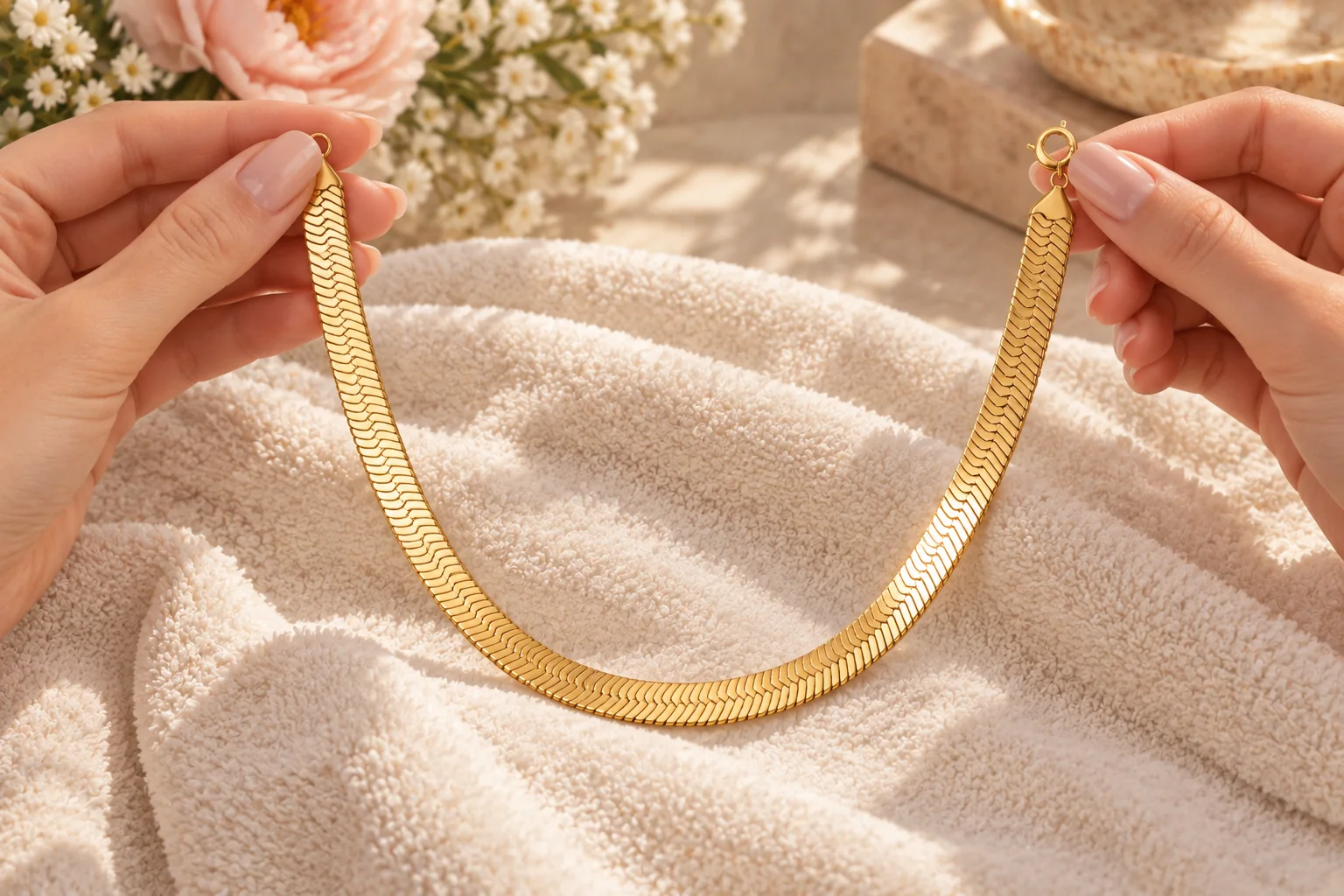
I prepare the piece before I reach for the clasp
I set the chain down where I can see both ends. I check that it is not caught beneath another necklace or folded under a pendant. I look at the clasp and its connection before I lift the piece. I do not pull on one end to free a section that I cannot see.
I hold the piece gently and keep its visible face in a consistent orientation. I follow the clasp instructions supplied for the design. If I normally bring a clasp toward the front to see it, I do that without forcing a twist through the chain. I do not keep rotating a closed flat chain around my neck when it resists that movement.
I choose a position where I can handle the closure comfortably. I can sit and use a mirror if that helps. I do not make speed the goal. If a small clasp is difficult for me, I ask about a suitable handling method rather than yank the connecting ring. I also do not attach a new extender or clasp helper without checking compatibility.
I notice the clothes near the chain. A raised collar edge, button or scarf can change where a flat piece rests. I make sure the chain is not trapped beneath the garment before I move on. I do not pull the fabric and necklace together to settle them. If the intended outfit makes the chain sit awkwardly, I can choose another piece for that outfit. I browse the Jewelry collection by the actual construction and care details, rather than expecting every necklace to suit every neckline or handling preference.
How do I remove it without creating a sharp fold?
I can take a necklace off carefully and then squeeze it into a small handful. The moment after opening the clasp needs the same attention as fastening it.
I open the clasp, support the chain as I lift it away, and place it on a clear surface without gathering it tightly. I do not pull a closed necklace over my head or tug a caught section. I remove the piece before activities that conflict with its care instructions.
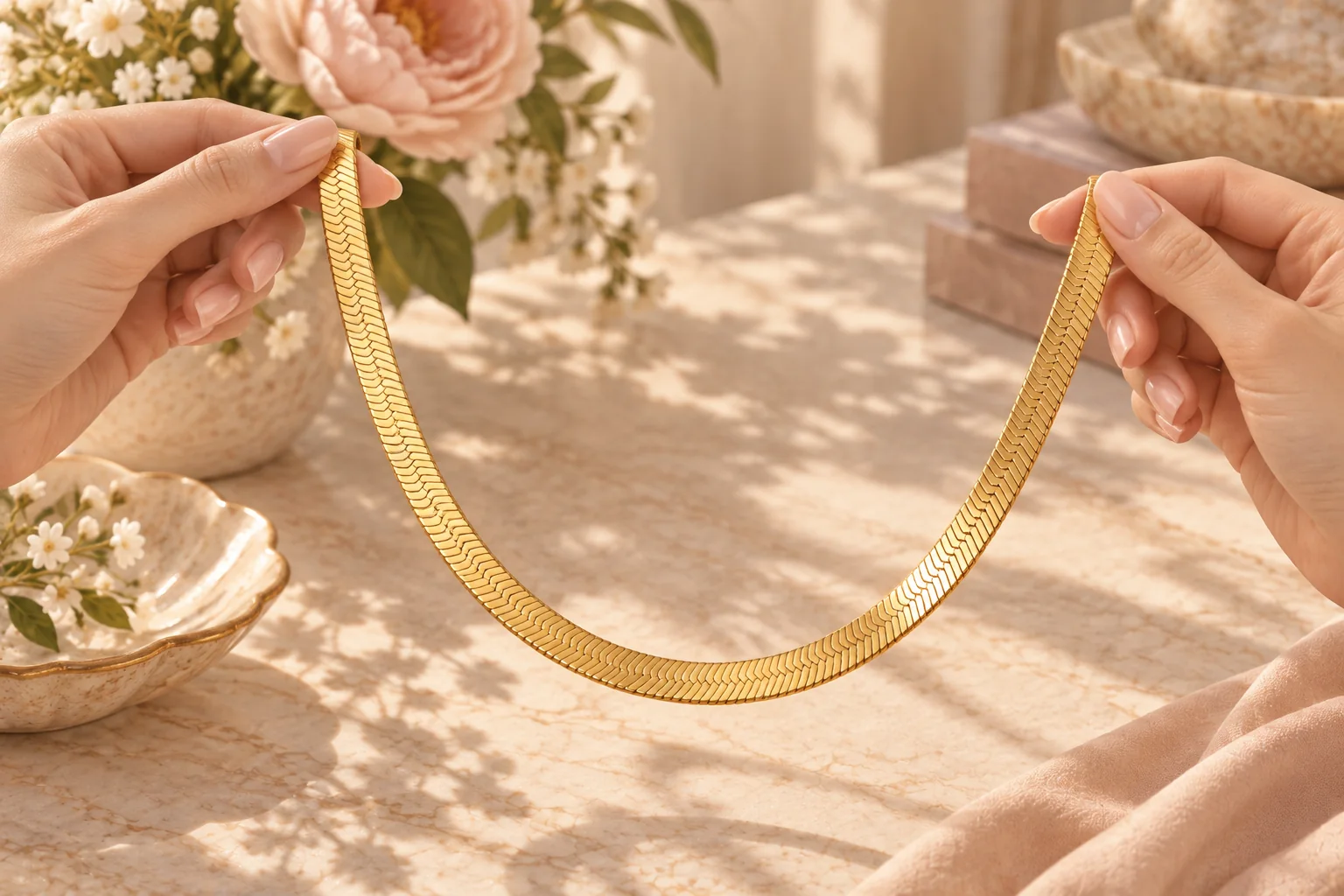
I make a clear place for the chain before removal
I prepare the storage surface first. I move other jewelry out of the way and make sure the area is dry. I do not begin removing the necklace with nowhere to put it. A clear surface helps me place the piece directly instead of carry it around in a tight bundle.
I find the clasp and open it without pulling on the chain. I support the ends as I lift the necklace away. I keep its shape open rather than let one section fold beneath another. I do not drag it through a collar or use the chain to lift a pendant that has caught on clothing. I stop and release the clothing gently if I can do so without force.
| Moment I check | Action I choose |
|---|---|
| Before unclasping | I prepare a clear, dry place |
| While lifting the piece | I support it without a tight fold |
| If the chain catches | I stop pulling and locate the obstruction |
I keep this handling question separate from cleaning. The current Zolay Nights chain descriptions advise avoiding prolonged moisture, abrasive cleaners, perfume and lotion. I use the shower-care guide when I need to decide about water exposure. I do not assume that a flat surface or stainless steel base changes those care limits.
I take the time to put the necklace away after removing it. I do not drop it into a pocket while I finish other tasks. I cannot promise that careful handling prevents every mark or problem. I can choose a routine that avoids an obvious sharp fold and gives me a chance to notice a changed clasp or link before the next wear.
What storage supports my flat chain's natural shape?
I can own a jewelry organizer that has no useful space for a flat chain. A small compartment can ask the piece to bend more sharply than I intend.
I choose a separate, roomy place where my flat chain necklace can rest in its natural shape without weight on it. I avoid tight coils, sharp folds and crowded pouches. I keep the piece dry and follow its specific storage instructions rather than make one organizer fit every chain.
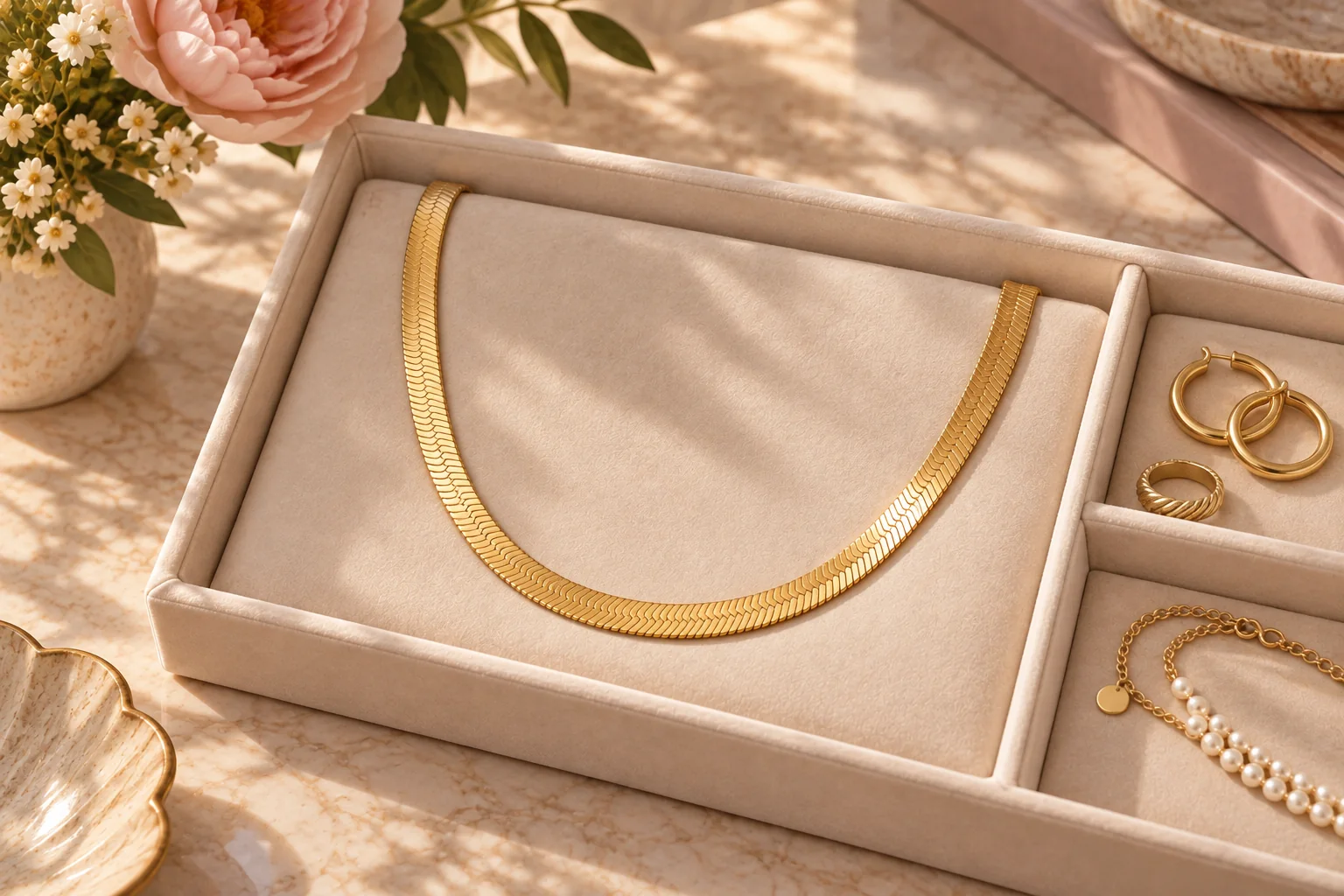
I check the space rather than the organizer's label
I place the chain in the compartment before I add anything else. I check whether its ends and clasp can rest without pushing the middle into a corner. I keep the piece separate from heavier pendants. I do not press the lid down if the necklace does not fit the available space.
I use a clean surface that will not catch the links. I keep the arrangement simple. A spacious shallow tray or suitable compartment can give me a clearer view than a tightly packed pouch. I do not assume that every padded pouch supports a flat chain's shape when it is squeezed inside a bag.
GIA's care guide discusses padded, separate jewelry storage.2 I use that general guidance alongside the flat chain's own instructions. I do not copy its advice for a different gemstone or metal into a cleaning routine for this piece. Its storage guidance does not establish that any container guarantees protection.
| Storage detail | What I want to see |
|---|---|
| Available space | I want the chain to rest without a sharp turn |
| Other pieces | I want their weight away from this chain |
| Closure and clasp | I want them supported without pressing into the chain |
I check the arrangement before I close a drawer or box. I notice whether the chain moved toward a divider or caught beneath the lid. I do not push it back with a heavier object. If the space is unsuitable, I choose another place.
I use the travel-storage guide when I need to pack several pieces. I keep this daily-care decision focused on the flat chain's shape. I do not add a new organizer just because it is sold for jewelry. I choose useful space and a supported arrangement first.
What should I do if a kink already exists?
I can see a raised section and try to press it smooth with my fingers. A quick home fix can make the original condition harder to assess.
I stop wearing or manipulating a flat chain that has a kink, raised link or damaged connection. I support it, document the changed area and ask the seller or a qualified jeweler about the actual construction. I do not promise it is repairable or force it flat with tools.
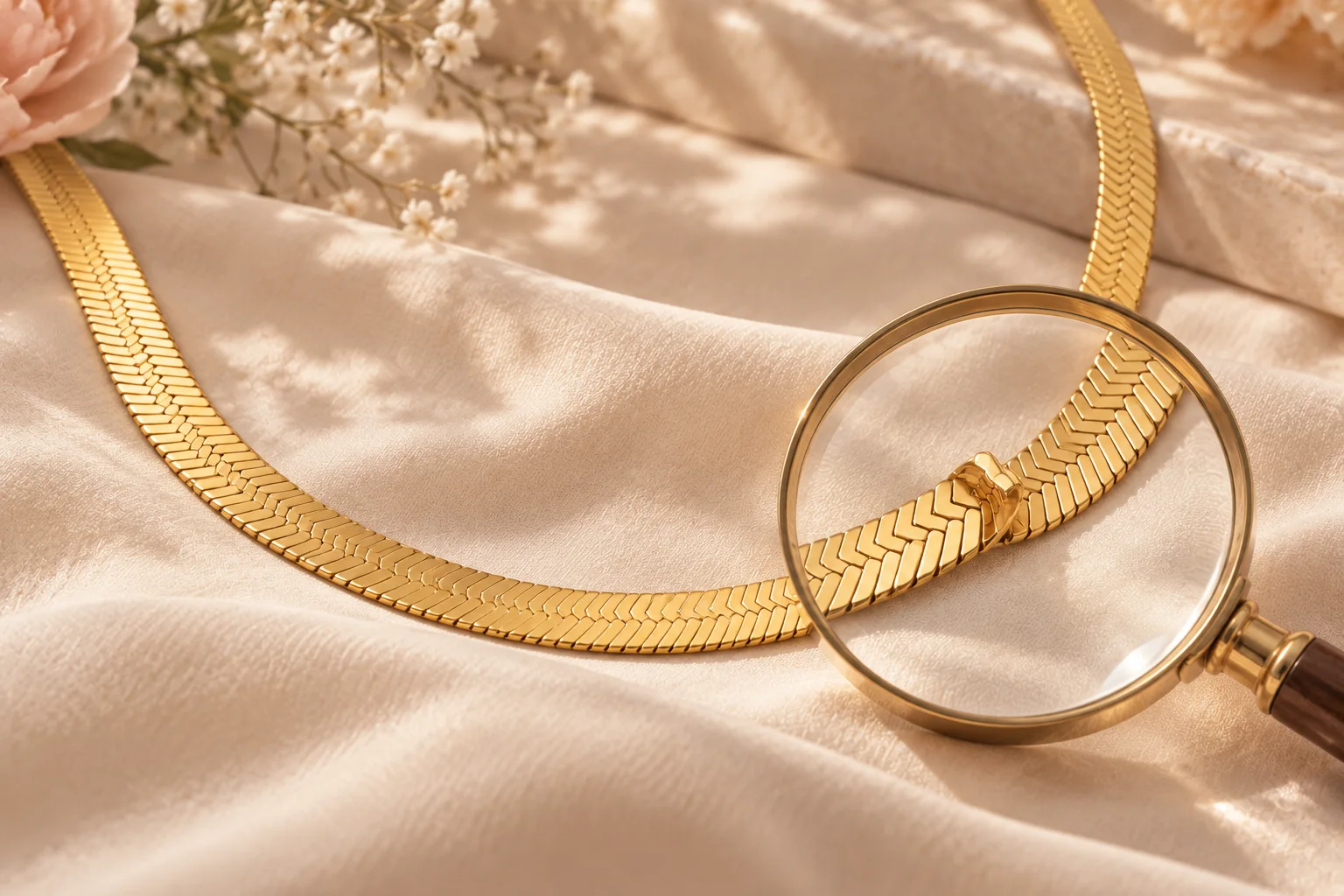
I describe the condition before I change it
I place the chain on a clean surface without pulling it straight. I note where the raised area sits and whether the clasp still closes normally. I do not rub the chain between my fingers until the mark disappears. I also do not use pliers, a roller or a weight as a home pressing method.
I take one photo that shows the whole piece and one that shows the changed area. I use ordinary light and avoid filters. I include the exact product and selected option when I ask for help. I explain when I first noticed the issue and what happened before that, if I know. I do not guess at a cause simply because the chain has a flat profile.
I ask what an assessment would involve. I want to know whether a proposed repair may change the chain's length, finish or clasp. I do not assume that a technique used for a solid-gold chain suits a gold-tone stainless steel piece. I also do not repeat a forum claim that every kink is easy to fix or that every flat chain is beyond repair.
I keep the item supported while I wait for advice. I do not keep wearing it to see whether the raised section settles on its own. I check the maker's current terms separately if I have an order-related question. I do not promise a free repair, replacement or refund on the basis of another retailer's policy. My aim is to preserve a clear view of the problem and choose a suitable next step for the actual chain, rather than force it back into a shape I cannot safely assess.
Conclusion
I handle my flat chain necklace with support and room. I avoid sharp folds, keep storage separate, and ask for an assessment before trying to fix a kink.
- Italian Fashions: Herringbone chain construction and care. I use its folding and pressure cautions as context for its chains, not a Zolay material or repair guarantee. ↩
- GIA: Tips on Caring for Jewelry. I use its general separate-storage guidance while following the finished item's own care instructions. ↩
Images are AI-generated editorial illustrations. They do not identify or verify a specific product.