
What If My Bonnet's Care Label and Product Page Disagree?
I can read hand wash on a bonnet's label and see machine washing mentioned online. I want a clear answer before I choose a method I cannot undo.
I match the label and webpage to my exact bonnet, compare instructions operation by operation and ask the seller to clarify any conflict. I pause the uncertain treatment while I check. I do not choose the more convenient instruction or assume that a webpage cancels a restriction on the item.
I treat the disagreement as an information problem first. I can often make the question smaller by checking the selected style, the wording and whether the two instructions describe the same part of care.
Do both instructions describe the exact bonnet I own?
I can compare a general silk article with a different bonnet's label and create a conflict that is not really there. I check the item's identity first.
I identify the bonnet style, selected option and any supplied care card, then check which item the webpage actually describes. I distinguish a general guide from product-specific instructions. I do not transfer permission from another style, lining or maker just because both products are called silk bonnets.
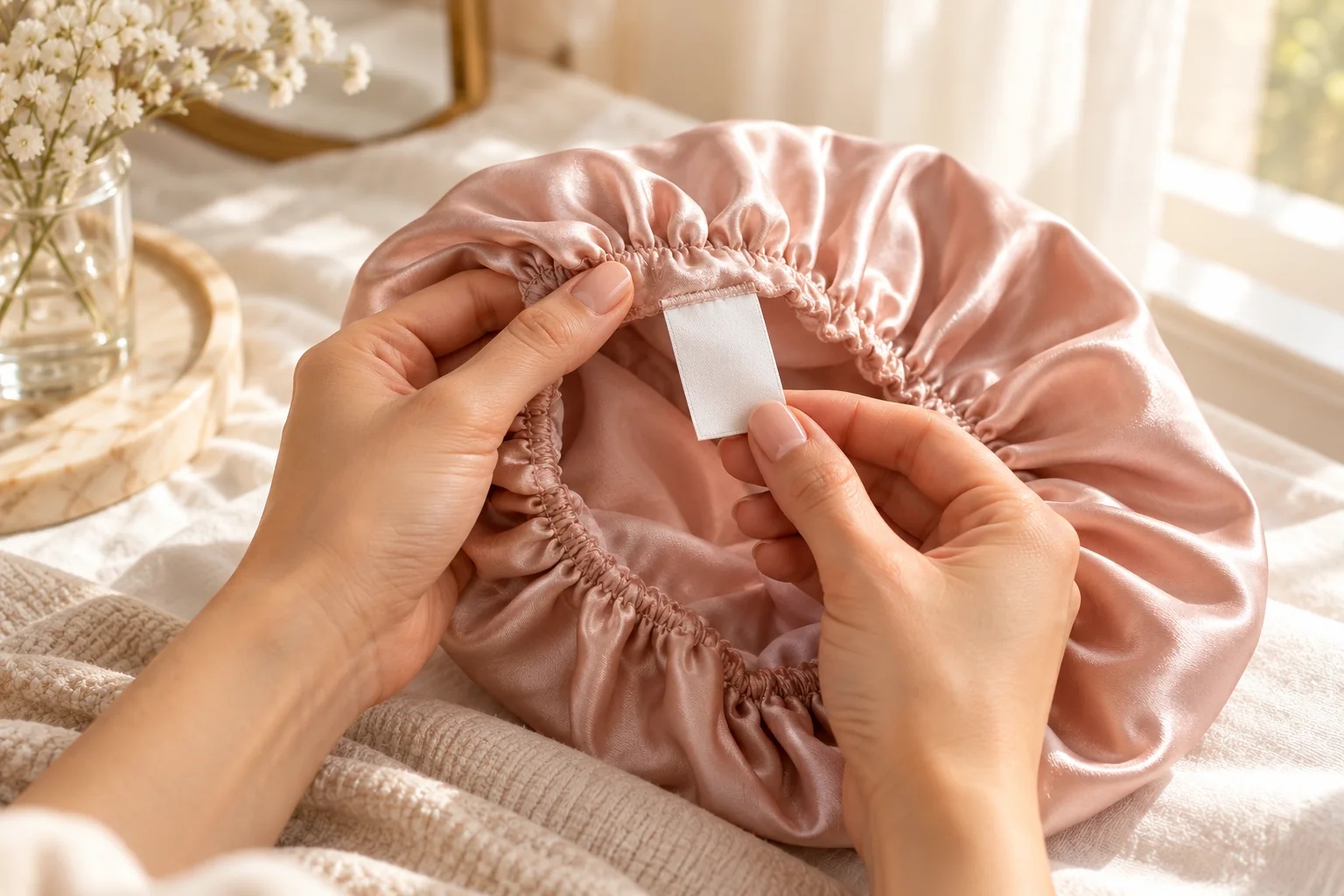
I match the instruction to the finished item
I start with the bonnet in front of me. I note the style and any option information from the order. I look for a sewn label, an included care card and instructions supplied with the packaging. I keep those sources together instead of relying on whichever one I happen to remember most clearly.
I check the webpage's scope. It may describe one product, several products in a collection or silk care in broad terms. I do not assume that a general statement about machine-washable silk was written for my bonnet. I also do not assume that two similar-looking options have the same lining, closure or trim.
| Source I find | Question I ask |
|---|---|
| I read the sewn label | I confirm that it belongs to this item |
| I read a care card | I check which product or collection it covers |
| I read a webpage | I identify whether it is a specific listing or general advice |
I use our product-detail record guide when I want to keep the selected option and original description together. I note when I saved a webpage because it may have changed since the purchase. I do not assume a change proves that the older instruction was wrong. I want enough context for the seller to explain which guidance applies to the actual piece. I can then ask about the difference without treating every page that contains the word silk as an equally specific instruction for my bonnet.
Am I comparing washing, drying and other care separately?
I can read a gentle washing instruction and assume it permits every later step. I separate the care operations so that I do not miss a drying restriction.
I compare washing, bleaching, drying, ironing and professional-care instructions separately. I read written limits alongside any symbols. I do not treat a permitted washing method as permission to tumble dry, bleach, iron or use a stain treatment, and I ask about any symbol I cannot identify confidently.
I give each instruction its own place in the comparison
I make a short list with one line for each relevant operation. I put the label's wording beside the webpage's wording. I avoid replacing a specific phrase with my own broader summary. I want to see whether the difference concerns the washing method, temperature, mechanical action, detergent or a later step such as drying.
I use GINETEX's guide to identify the different care-symbol families and their variations.1 I do not redraw a symbol from memory or assume every mark that looks like a bowl means the same thing. I check the full symbol, any bars or crossing lines and the accompanying words before interpreting it.
I keep the guide's explanation separate from the instruction on my own item. A reference chart explains what a symbol means when present. It does not decide which symbol should have been attached to my bonnet. I ask the maker to resolve that question if the symbol is missing, unreadable or inconsistent with the written text.
| Care question I have | Detail I compare |
|---|---|
| I want to choose a wash method | I compare the actual washing instruction |
| I want to use a dryer | I check the drying instruction separately |
| I want to treat a mark | I check the treatment and bleach restrictions too |
I do not combine convenient parts from different sources into a new method. I want one coherent plan for the finished item, with all its limits preserved. I also keep a professional-care instruction as a separate category rather than assume that any home washing method is a close enough substitute.
Is the wording different, or is there a real conflict?
I can see two phrases that look different and miss that one gives a preference while the other gives a limit. I compare the meaning before choosing a response.
I distinguish a recommendation from a prohibition, and a broad description from a complete method. I look for a specific instruction that one source allows and the other rules out. I do not treat silence about a step as permission or resolve a true contradiction by choosing the faster method.
I preserve the strength and scope of the wording
I read the complete sentence rather than select a useful phrase from it. Hand washing recommended and hand wash only do not make the same statement. I also distinguish air dry from a full washing instruction. I do not assume that a page discussing drying has answered how the bonnet should be cleaned first.
I compare conditions as well as methods. A webpage may mention a delicate cycle only with a particular protective bag and detergent. I do not remove those conditions when I write my note. I also do not treat cold water as a complete description of an entire wash process. I want to know which operation and which restrictions the source actually addresses.
I use the American Cleaning Institute's fabric-care advice as a reminder to read the product label rather than guess.2 I do not use that broad reminder to claim that a mislabeled item is impossible or that the seller never needs to clarify anything. I keep a real contradiction visible and ask about the exact wording.
I make the question concrete. I can say that my bonnet's label prohibits machine washing while the selected product page appears to allow it. I include the relevant text from each source without rewriting either into stronger language. I do not need to decide which source has legal priority to avoid an uncertain wash. I can pause the disputed action and seek a clear instruction for the item before proceeding.
What information should I send when I ask for clarification?
I can ask whether silk is washable and receive a broad answer that leaves the conflict unresolved. I give the seller the exact comparison I need explained.
I send the item name, selected option, a readable label photo and the relevant page text through the normal support route. I ask which complete method applies and how the conflicting wording should be understood. I keep order details private and describe any care already attempted honestly.

I make the reply easy to tie to my item
I identify the selected style before I describe the disagreement. I include a clear image of the whole label, not only the one symbol that worries me. I also provide the current product-page address and the relevant wording. I avoid sending a long collection of unrelated care articles that makes the actual question harder to find.
I state what I have and have not done. I can explain that I have paused washing while I check the method. If I already cleaned the bonnet, I describe the steps and products used. I do not omit that history to make the case sound simpler. I want the reply to address the current item and its current condition.
| Information I provide | Purpose it serves |
|---|---|
| I provide the exact style and option | I help identify the intended instructions |
| I provide the complete label and page wording | I show the actual disagreement |
| I describe any previous care | I make the current condition easier to understand |
I ask for a full sequence rather than a one-word answer. I want to understand washing, detergent limits, handling and drying together. I can also ask whether a corrected care card or an updated instruction is available. I save the reply with my item record instead of relying on memory. I do not take a quick statement about the fiber alone as a complete answer about a bonnet that also contains a lining, closure or other parts.
How do I turn a clear reply into a usable care plan?
I can receive a useful answer and lose it before the next wash. I turn the resolved instruction into a short plan that stays attached to the item.
I save the confirmed method with the bonnet's identity and keep its conditions intact. I check the cleaning product's directions and prepare the drying space before starting. I ask again if the reply still contradicts the label, and I do not treat an incomplete answer as a finished care plan.
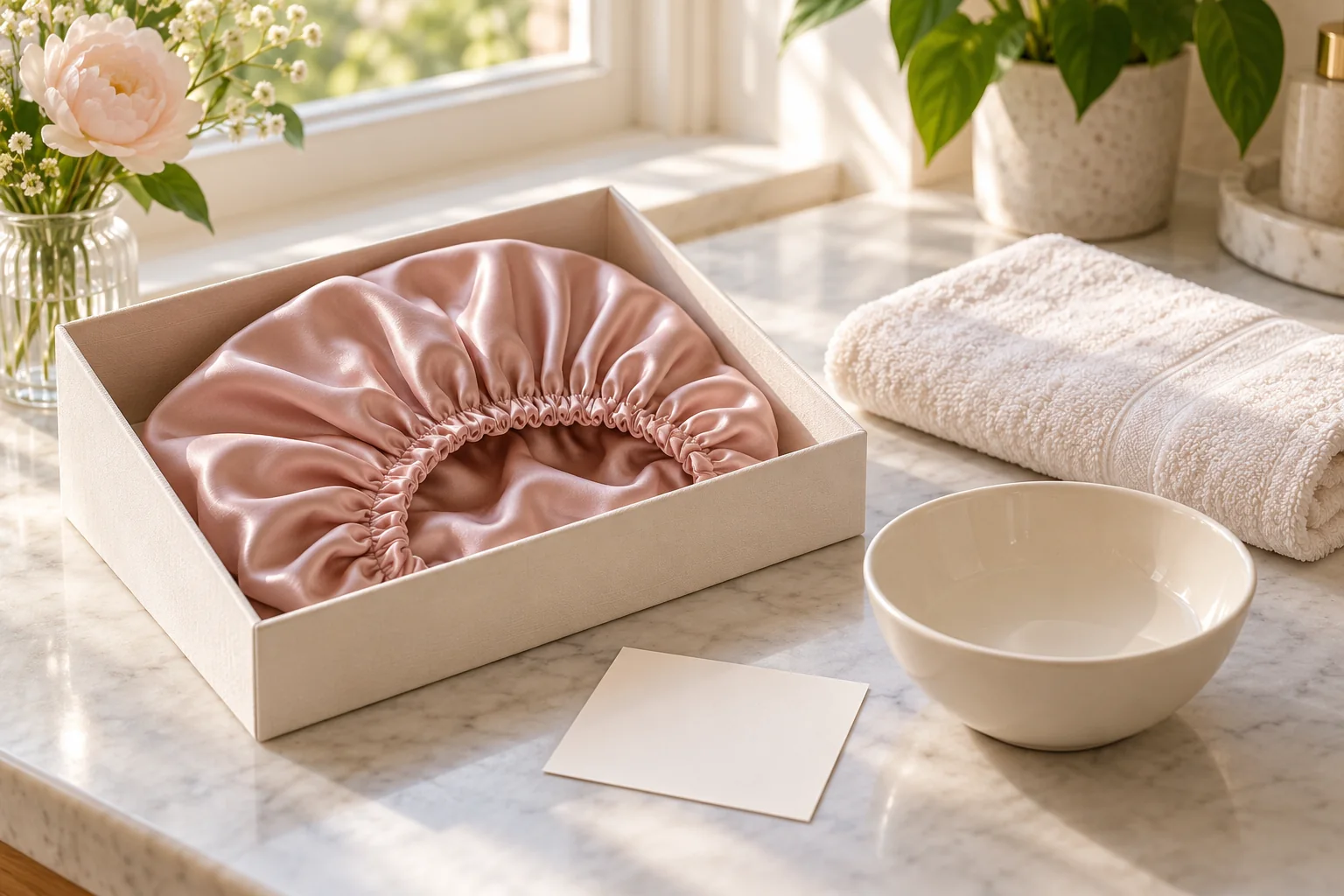
I keep the resolved instruction specific and repeatable
I write a brief note in plain language. I include the confirmed method and any limits on temperature, soaking, mechanical action, bleach or drying that the maker supplied. I keep the original reply available beside that note. I do not shorten the plan so much that it loses an important condition or changes a recommendation into a guarantee.
I check the detergent as a separate product. I want its intended fabrics and directions to fit the confirmed care plan. I use our bonnet detergent guide when I need to compare the actual bottle with the item's instructions. I do not assume that a mild-sounding name or an attractive fragrance establishes suitability for silk.
I prepare the drying arrangement before the wash begins. I want to follow the confirmed sequence without having to improvise midway through it. I also keep the bonnet separate from other items whose care needs differ. I do not turn a resolved instruction for one bonnet into a new rule for everything in my laundry basket.
I use our silk care page for general context while preserving the exact instruction I received. I check again when I replace the bonnet with another style or receive an item with a different label. I want a small, dependable record that helps me act with confidence. I do not want the next wash to restart the same debate between an old webpage, a half-remembered reply and the label still attached to the item.
Conclusion
I match the sources to my bonnet, compare each care step and clarify real conflicts. I save one complete instruction before starting an uncertain treatment.
- GINETEX's care-symbol guide explains separate care operations and symbol variations; it does not identify a particular item's correct label. ↩
- The American Cleaning Institute's fabric-care guidance encourages reading product labels rather than guessing about care. ↩
Images are AI-generated editorial illustrations. They do not identify or verify a specific product.