
What Do I Do When My Silk Bonnet Band Feels Loose?

I can notice my bonnet slipping more and assume its elastic has failed. A changed hairstyle or folded edge can lead me toward the wrong fix.
I inspect my clean, fully dry bonnet and compare its opening with its earlier fit. I separate elastic, ties and adjustment parts before deciding what changed. I follow the item's care instructions and ask about a persistent loose band. I do not use heat or extra tension as a repair.
I write the Zolay Nights Journal to make accessory care decisions clearer. Here, I focus on an opening that feels different after use. I want to distinguish a changed component from a changed way of wearing the bonnet before I replace it or alter it.
Which part of my silk bonnet band provides the hold?
I can call every opening an elastic band. That shortcut makes it harder to tell whether the fabric, fastening or elastic needs attention.
I identify the parts that set my bonnet's opening: fixed elastic, fabric ties, a drawstring, or an adjustable strap. I inspect each part according to its intended use. I do not assume a silk crown tells me the material or repair method for every component around it.
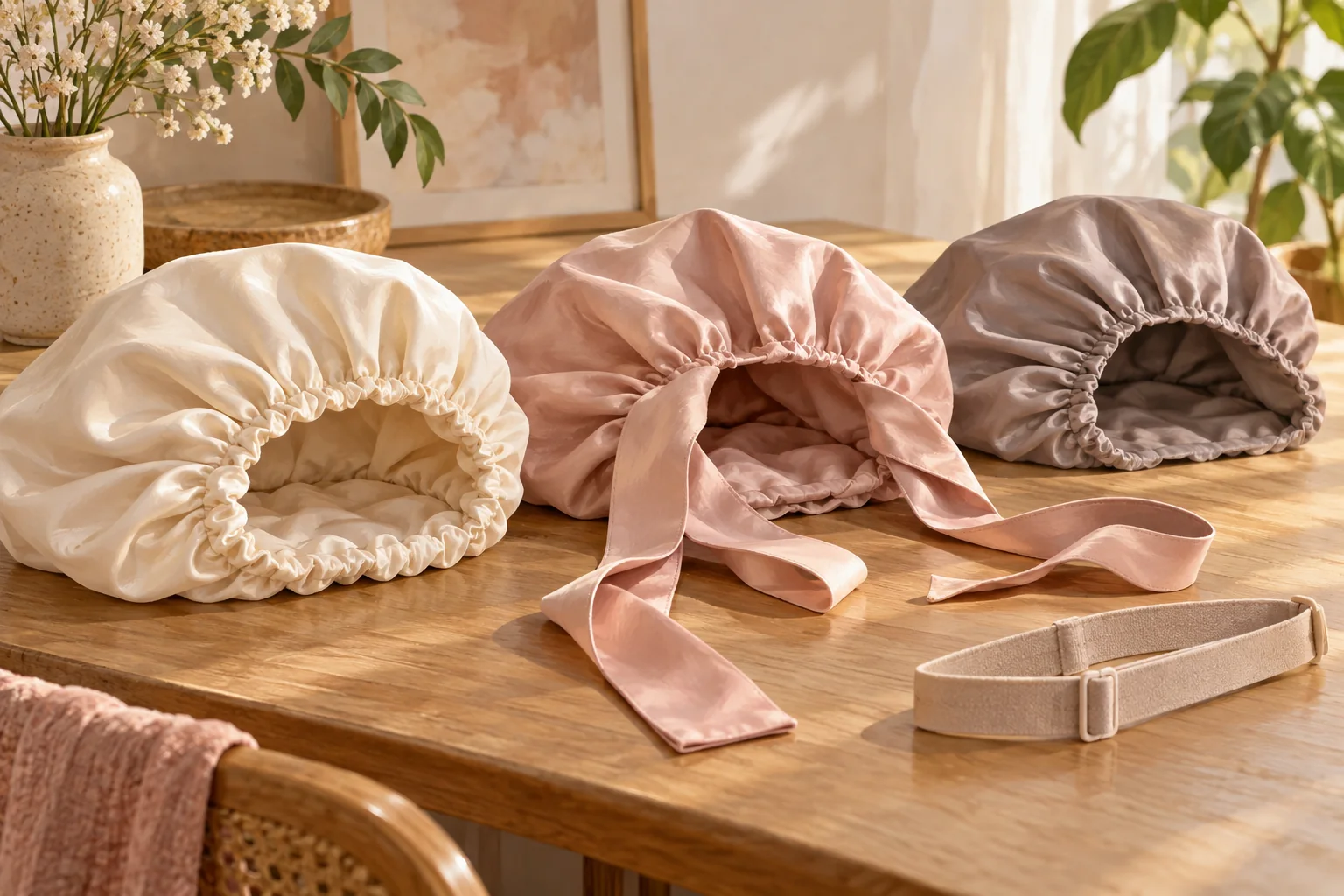
I identify the mechanism before I inspect it
I start with the exact product description. I look at how the opening closes and which part changes its size. A gathered edge may contain elastic. A ribbon may rely on the bow I tie. An adjustable design may combine elastic with a strap or buckle. I do not judge the mechanism only from the word adjustable.
I use our closure guide when I need help naming those differences. That guide compares mechanisms before purchase. My question here is narrower: I want to understand why the opening on an item I already use feels different. I keep the original construction in mind as I inspect it.
| Part I identify | Question I ask |
|---|---|
| Gathered elastic edge | I ask whether the gathering looks even while relaxed |
| Fabric ties | I ask whether the intended route or bow has changed |
| Strap or drawstring | I ask whether its setting or condition has changed |
I read the material statement for the whole item. The current Signature bonnet description names a gathered elastic opening and a silk body. The Adjustable style names elastic and an adjustment strap. I do not turn a silk-body statement into proof that the elastic, buckle or every tie uses the same fiber.
I also check what the maker actually says about replacing components. If the description is silent, I leave replacement as a question. I do not open a seam to find the elastic, shorten a band or attach another fastening before I have guidance for that construction. An inspection should help me describe the item without changing it.
How do I tell a changed band from a changed fit?
I can compare two different hairstyles and blame the bonnet for the difference. I need a consistent starting point before I draw a conclusion.
I compare the same bonnet while clean, dry and relaxed, with a similar loose hair arrangement and the same intended closure setting. I note gathering, seams and adjustment position. I do not stretch it repeatedly or treat one night's slipping as proof of worn elastic.

I describe a change that I can observe
I place the bonnet on a clean surface first. I look at the opening without pulling it to its widest point. I notice whether one section is flatter, twisted or uneven. I look for a seam that appears different. These observations help me describe the condition. They do not tell me the cause on their own.
I then think about how I last wore it. I ask whether my hair arrangement became smaller or fuller. I ask whether I moved the bow or buckle. I ask whether a ribbon edge folded under itself. Each change can alter how the opening sits. I want to compare a similar setup rather than call every difference wear.
I use a measurement only when the maker gives a useful method. I record whether the opening is relaxed and where I measured it. I do not compare a stretched circumference with a seller's unstated measurement method. I also do not use a maximum stretch figure as a comfortable fit target. If the listing gives no measurement method, I ask before assigning meaning to my number.
I take a simple photo of the relaxed opening if I need help. I include enough of the crown to show its relationship to the edge. I keep the photo free of filters and do not pull the band just to make the change look larger. I can say that a section now lies flat or that the same setting no longer feels comfortable. I leave the material diagnosis to someone who can assess the construction. I stop an awake fit check if it causes pressure or pulling.
Can washing make a loose silk bonnet band fit again?
I can reach for hot water to shrink an opening back into place. That experiment can affect parts of the bonnet that I did not mean to change.
I do not use washing, hot water or a dryer to repair a loose silk bonnet band. I wash only by the finished item's instructions when cleaning is needed. I let it dry fully before comparing fit, and I ask about a change that remains after ordinary permitted care.

I separate cleaning from an attempted repair
I check whether the bonnet is due for cleaning for its own reasons. I do not wash it repeatedly to chase a smaller opening. A cleaning instruction tells me how to maintain the finished item. It does not establish that the method restores elastic or repairs a fastening.
I read the care instructions again before I wash. The current Zolay Nights bonnet descriptions call for gentle hand washing in cool water with silk-safe detergent and drying away from direct sunlight. Several also specify no wringing and gentle reshaping. I follow the exact item's guidance. I do not replace that method with a household shrinking recipe.
| Care choice | What I keep separate |
|---|---|
| I wash when cleaning is needed | I do not call washing an elastic repair |
| I dry by the specified method | I do not use heat to reduce the opening |
| I compare the fully dry item | I do not judge wet fabric as its final fit |
GINETEX describes care symbols as instructions for permitted washing and drying processes.1 I use that framework to read a label or maker's directions. I do not infer a repair promise from a washing symbol. I also do not assume that a method for another silk garment suits a bonnet with elastic, several layers or adjustment hardware.
I use the washing and drying guide for the wider routine. I keep this question focused on the changed opening after the item is fully dry. If the same problem remains, I document it instead of repeating the wash with a stronger treatment. I do not stretch the bonnet over a bowl during drying or leave it under tension in storage.
When do I stop adjusting the band and ask for help?
I can compensate for a loose section by tightening another part. That can hide the original issue and create pressure where the bonnet used to feel comfortable.
I stop when the opening needs unusual tension, a fastening does not work normally, or a seam or component looks damaged. I set the bonnet aside and describe the specific change to the seller. I do not add clips, pins or extra wraps to make it usable for sleep.

I keep the inspection from becoming a modification
I inspect the fastening gently while awake. I do not keep pulling a drawstring that catches or forcing a buckle that will not move normally. If a tie is frayed, I note where the fraying appears. If a seam is open, I do not pull it farther apart to show the problem. I want to preserve the condition I am asking about.
I write down when I first noticed the change and the care method I used. I include the product name and selected style. I explain whether the item was always loose or became loose later. Those are different questions. A new item that never fit and an older item with a changed opening need different context.
I keep the request short. I might ask whether the seller can assess an uneven section or whether the design allows a particular component to be replaced. I do not promise myself that a photo will establish the cause. I also do not treat a seller's advice for one model as a repair instruction for every bonnet.
I leave the bonnet aside if I cannot wear it comfortably through its intended adjustment. I do not add a fastening near my resting contact or tie an extra loop around another sleep accessory. A complicated workaround can make the routine harder to repeat. I would rather know that the design needs attention than hide the change behind more hardware. If the seller cannot establish a suitable next step, I consider whether another opening style meets my needs without requiring extra pressure.
How do I choose between repair, replacement and another design?
I can buy the same bonnet again without learning why this opening did not suit me. A clear decision helps me avoid repeating the same mismatch.
I consider repair only when the maker supports it for the actual construction. I consider replacement when the item cannot be used comfortably and no suitable repair is available. I compare another design by its opening range, crown room, handling and care rather than expecting any band to last forever.

I compare a next step with the problem I actually found
I start with the observation that matters most. I may need a useful opening range. I may prefer a closure that I can reset gently. I may want fewer handling steps. I do not treat those preferences as evidence that elastic is always unsuitable or that ties never change with use.
I ask for specific repair information before I agree to an alteration. I want to know which component would change and whether the finished fit and care instructions would change too. I do not assume that a repair is possible, affordable or covered by a guarantee. I also do not cut into the bonnet myself as the first step toward finding out.
| Next step I consider | Information I need |
|---|---|
| Maker-supported repair | I need a method for this construction |
| Replacement of the same design | I need to understand the earlier fit and care issue |
| A different opening style | I need relevant measurements and handling details |
The FTC advises reading product descriptions and keeping purchase records when shopping online.2 I use those habits when comparing a replacement or asking about an existing order. I do not use them as a promise of eligibility for a worn-item return. I check the seller's current terms separately.
I compare the actual descriptions in Home & Rest before choosing. I do not expect a higher momme number, a wider tie or more layers to solve a changed opening by itself. I want the next design to answer the practical issue I identified. I can make that decision without promising a fixed lifespan or an overnight result.
Conclusion
I inspect my silk bonnet band before trying a fix. I separate care from repair, record the change, and choose a comfortable next step using the actual construction.
- GINETEX: Care symbols. I use its explanation of permitted care processes, not an elastic-repair claim. ↩
- FTC: Online Shopping. I use its product-description and purchase-record guidance, not a guarantee of return eligibility. ↩
Images are AI-generated editorial illustrations. They do not identify or verify a specific product.