
How Do I Compare Numbered Necklace Styles Before Buying?

I can like a chain collection and still feel lost among its numbered options. I need to connect each choice with the details that actually matter.
I compare numbered necklace styles by matching each option with its own image and supplied measurements. I check length, width, link shape, finish and clasp separately. I narrow the choice to two options, record any missing detail and avoid treating a style number as a shared sizing standard.
I want the comparison to answer how I will wear and handle the necklace. I use a short decision table instead of choosing the largest photo or assuming that the next number means a larger chain.
How do I match a style number with the correct necklace?
I can compare one option's title with another option's photo and make the wrong choice. I start by making sure the details belong together.
I select one numbered option, confirm the image and read the details attached to that selection. I repeat the same check for the second option. I do not assume that a gallery's first image or a collection-wide description gives every measurement for every style.
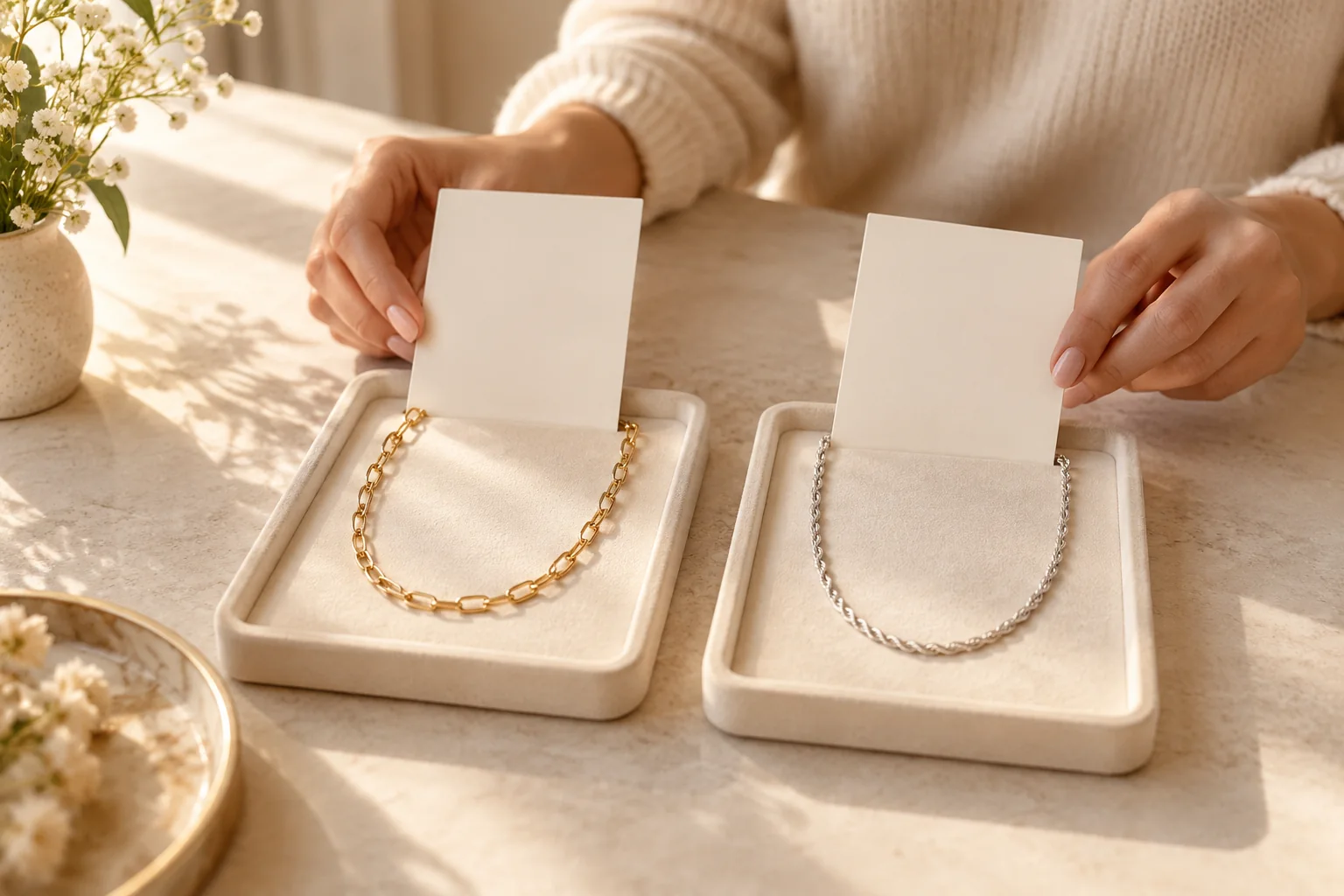
I identify the exact option before comparing features
I begin with the product's own option labels. I note the selected number and the image that the page associates with it. I check whether the page changes its description, availability or other details after that selection. I do not use the number alone to identify a chain in a different collection or another seller's listing.
I can use our Essential Stainless Steel Chain Necklace Collection as a practical example. Its description directs me to the exact numbered option image for the chain's shape and scale, and its styles can vary. I read the supplied details for the option I want. I do not turn the collection name into a promise that every choice has the same length, width or visual weight.
| Detail I record | Mistake I avoid |
|---|---|
| I record the selected style number | I do not compare an unselected gallery image by accident |
| I check the corresponding image | I do not assume the largest picture represents the largest chain |
| I keep unclear details marked unknown | I do not borrow a measurement from the next option |
I pause if I cannot connect the selection with a clear image. I can ask the seller which photograph and measurements belong to that option. I want a reply tied to the exact number, not a general statement that the collection offers several designs. I also check the chosen option again before adding it to my order. I keep that last review short because the useful work is the comparison I have already made.
How do I compare necklace length, width and scale?
I can read a chain's length and overlook its width, then receive a piece that feels visually different. I compare those measurements as separate features.
I compare length with length and width with width, using the same units and the exact option's supplied dimensions. I check any pendant and extender measurements separately. I use photographs to understand the design, but I do not estimate physical size from zoom, cropping or screen display.
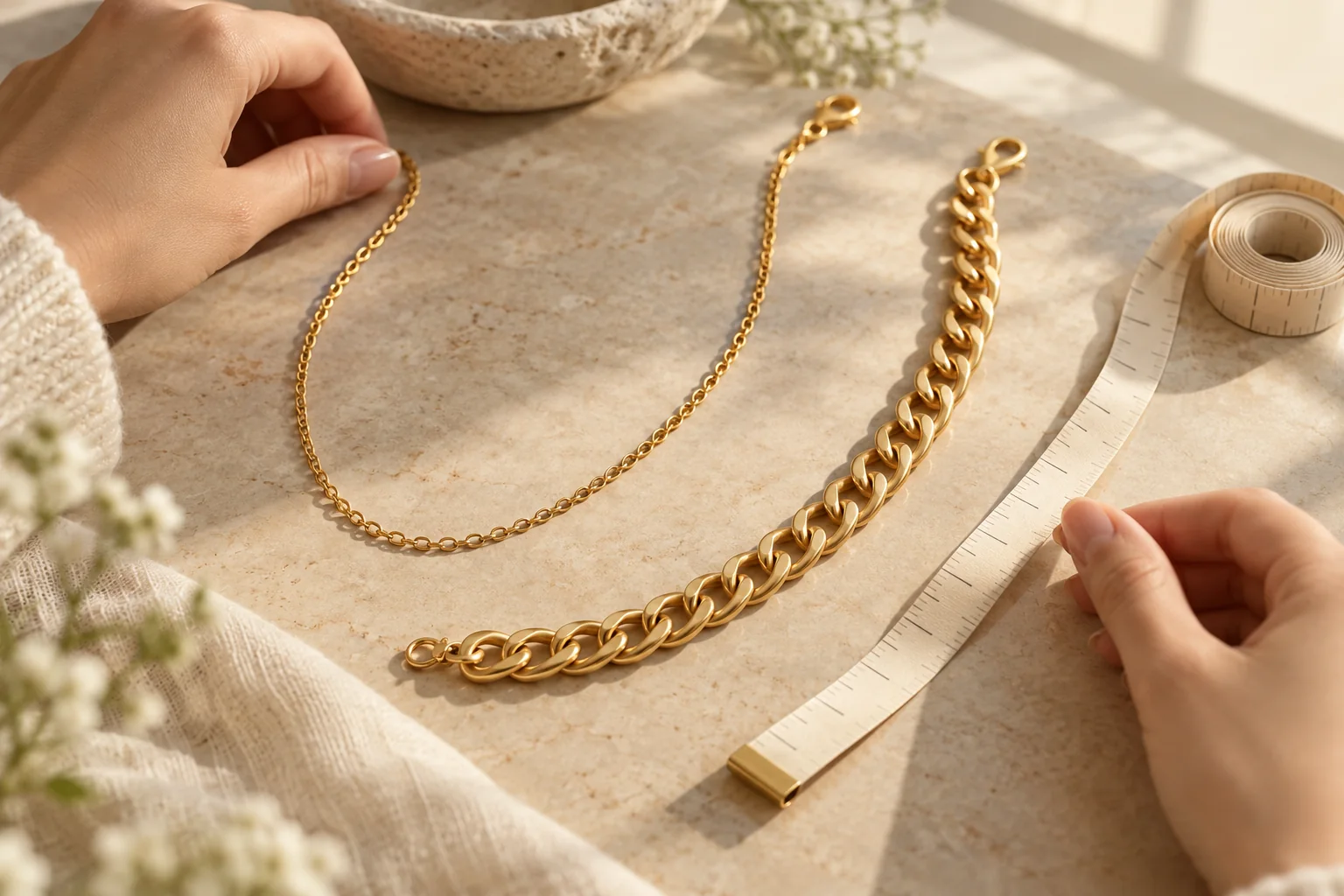
I give each measurement one clear job
I use the necklace's stated length to think about where it may sit. I use width to think about the visible scale of the chain. I do not treat either number as a complete fit promise. My neck, neckline and the necklace's overall design still affect how I understand that measurement in an outfit.
I keep units consistent across my comparison. I do not compare an inch value with a centimeter value as if the numbers meant the same thing. I also read whether an extender is included in the listed length or described separately. I ask when that point is unclear rather than add the values in the way that gives the fit I want.
| Measurement I check | Question I use it to answer |
|---|---|
| I check the stated necklace length | I estimate the intended resting area |
| I check the stated chain width | I compare the chain's visible scale |
| I check pendant and extender details | I separate the drop and adjustment from the main chain |
I use our necklace length guide when I want a starting point for comparing lengths. I do not expect a model's photograph to show my exact fit. I also avoid calling a chain light or heavy from the image alone. I look for an actual supplied weight if that feature matters to me, and I keep a missing weight marked as unknown. I would rather ask one focused measurement question than choose an option on the basis of a close crop that makes a fine chain appear substantial.
Does a chain style name tell me how the necklace is built?
I can recognize a familiar chain shape and assume I know its construction. I need to separate a visual category from the exact piece being sold.
I use chain style names to describe visible patterns, then check the item's own construction details. I do not infer strength, flexibility, weight or snag resistance from a name alone. I compare the actual links, connections and supplied instructions instead of ranking all styles from a photograph.
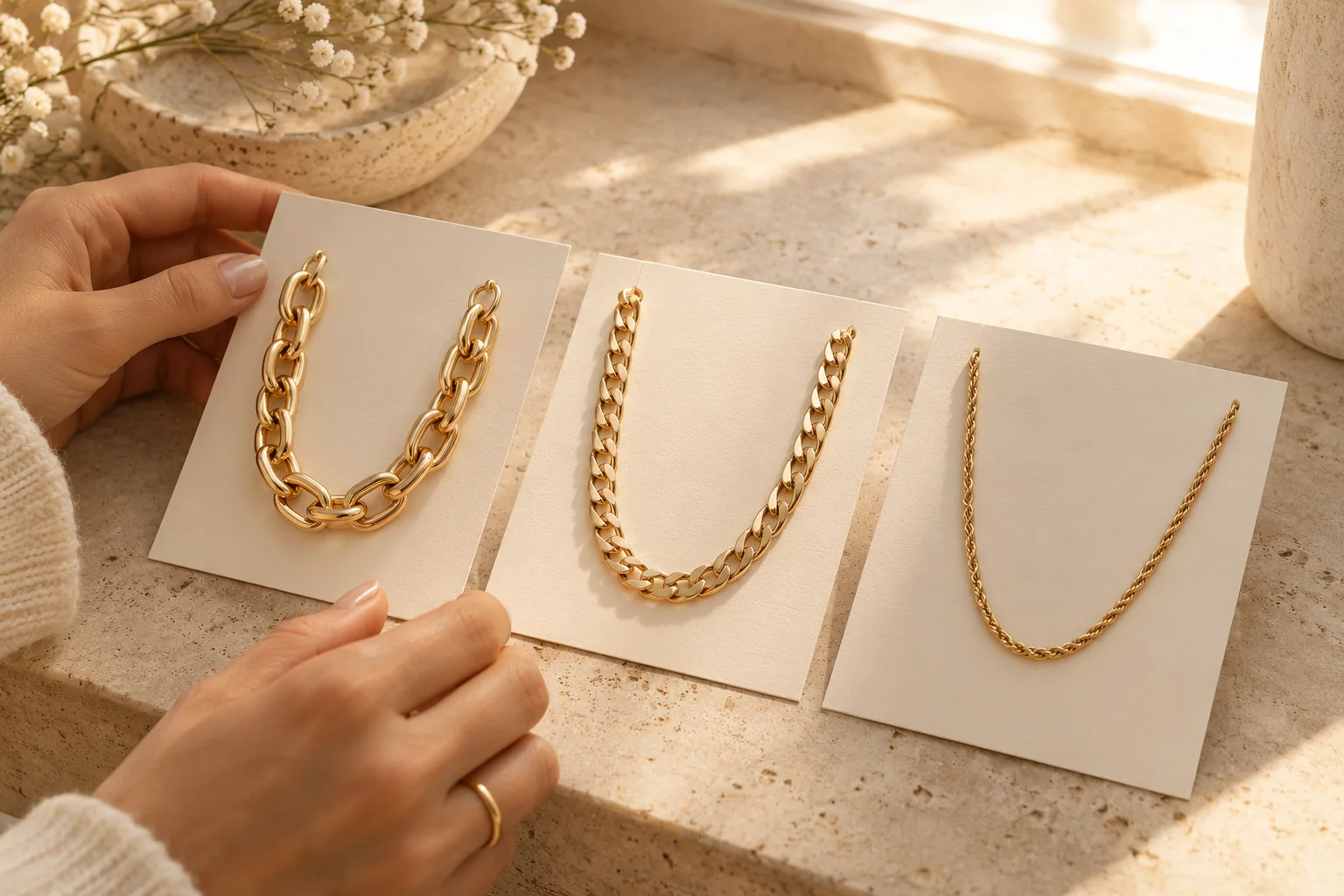
I compare the pattern without inventing performance
I may see terms such as rope, box, curb or snake in necklace shopping results. I use those terms to ask about a link pattern or overall appearance. I do not assume every seller uses the terms in exactly the same way. I look at the selected option and ask for clarification if the name and image seem to describe different designs.
I compare the shape with the outfits I plan to wear. I may want a fine line near a collar or a more visible chain over a smooth top. I can describe that preference without calling one design universally better. I also keep the clasp and any pendant in the comparison. A chain image does not answer how the complete necklace opens or whether it is intended to carry a separate pendant.
I do not turn visual thickness into proof of durability. I may see a broad chain that appears strong, but I still need information about its actual construction and care. I do not add a pendant because the link pattern looks substantial. I ask whether that use is intended for the selected item and whether the connection is suitable.
I keep the same restraint when I read metal descriptions. The FTC's Jewelry Guides overview emphasizes accurate representation of jewelry materials and related qualities.1 I use that context to read descriptions carefully. I do not treat the guides as certification of our collection or another seller's claims. I want a useful statement about the exact item rather than a broad assumption based on the shape of its links.
Which finish and clasp details should I confirm?
I can settle on a link pattern and miss the details I will handle each day. I check the finish and opening before choosing the final option.
I confirm the stated base material, finish wording, clasp type and care instructions for the selected necklace. I keep gold-tone and silver-tone descriptions separate from precious-metal content. I ask about a missing detail that affects my decision rather than assume every option in the collection shares it.

I ask about the detail that changes my choice
I read what the description actually says about the metal. I keep a stated stainless steel base separate from a finish color. I do not add a grade number, coating process or coating thickness when the listing does not supply it. I also do not assume that gold-tone means solid gold or that a silver-colored chain contains sterling silver.
I use our guide to stainless steel and gold-tone labels to keep those terms distinct. I want to know what the supplied wording supports, and I leave an unknown as an unknown. I do not convert a familiar material name into an allergy, waterproof or lifetime-finish promise.
I check how the necklace opens. I want an image or clear description of the actual clasp, especially if I find small fastenings difficult to manage. I do not infer the opening from a front view of the chain. I also distinguish a sliding adjustment from a fastening and ask which part is intended to move.
| Missing detail I notice | Question I ask |
|---|---|
| I cannot identify the clasp | I ask which opening belongs to my selected style |
| I see only a finish color | I ask what material and finish information is supplied |
| I need to understand adjustment | I ask which measurements include the extender or drop |
I read the care instructions before I decide. I compare them with the handling I am willing to do, not with a claim that the necklace needs no care. I can choose a different option if the instructions do not suit my routine. I keep that practical choice separate from an unsupported judgment about the quality of every piece in the collection.
How do I make a useful two-option comparison before ordering?
I can keep opening new tabs and become less certain about what I need. I make the decision smaller by comparing two relevant options on the same basis.
I choose two styles that fit my intended use and compare their confirmed image, dimensions, finish, clasp and care. I mark missing information plainly. I review the current total cost and policies before ordering, and I choose the option that answers my needs with the fewest unresolved questions.

I let confirmed details drive the final decision
I first write down the outfit or occasion I have in mind. I may want a subtle chain for a smooth neckline or a stronger visual line for an open collar. I use that purpose to select two candidates. I do not compare every option at once or keep a style in the list only because its photograph looks impressive.
I give both candidates the same questions. I identify the selected image, note the supplied length and width, read the finish wording and check the clasp. I mark any detail that is not supplied. I do not fill an empty cell with a guess based on a similar necklace elsewhere. I want my table to show the limits of the comparison as clearly as its useful details.
I can decide which unknown matters. I may be able to choose without a supplied weight if the other details answer my needs. I may need a clear clasp image before I can make a sensible choice. I ask that question before ordering rather than treat all missing information as equally important or equally harmless.
I follow the FTC's online-shopping advice to review the details, total cost and applicable policies before I buy.2 I check the current page because those terms can change. I do not assume another store's return period or shipping promise applies here. I make one final check that my selected style number matches the option I compared. I want the order to reflect a clear decision about the actual piece, with its known features and any remaining limits kept visible.
Conclusion
I match each number with its actual image, compare confirmed details and keep unknowns visible. I choose necklace styles for my own outfits and handling needs.
- FTC's Jewelry Guides overview describes guidance on accurate jewelry representations; it is not product certification. ↩
- FTC's online-shopping advice supports reviewing product information, total cost and policies before buying. ↩
Images are AI-generated editorial illustrations. They do not identify or verify a specific product.