
How Do I Choose Between Gold-Tone and Silver-Tone Jewelry?
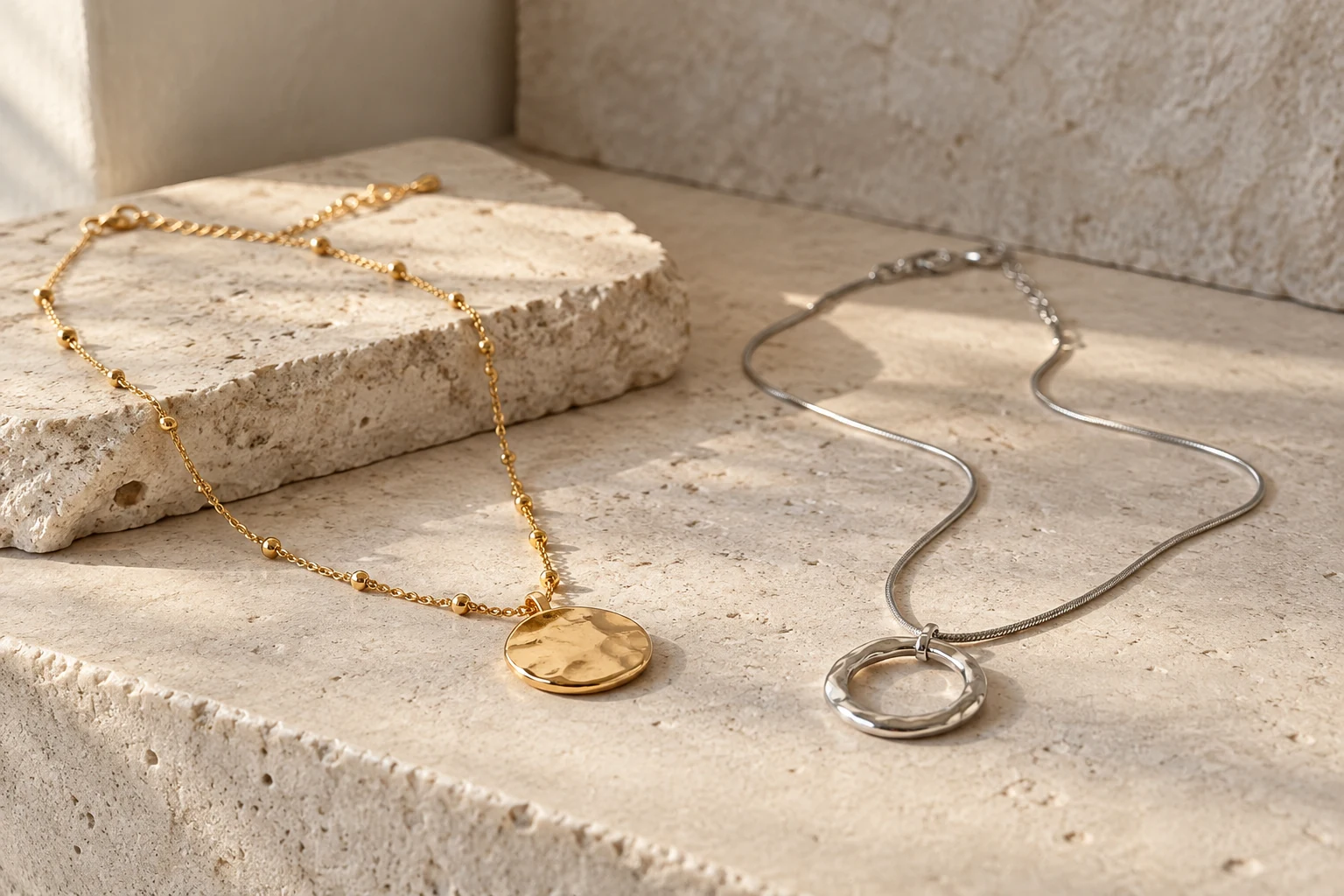
I can turn a simple color choice into a rule I never asked for. That pressure can hide the pieces I actually enjoy wearing.
I choose gold-tone or silver-tone jewelry by comparing both colors with my clothes and favorite pieces. I read the material and finish separately from the color name. I can wear either or mix them when I like the result and the pieces feel comfortable.
I use color as one part of the choice. I also need useful product details, a workable fit and a care routine I can follow. I check these parts together before I decide.
Do I need to follow a skin-tone rule?
I can feel boxed in by advice that assigns one metal color to my skin. A rigid rule gives me little room for personal preference.
I use skin-tone advice as an optional styling idea. I compare colors directly near my face in ordinary light and choose the effect I enjoy. I do not need to reject a favorite piece because a color guide puts me in a different group.
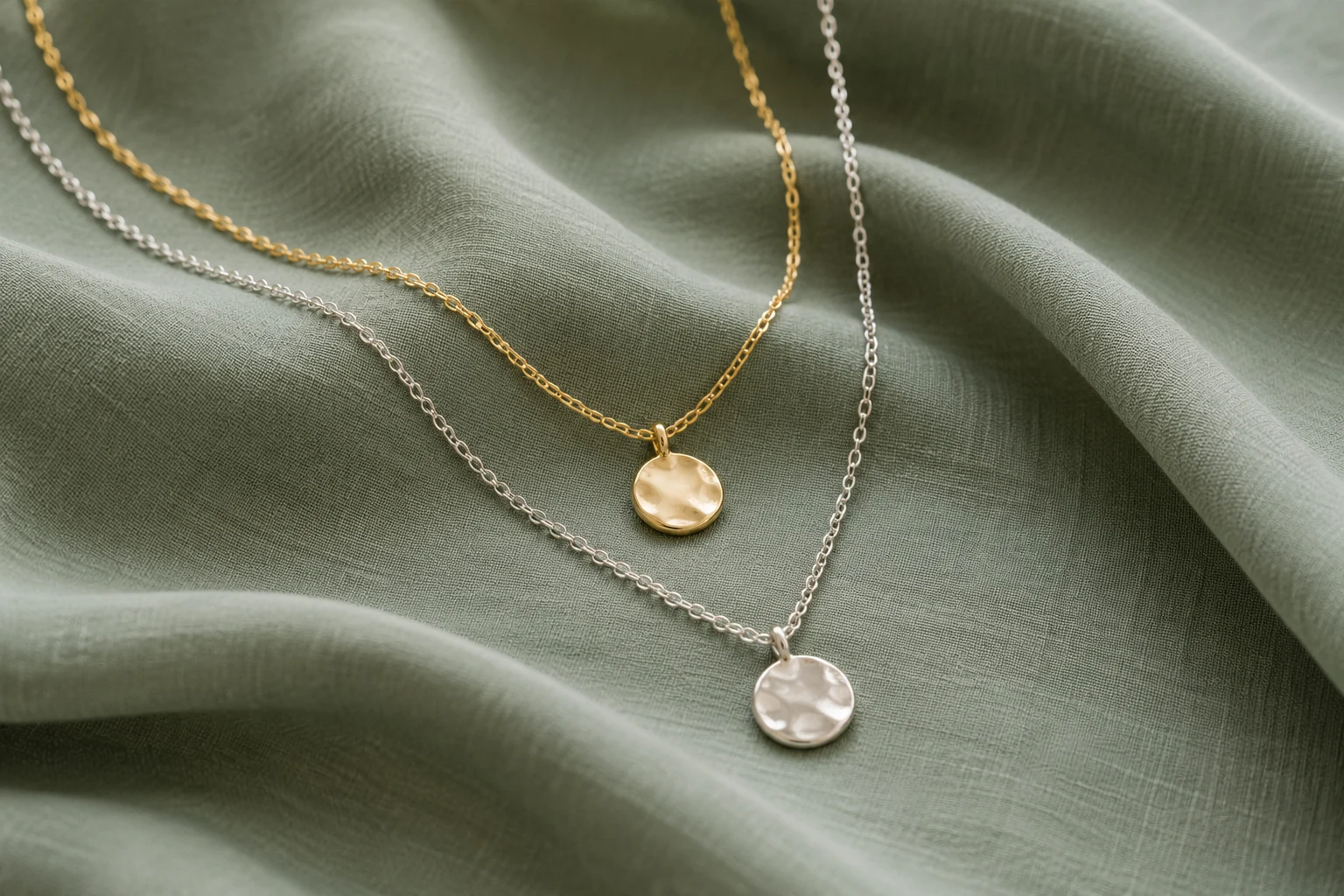
I compare the effect I can actually see
I place each color near the neckline where I would wear it. I use the same light and the same clothes for both comparisons. I look at the whole result instead of trying to decide from a close photograph of my wrist. I notice whether I prefer a warmer-looking detail, a cooler-looking detail or a quiet match with another accessory.
I can take a simple photograph to compare the arrangements later. I remember that the camera and screen can shift color. I use the photograph to recall the outfit, then return to the actual item when I can. I do not treat an edited product image as an exact prediction of how a finish will look in my room.
I keep preference in the decision
I ask which option I would reach for on an ordinary morning. I might prefer one color with a particular shirt and another with a different outfit. I might enjoy both. My taste can also change, so I do not need to turn one purchase into a permanent rule for everything I own.
I use the jewelry collection to compare shapes and colors, then read the individual descriptions. I do not assume the brighter photograph has a better finish. Lighting can change the impression without changing the material. A useful choice comes from my preference plus clear information, not a promise that one color will suit every person with similar skin.
What do gold-tone and silver-tone tell me about materials?
I can mistake a color name for a metal claim. That confusion matters when I compare price, care instructions and my own sensitivity history.
I treat gold-tone and silver-tone as color descriptions unless the listing gives a specific material statement. I check the base metal, coating, stones and care instructions separately. I ask about missing details instead of assuming a color means solid gold, sterling silver or a skin-safety guarantee.
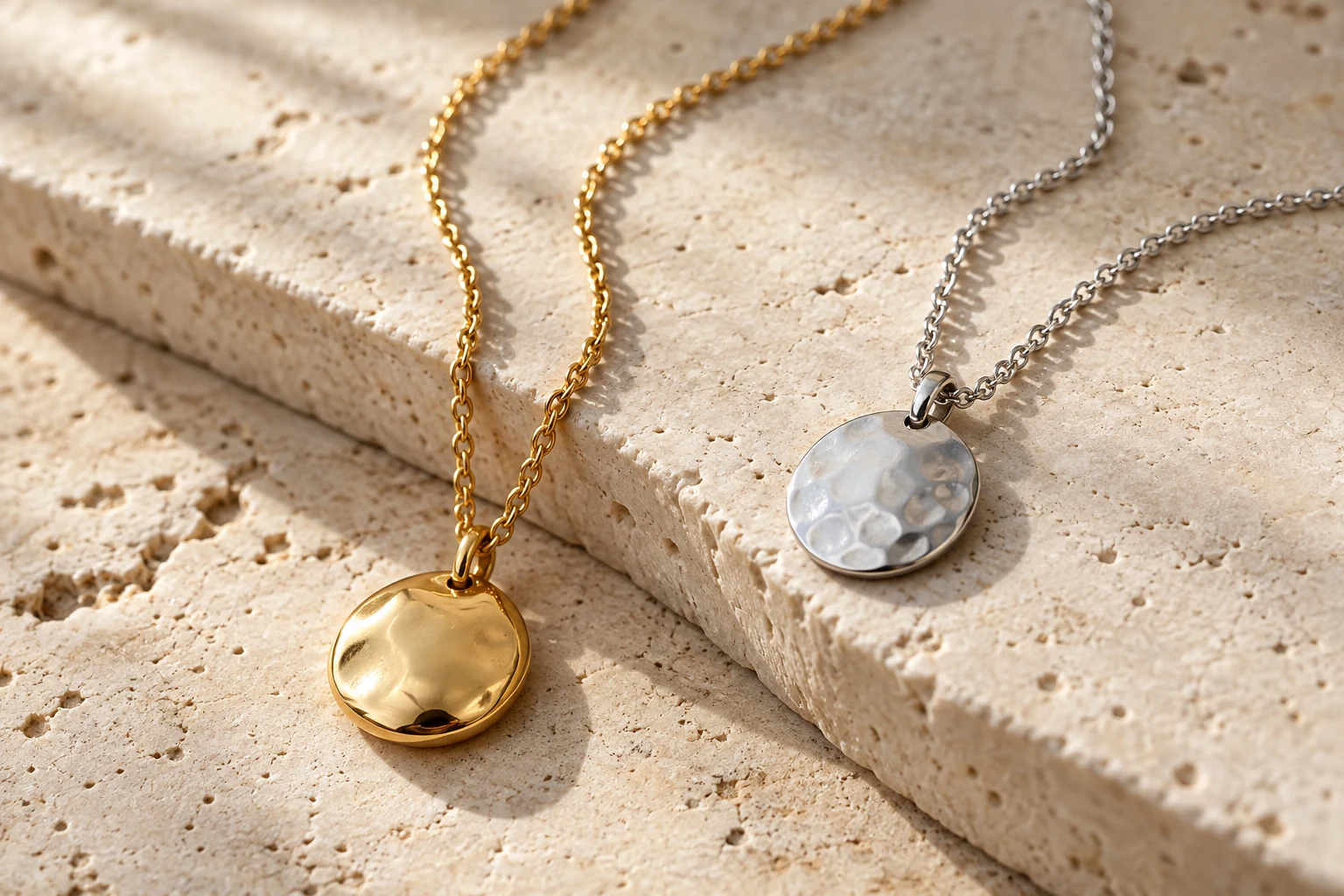
I read the construction before the color
I look for the named base material first. I then look for any finish or plating description. I keep those two details separate because the visible surface and the material below it can affect the care instructions in different ways. I also check the clasp, extender and pendant description rather than assuming every part has identical construction.
I do not infer composition from color alone. A gold-colored surface does not establish solid gold. A silver-colored surface does not establish sterling silver. I also avoid guessing from weight or shine. A specific product description gives me a better basis for a question than a visual impression does.
I ask a useful question when details are missing
I might ask the seller to confirm the base metal and whether the finish is plated. I might ask what cleaning method they recommend for that particular item. If I have a known material sensitivity, I need clear information about the relevant components. I cannot turn a general phrase such as gentle or everyday into a guarantee for my skin.
| Information | What it helps me decide |
|---|---|
| Color name | I can compare the visual style |
| Base metal and finish | I can compare construction and care |
| Stone or decorative material | I can check cleaning limits |
I use GIA's care guidance to understand why materials need different treatment.1 I still follow the item's own instructions because a broad guide cannot identify an unnamed coating or decorative part.
Can I mix both colors in one outfit?
I can add pieces until the colors compete with the shape I wanted to show. Mixing works better for me when I make one clear choice first.
I can mix gold-tone and silver-tone jewelry when I like the balance. I start with one focal piece and add a simple supporting item. I compare the full outfit, visible spacing and comfort before adding more pieces.
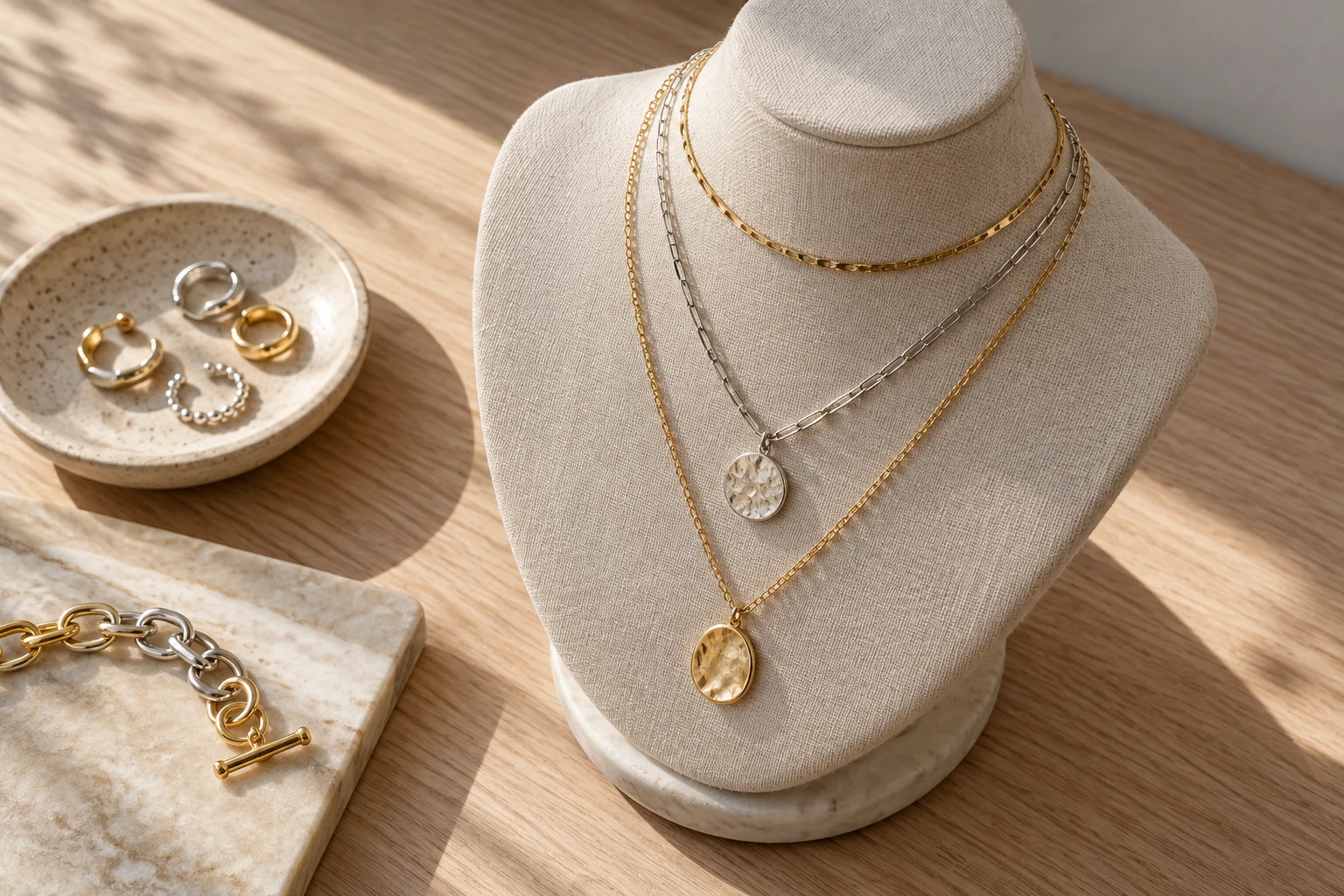
I give the arrangement a clear center
I choose the necklace I want to notice first. I then add one item in the other color and look again. I might keep the shapes simple so that I can judge the color combination without too many competing details. I do not need equal amounts of each color. I need a result that feels clear to me.
I compare the jewelry with any visible watch, earrings or clothing hardware. I can use a repeated color to connect those details, but I do not need every item to match exactly. I also compare the finish. A bright surface can stand out differently from a softer surface even when both items share the same broad color name.
I check whether the pieces work together physically
I use the layering guide when I want to combine necklaces. I check their resting points and move normally. I watch for crossing chains, catching clasps and a pendant that keeps covering another piece. A pleasing color combination does not solve these fit problems by itself.
Etsy's styling guide includes mixed metals as an option.2 I use that idea as permission to experiment, not as a rule that I must mix them. I might prefer one color on some days. I might prefer a mixed pair on others. I stop adding pieces when I already like the arrangement because another layer can change both the visual balance and the effort of wearing it.
How do I choose a color I will keep wearing?
I can buy a finish for one imagined outfit and forget it later. I need a choice that works with the clothes and routine I already have.
I compare the color with several outfits I actually wear and with a piece I already enjoy. I check fit, construction and care before I buy. I choose the item I expect to use, rather than collecting every color because it is available.
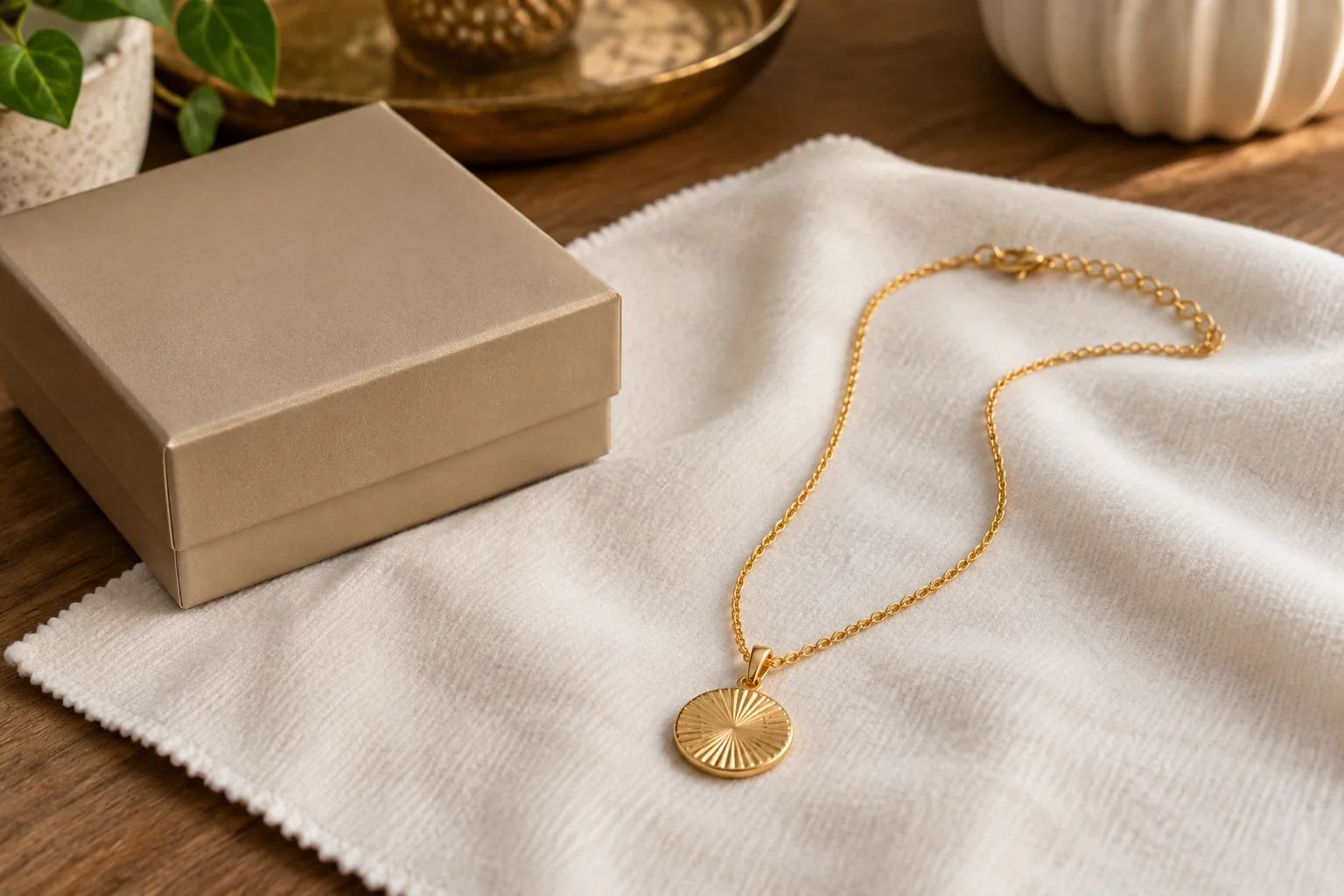
I test the choice against ordinary days
I list a few outfits I wear often. I include a casual top, a work outfit if I need one, and another combination that reflects my routine. I imagine where the necklace would sit in each case. I can use a piece I own as a rough reference for color, but I remember that the new shape and finish may change the effect.
I then look for the practical limits. I check the length and available adjustment. I think about whether I will remove the item for activities covered by its care instructions. I also consider how I will store it. A finish I like still needs a routine that protects the actual materials and keeps the chain separate from other pieces.
I compare the whole item rather than a single feature
I use the necklace length guide to check fit before I choose a color. I read the material description and care details with the same attention. I do not expect a color name to predict durability, value or comfort. Those questions need their own information.
| My daily check | What I compare |
|---|---|
| Clothes I already wear | I compare the color near their necklines |
| A favorite existing piece | I compare the role the new item would fill |
| Care I can maintain | I compare the instructions with my routine |
I can wait when the choice remains unclear. I would rather return to a useful comparison than buy two versions simply to avoid deciding. I keep the item that gives me a clear role, a fit I enjoy and details I can understand.
Conclusion
I choose jewelry color through personal preference, clear material details and everyday fit. I can mix both tones, and I keep the arrangement that I enjoy wearing.
- GIA: Tips for Caring for Your Jewelry, a reference for material-specific care. ↩
- Etsy: How to Layer Necklaces, a styling guide that includes mixed-metal combinations. ↩
Images are AI-generated editorial illustrations. They do not identify or verify a specific product.