
How Do I Layer Necklaces Without a Busy Look?
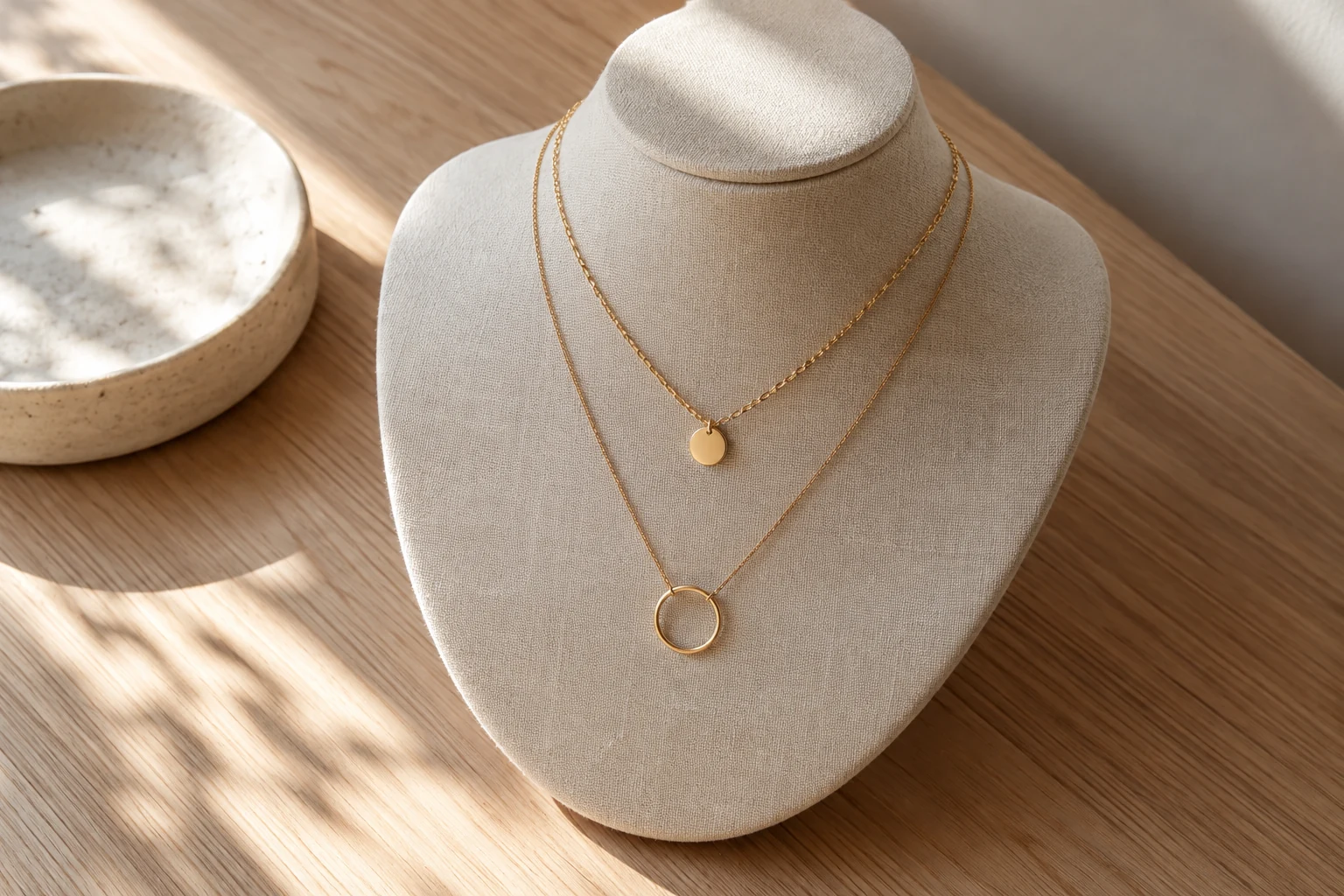
I can add necklaces until the individual pieces disappear into the stack. A look meant to feel personal can become harder to wear and harder to read.
I start with one focal piece and add a simple layer at a different visible level. I compare the stack with my actual neckline. I check movement and comfort before adding another piece, and I stop when the arrangement already feels complete to me.
I use layering as a styling choice rather than a rule about how much jewelry I should wear. Etsy's guide discusses length spacing and mixed metals.1 I use those ideas as options, then choose the balance I prefer.
How do I choose the focal piece first?
I would not start with every necklace I own. I need one clear idea before I decide which pieces add something useful to the arrangement.
I choose the piece I want to notice first, then compare any extra layer with it. I might use a pendant, a shaped chain or a familiar daily piece. I do not need every necklace to compete for attention.
I give the stack a clear role
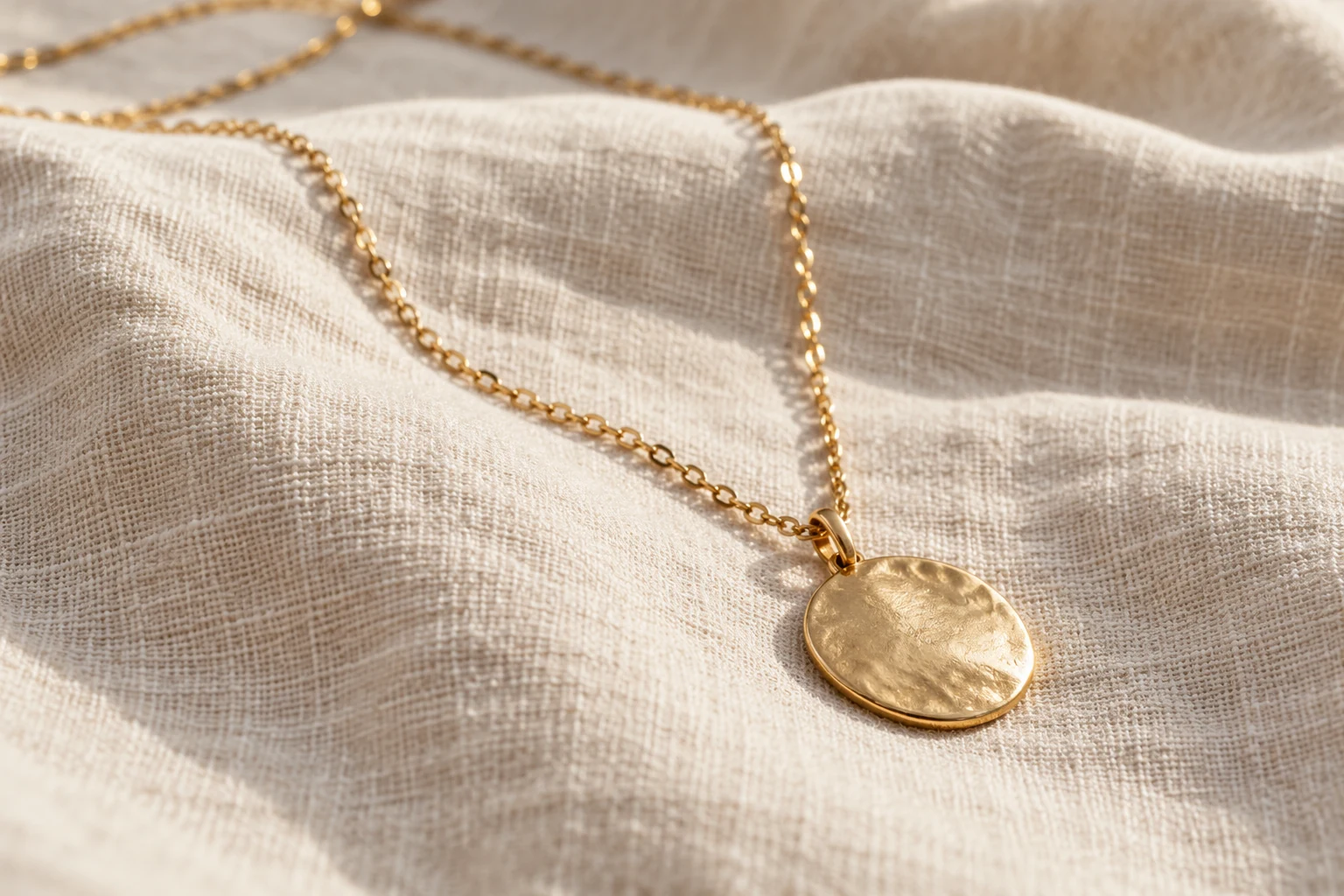
I would start with the clothes I plan to wear. I would look at the neckline, fabric texture and other visible details. I would then put on one necklace and decide whether it already gives me the balance I want. I would not add another layer simply because a styled photograph uses several pieces.
I would describe the focal piece in plain terms. I might want the pendant to stand out. I might want a broader chain to define the neckline. I might want a small familiar piece to remain visible beside another item. A clear role helps me judge the next layer without turning the choice into a search for more jewelry.
I compare what the second piece adds
I would place a simple second layer at a different level and look again. I would check whether it adds a useful line or covers the focal piece. I would also notice whether the two items share a shape that makes them feel repetitive. I would keep the second piece only if I like the change.
| Role | What I would compare |
|---|---|
| Focal pendant | I would compare the space around it |
| Simple supporting chain | I would compare whether it stays visually separate |
| Another shaped piece | I would compare whether it competes for attention |
I would allow one necklace to be enough. I would also allow a more detailed stack when I enjoy it. My decision is about the result I want, not a fixed number of layers that everyone should use.
How do I use length without relying on a universal formula?
I would not assume a length label predicts exactly where a necklace sits. My neck, the pendant and the clothing can change the visible arrangement.
I compare the actual resting points of the necklaces on the neckline I am wearing. I use visible spacing rather than a fixed gap for every person. I check the total length, including any extender or added clasp.
I measure the item and inspect the result
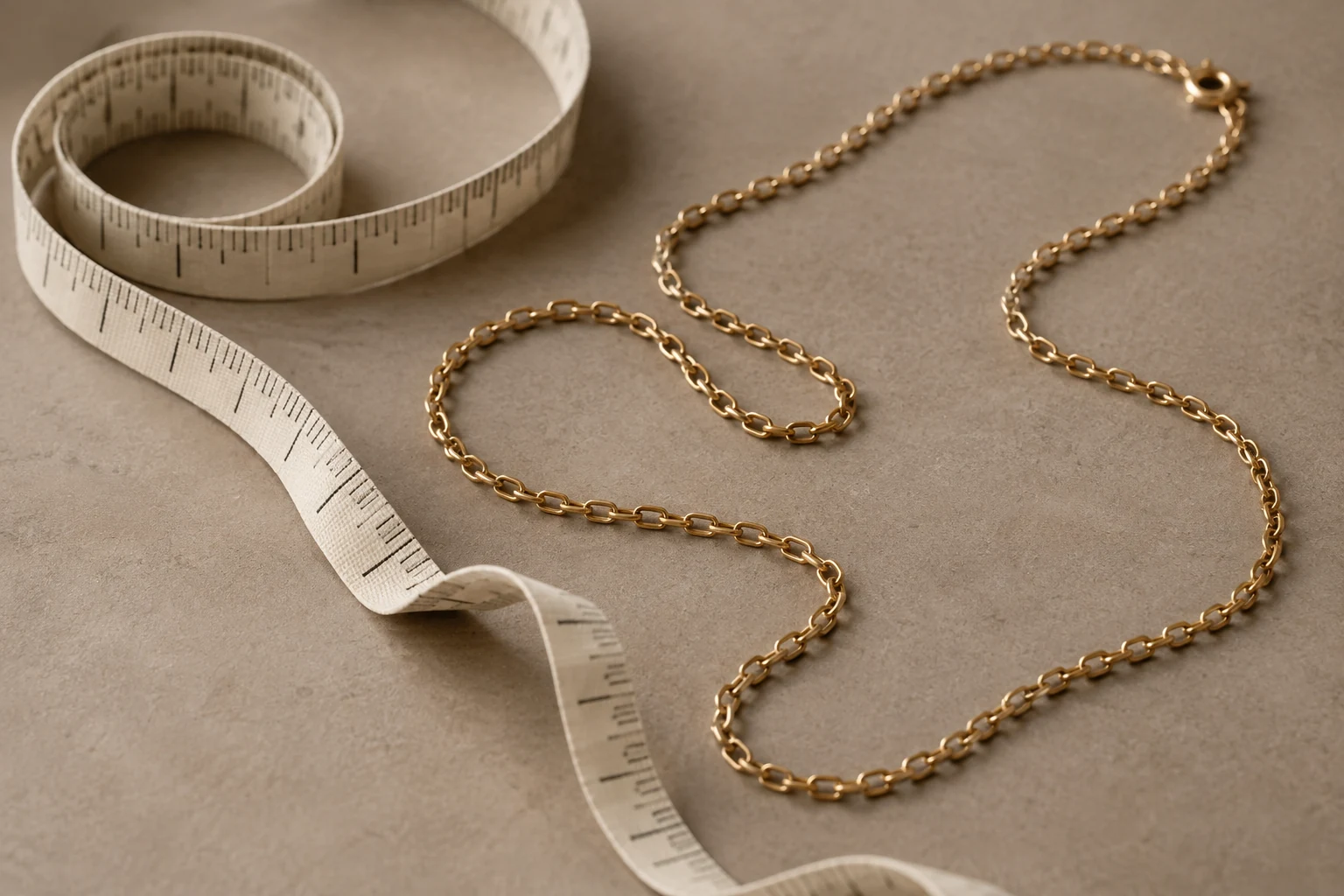
I would read how the seller states the necklace length. I would check whether the figure includes the clasp and whether an extender adds to it. I would not compare a chain-only measurement with a total end-to-end measurement without noting the difference. The necklace length guide helps me keep those details separate.
I would then put on the necklaces with the intended clothes. I would check the front while standing normally, not only while posing. I would look for overlap between a pendant and another chain. I would also notice whether the lower necklace lands at an awkward clothing edge. A small available adjustment may change the visual spacing, but I would check its comfort and construction too.
I use the garment as part of the comparison
I would compare the same pair with the necklines I wear most often. I might like the arrangement with an open collar and dislike it with a high crew neck. I would treat that as a styling observation, not a failure of the necklaces. I can keep different combinations for different clothes without buying a new stack for every outfit.
I would also consider the pendant's width and shape. A compact pendant and a broader pendant may need different visual space even when the chain lengths match. I would not solve that question by looking at the numbers alone.
I would photograph a trial for my own reference if that helps me remember the arrangement. I would use the photograph to record a combination I like, not to prove a universal styling rule. The result needs to suit my clothes and my preference.
How do I mix colors and textures simply?
I would not want a metal-color rule to make a useful piece feel off limits. I can compare the whole arrangement before deciding whether the colors belong together.
I start with a simple shared feature, such as a clean finish or a similar scale. I compare gold-tone and silver-tone pieces visually while checking their material descriptions separately. I do not infer precious-metal content from color.
I keep the color decision visual
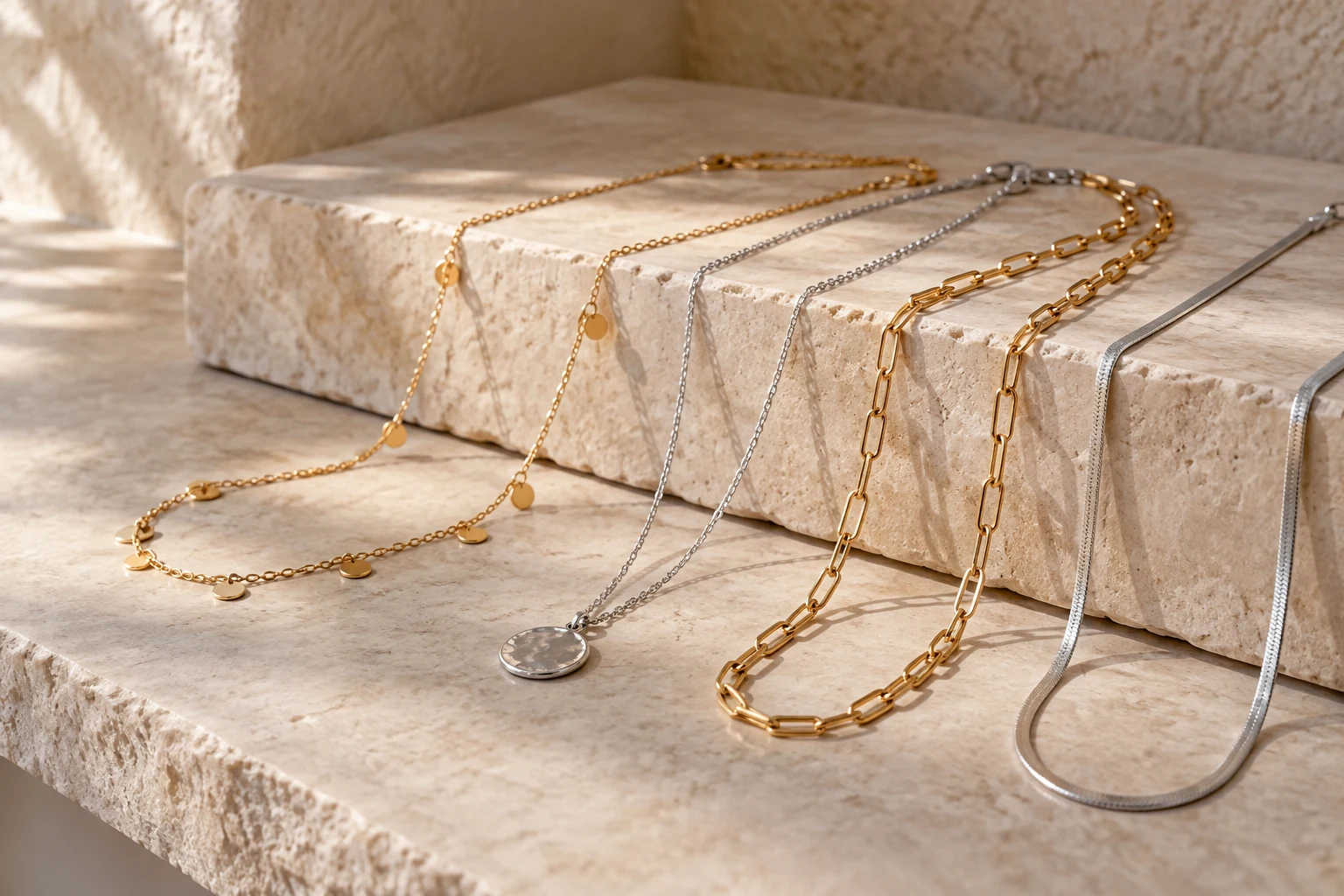
I would compare the pieces against the clothes I wear and the other accessories I want to use. I would notice whether one tone feels more prominent in the arrangement. I would also check the finish, because a highly polished surface and a softer-looking surface can create different visual effects. I would choose the balance I like without declaring one color correct for every skin tone.
I would separate that visual choice from the material question. A gold-tone necklace is not automatically solid gold. A silver-tone necklace is not automatically sterling silver. I would read the listing's actual composition and finish before buying. I would not let an attractive color pairing hide missing material information.
I change one visible feature at a time
I would try a familiar chain with one contrasting piece before adding several differences. I would compare scale, color and texture separately. I might keep the colors similar while varying width. I might keep the shapes simple while mixing tones. I would use those trials to learn what I prefer, not to create a complicated formula.
| Feature I change | What I look for |
|---|---|
| Color | I look for a balance I enjoy with my clothes |
| Chain width | I look for clear separation between layers |
| Pendant scale | I look for enough space around the focal piece |
I would use Personal Style to compare current pieces by their stated details. I would not assume that every item has the same metal, finish or dimensions. The visual stack and the factual product comparison both need clear information.
How do I check that the look works during the day?
I would not keep a stack just because it looks neat in a mirror. Repeated twisting, catching or uncomfortable contact can change how much I enjoy wearing it.
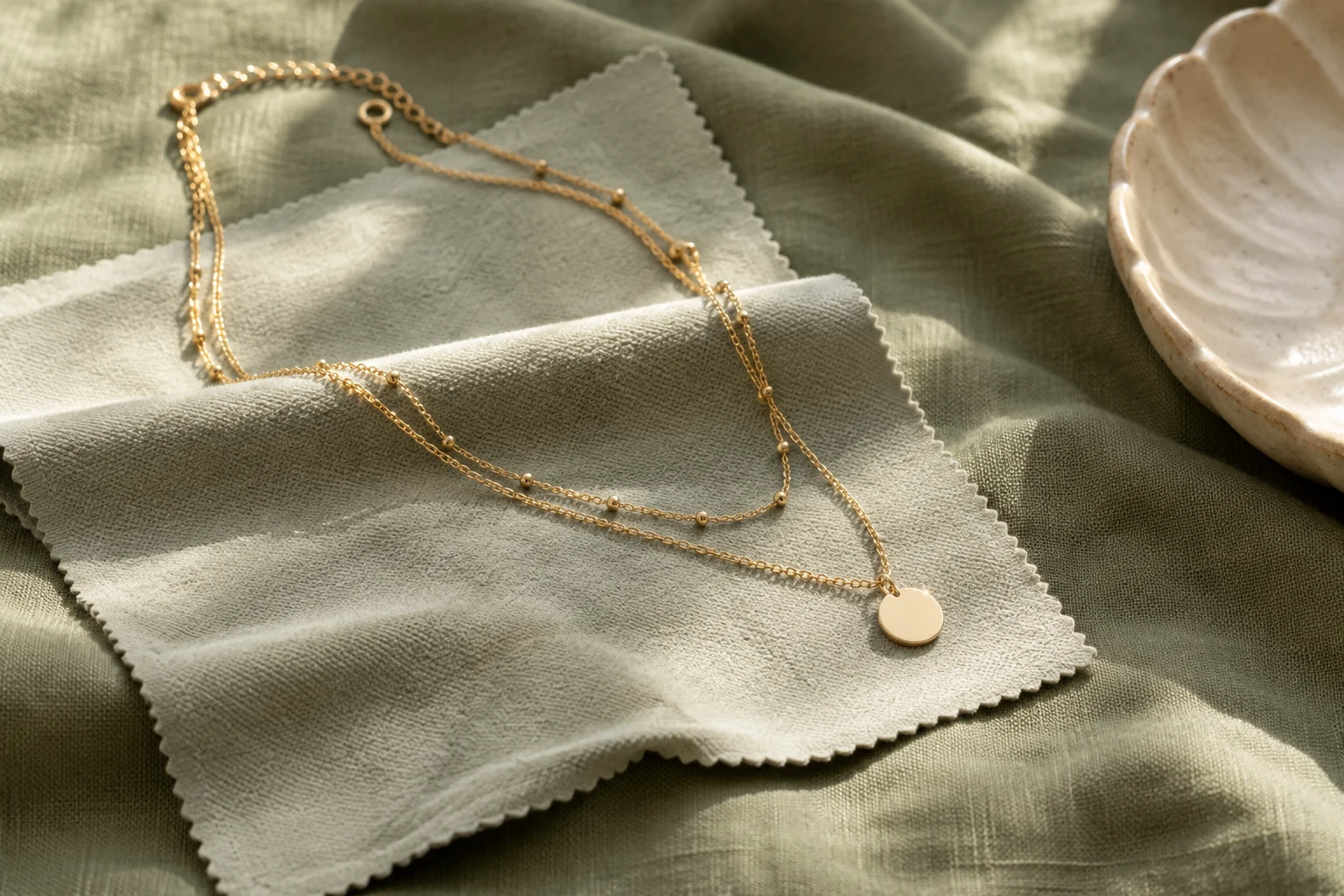
I check the pair during ordinary movement and inspect the clasps. I would simplify it if I keep fixing the layers. I treat spacer clasps as optional tools with compatibility and comfort questions.
I move before I add another layer
I would sit, stand and lean gently with the pair on. I would notice whether a pendant crosses the supporting chain or whether a clasp rotates toward the front. I would also check whether the necklaces catch the clothing. I want a stack that behaves acceptably in the activities I actually do, not only in a still photograph.
I would read the tangling guide if movement becomes the main issue. I would change one part of the pair at a time. I might adjust an available extender or try a different supporting chain. I would not add a spacer and a third necklace together because the result would be harder to interpret.
I respect the limits of accessories
I would check the spacer's material, attachment points and added length before trying one. Community reports show mixed experiences with these clasps.2 I would not expect an added part to guarantee a tangle-free day. I would also compare whether the spacer makes the stack easier to remove, which is a separate benefit from preventing twists.
I would store the pieces apart after wearing them. I would inspect any clasp or chain that appears damaged before using it again. I would also follow the item's care guidance rather than apply a cleaner chosen for a different material.
I would keep the combination that fits my day and my style. If one necklace is the more comfortable choice, I would use it. If two layers work well, I would enjoy them without assuming that a third layer is the next required step.
Conclusion
I start with one focal piece, add clear spacing and check movement. I choose the colors and scale I enjoy, then stop when the stack suits my day.
- Etsy: how to layer necklaces. I use its spacing and mixed-metal ideas as styling options. ↩
- Reddit: two necklaces keep tangling. I use the varied spacer experiences to keep expectations realistic. ↩
Images are AI-generated editorial illustrations. They do not identify or verify a specific product.