
Why Do My Layered Necklaces Keep Tangling?
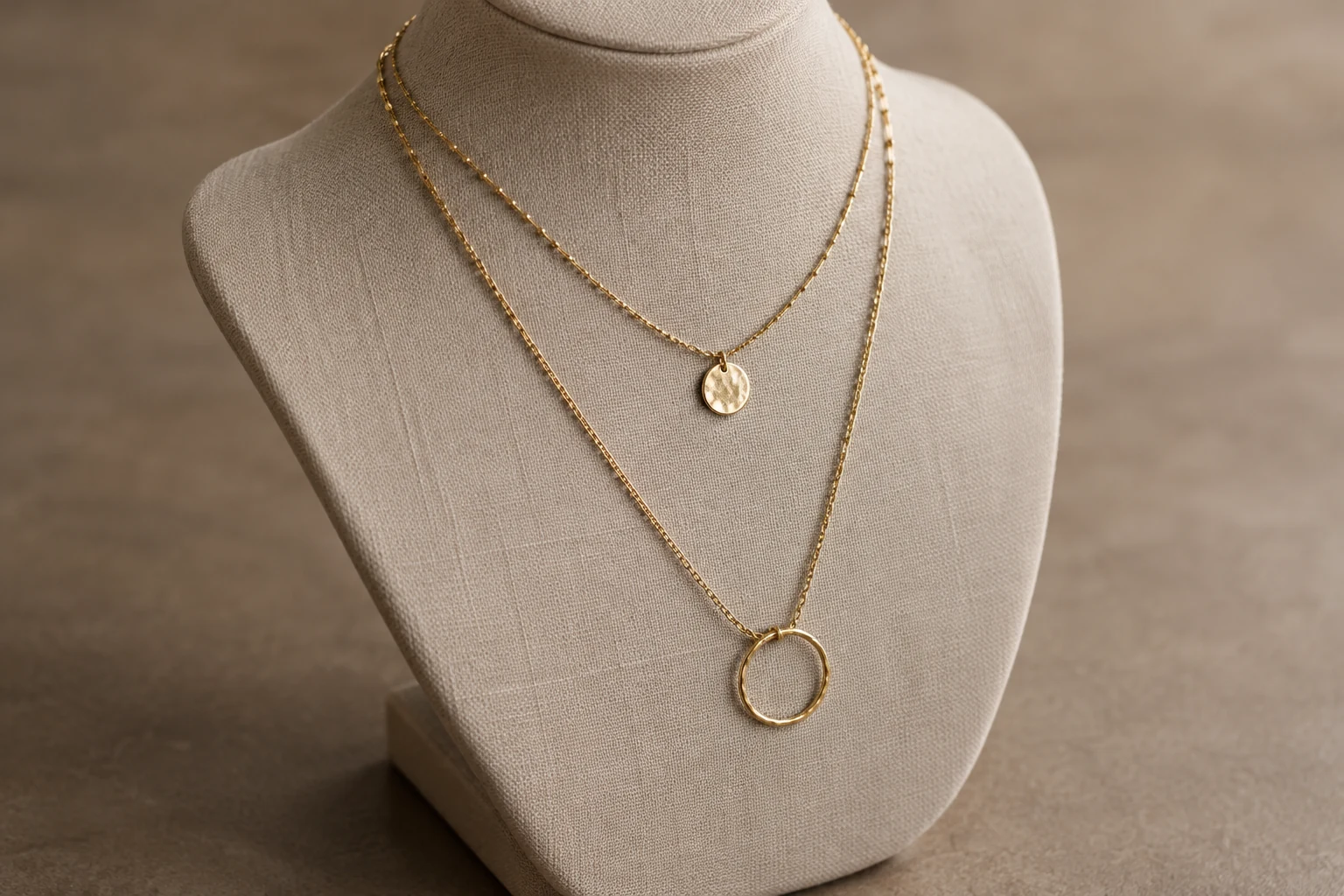
I understand why a necklace stack can feel frustrating. A look that starts neatly can become a knot, and repeated fixing can make me stop wearing it.
I would compare chain lengths, widths, pendant placement and movement before buying a spacer. I would start with two clearly separated necklaces and test one change at a time. I would treat a layering clasp as an option, not a guarantee against tangling.
I use the Reddit discussion to understand the problem's range.1 Some users like spacers, and others still experience twisting. I want to explain a trial that helps identify which part of a stack I can change.
Why do I start with length and chain shape?
I would not add a third necklace before checking the first two. Similar chains sitting close together make it harder to see which piece moves first.
I start with two necklaces that sit at visibly different levels. I also compare their chain widths and shapes. I use those differences to create a clearer trial, while allowing that movement can still bring the chains together.
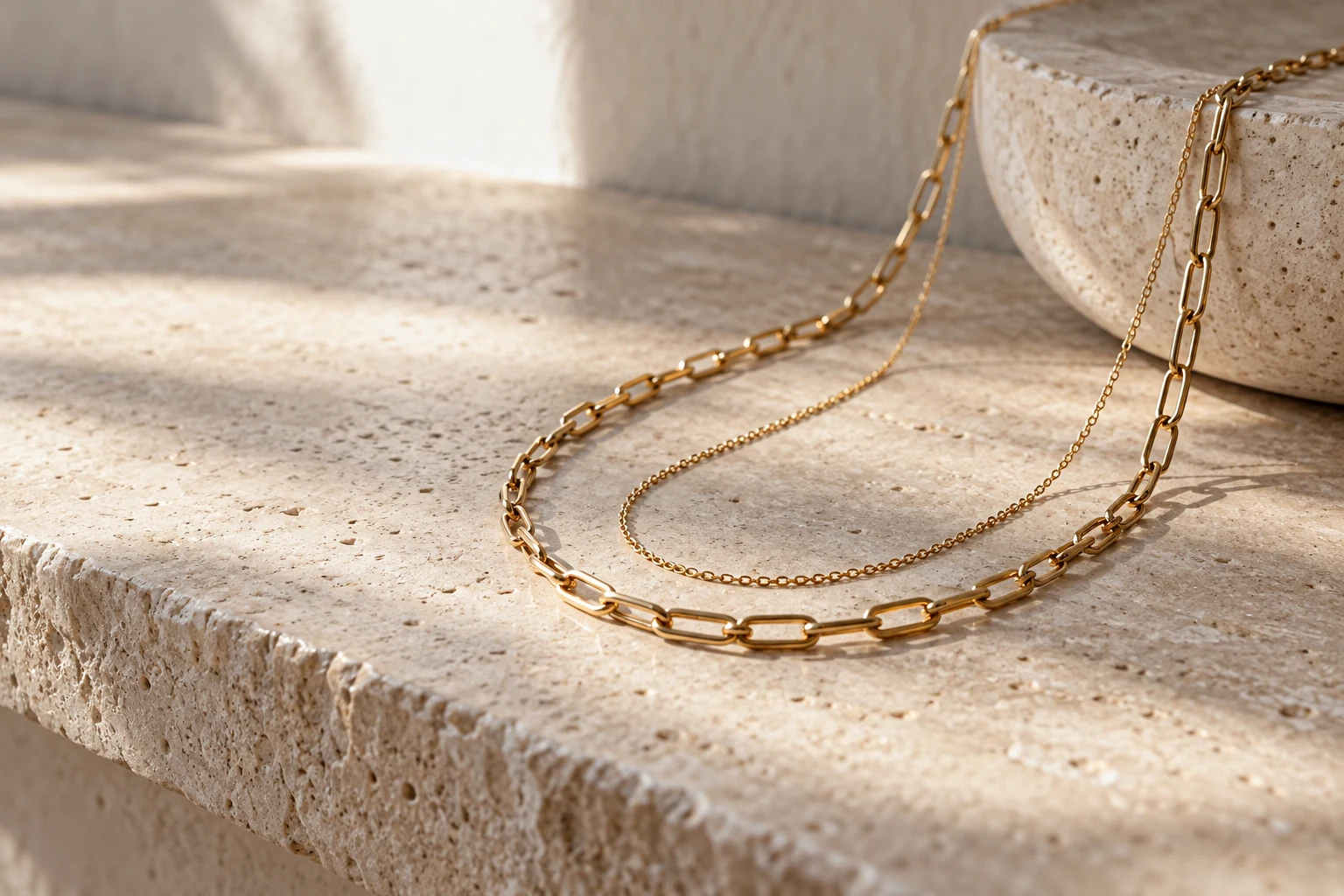
I compare the stack in the clothes I wear
I would put on the shirt or neckline I intend to use. I would check where each chain rests when I stand normally. I would also notice whether a pendant overlaps another chain or catches the clothing edge. A stack that looks separated on a display may sit differently on me. I want to inspect the real arrangement before adding another accessory.
I would compare the chains without assuming a fixed length gap works for every person. Neck shape, pendant position and clothing all affect the visual space. I would use a mirror and a short movement check to see whether the necklaces remain distinct. I would not call a pair wrong simply because it differs from a styled photograph.
I change one part of the pair
I would first try removing one necklace to see how the remaining item behaves. I would then put the pair together again and note the difference. I might compare a broader chain with a finer chain, or adjust one available extender. I would avoid making all those changes at once because I want a useful observation.
| Detail I compare | What I observe |
|---|---|
| Length difference | I observe whether the chains sit apart |
| Chain width and shape | I observe where they cross during movement |
| Pendant position | I observe whether it overlaps another layer |
Etsy's layering guide also discusses different lengths and chain weights.2 I use that styling framework as a starting point. I still check the finished pair on my own neckline rather than expect the guidance to eliminate every tangle.
What do I check about pendants and movement?
I would not judge a stack only while standing still. Reaching, leaning and changing clothes can show a problem that a mirror pose hides.
I check how the pendant and chain move together during ordinary actions. I look for repeated crossing, rotation and clothing contact. I would simplify the stack if I keep needing to fix it.
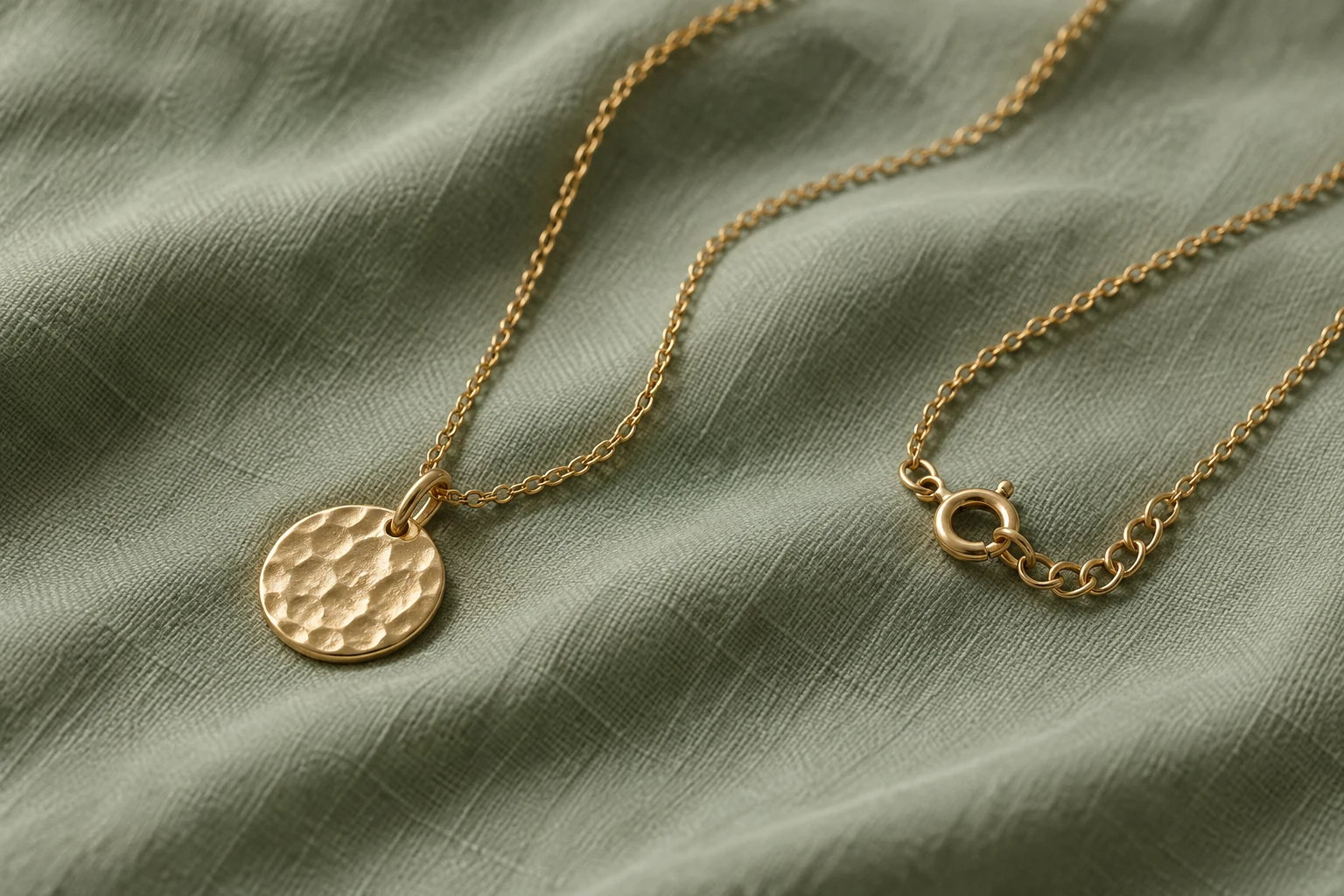
I make a short awake wear check
I would start with the clasps in their intended positions. I would then sit, stand and lean gently as I do during an ordinary day. I would notice whether one pendant moves across the other chain or whether the clasp rotates toward the front. I would not pull the chains apart while they are under tension. I would remove the items and inspect them calmly if they become knotted.
I would note when the crossing happens. A pair that tangles mainly with one sweater may need a different clothing combination. A pair that crosses during many movements may need a different chain pairing. I would distinguish those observations rather than blame the entire idea of layering.
I compare complexity with daily use
I would consider whether I want two pendants competing for the same space. I might keep one pendant and one simple chain to make the trial easier to read. I would also inspect any fixed charm or shaped part that can catch another layer. I would not assume that a heavier pendant is always a solution because the whole pair still needs to suit my movement.
I use the layering style guide for the visual decision and keep this article focused on managing movement. I would choose a simpler stack if that gives me a result I can enjoy without repeated handling.
I would also remove a stack when its use conflicts with the item's care instructions. I would not wear an awkward pair overnight as a test of its strength. I want a practical daytime arrangement, not an experiment that risks the chains for a promised styling result.
When would I try a spacer or layering clasp?
I would be cautious about a product described as tangle free. A new clasp can add weight, another material and another point of contact with my hair.
I would consider a spacer after checking the necklaces themselves. I would inspect loop size, clasp compatibility, added length, material and comfort. I would test it as another variable and keep expectations about twisting realistic.
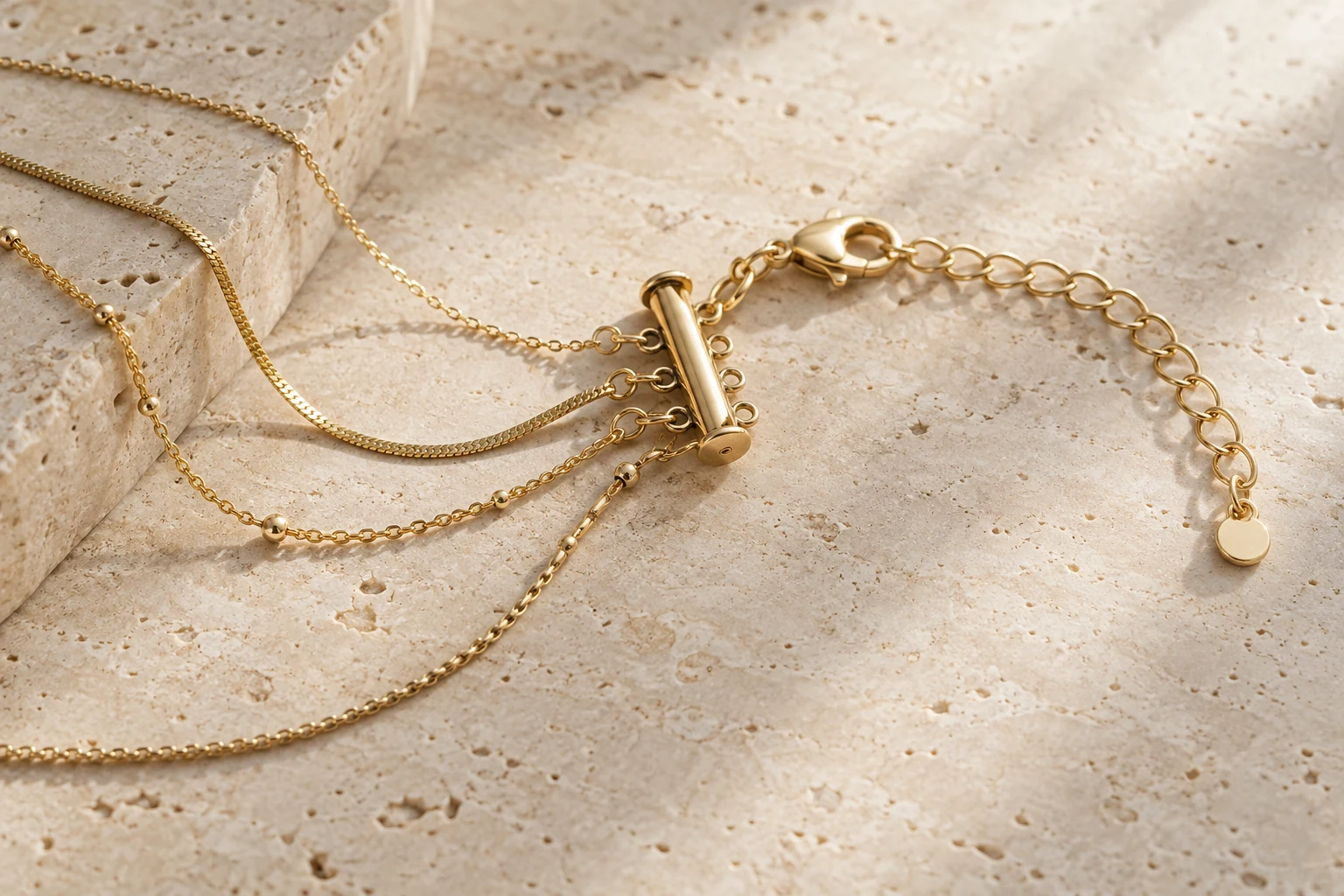
I check compatibility before buying
I would compare the ends of my necklaces with the attachment points on the spacer. I would check whether the clasp can pass through the intended loop without force. I would also ask how much length the new part adds. A spacer can change where the whole arrangement rests, so I want that change included in the comparison.
I would read the material description for the spacer itself. I would not assume it matches the necklace or has the same finish. I would also avoid relying on a broad sensitivity promise. If I have a known material concern, I would use the verified composition and suitable professional advice rather than the appearance of the clasp.
I inspect the new resting position
I would try the assembly while awake and see where the spacer sits. I would notice whether it rotates, catches hair or feels bulky. I would also check whether the added part makes the layers easier to remove. A spacer might be useful for handling even when it does not prevent every twist. I would judge those benefits separately.
| Spacer question | Why I ask it |
|---|---|
| Do the attachment points fit? | I want to avoid forcing the clasps |
| What material is stated? | I want to assess the new contact surface |
| How much length does it add? | I want to predict the changed placement |
I would use the necklace length guide to reconsider the result after adding a spacer. I would not keep an uncomfortable accessory just because it solves one visual problem. I want the whole stack to remain easy to wear and remove.
How do I decide whether the stack is worth keeping?
I would not want a daily look that needs constant repair. A simpler pair can be a better choice when repeated tangles take the pleasure out of wearing it.
I would compare the time spent fixing the stack with how much I enjoy the look. I would keep a comfortable pairing that behaves acceptably in ordinary use. I would separate the chains for storage and stop forcing a difficult combination.
I use a small record of the trial
I would write down the two pieces, any extender setting and the clothing I wore. I would also record whether I used a spacer. I would then note the type of crossing rather than simply count a day as good or bad. Those details help me repeat a useful combination or identify the one feature I want to change.
I would give an ordinary wear check enough time to include the movements that matter to me. I would not promise a fixed test duration for every person. I would also inspect the jewelry before and after the trial. I would not keep experimenting with a clasp or chain that already appears damaged.
I protect the pieces between wears
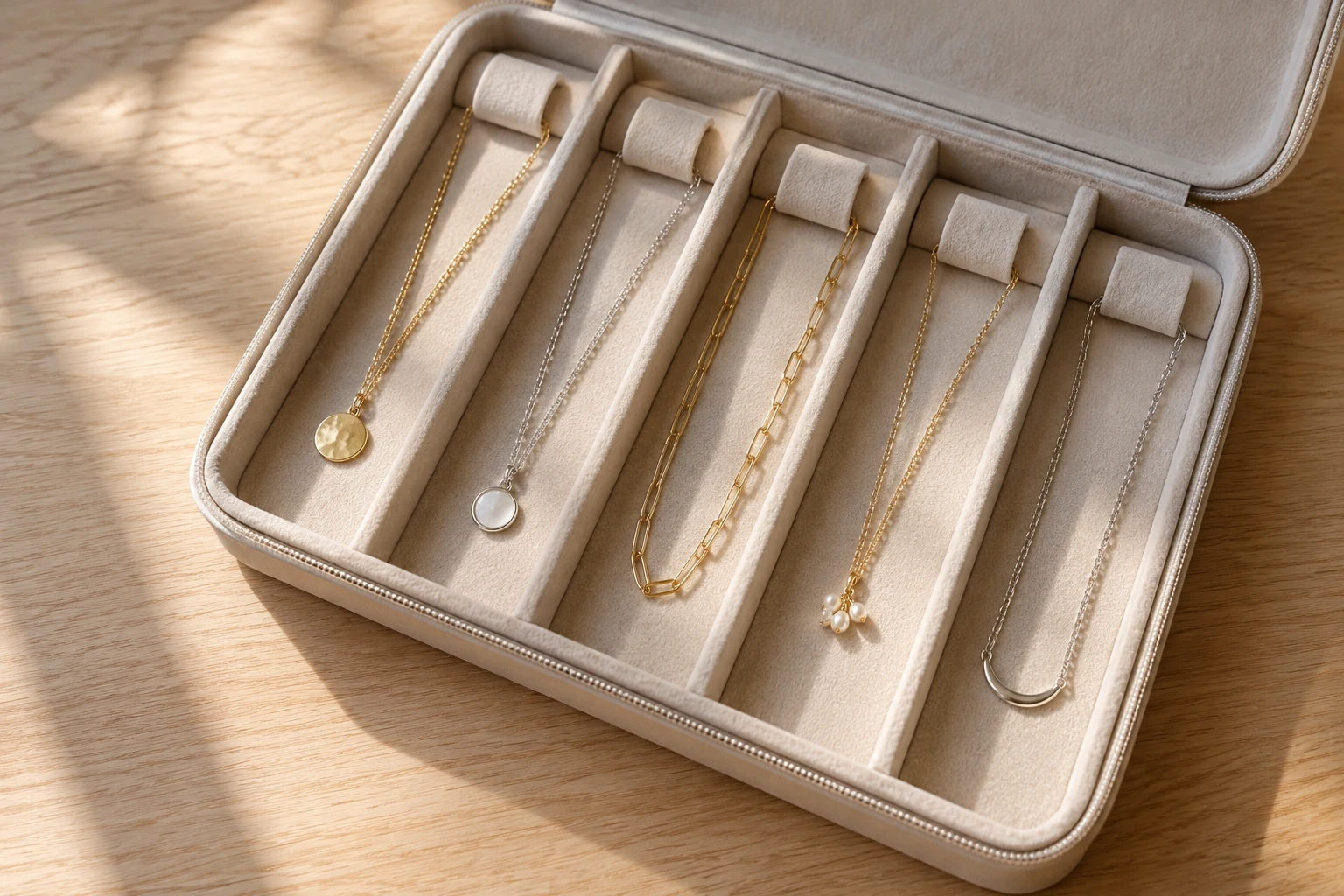
I would remove the necklaces separately when possible and lay them apart. I would store each chain so that it does not fall into the others. I would also keep pendants from pressing against unrelated pieces. I would choose the storage method that matches the materials and the item's guidance, rather than assume every pouch or box is suitable for every necklace.
I would browse Personal Style with a specific role in mind if I need another piece. I might want a simple chain to pair with a pendant I already own. I would not buy another layer just because the existing stack is difficult to manage. A new item should answer a clear styling or fit need.
I would allow some movement without expecting perfection. I would also allow myself to wear one necklace when that is the more comfortable choice. The stack needs to fit my day as well as my photograph.
Conclusion
I would test length, chain shape and movement before adding a spacer. I would keep the pairing that feels manageable and avoid treating any clasp as a tangle-free guarantee.
- Reddit: layered necklaces keep tangling. I use the varied reports to identify practical questions and spacer tradeoffs. ↩
- Etsy: how to layer necklaces. I use its length and chain-weight framework as a styling starting point, not a guaranteed result. ↩
Images are AI-generated editorial illustrations. They do not identify or verify a specific product.