
How Do I Pack a Silk Bonnet for Travel Without Damage?

I can pack a silk bonnet carefully and still find it damp or snagged later. I want a simple routine that protects it during the trip.
I pack a silk bonnet only when it is fully dry. I fold it loosely into a clean, smooth pouch and keep it apart from liquids, jewelry, and rough fasteners. I unpack it at my destination, check its condition, and let it air out before storage.
At Zolay Nights, I want travel care to fit an ordinary bag and an ordinary evening. I do not need a complicated packing kit for one bonnet. I will explain the few checks I would use before leaving, after arrival, and when I return home.
How do I check that my bonnet is ready to pack?
I can rush to pack after washing and miss moisture inside the band. I need to check the whole bonnet before closing its pouch.
I open the bonnet and check the band, seams, lining, and folds before packing. I wait until every part is dry. I do not use a travel pouch as a drying space. I would leave a damp bonnet unpacked rather than force it into a closed bag.

I leave enough time before departure
I would plan a wash early enough to let the bonnet dry without rushing. I would follow the actual product's care instructions first. I would not use a fixed number of hours as proof that a band or lining must be dry. I would open the fabric and check the parts that rest against each other. I would also turn the bonnet gently if its construction made that useful.
I would wash sooner if the band felt unclean, but I would not wash a clean bonnet simply because I was taking a short trip. I would separate the need for cleaning from the need for packing. I use the Zolay silk care guide for the current store routine. I still check the label or instructions supplied with the particular item.
| Part I inspect | What I would do before packing |
|---|---|
| I check the thick band | I open it gently and allow more drying time if needed |
| I check an inner lining | I keep the layers open rather than pressed together |
| I check folded fabric | I spread it on a clean surface |
| I check a damp pouch | I use a different clean, dry pouch |
I would not speed the process with direct dryer heat just to meet my departure time. I would also avoid packing the bonnet beside a wet towel. I would arrange an alternative for the trip if I could not get the bonnet fully dry before leaving. I would not put moisture into a closed pouch and hope that it disappeared while the luggage stayed shut. I want the packing decision to reflect the bonnet's condition now, rather than the time I expected it to be ready.
How do I fold the bonnet without crushing the band?
I can squeeze the bonnet into a tiny corner and make unpacking awkward. I want a fold that gives the fabric a little space.
I smooth the bonnet with clean hands and use a loose fold that fits a clean pouch. I keep the band in its natural shape as far as the construction allows. I avoid pulling ties tight or pressing the bonnet beneath heavy, hard objects.
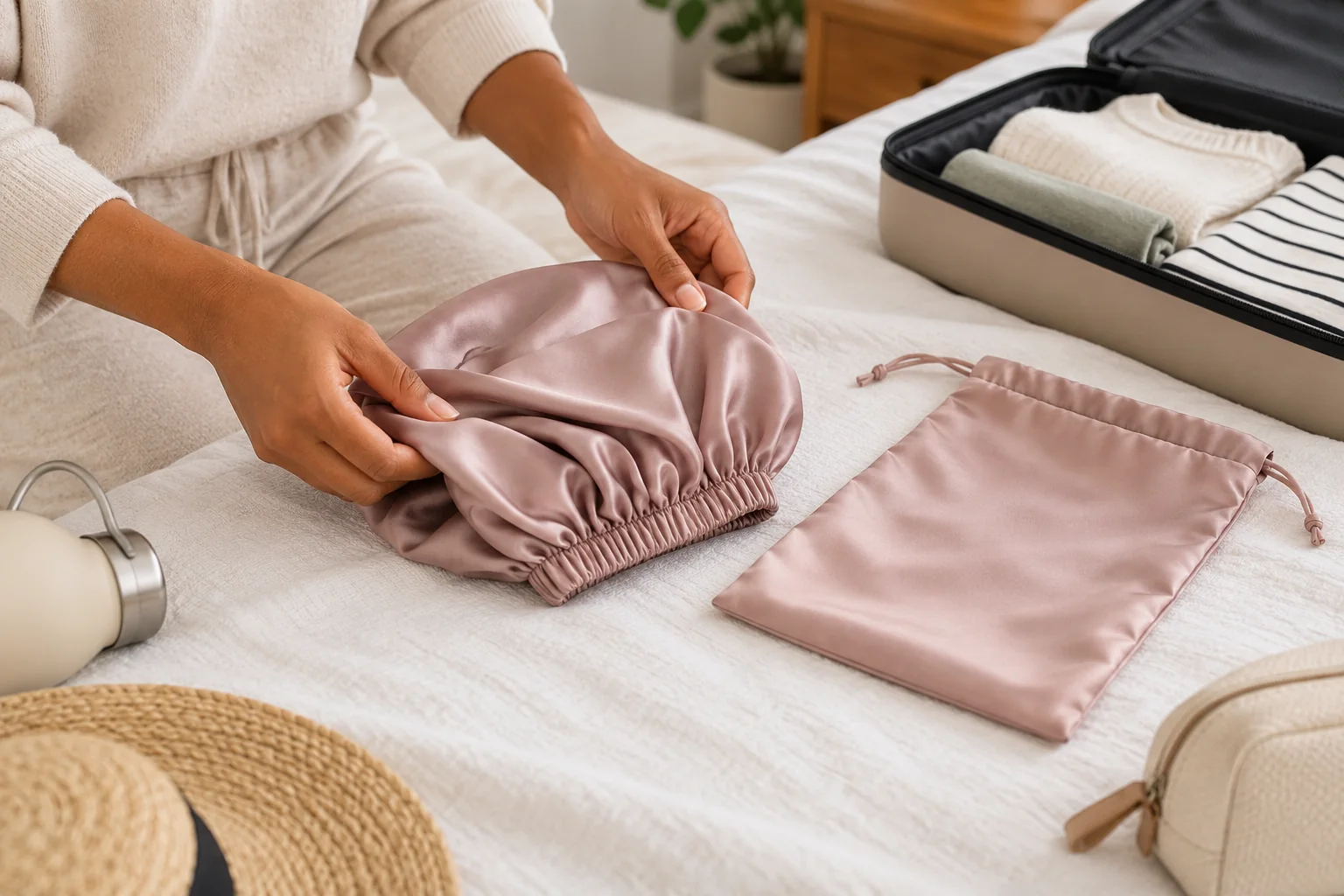
I choose a simple container
I would start with a clean, dry surface. I would check it for grit, exposed fasteners, and anything that could catch the fabric. I would then lay the bonnet down without stretching the band. I would fold the softer crown toward the band only as much as the pouch required. I would not make a hard crease just to produce a perfect rectangle.
I would leave ties loose and place them inside the pouch with the bonnet. I would avoid wrapping them tightly around the folded fabric. I would also check the pouch closure before inserting the bonnet. I would not let silk sit across an open zipper while I pulled it shut. I would choose another pouch if its inside felt rough or its fastener repeatedly caught fabric.
I take a narrow lesson from the Canadian Conservation Institute's textile care guidance.1 I use its discussion of handling, physical damage, and moisture as background. I do not apply museum storage rules to claim that a particular travel pouch protects every modern bonnet.
I would place the pouch where I could reach it without emptying the whole bag. I would not pack it under a shoe sole or beside loose jewelry. I would allow a little spare space instead of flattening it beneath a heavy case. I would expect some travel wrinkles and would not treat every fold as damage. I would check for a pulled thread or a stretched edge separately. I want the bonnet contained and easy to retrieve, rather than compressed into the smallest possible volume.
How do I keep liquids and rough items away from the silk?
I can protect the bonnet with a pouch and still expose it to a leaking bottle. I need to think about the rest of the bag.
I keep the bonnet in a separate dry area of my luggage. I place toiletries in their own closed container and keep jewelry and rough fasteners apart. I do not treat a cloth pouch as leak protection. I check nearby items before closing the suitcase.

I separate the sources of trouble
I would look at the items next to the bonnet, not only the pouch itself. I would keep shampoo, skincare, and other liquids in a separate closed container. I would check that the lids were secure. I would not place a damp toothbrush case on top of the bonnet pouch. I would also avoid storing the bonnet in a compartment that had recently held a wet swimsuit or towel.
I would give jewelry its own storage. I would not tuck earrings or a necklace into the bonnet pouch to save space. I would also check the nearby clothing for exposed hook-and-loop fasteners. I would place those surfaces away from the bonnet rather than trusting a very thin pouch to solve every contact problem.
| Item I pack | Separation I would use |
|---|---|
| I pack a bottle of hair product | I place it in a separate closed toiletry container |
| I pack necklaces | I use their own storage rather than the bonnet pouch |
| I pack a damp towel | I keep it away from the clean, dry silk |
| I pack shoes or rough hardware | I use a different luggage section |
I would not describe this arrangement as waterproof. I would check what the actual container is designed to do if leak protection mattered. I would also leave space to open the bonnet pouch without dragging it across other hardware. I would use the bonnet washing and drying guide if I needed to clean the piece after a spill. I would avoid an improvised stain treatment because a product that works on a towel may not suit the bonnet's fiber, dye, or finish.
What do I do when I arrive at a hotel or rental?
I can leave the bonnet in packed luggage all week and forget what is inside. I want one quick check when I reach the room.
I unpack the bonnet onto a clean, dry surface and check for moisture, residue, and caught threads. I let it air out before putting it away. I choose a dry place away from direct heat and do not assume the hotel bathroom is the best storage spot.
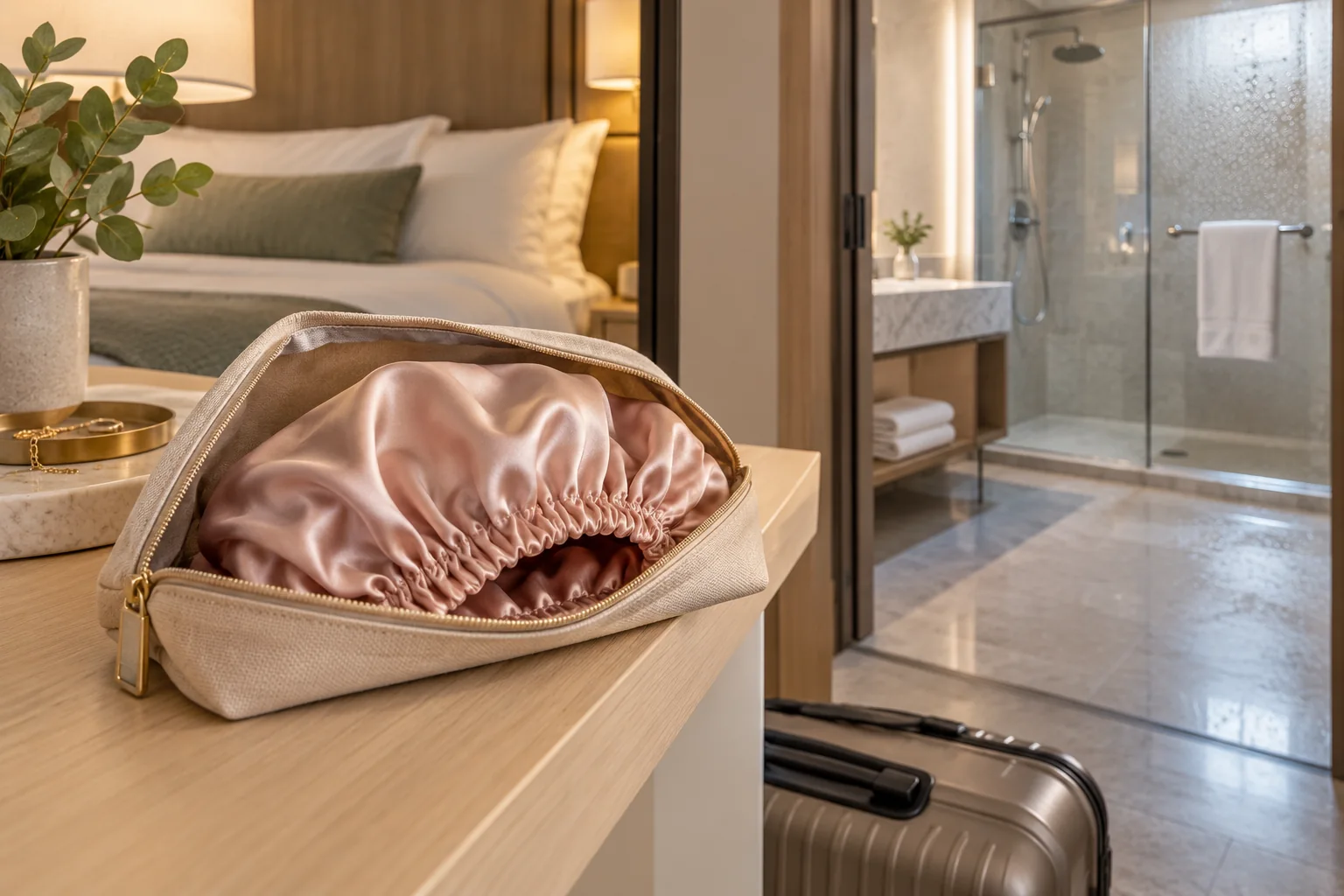
I check condition before routine
I would open the pouch before I needed the bonnet for bed. I would look at the band and any lining again. I would notice whether the pouch felt damp or whether a nearby product had leaked. I would not put the bonnet on simply because I had packed it clean at home. I would check the condition it was in after the journey.
I would choose a clean, dry surface in the room. I would avoid a hot radiator, direct sun, or a damp bathroom counter. I would keep the bonnet away from the place where I set rings and earrings. I would also check a drawer before using it. I would not assume that an empty-looking drawer had a smooth, clean surface.
I would follow the bonnet's care instructions if it needed cleaning after a leak. I would not hide residue with perfume or a scented spray. I would leave enough time for drying and choose another arrangement for the night if the bonnet remained damp. I would not treat a quick wipe as a complete fix for an unknown spill.
I would carry a plain note of the care instructions if I expected to wash the bonnet away from home. I follow the FTC's advice to retain useful purchase details when I need to check a seller's description later.2 I would use that information to ask a specific care question. I would not interpret missing instructions as permission to use whatever hotel detergent happened to be available. I want the first evening to begin with a simple condition check rather than a rushed repair.
How do I handle the bonnet after wear and on the trip home?
I can remember careful packing on the way out and forget it on the way home. I need the same dry check after the last night.
I let the bonnet air out after wear and keep it apart from wet laundry. I check it before packing for home, then unpack it promptly after the trip. I decide whether to wash it from its condition and care instructions, rather than from the number of travel days alone.

I keep the return routine small
I would open the bonnet after wearing it rather than leaving it tightly bundled in the pouch. I would give the band and lining a chance to air out in a dry place. I would not fold it together with yesterday's damp laundry. I would keep a clean pouch available so the return journey did not depend on finding an unused corner in a crowded suitcase.
I would check for residue from hair or skincare products before the trip home. I would not assume that a clean-looking crown meant the band was equally fresh. I would follow the care instructions if cleaning was needed. I would allow enough time for full drying or keep the bonnet separate and open until I could care for it properly. I would not seal a wet piece into a pouch as ordinary storage.
| Return step I use | Reason I keep it in the routine |
|---|---|
| I inspect the band before packing | I can notice residue before it stays enclosed |
| I keep wet laundry separate | I avoid making the dry pouch damp |
| I unpack the bonnet when I get home | I can check its condition before long storage |
| I inspect seams and closures | I can ask about a small issue before more wear |
I would check any loose thread without pulling it. I would ask the seller about a repair if the closure or seam looked damaged. I would use the materials and care page to find the right starting guidance for the piece. I would not use a travel wrinkle as a reason to apply high heat. I want a return routine that I can repeat: open the pouch, inspect the bonnet, and care for the condition I actually find.
Conclusion
I pack silk dry, loosely folded, and separate from liquids and hardware. I unpack it at both ends of the trip and check its condition before the next wear.
- I cite CCI for general textile risks and careful handling. I do not present museum conservation guidance as a test of a modern travel pouch or bonnet. ↩
- I use FTC advice for keeping product descriptions and purchase records. I follow the actual item's care instructions when cleaning it away from home. ↩
Images are AI-generated editorial illustrations. They do not identify or verify a specific product.