
How Do I Plan a Silk Bonnet Laundry Rotation?

I do not want bedtime to depend on a damp bonnet. A late wash can leave me rushing, skipping care, or buying another piece without a plan.
I plan a silk bonnet laundry rotation by giving each piece a clear state: ready, drying, or waiting for washing. I wash early enough for full drying, keep those states separate, and consider a spare only when my routine repeatedly leaves a real gap.
At Zolay Nights, I see care as part of choosing an everyday accessory. This guide covers the weekly handoff between wear, laundry, and storage. I keep the actual washing method in the separate care guide. Here, I work through the timing and space decisions that make that method easier to follow.
When do I schedule washing so my bonnet is ready at bedtime?
I can forget a small accessory until the last hour of the day. Then I have little time to wash it gently and let it dry fully.
I schedule washing around the time I next need the bonnet, rather than around a fixed bedtime reminder. I choose an earlier care window, allow extra drying time, and leave the piece out of use until the fabric, band, and seams are dry.
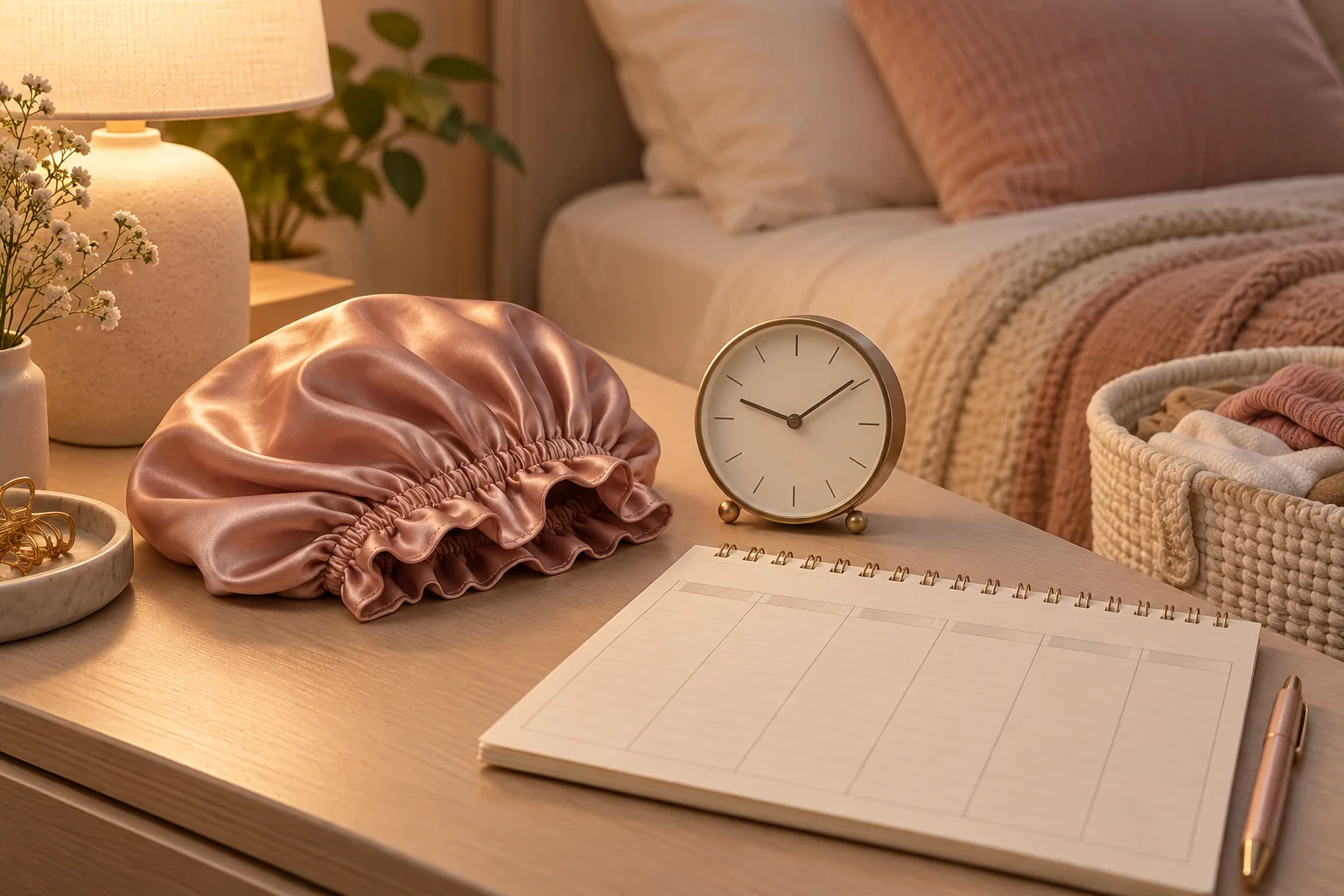
I plan backward from the next use
I start with a simple question: when do I want this bonnet ready again? I then choose a washing window that leaves room for drying without a deadline. A morning at home may work better than an evening before an early start. I do not promise an exact number of drying hours. The finished construction and room conditions can change that number.
I also separate my hair-washing schedule from the accessory schedule. A bonnet may need attention after perspiration or product transfer even when my hair-washing day has not arrived. I use the guidance in Silk Care as a starting point, and I check the instructions for my own piece. I do not treat a calendar reminder as permission to keep wearing a visibly soiled item.
| My next-use situation | My planning choice | My check before use |
|---|---|---|
| I need it this evening | I start care earlier in the day | I check the band and seams |
| I will be away all morning | I choose an earlier free window | I leave time for full drying |
| I notice product transfer | I move washing forward | I use a clean, dry option |
I keep the reminder short. It tells me to inspect and plan, rather than to wash automatically every time it appears. This matters when I have worn the piece very little, or when it needs washing sooner than the usual interval.
I build in a small practical margin. If my home is cool or humid, I plan more time. If I cannot provide that time, I change the schedule. I do not solve a planning problem by adding heat, rubbing the fabric harder, or using an unapproved machine setting.
How do I tell whether a drying bonnet is actually ready?
I can mistake a dry outer panel for a fully dry accessory. A thick band or folded seam may still hold moisture when I put the piece away.
I check the whole bonnet in good light and gently feel the band, seams, ties, and both layers. I leave it open to finish drying if any area feels damp. I do not use elapsed time alone as my readiness test.
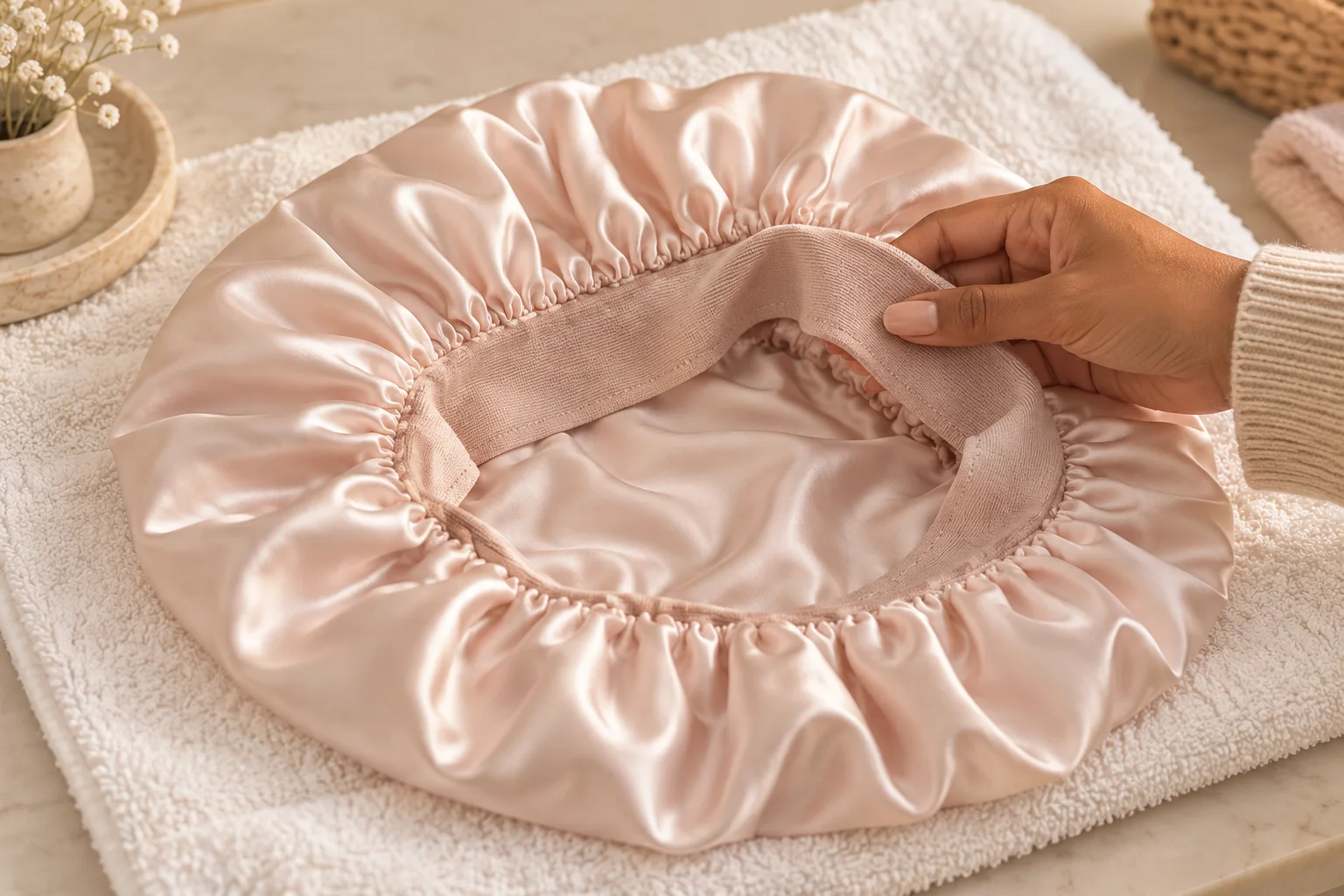
I check the places that dry last
I spread the piece as its care instructions allow. I make sure a folded section is not hiding beneath another layer. I then check the opening, any gathered fabric, and the end of a tie. I use clean, dry hands. I handle the fabric lightly, because this is an inspection rather than another round of squeezing.
I do not rely only on surface shine or color. A photograph cannot tell me that the inside of a gathered band is dry. I also avoid deciding from a single touch to the largest panel. That panel may be ready while the more crowded areas still need time. I keep the piece in the drying area until those areas feel ready too.
The Canadian Conservation Institute's textile guidance explains that damp and poor ventilation can create problems in textile storage.1 I use that source for the general reason to avoid storing damp fabric. Its museum guidance does not set a household bonnet drying time.
I replace a wet supporting towel with a dry one when the item's instructions allow that drying arrangement. I keep direct heat and strong sunlight out of my attempt to catch up. I also keep the drying piece away from a sink where another splash could undo the inspection.
If the accessory has an odor or a visible mark after washing, I do not call it ready just because it feels dry. I check the care instructions and ask for advice if needed. My rotation needs a clear ready state, and that state includes both cleanliness and dryness.
Where do I keep ready, drying, and used bonnets separate?
I can put a used bonnet back beside a clean one without thinking. Then I lose track of which piece is ready and which still needs care.
I give ready, drying, and used pieces separate places that I can recognize at a glance. I keep the ready area clean and dry, leave the drying area open, and move an item awaiting washing away from the pieces I will wear next.

I use places before I use labels
I do not need a new organizer to make three states clear. A clean tray, a suitable drying surface, and a small existing laundry basket can be enough. I choose locations that fit my space and that I can reach without moving several other objects. A system that requires extra sorting every evening is easy to abandon.
I avoid piling a drying bonnet on top of the ready one. I also avoid closing a damp piece inside a pouch so the room looks tidy. My aim is to see the next action, not to hide the work. A ready piece goes to the ready place only after I have checked it.
| My state | My location | My next action |
|---|---|---|
| I have a clean, dry piece | I use a clean tray or drawer space | I can choose it for wear |
| I have a washed, damp piece | I use the instructed drying area | I check it again before storage |
| I have a piece awaiting care | I use a separate laundry place | I schedule washing |
I keep the states independent of how often I wear the item. A bonnet that I used briefly may still be clean enough under its care guidance, but I make that decision before returning it to the ready area. I do not use a tray as proof of cleanliness.
I also consider the nearby objects. Jewelry clasps, open zippers, and cosmetic containers do not belong against the silk. I leave enough room to place the bonnet without pushing it under another accessory. If I share a drawer, I give each kind of item its own space. I can then maintain the rotation with a small handoff after use.
Do I need a second bonnet for a useful rotation?
I can buy a spare because my first bonnet is always unavailable. But a second piece can double the clutter if I have not understood the actual gap.
I consider a second bonnet when proper washing and drying repeatedly leave me without a suitable ready piece. I first check my schedule, storage, and existing options. I choose a spare for a specific care gap, rather than assuming that every routine needs two.

I identify the gap before I add a piece
I make a small record of the problem. I note when the bonnet was needed, why it was unavailable, and whether an earlier washing window could have helped. I do not need a long diary. A few clear observations can separate a repeated constraint from one unusually busy day.
If I have enough time to wash early but keep forgetting, a reminder may solve more than another purchase. If my care window is genuinely limited, a spare may provide a clean, dry choice while the other piece finishes drying. I do not need both pieces to be different styles. I need each one to fit the job and have care requirements that I can follow.
I use the FTC's online-shopping advice to check the full description, total cost, and purchase terms before ordering.2 Those checks help me assess a practical purchase. They do not prove that a spare will improve my hair or sleep.
I ask whether the extra piece has a place to live. If I cannot keep two pieces separate by state, I may have created a new tracking problem. I also check whether I am trying to replace a poor fit with a duplicate of the same poor fit. A spare does not fix discomfort in the original design.
My guide to choosing essentials without overbuying supports that purchase decision. I keep this rotation guide focused on availability. I can decide to use one bonnet, two bonnets, or another comfortable routine. My choice should match the actual care gap that I have found.
How do I reset the rotation after a busy week?
I can lose track after travel, late nights, or several loads of laundry. A complicated catch-up plan makes a small care task feel harder to restart.
I reset by inspecting every piece, moving each one to its correct state, and scheduling the next needed wash. I return only clean, fully dry items to the ready area. I then simplify any step that made the rotation difficult to maintain.

I restart with the items in front of me
I gather the accessories that belong in the rotation. I check the fabric, opening, seams, and any fastening parts. I do not assume that everything left in a drawer is ready. I place uncertain items with those awaiting inspection or care, rather than mixing them into the next-use group.
I then clear the ready area. A clean, dry place matters more than an attractive display. I remove loose jewelry and containers that have drifted into that space. I do not turn the reset into a full bedroom project. My aim is to restore a reliable handoff for the next use.
| My reset question | My response when the answer is no |
|---|---|
| I know which piece is ready | I inspect and separate the pieces |
| I have a suitable drying place | I clear the instructed drying space |
| I have time before the next use | I change the next care window |
| I can maintain these steps easily | I remove an unnecessary step |
I check the wash-and-dry guide when I need the actual care sequence. I do not repeat the washing method from memory if the item has different instructions. A wrap with an absorbent lining, for example, may not share the same construction as my sleep bonnet.
I also look at the cause of the disruption. If I always leave washing until late, I move the reminder earlier. If I cannot tell two pieces apart, I use separate spaces or a simple note outside the fabric. If my storage is too crowded, I reduce what sits there. I want the next week to require less attention, not more equipment.
Conclusion
I keep a bonnet rotation useful by separating its states, allowing full drying, and buying a spare only when a real care gap remains.
- I use the Canadian Conservation Institute for general textile-storage context, not a bonnet-specific drying timetable. ↩
- I use the FTC for purchase checks, not product performance or a required number of accessories. ↩
Images are AI-generated editorial illustrations. They do not identify or verify a specific product.