
Should I Turn My Silk Bonnet Inside Out for Comfort?
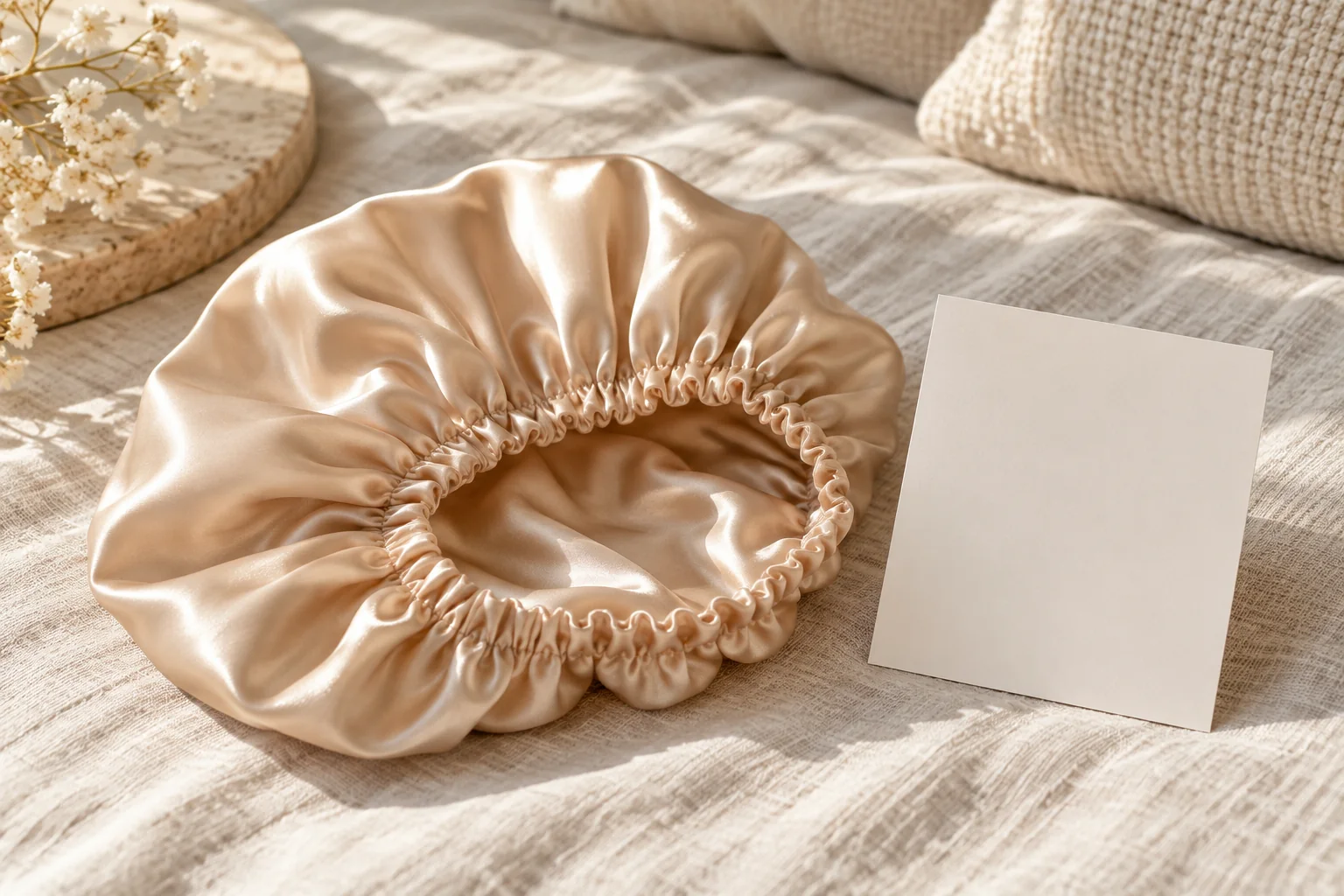
I can notice a bonnet seam and try reversing the whole cap. A smoother-looking side can still leave the closure or lining in the wrong position.
I turn a silk bonnet inside out only when its maker allows that wearing method and the changed arrangement feels comfortable. I check the lining, seams and closure together. I do not treat two layers or a shiny surface as proof that both sides are intended for wear.
I write the Zolay Nights Journal to make fit decisions clearer. Here, I separate an intended reversible design from an improvised change. I want to understand what touches my hair and what happens to the opening before I make reversing the bonnet part of my routine.
How do I identify the intended hair-facing side?
I can choose the shiny surface as the inside and miss the actual lining description. The appearance alone does not answer the wearing question.
I read the finished bonnet's description and instructions for its intended hair-facing side. I check the shell, lining and opening separately. I ask the seller when the direction is unclear instead of deciding from shine, color or a photograph of another bonnet.

I separate a surface from its stated purpose
I start with the bonnet I own or the exact option I am considering. I look at the supplied instructions and the current product description. I notice whether the maker identifies a lining, a shell or a reversible construction. I do not transfer a statement from another style in the collection. Similar colors can hide different layer arrangements.
I separate the material question from the wearing direction. A fabric can look smooth without telling me what fiber it contains. A label can name a fiber without showing which surface the maker intends against the hair. I need the useful construction detail as well as the material description. I keep those two questions clear when I contact the seller.
| Detail I check | Question it answers |
|---|---|
| Stated hair-facing layer | I can identify the intended inside |
| Wearing instructions | I can follow the intended orientation |
| Reversible description | I can ask whether both orientations are allowed |
I use the silk and satin guide to understand the difference between fiber and weave. I do not use that distinction as a shortcut to a wearing method. It helps me read the description, while the actual bonnet instructions tell me how the finished item is used.
I also use the FTC's shopping guidance as context for reading product details and keeping records.1 I keep the selected option and the answer I receive together. I do not infer that every bonnet must carry the same kind of statutory label, or that a missing detail automatically proves a false material claim. I ask the product-specific question first.
Does double-layer construction mean the bonnet is reversible?
I can read double layer and expect two interchangeable sides. The finished opening and closure may still have one intended arrangement.
I do not treat double layer and reversible as the same claim. I check whether the maker expressly permits wearing both sides and whether the closure works as intended in each direction. I leave reversibility unresolved when the description only identifies the number of layers.

I read the whole construction description
I look beyond the count of fabric layers. I notice the shape of the crown, the way the opening folds and the position of any ties or adjustment parts. I do not assume those details remain the same when I reverse the cap. I want the finished design to support the method, rather than expect the fabric count to settle every question.
I check a statement about both surfaces carefully. A seller may describe material on the inside and outside without describing both orientations as wearing options. I keep that distinction in my question. I can ask whether reversing the bonnet changes how the band, slider or ribbon route should be used. I do not create a new route for those parts myself.
I inspect the maker's images as supporting information. I look for the actual selected style and a clear view of its opening. I do not use the absence of a visible seam in one photograph as proof that both sides feel the same. Lighting, folds and the angle of the image can limit what I can see.
I also separate an intended reversible product from a bonnet that a forum user reverses. A personal workaround tells me what that person tried. It does not confirm my item's construction. I can take the question from a discussion without taking its method as a universal instruction.
I keep my choice open if the seller cannot establish reversibility. I can use the bonnet in its intended orientation or choose another design. I do not need to alter a closure or hide a label to make a guessed second wearing side work.
What changes at the opening when I reverse the cap?
I can focus on one seam and overlook a folded band or moved adjustment part. The opening deserves its own check.
I check the band, ties, drawstring route and any adjustment part in the maker-approved orientation. I do not add tension to hold a reversed opening in place. I stop if the changed arrangement creates a pressure point, catches hair or requires a closure method the maker has not described.
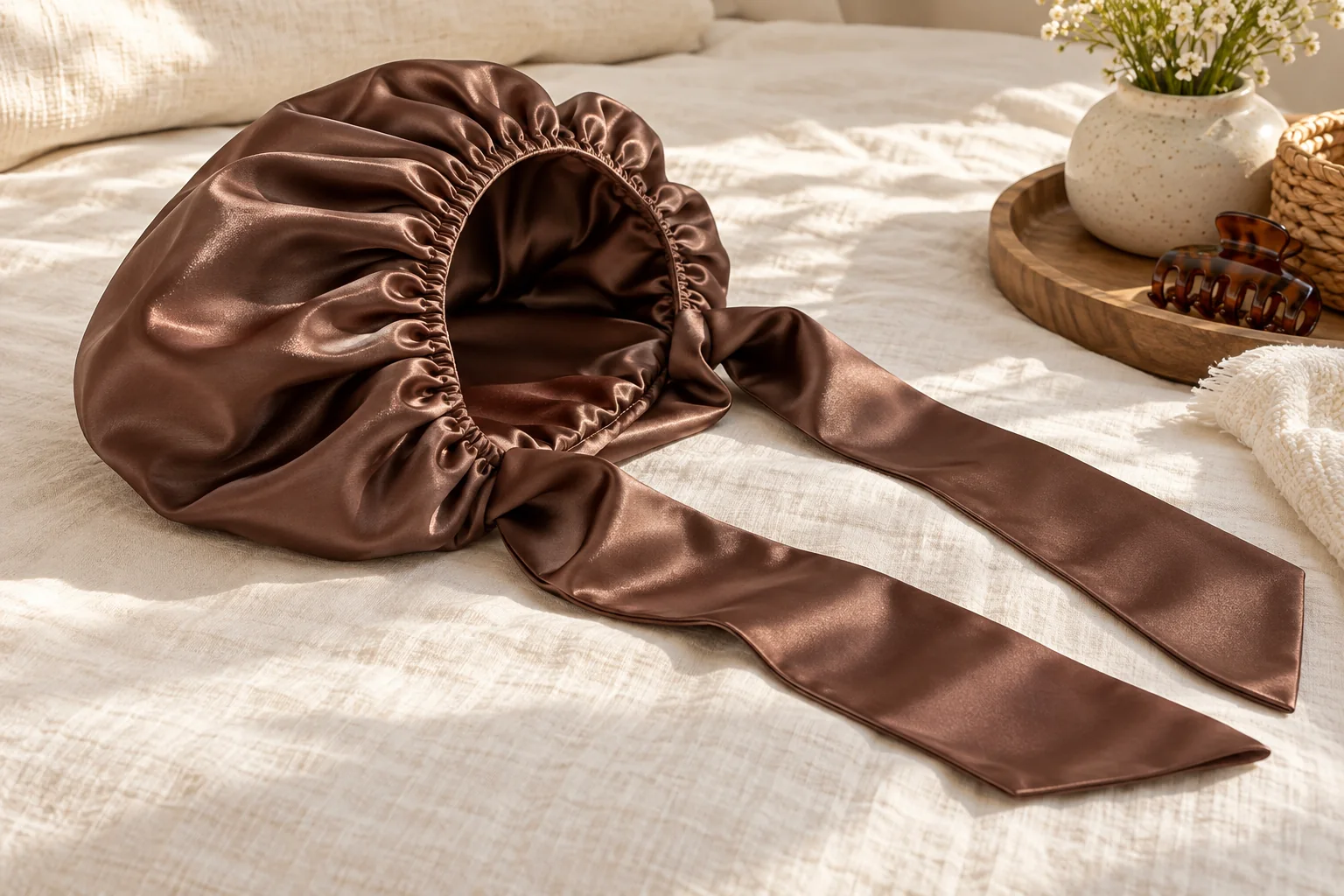
I keep adjustment separate from orientation
I look at how the opening rests before I change its tension. I notice whether a folded edge rolls inward or whether a tie now starts from a different position. I do not treat every shift as something to solve by pulling harder. A changed fabric route can require a different design decision rather than another adjustment.
I follow the supplied method for any moving part. I do not pull a drawstring through an unfamiliar opening or retie ribbons around parts that were not intended to hold them. I also avoid adding a pin or clip to keep a reversed band flat. I want a clear wearing method that does not depend on an extra object at the opening.
| Part I inspect | Detail I want to understand |
|---|---|
| Folded opening | I want it to sit without an awkward roll |
| Ties or drawstring | I want the intended route to remain clear |
| Adjustment hardware | I want its position and method explained |
I use the bonnet closure guide when I need to compare elastic, ties and drawstrings. I keep this question narrower. A closure type does not establish that my particular cap can be reversed. I compare the actual arrangement, not the name of the mechanism alone.
I inspect the bonnet again after removing it. I check whether a seam, ribbon attachment or opening looks changed. I do not assume that one brief comfortable moment validates the construction for repeated use. I keep the manufacturer's permitted method and the finished item's condition in view together.
How do I check comfort before using a new arrangement?
I can keep adjusting a bonnet because I expect the next position to feel better. A clear stop point helps me avoid forcing the experiment.
I check a permitted arrangement while awake and stop when it feels uncomfortable, pulls or pinches. I distinguish a surface-contact issue from an opening-fit problem. I follow the actual item's instructions and ask for guidance if I cannot resolve the changed fit without extra tension.

I describe what I notice plainly
I pay attention to the part that feels wrong. I can describe a seam near my hairline, an opening that rolls or a closure that presses in an awkward place. I do not need to diagnose a condition to explain that an accessory is uncomfortable. I use that description when I ask the maker for a suitable wearing method.
I change only a detail that the instructions permit. I do not combine reversing, tighter adjustment and an added wrap in one trial. Too many changes make it harder to understand the source of discomfort. I can return to the intended orientation and compare the opening again while I am awake.
I treat the pillow position as another contact check when it applies to the item's intended use. A cap can feel different after I change position. I do not assume that I will stop noticing an uncomfortable part once I fall asleep. I also do not use extra tension as a response to a seam that I cannot reposition comfortably.
I use the American Academy of Dermatology's styling guidance as general context for gentle handling and avoiding unnecessary pulling.2 I do not present that page as an endorsement of reversed bonnets. It does not test my item, identify its lining or establish a particular overnight result.
I keep the decision within the evidence I have. I can stop using an uncomfortable arrangement and seek item-specific guidance. I do not turn a personal comfort check into proof that a fabric, seam or orientation works for every reader. I want a method I can follow clearly, without making a promise about someone else's experience.
What should I choose if reversing does not solve the problem?
I can spend time changing the same cap when its opening or construction does not suit me. Another permitted arrangement may be more useful.
I use the bonnet as directed, ask about a suitable alternative or choose a different construction when the current arrangement remains uncomfortable. I compare the feature causing the problem. I do not buy another cap solely because its listing promises softness or calls it reversible.

I compare the feature I need to change
I write down the concrete problem before I compare another bonnet. I may need a different opening, a clearer hair-facing layer description or a closure that sits elsewhere. I do not make the comparison about every feature at once. One clear question helps me read another listing more carefully.
I compare an actual construction with another actual construction. I check the stated dimensions and measurement method where they are available. I look at the position of ties, seams and adjustment parts. I do not assume that a cap with a different color or a softer photograph has a different opening. I ask when the relevant detail is missing.
| Problem I noticed | Comparison I make |
|---|---|
| I dislike the opening position | I compare the opening and closure route |
| I cannot identify the intended inside | I compare the layer description |
| I need more usable crown room | I compare crown shape separately from band tension |
I browse the Home & Rest collection by the selected item's stated purpose and construction. I do not assert that every double-layer Zolay Nights bonnet is reversible. I keep that product-specific question open when the current description does not settle it. I also do not treat an absorbent hair-drying wrap as the same kind of item as a sleep bonnet.
I leave room to use what I already own in its intended way. I can decide that a reversible option is unnecessary if the original orientation suits my routine. I can also decide that a different design is worth comparing. I base that decision on the actual feature I need, rather than continue an uncomfortable workaround because I have already spent time on it.
Conclusion
I reverse a bonnet only when its design allows it. I check the lining, opening and comfort together, and choose another arrangement when the setup needs force.
- FTC: Online Shopping. I use its description and record-keeping guidance, not a blanket bonnet-label or return-policy claim. ↩
- American Academy of Dermatology: Hair styling without damage. I use its general hair-handling context, not an endorsement of a reversed bonnet or a promised medical outcome. ↩
Images are AI-generated editorial illustrations. They do not identify or verify a specific product.