
Is a Silk Bonnet the Same as a Satin Bonnet?
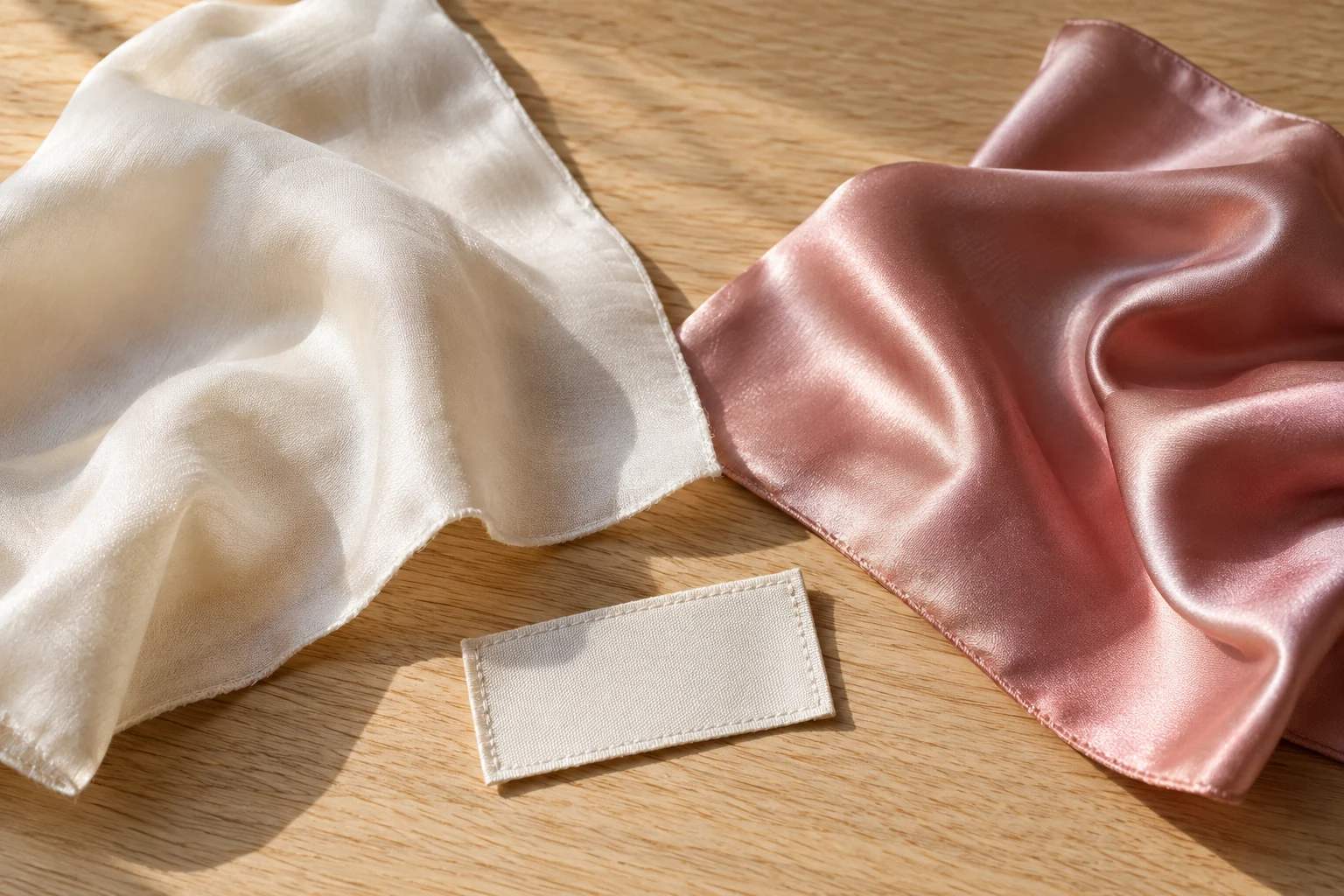
I find silk and satin used together in many bonnet titles. That wording can leave me unsure about what touches my hair and what I am buying.
I distinguish silk, a fiber, from satin, a weave. A satin bonnet can use silk or another fiber. I check the stated composition of the hair-facing layer, outer fabric and band before comparing fit, care needs or price.
I use material language to narrow a decision. I do not use it to predict a guaranteed hair result. I also separate the product's factual description from a seller's promise. My Why Silk guide provides the background for that comparison.
Why do I separate fiber from weave?
I can mistake a smooth finish for a material name. That shortcut makes two different products appear identical before I read their details.
I ask what the fabric is made from and how it is constructed. I treat silk as the fiber question and satin as the weave question. I need both answers when the listing uses both terms.
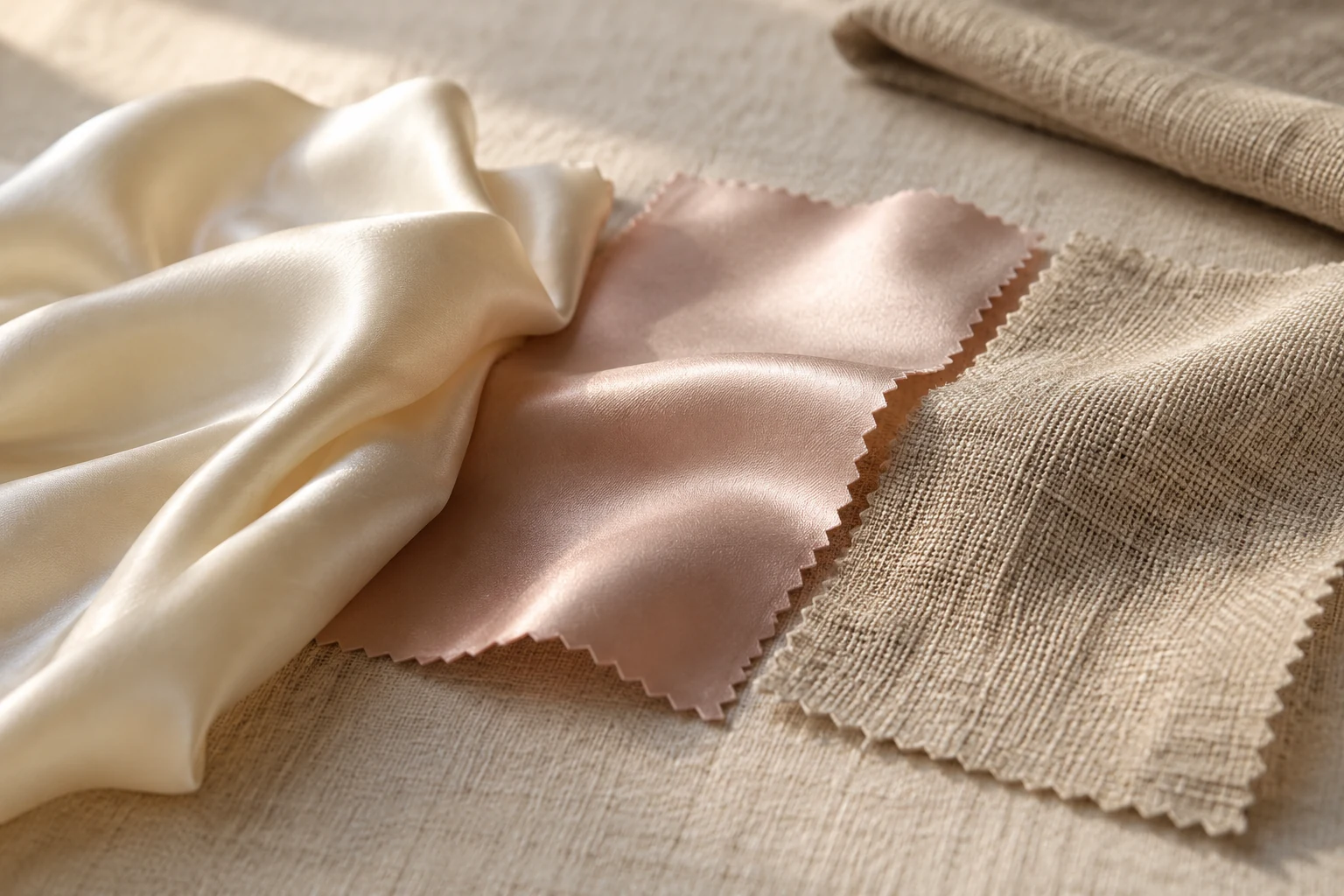
I read the description in two passes
I first look for a clear fiber statement. I want to know whether the crown, lining or both are described as silk. I then look at the surface and construction language. A title can contain satin without telling me which fiber the seller used. I would ask for that detail rather than infer it from a photograph.
I would not identify fiber by shine alone. Lighting, color, finishing and image editing can all affect what I see on a product page. I can use a close photograph to inspect a seam or opening. I cannot use the same photograph as a laboratory result. I would also avoid a home burn test because it can damage the item and does not answer every question about a finished accessory.
I keep the comparison narrow
I might compare a silk satin bonnet with a polyester satin bonnet. That comparison describes two material choices. It does not tell me which opening fits my head, which shape holds my hair or which band feels comfortable. I would write those questions separately so that a material preference does not hide a fit problem.
| Question I ask | Detail I need |
|---|---|
| What is the fiber? | I need a specific composition statement |
| What does satin describe? | I need the weave or surface description |
| What will touch my hair? | I need the lining or inner-layer description |
I use general textile-label guidance from the FTC as background for reading fiber language.1 I do not assume every bonnet has the same legal labeling duties. Headwear has exemptions, so I ask for clear material information without turning a buying checklist into a legal claim.
Which layer matters when I compare bonnets?
I can read a silk claim and miss a different lining. That gap matters when the inside is the part I intend to place against my hair.
I check the inner layer, outer layer, band and adjustment parts separately. I would not assume a silk outer crown means every component is silk. I compare the finished construction rather than one word in the title.
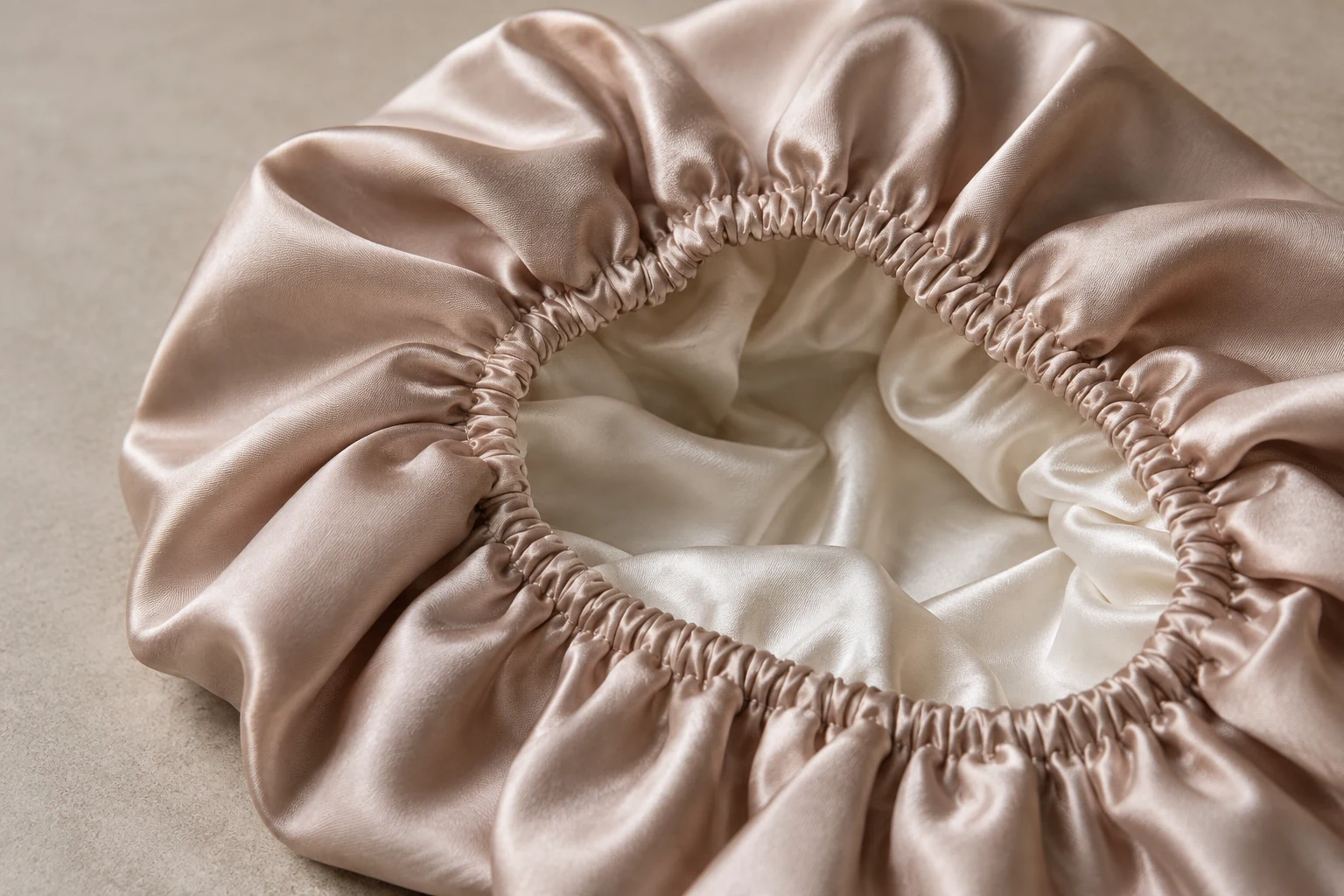
I map the parts of the finished item
I make a short list of the components I can identify. I include the crown, lining, band, elastic and ties when they are present. I then match the listing's claims to those parts. A silk-lined bonnet may have a different outer material. A double-layer bonnet may need an explanation of what each layer contains. I would not fill those gaps with assumptions.
I also check how the layers meet at the opening. A seam or edge can affect how the bonnet feels even when the main fabric suits my preference. I would ask for a close view of the inside if the listing only shows the outside. I would prefer an answer about the exact item to a broad statement about all products in a collection.
I look beyond layer count
I do not treat more layers as an automatic upgrade. I compare the space inside the crown and the way the item feels in my room. I also consider whether I want a compact shape or a longer shape. Layer count is a construction detail; it cannot decide comfort for me.
I would use a simple example when comparing two listings. One could state a silk inner layer and an unspecified outer shell. Another could state silk on both sides but give no opening range. I would still have a missing fact in each case. I would ask each seller a different question rather than choose the second item because its description sounds more complete at first glance.
I keep the Materials & Care page beside my comparison so that material and care questions stay connected. A clear parts description gives me a better basis for both questions.
Does momme tell me which bonnet is better?
I can be drawn to a higher number without checking what it measures. That can distract me from the details that decide whether I will use the bonnet.
I use momme as a silk fabric-weight reference. I do not use it as a complete quality score. I still need the fiber, layer count, crown dimensions, opening range and care instructions for the finished bonnet.
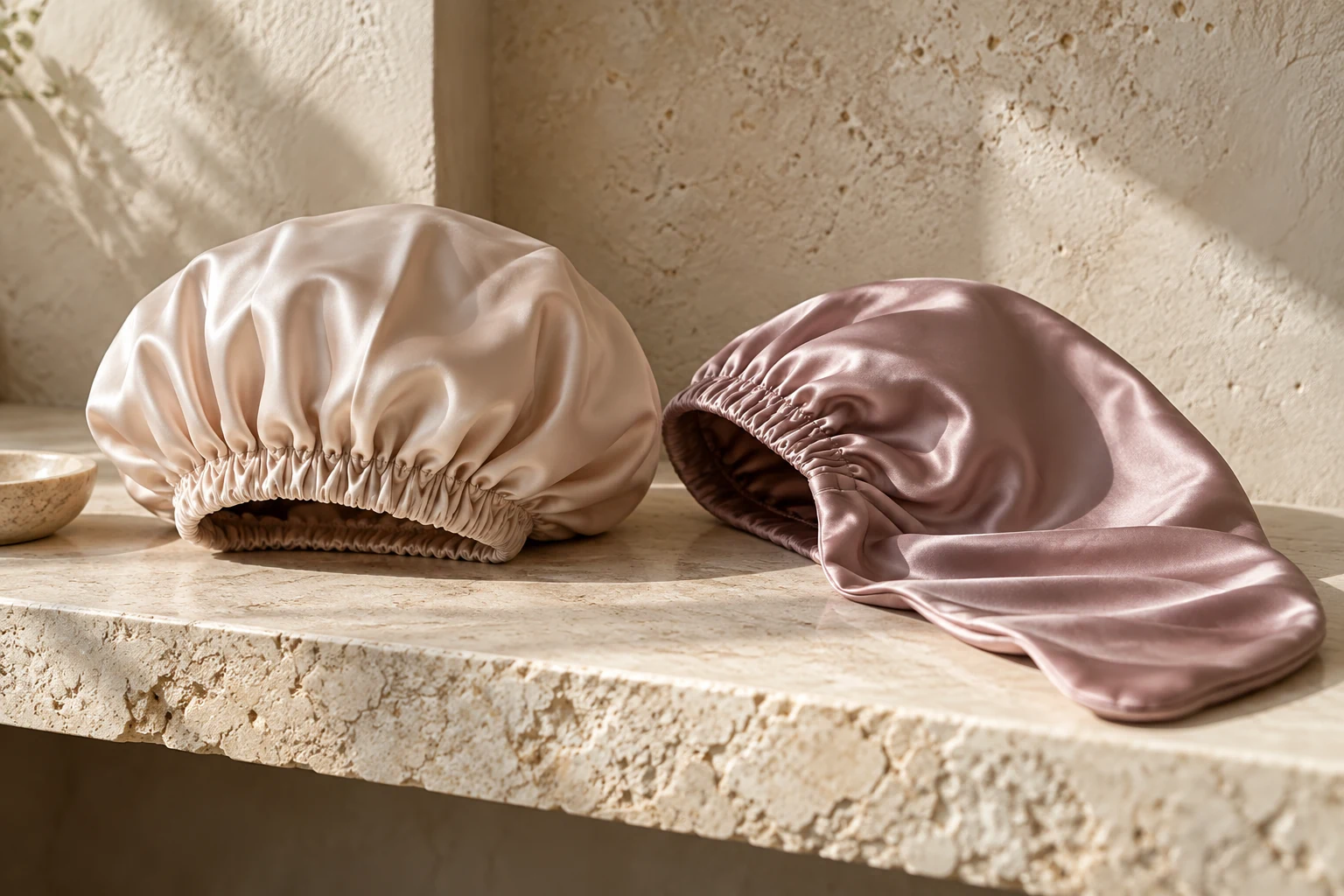
I compare like with like
I would compare momme values only when I know which fabric and layer each value describes. A number for the outer crown does not establish a number for the lining. I would also check whether the seller states the value consistently across the title, description and item details. A mismatch gives me a reason to ask for clarification.
I would not compare fabric weight with total accessory weight. A finished bonnet includes seams, a band and sometimes hardware. Those parts make the accessory different from a simple fabric swatch. I would ask for the fabric specification rather than calculate a supposed momme value from the weight of the whole bonnet.
I weigh the other details
I would consider a product with a lower stated momme if its verified construction fits my needs better. I would also consider a heavier fabric if I prefer its feel and the finished item is comfortable. I do not need to claim that one value is right for every person. I need a reason for my own choice.
| Specification | What I would still check |
|---|---|
| Momme value | I would check which layer it describes |
| Double-layer description | I would check each layer's fiber |
| Large crown | I would check actual dimensions and opening range |
I use the 19 momme explanation when I want to read that number in context. I would keep material weight, shape and comfort as separate lines in my comparison. That method leaves room for a product to suit one person well and suit another person poorly without changing the meaning of its fabric specification.
How would I choose between silk and another satin fabric?
I would not want an expensive material choice to become a poor daily fit. I need an item I can wear comfortably and care for as instructed.
I compare my material preference with the item's fit, care requirements and clear product details. I would choose the bonnet whose stated construction suits my routine. I would avoid a promise that one fabric guarantees smooth hair or stays on every head.

I decide what I am willing to maintain
I would read the care instructions before paying for the item. A care method that fits my week is part of the buying decision. I would not choose a fabric and then invent a wash method because the published instructions feel inconvenient. I would also ask what to do when instructions are absent or unclear.
I would set a practical budget after checking those facts. I do not need the highest price to feel confident in a purchase. I need an accurate material description, a useful size explanation and a care method I can follow. I would leave unsupported hair-growth or universal comfort claims out of the comparison.
I allow different personal experiences
I read community reports to understand the questions people ask, not to borrow someone else's outcome. The first-night bonnet discussion includes different experiences with fit and morning hair shape.2 I would use those differences as a reason to plan an individual trial. I would not select one favorable comment and treat it as proof for all users.
I would start a trial while awake and check the opening, seams and closure. I would notice whether I can place my hair inside without forcing it into a tight bundle. I would also check where extra fabric rests against the pillow. If the item feels uncomfortable, I would reconsider the fit even if its fabric matches my preference.
I would record what I observed in plain language. I might like the material but need a different crown. I might like the shape but dislike the band. Those observations help me choose a more suitable item without blaming or praising a fiber for every part of the finished design.
Conclusion
I compare fiber, weave, layers, fit and care separately. Clear product details help me choose a bonnet I can use, without expecting a material name to guarantee results.
- FTC textile-label guidance. I use its fiber-disclosure background while respecting the stated headwear exemptions. ↩
- Reddit: first-night bonnet experience. I use the discussion to understand varied experiences, not to establish fabric performance. ↩
Images are AI-generated editorial illustrations. They do not identify or verify a specific product.