
How Can I Use the Zolay Nights Journal to Make Clearer Everyday Choices?
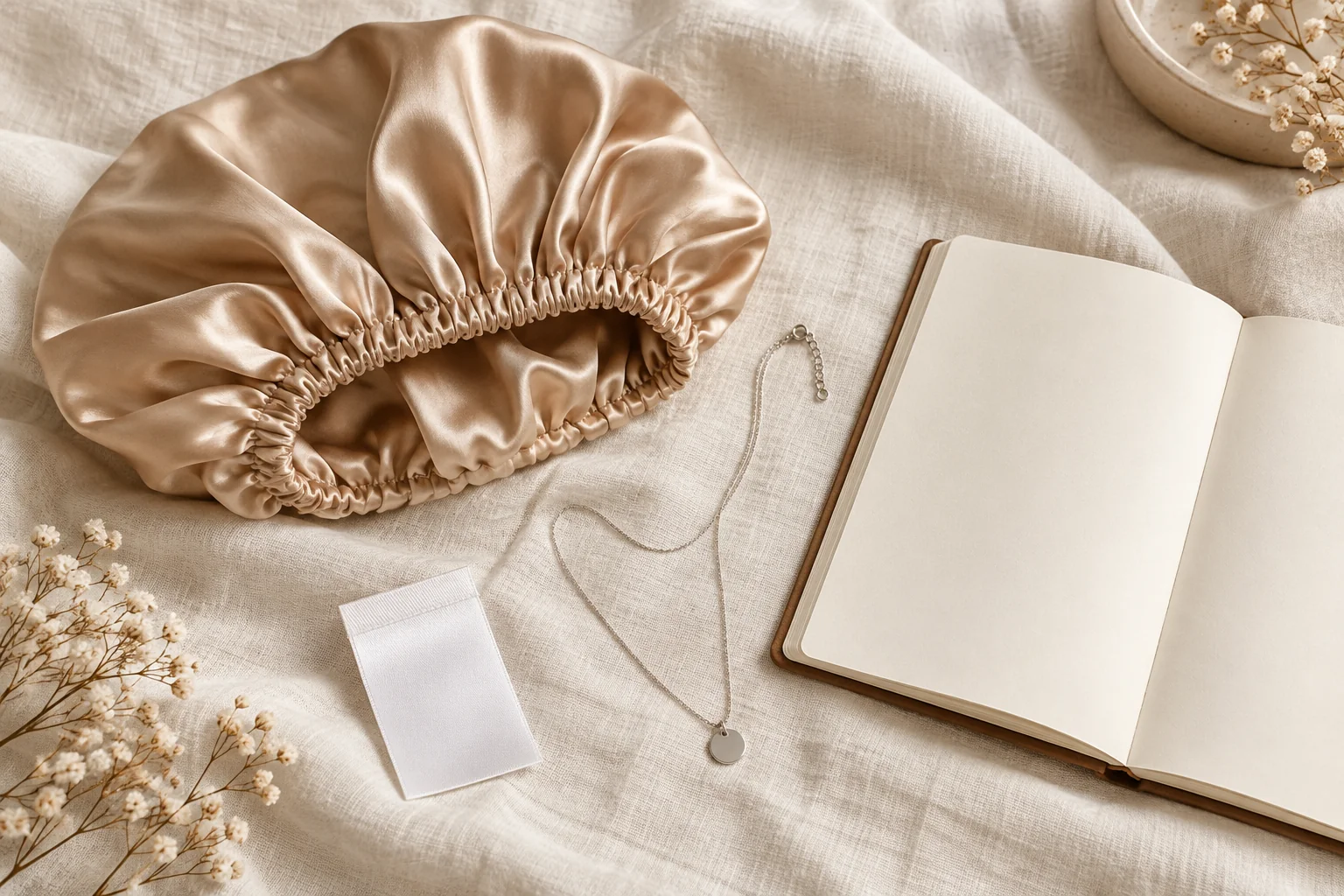
I can read many product descriptions and still miss the detail I need. More information helps only when it answers the question behind my choice.
I use the Zolay Nights Journal by starting with one practical question about fit, materials, care or personal style. I choose the relevant category, compare the guide with the actual product details and follow its sources where needed. I keep my own comfort and routine in the decision.
I see the Journal as a place to slow down the comparison and make the next question clearer. I want the articles to help me understand a choice before I bring another piece into my day.
Where do I start when I have a bonnet fit question?
I can blame the fabric when a bonnet slips or presses against my head. Fit has several parts, so I need to identify the actual difficulty first.
I start in Silk Sleep & Fit and describe the problem in plain words. I compare opening fit, crown room, closure placement and my hair arrangement. I stop if the setup hurts, and I avoid treating a tighter band as the answer to every slipping problem.
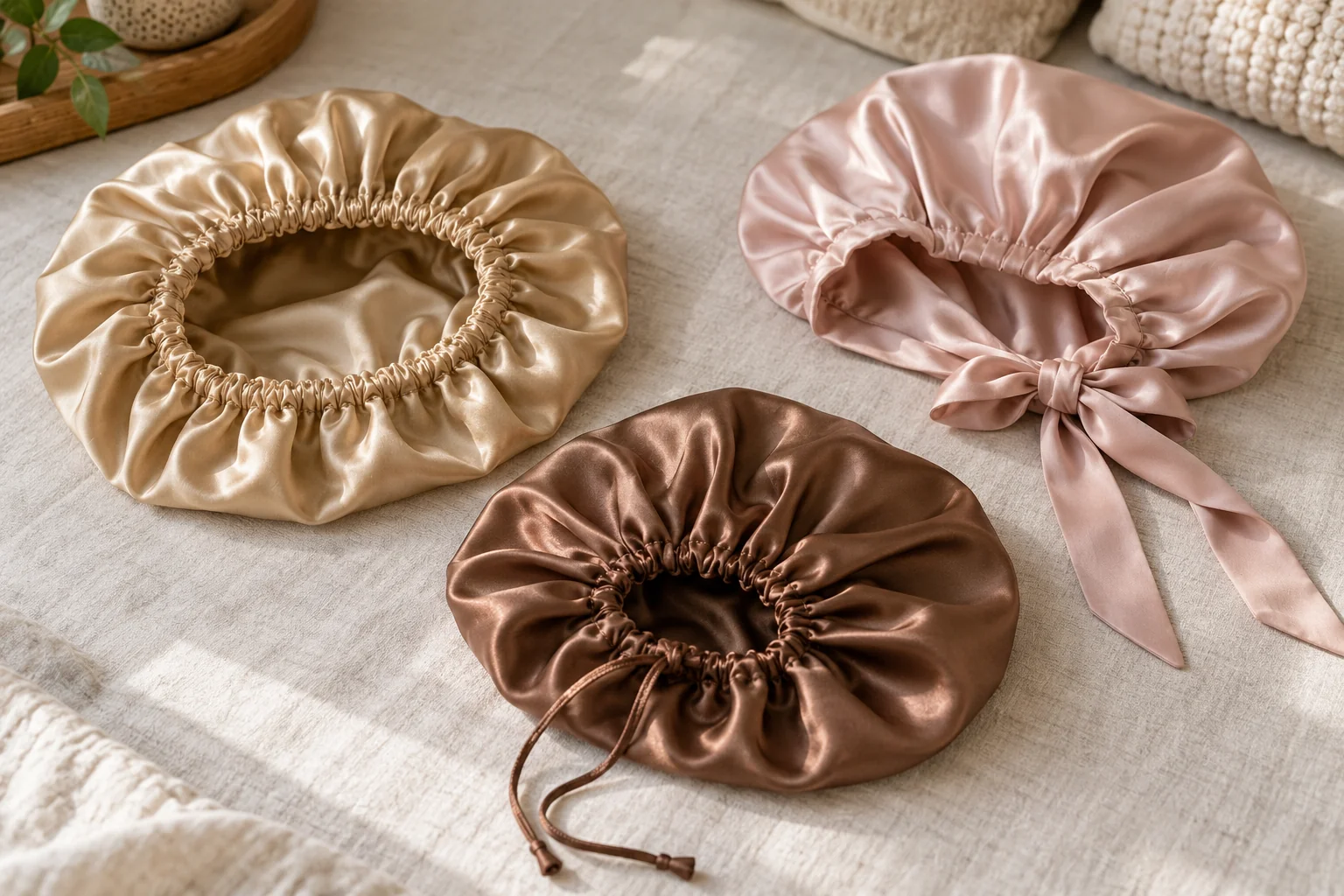
I separate the fit questions
I ask whether the opening feels loose, tight or comfortable. I then ask whether the crown has enough space for my intended hair arrangement. I check where a tie, seam or drawstring rests when I lean against the pillow. These are separate observations. A bonnet can have a roomy crown and a tight opening, or a comfortable band and a closure placed awkwardly for my resting position.
I look for the guide that matches the observation. I can begin with choosing a silk bonnet when I need a broad comparison. I can use the category's slipping or fine-hair articles when the question is more specific. I do not expect one product name to answer every fit problem.
I keep comfort as the first check
I test adjustments while I am awake. I gather hair loosely and move normally. I stop if I feel pain, pulling or pressure. The American Academy of Dermatology's guidance about tight hairstyles gives me a reason to avoid painful hair tension.1 It does not establish that any bonnet prevents hair loss or treats a scalp condition.
| Fit detail | Question I ask |
|---|---|
| Opening | I ask whether it sits comfortably |
| Crown | I ask whether it has room for my hair |
| Closure | I ask where it rests against the pillow |
I keep an ongoing health concern separate from an accessory comparison. A useful article can help me inspect construction, but it cannot diagnose the cause of a hair or scalp problem.
How do I use the materials and care articles?
I can mistake a smooth surface for a clear fiber statement. I need to read the actual material details before deciding how to choose or clean an item.
I use Materials & Care to distinguish fiber, weave, fabric weight and item-specific care. I compare those explanations with the product's own description and instructions. I ask the seller about missing details rather than using shine, price or a photograph as proof.
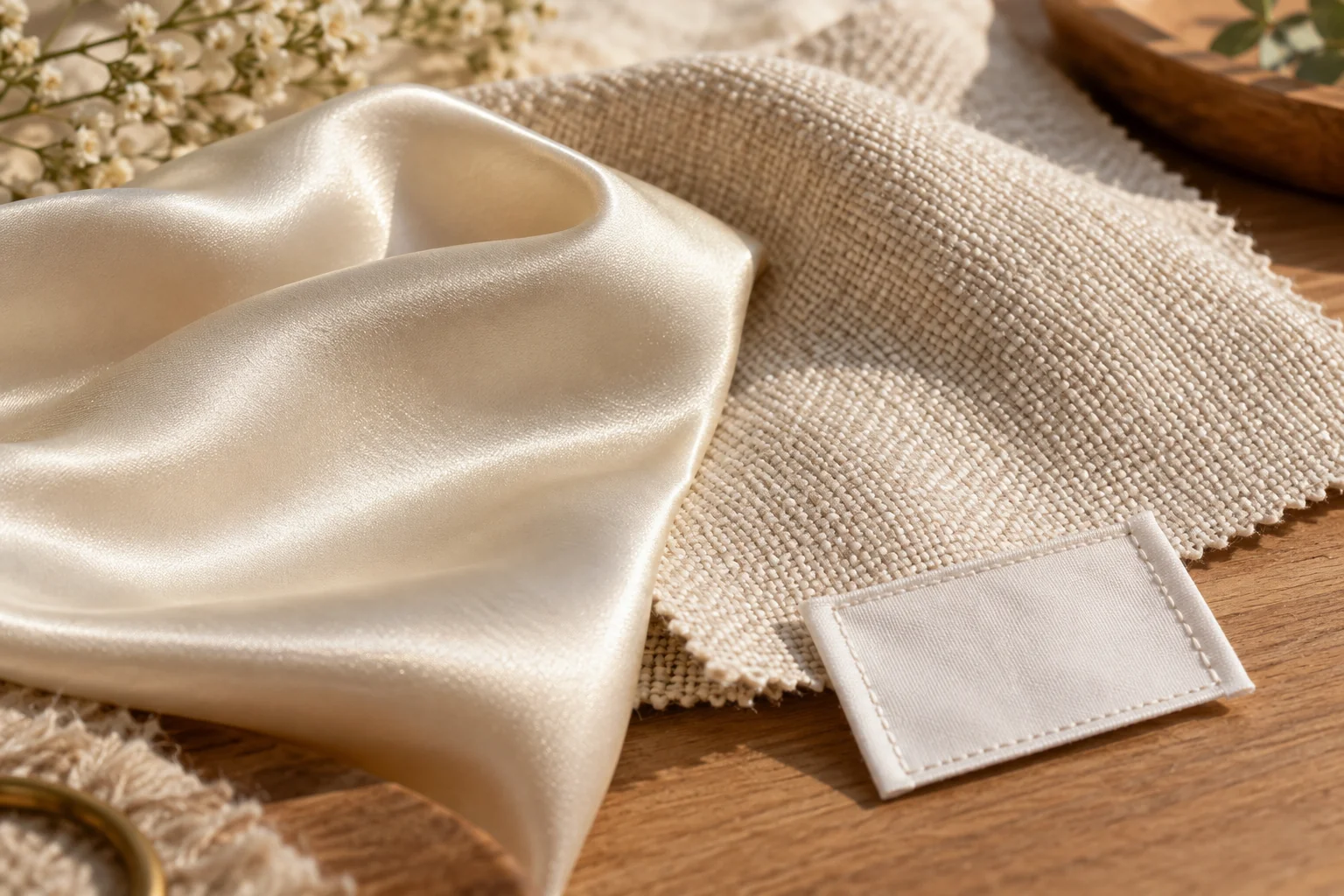
I identify the question behind the word
I look at which part of the description is unclear. Silk refers to a fiber. Satin describes a weave. A momme figure describes fabric weight and does not prove fiber content by itself. These distinctions help me ask a specific question instead of treating every smooth, shiny material as the same thing.
I use the category articles to understand those terms, then return to the actual listing. I check its stated composition, construction and care information. I do not use the article's illustrative image as evidence about a particular product. I also do not assume that a term in a search result appears in every item sold by the store.
I follow the item-specific care method
I read the instructions before choosing a wash or drying method. I keep fabric, seams, elastic and closures in the comparison because a complete item contains more than its main cloth. I avoid applying a single cleaning method to every object that shares one material word.
I use materials and care as a reference page and the Journal category for deeper questions. I note any unclear instruction and ask for an answer before experimenting. I do not use an aggressive test to identify the material of an item I want to keep wearing.
I want the guide to make the care decision clearer, not longer. I choose a routine I can follow and keep the product information available for the next time I need it. A clear instruction is more useful than a general claim that an item is easy to care for.
How do I use the jewelry articles without copying a fixed style rule?
I can copy a necklace stack and still find it uncomfortable or tangled. Styling ideas need a fit check on my own clothes and movement.
I use Everyday Jewelry to compare length, focal pieces, spacing, materials and storage. I treat styling examples as options. I test the actual pieces with my clothes and stop adding layers when I already like the balance or when the combination keeps catching.
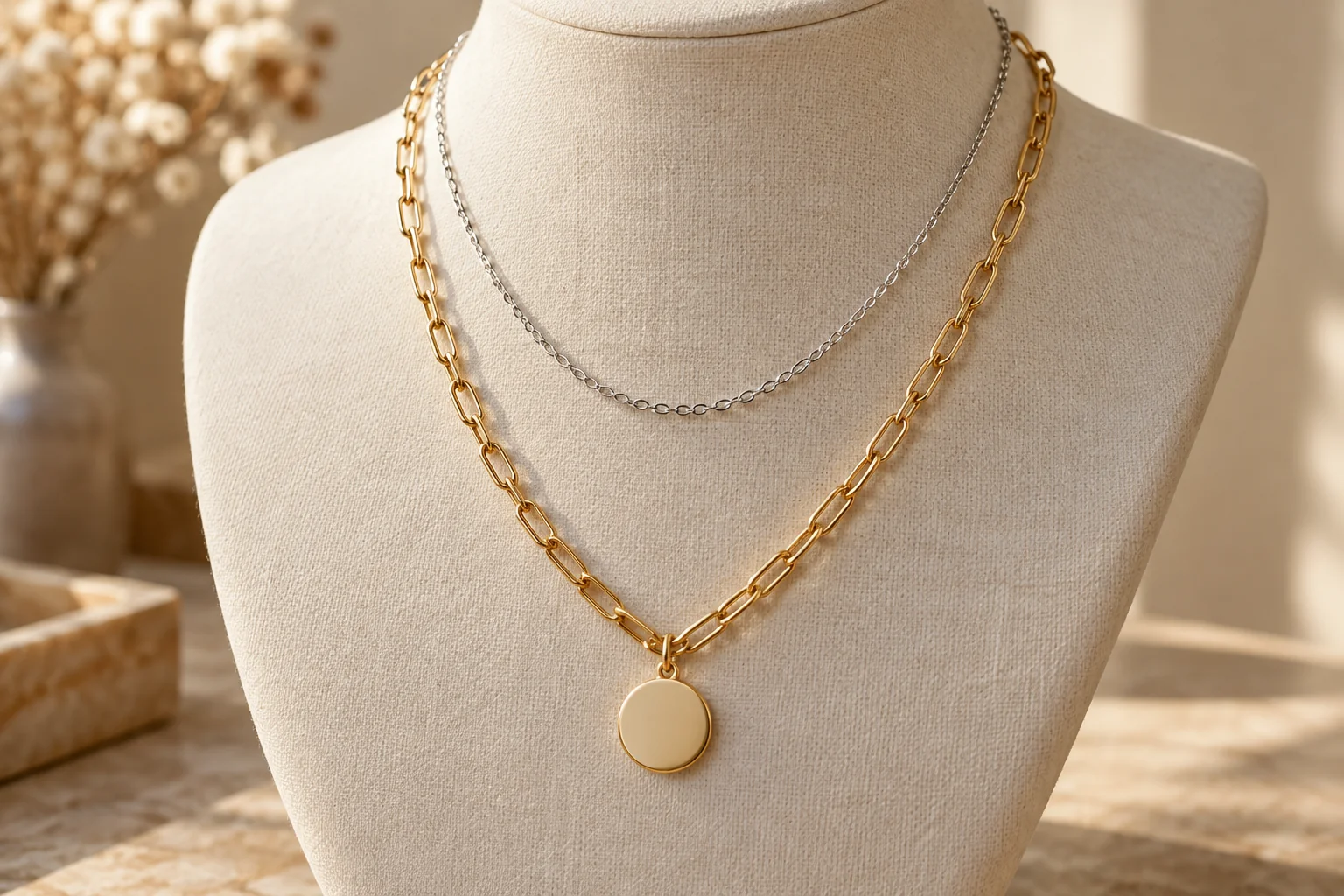
I choose the question that matches the problem
I ask whether I am trying to choose a length, build a stack or prevent repeated tangling. These questions overlap, but they are not identical. A length guide helps me understand measurement and resting points. A layering guide helps me choose a focal piece. A tangling guide helps me inspect the way chains and clasps interact during movement.
I start with a necklace I already enjoy if I have one. I compare its measured length and pendant size with the item I am considering. I try the relevant clothes and check the visible position. I do not assume another person's photograph predicts the same placement on me.
I include care and storage in the choice
I read the base metal, finish and decorative material details. I keep color names separate from composition. I use GIA's care guidance to understand why different components need different treatment.2 I then follow the particular item's instructions rather than applying one cleaning routine to every necklace.
| Jewelry question | What I compare |
|---|---|
| Which length suits me? | I compare measurements and resting points |
| Which layers work together? | I compare spacing and normal movement |
| How should I put them away? | I compare suitable separate storage |
I allow personal preference to remain part of the decision. I can choose one necklace, several layers or no necklace for an outfit. I use the guide to make that choice clearer, without turning a suggestion into a rule about what everyone should wear.
What does the Zolay Edit add to the practical guides?
I can understand product details and still feel uncertain about what to buy. A wider look at routine and purpose helps me decide whether the piece belongs.
I use The Zolay Edit to connect an object with a real task, a comfortable routine and personal taste. I compare what I already own, the care I can maintain and the purchase terms. I choose when the role is clear and wait when it is not.

I connect the detail with everyday use
I can know a necklace's dimensions without knowing when I will wear it. I can understand a bonnet's closure without knowing whether it fits the routine I want. The broader articles give me a way to ask those questions. I look at a real moment in my day and describe what the object would add.
I compare the proposed item with what I already use. I check whether a storage change, a different pairing or clearer care information would solve the problem first. I do not need to buy every object that appears in an article. I can use a guide to make better use of something I own.
I keep the brand story and the product facts distinct
I read the Zolay Nights story for the store's approach to useful pieces and understated design. I read the individual product listing for materials, measurements and care. The story gives me context. The listing needs to give me the details for the actual purchase.
I also check the current shipping and return information before I order. I keep a record of the description and order details. I ask the store a specific question when I cannot find an important answer. I want the Journal to support that process by making the question clearer.
I revisit a guide when my routine changes. I may need another length, a different fit approach or a more practical storage method later. I use the category structure to find the next relevant question rather than assuming that one choice must remain right forever.
Conclusion
I use the Journal to ask clearer questions about fit, materials, care and purpose. I compare each guide with real product details and keep my routine in view.
- American Academy of Dermatology: Hairstyles That Pull Can Lead to Hair Loss, a reference about hair tension, not bonnet performance. ↩
- GIA: Tips for Caring for Your Jewelry, a material-specific care reference. ↩
Images are AI-generated editorial illustrations. They do not identify or verify a specific product.