
Is a Glass Pearl Necklace the Same as Cultured Pearl?

I can read pearl in a necklace title and assume more than the description says. I want to understand the accent before I judge the finished piece.
I keep glass pearl and cultured pearl separate. A glass pearl description refers to a glass imitation, while a cultured pearl forms in a mollusk with human involvement. I read the exact material statement and do not identify the accent from its shine, shape or photograph alone.
I can enjoy a pearl-like appearance without changing the item's material name. I use the description to compare like with like, check the whole necklace and decide whether it suits my style and care routine.
What do glass pearl, faux pearl and cultured pearl mean?
I can see several names used beside similar-looking beads and miss the difference between appearance and origin. I need the terms separated before comparing items.
I treat glass pearl as a stated imitation material, and faux or imitation pearl as wording that needs its actual material explained. I keep those terms separate from cultured pearl. I do not use cultured as another word for imitation or assume every pearl-like bead has a glass base.

I start with the kind of object being described
I read the full material phrase rather than stop at pearl. I may see glass pearl, imitation pearl or freshwater cultured pearl. I want to know what the seller is naming, not which word appears most prominently in a title. I do not drop the qualifier when I compare the piece with another necklace or describe it as a gift.
I use GIA's explanation to keep the main distinction clear. Its guidance identifies cultured pearls as pearls formed through human involvement in the mollusk's growth process, while imitations use other materials to create a pearl-like appearance.1 I do not turn that broad distinction into a claim about a specific necklace's identification or quality.
| Term I read | Information I take from it |
|---|---|
| I read glass pearl | I keep the stated glass imitation separate from cultured pearl |
| I read faux or imitation pearl | I ask which material creates the pearl-like accent |
| I read cultured pearl | I keep that origin distinct from an imitation |
I also keep natural pearl separate from the other descriptions. I do not assume a pearl-like accent is natural because it has an uneven shape or a warm color. I can ask for a clearer material statement when a listing uses only pearl in a decorative name. I want enough information to understand the item's identity without assigning it an origin the seller has not established.
How do I read the material statement in an actual listing?
I can focus on a pendant's shape and overlook a clear qualifier in the details. I get a better comparison when I read the title and product text together.
I check the selected necklace's full description, stated accent and option details. I keep the seller's material wording intact. I do not replace glass pearl with cultured pearl, and I ask for clarification when a decorative title and a material statement appear to describe different things.
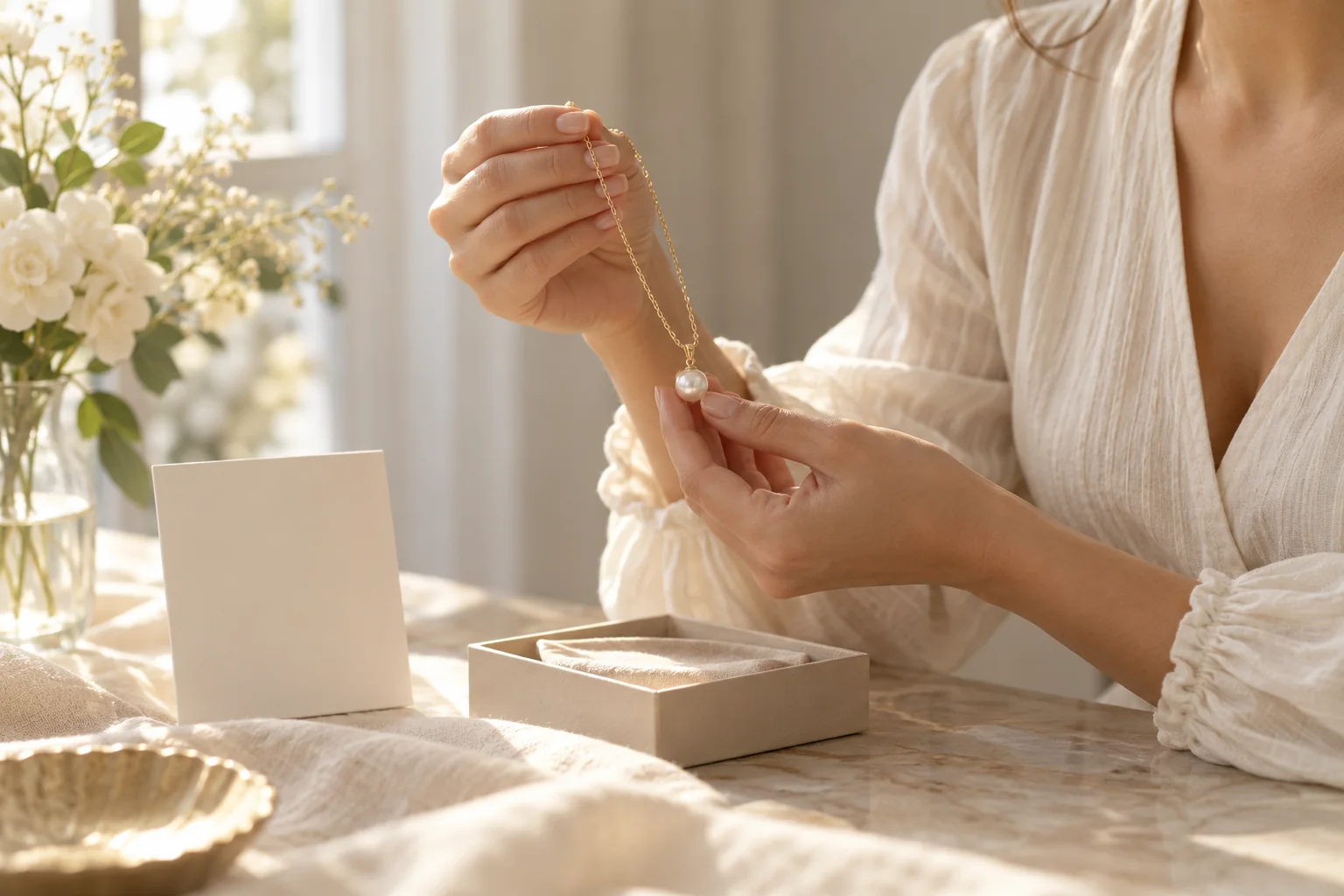
I keep the exact qualifier attached to the accent
I start with the selected item and variation. I check whether the material statement names the accent, chain or setting. I do not assume that one statement covers all three. I also look for details that apply to the exact option rather than a photograph of a different color or design in the same collection.
I can use our Pearl Drop Adjustable Y Necklace as a concrete example. Its current description states a glass pearl accent, a snake-chain Y design and an adjustable sliding arrangement. I can describe those supplied details. I do not relabel the accent as freshwater, natural or cultured pearl because the product's decorative name includes pearl.
I check the finish wording separately. The same listing offers gold-tone and silver-tone appearances. I do not infer a chain's full metal composition from those color descriptions. I keep each part of the product text at the level it actually supports, rather than turn one clear detail into a broader material promise.
I use the FTC's Jewelry Guides overview as context for accurate descriptions of gemstones, pearls, imitations and other jewelry details.2 I do not treat that overview as certification of the selected product. I ask a narrow question if I still need information. I want a reply tied to the actual accent and option, not a general claim that every piece in a collection uses the same construction.
Can I tell which kind of pearl it is from a photograph?
I can see a glossy bead online and feel certain about its material. A clear photograph still leaves questions about what the object actually contains.
I use photographs to compare visible design and scale, not to establish pearl origin. I do not identify a bead as glass, cultured or natural from shape, shine or price alone. I request supplied material information and seek a qualified assessment when an unknown item's identity matters.

I separate what I can see from what I need to know
I can observe the outline of a pendant, the arrangement of beads or the position of a clasp in a useful product image. I may also compare a stated dimension with the photographed design. I do not treat those observations as proof of the accent's composition. I keep a written material statement beside the image when I make a purchase comparison.
I remember that the viewing conditions vary. I may see different light, backgrounds and screen settings across two listings. I do not use a stronger reflection or warmer shade as a test of origin. I also do not assume a less even shape establishes a natural material. I want the seller's description to answer the material question directly.
| Question I have | Evidence I use |
|---|---|
| I want to compare the design | I inspect clear images and supplied dimensions |
| I want to know the stated accent | I read the material description |
| I need an unknown item identified | I ask about a qualified assessment |
I avoid tooth, scratch, heat or chemical tests on my own necklace. I do not need to damage an accent to ask what the supplied description means. I can save the current listing and ask the seller to identify the exact material statement. I use our product-detail record guide when I want to keep those original details available. I preserve the distinction between what a photograph shows and what an actual material assessment would establish.
What else should I compare besides the pearl-like accent?
I can settle the accent question and still choose a necklace that is awkward to wear. I need to compare the complete design as well as its material name.
I check the chain, clasp, length, pendant scale and any adjustment method. I compare their supplied details with my intended outfit and handling preferences. I do not assume that a glass or cultured pearl description tells me how the complete necklace fits, opens or needs to be stored.

I assess the accent within the finished necklace
I look at where the accent sits in the design. A single drop, a strand and a shorter pendant arrangement can serve different visual roles. I do not compare them only by the word pearl. I consider the neckline I plan to wear and whether I want a quiet detail or a more noticeable group of beads.
I read the supplied length and scale information. I do not estimate the size from a close crop or assume that every necklace in a collection uses the same measurements. I also keep an adjustable drop separate from an opening clasp. A part that changes the proportions of a Y design does not automatically tell me how the necklace opens or which length range the maker intends.
I check the handling method before I change the arrangement. I do not pull a bead or pendant abruptly through a slider. I ask for instructions if the connection is unclear. I want to understand which parts are intended to move and which parts should remain joined. I keep that question separate from the accent's origin.
I also compare the finished piece's care requirements. I may like its appearance and still prefer a simpler routine for daily use. I do not treat one material word as permission to soak or polish the whole necklace. I consider all stated components and the maker's directions before deciding whether this design fits the way I want to wear and maintain it.
What should I keep after I buy a pearl-look necklace?
I can put away the packaging and forget the exact accent description. I want a small record that keeps future care and comparison decisions grounded in the original details.
I keep the selected option, dated product description and supplied care instructions together. I retain qualifiers such as glass or cultured when I describe the item. I ask about unclear care directions instead of transferring a method from another pearl necklace with a different construction.

I preserve the useful details without inventing a certificate
I save the product name and exact option before I discard a tag or close a listing. I keep a copy of the written material information with the supplied measurements and care directions. I do not treat my own note as independent identification. I want to remember what the seller stated at the time I chose the item.
I keep the accent qualifier visible if I give the necklace to someone else. I can describe a glass pearl accent plainly without making the gift feel less thoughtful. I do not replace that wording with a stronger claim to make the presentation sound more special. I focus on the design, the person's preferences and the practical information they will need.
| Detail I retain | Use I have for it later |
|---|---|
| I keep the exact material phrase | I can describe the accent accurately |
| I retain the selected option | I can identify the same finished piece |
| I save the care instructions | I can follow the maker's method without guessing |
I use our mixed-material care guide when I need to work through the necklace's separate components. I keep the actual method within the item's supplied limits. I contact the seller if the instructions conflict or a surface changes. I do not identify the cause from one mark or photograph. I keep a clear record so I can ask a specific question about the actual piece rather than rely on the broad word pearl.
Conclusion
I keep glass, imitation and cultured pearl descriptions distinct. I read the exact accent statement, compare the whole necklace and preserve its original material and care details.
- GIA: Are cultured pearls considered real pearls?. I use its distinction between cultured pearls and imitations, not identification of a specific necklace. ↩
- FTC: Jewelry Guides. I use its accurate-description context for pearls and imitations, not product certification. ↩
Images are AI-generated editorial illustrations. They do not identify or verify a specific product.