
Should My Silk Bonnet Cover My Ears While I Sleep?

I can position a silk bonnet neatly and still feel its edge against my ears. I want a comfortable arrangement, not another reason to tighten it.
I follow my bonnet's intended wearing instructions and judge where its edge rests. I do not use one rule that every bonnet must cover or uncover the ears. I choose a position that avoids folding my ear or concentrating pressure, and I reconsider the fit when neither position feels comfortable.
I start this comparison while I am awake. I look at the opening, the seams and the space for my hair before I settle on a placement. I can keep the decision simple without treating discomfort as something I need to get used to.
Where does the bonnet edge actually rest around my ears?
I can think I have covered an ear with soft fabric when the gathered edge sits directly across it. I need to distinguish those two contact points.
I look at the edge separately from the loose crown fabric. I check whether the opening rests above, behind or across my ear and whether it folds the ear. I do not assume that an ear under loose fabric experiences the same contact as an ear beneath a taut band.

I trace the opening without pulling it tighter
I use a mirror to see the side of the bonnet. I follow the edge from my forehead toward the back of my head. I want to identify where the gathered band or tie crosses the area around my ear. I do not judge the whole fit from the front, where the bonnet can look smooth while a side section is folded.
I distinguish loose coverage from the edge that holds the cap in place. I may have soft crown fabric near an ear without the opening pressing across it. I may also have a broad band that looks soft but gathers into a narrow fold at one point. I check the actual contact rather than decide from the fabric name alone.
| Contact I notice | Detail I inspect |
|---|---|
| I see loose fabric over an ear | I check where the holding edge rests |
| I feel a narrow line at the side | I look for a folded or twisted section |
| I notice my ear is folded | I loosen and reconsider the placement |
I keep the manufacturer's intended route in view. I do not shift an adjuster or pull a tie into a position that the design does not support. I use the bonnet closure guide when I need to understand the difference between elastic, fabric ties and a drawstring. I want a clear picture of the opening before I decide whether covering my ears suits this particular bonnet.
Could a seam or folded band be causing the awkward contact?
I can move the whole bonnet repeatedly and miss a small fold in its edge. I want to inspect the construction before changing the overall position.
I check for a twisted tie, bunched edge or seam at the contact point. I smooth the part only as its design allows. I do not cut seams, stretch elastic or reverse the bonnet without checking which side and wearing method the maker intends.
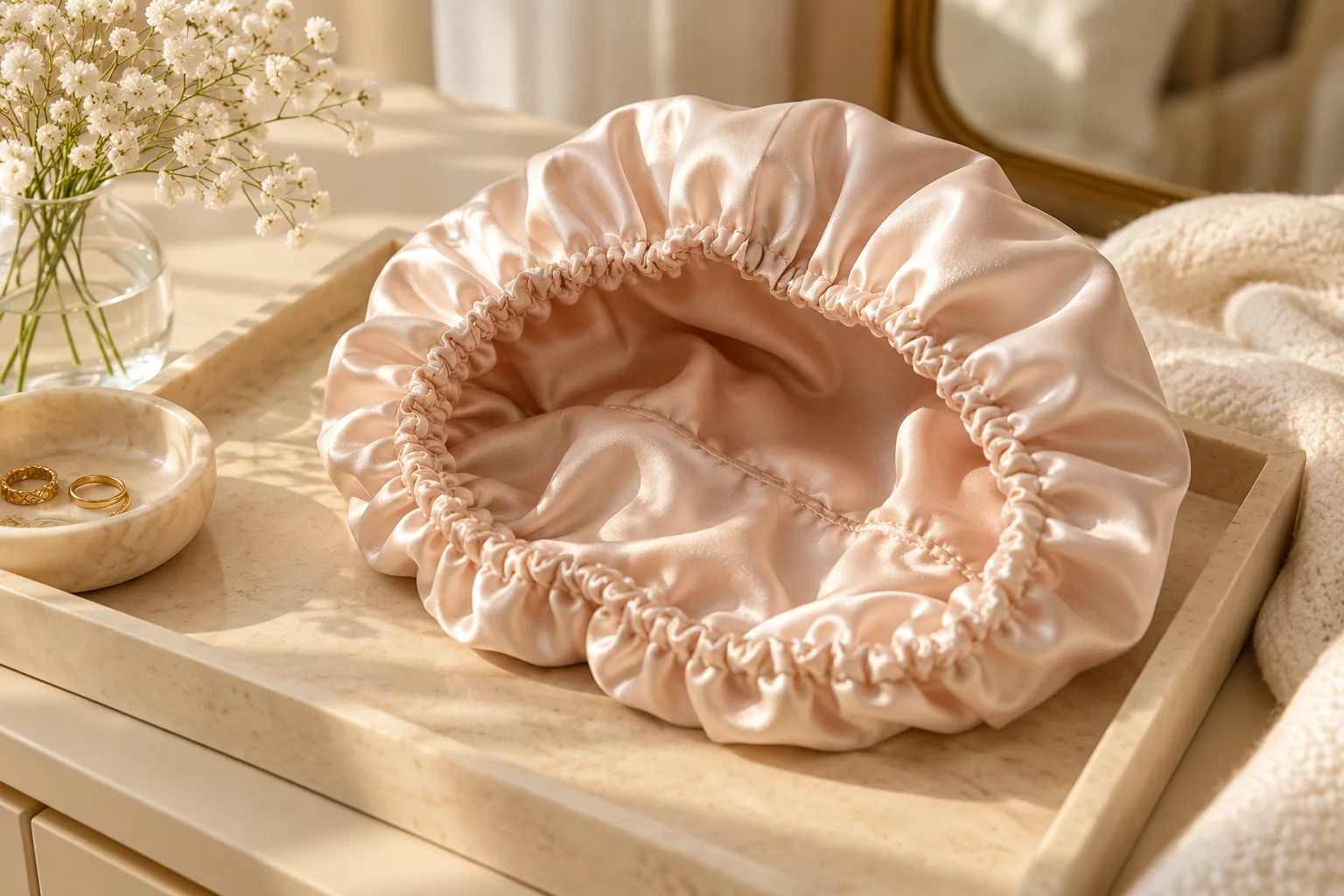
I inspect the shape of the edge first
I take the bonnet off and place it on a clean surface. I look for the section that was near my ear. I check whether the fabric lies flat or gathers into a fold when I arrange it for wearing. I do not pull hard on elastic to test its strength. I want to understand the finished shape without changing it.
I compare the two sides of the opening. I may find a tie crossed over itself or a seam near the point where I rest. I note that detail before I put the bonnet on again. I do not assume that the seam is a defect or that turning the cap inside out will solve the problem. Another side can expose a different surface or change how the closure sits.
I use our bonnet orientation guide if I am unsure which surface belongs against my hair. I keep orientation separate from ear coverage. I can identify the intended side and still decide that the edge shape does not suit the position I prefer. I do not need to modify the item to make that observation useful.
I also check the instructions for a wide tie. I want the fabric to follow its intended path without rolling into a narrow cord. I do not assume that a wider-looking tie always creates a gentler fit. I judge the part as it sits on me, including where the knot or adjuster ends up, rather than rely on the width shown in a product photograph.
How can I compare covered and uncovered positions while awake?
I can change the position, tension and hairstyle at the same time and learn very little. I get a clearer comparison when I keep the other details steady.
I compare only positions that the bonnet's design permits. I keep my hair placement and closure setting similar, then check the edge from the front and side. I loosen immediately if I feel pressure, and I do not use a tighter setting to make one position stay put.

I make the comparison small and practical
I begin with the intended wearing method. I place my hair inside without packing it tightly against one side. I look at the crown space and the opening as two different features. I do not use the band to force extra hair into a small cap. I want the comparison to reflect the bonnet's normal arrangement.
I check one permitted position, then take the bonnet off before trying the other. I pay attention to where the edge meets the top and back of the ear. I also notice whether the tie or adjuster is likely to meet my usual pillow contact point. I do not call this a performance test or assume a brief fitting predicts a whole night.
| Check I make | Question I answer |
|---|---|
| I view the side in a mirror | I can see whether the edge crosses my ear |
| I check the closure position | I can identify a knot or adjuster near contact |
| I compare the crown arrangement | I can tell whether hair space changed too |
I consider the routine I actually want to follow. I may dislike taking time to arrange a narrow edge around my ears. I may prefer a different opening or no headwear at all. I do not turn that preference into a statement that one wearing position is correct for everyone. I keep notes about what I notice and use them to ask a specific question about the design if I remain unsure.
What if the bonnet stays on only when I add pressure?
I can treat staying on as the only success measure and ignore the way the opening feels. I need to keep comfort in the decision.
I do not choose extra pressure as the solution to slipping near my ears. I loosen or remove the bonnet and check the opening, crown space and intended closure route. I reconsider the design if I cannot get a comfortable arrangement without forcing my hair or ear into place.
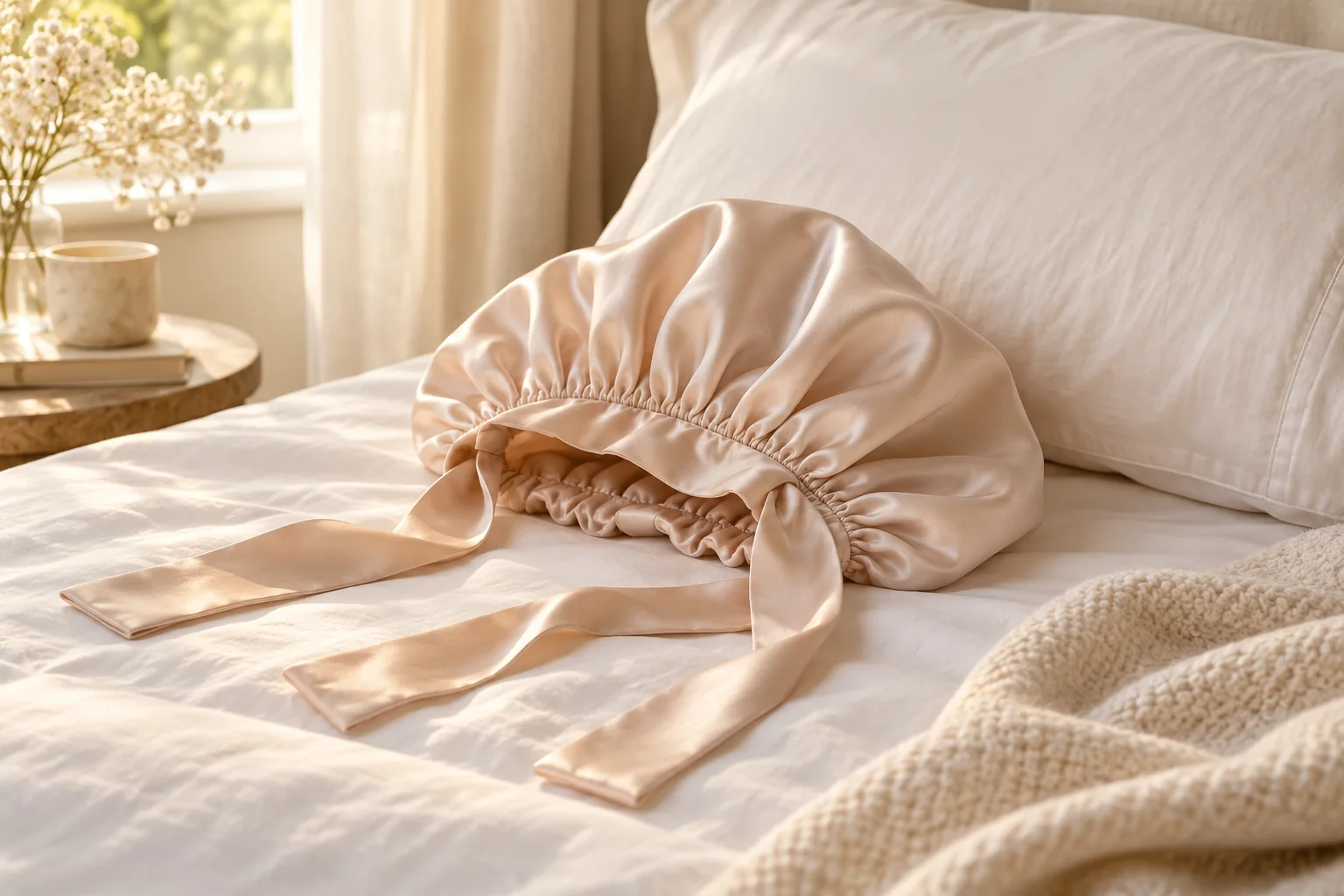
I separate hold from a workable fit
I look at what changes when I tighten the opening. I may move the cap to a new position or concentrate the edge at the side of my head. I do not assume that this makes the original size suitable. I want to understand why I feel the need to tighten it rather than keep repeating the same adjustment.
I consider the space inside the crown. I may need room for a different length or fuller style. I also consider whether I have gathered my hair into a tight arrangement to fit the cap. The American Academy of Dermatology's styling advice supports avoiding tight pulling on hair.1 I use that point as gentle-handling context, not as an explanation of an ear symptom or proof of a particular bonnet's performance.
I do not add clips, pins or another tight band to hold the edge in place for sleep. I also do not fold an ear under the opening to create a grip point. I can remove the cover while I decide whether a different construction would suit me. I keep the search focused on the feature I need, such as a different opening shape or more crown space.
I describe the problem clearly if I contact the seller. I state the bonnet style and the position of the edge when I notice pressure. I ask about its intended wearing route and supplied measurements. I do not ask for a universal promise that one size will stay on every person, and I do not treat a confident claim as a substitute for those practical details.
When should I choose a different sleep setup?
I can spend more time adjusting a cover than I want to spend on bedtime. I can step back when the arrangement does not suit my preferences.
I consider another bonnet design or a pillowcase when repeated permitted adjustments remain uncomfortable or awkward. I choose by the job I need done and the care I can maintain. I do not treat avoiding headwear as a failure or assume that another product guarantees a particular hair result.
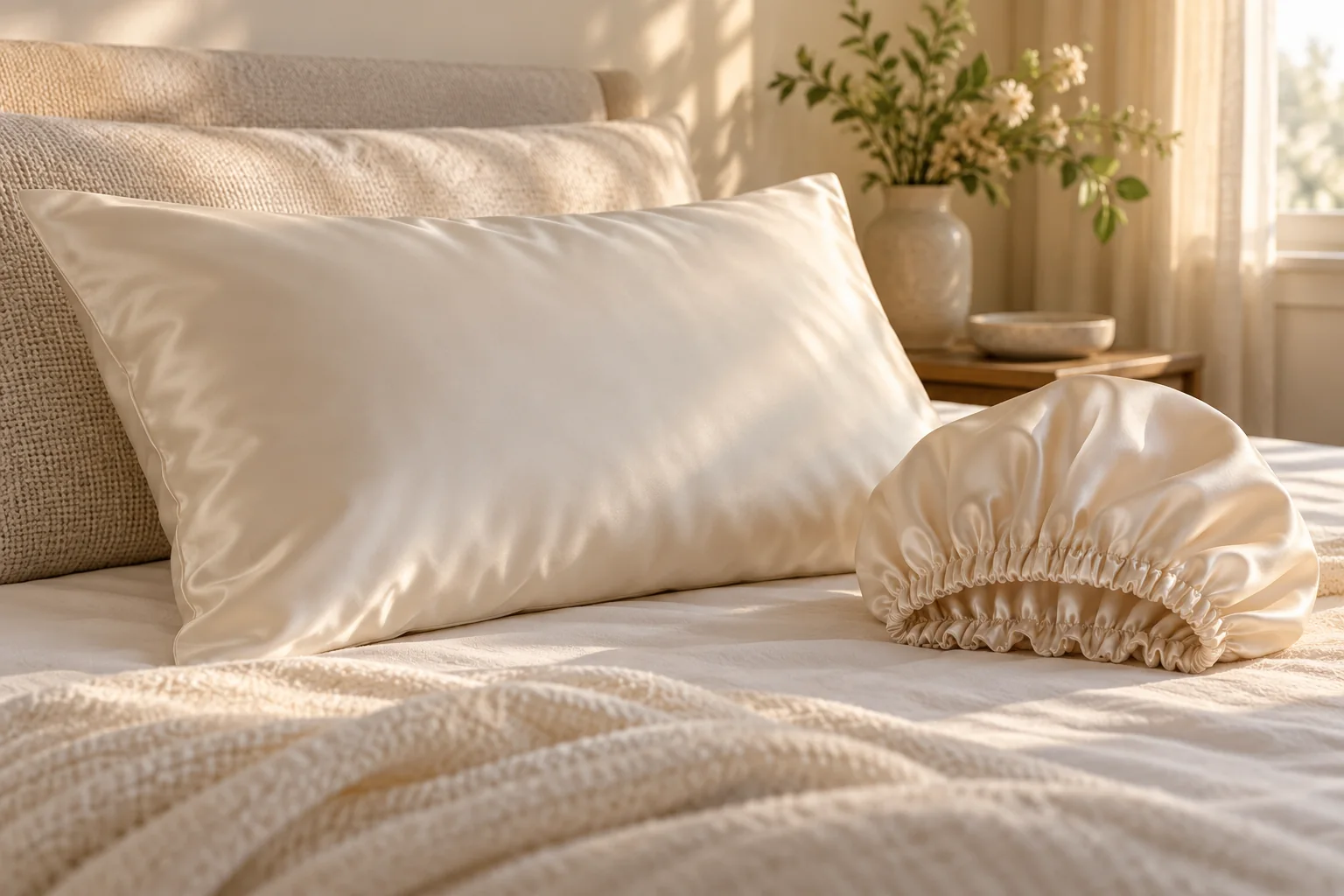
I use the failed comparison to name the feature I need
I write down what I want to change. I may prefer an edge that rests elsewhere, a different closure position or less fabric near my ears. I keep that request specific. I do not need to claim that all bonnets are unsuitable simply because one opening does not match my preference. I can also decide that I do not want any edge around my head.
I use the bonnet and pillowcase comparison when that last preference guides the choice. I remember that a pillowcase changes a pillow covering and does not gather hair inside a cap. I compare those different jobs rather than assume that either design wins for every person or that I need both.
| Preference I identify | Direction I consider |
|---|---|
| I want hair contained with a different edge | I compare another bonnet construction |
| I want no headwear around my ears | I consider a pillowcase's actual details |
| I still lack fit information | I ask before ordering another item |
I read the selected item's details and policies before buying. The FTC's online-shopping advice gives me useful context for checking descriptions and terms.2 I do not infer a particular seller's return policy from that advice. I resolve the fit question as far as I can first. I want the next choice to address the contact point I identified, rather than repeat the same purchase with a different color.
Conclusion
I choose ear placement by the bonnet's design and actual contact. I avoid extra pressure, check the edge carefully and change the setup when comfort remains difficult.
- AAD: Hair styling without damage. I use its advice about gentle hair handling, not ear diagnosis or a bonnet-performance claim. ↩
- FTC: What to know before you buy something online. I use its description and policy-checking context, not a universal right to return a worn item. ↩
Images are AI-generated editorial illustrations. They do not identify or verify a specific product.