
Should I Take My Necklace Off Before I Go to Sleep?

I can reach bedtime with my necklace still on and no clear place to put it. I want removal to feel easy before I become tired.
I take my necklace off before sleep and follow its own care instructions. I open the intended clasp, support the piece and store it separately. I do not treat everyday wear, stainless steel or a comfortable fit as a promise that a complete necklace is meant for overnight wear.
I approach this as a care routine for adult cosmetic jewelry. I want to understand the whole piece, make removal manageable and keep it ready for the next time I choose to wear it.
Why do I remove an everyday necklace before sleep?
I can confuse a piece I wear often with a piece I never need to remove. I make a clearer decision when I read its care limits.
I separate everyday styling from instructions for continuous wear. I choose removal as my regular bedtime step, and I check the item's actual guidance. I do not use a chain's material name, price or another person's experience as permission to leave every necklace on overnight.

I read the instruction for the complete piece
I start with the necklace I actually own. I may see a chain, a pendant, a sliding part, an extender and several connecting rings. I do not let the name of one part stand in for the care of all the others. I check whether the maker gives specific instructions about wear and removal before deciding how I will use it.
I use manufacturer guidance as an example of why that distinction matters. Pandora's own care card recommends removing its jewelry before sleeping.1 I keep that recommendation attached to Pandora's products. I do not infer that our necklaces have its alloys, coating process or warranty. I use the example to remind myself that a familiar jewelry brand can still set limits on when its pieces should be worn.
| Wording I encounter | Meaning I keep separate |
|---|---|
| I read everyday necklace | I see a styling description, not an overnight-use instruction |
| I read stainless steel base | I still check the other parts and supplied care |
| I see a comfortable fit | I do not treat comfort as a test of continuous-wear suitability |
I also separate my routine from a guarantee about damage. I cannot predict what will happen to every necklace during one night. I do not need that prediction to make removal my normal habit. I want the piece in a known place, with its parts supported and its care instructions available. I can enjoy frequent wear while still giving the necklace a regular pause at bedtime.
How do I take my necklace off without rushing the clasp?
I can struggle with a small fastening when I am already tired. I make the step easier by choosing good light and a clear place to work.
I sit or stand steadily at a well-lit surface, identify the intended opening and support the necklace as I release it. I stop if the clasp resists or its operation is unclear. I do not pull the chain, pendant or slider to force the piece off.
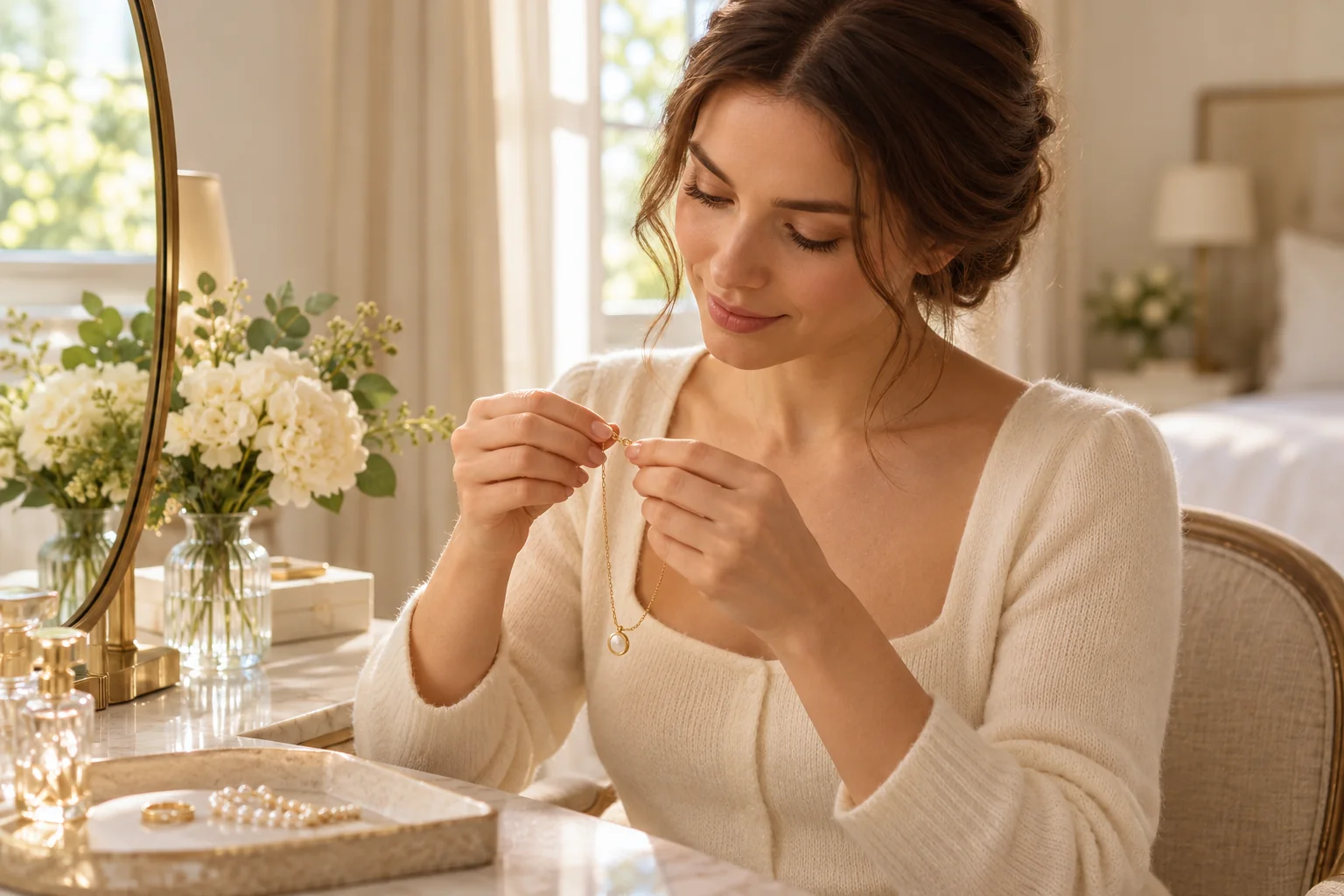
I give the opening step enough attention
I remove the necklace before I turn off the main light. I use a mirror if that helps me see the fastening, and I keep the surface below clear. I do not try to work over an open sink or a pile of loose accessories. I want a small part to remain easy to find if I lose my grip.
I first check which part is designed to open. I do not assume that a decorative connector or adjustable drop is the clasp. I use our clasp selection and handling guide when I need to compare visible opening methods. I still follow the actual item's instructions rather than try a technique meant for another design.
I support the necklace while I release the fastening. I do not let a pendant's weight pull on a partially opened connection. I then bring the piece away from clothing and place it on the prepared surface. I keep long hair and loose sleeves away from the opening so that I can see what I am doing.
I stop if the mechanism will not move as expected. I do not use extra force because I want to get to bed quickly. I can ask someone to help me see the clasp or contact the seller for instructions. I keep a recurring difficulty in mind when choosing future jewelry. I would rather select an opening I can manage comfortably than plan to leave a necklace on simply because removing it is frustrating. I treat ease of removal as a practical part of the purchase decision.
Where do I put the necklace after I remove it?
I can remove a necklace carefully and then leave it in a heap beside the bed. I need storage that is as simple as the removal step.
I put the necklace in its own suitable lined compartment or storage space, away from liquids and places where it may fall. I give its chain and pendant room. I follow any material-specific instructions instead of assuming that every pouch, box or bedside surface suits every necklace.
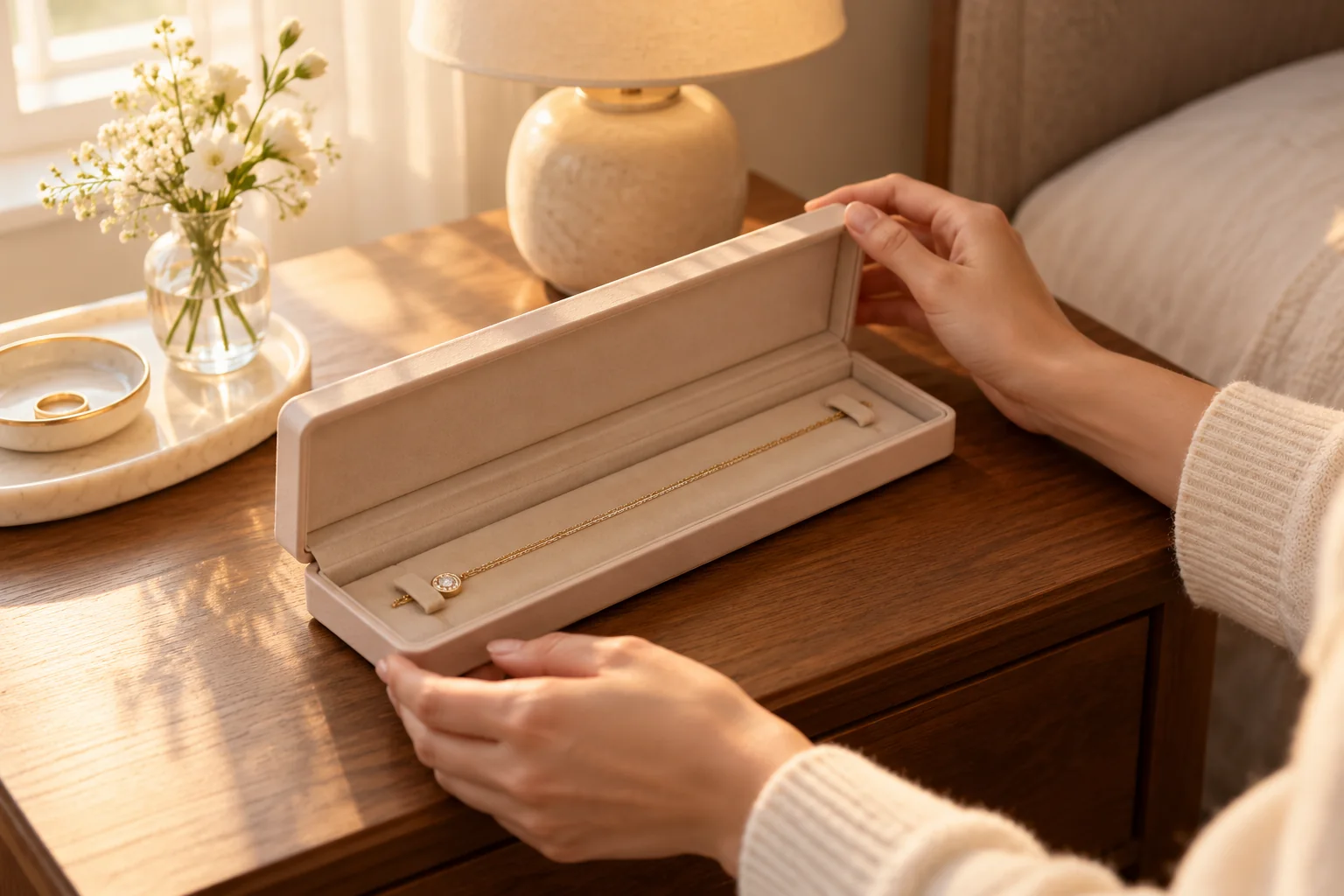
I choose one clear place rather than a shared pile
I plan the storage space before I need it. I want to reach it easily, see the complete necklace and close or protect it as appropriate. I do not place the piece on a pillow or near the edge of a table. I also keep it away from a water glass, open lotion bottle and charging cables that may be moved without much thought.
I give the necklace its own space. GIA's general care guidance discusses suitable separate storage and the need to consider different jewelry materials.2 I use that as broad care context. I do not turn it into a claim that one fabric or container protects every finish equally well. I check any instructions supplied with my own piece.
| Storage choice I make | Detail I check |
|---|---|
| I use a lined compartment | I make room for the chain and pendant without crowding |
| I use a pouch intended for the item | I check that the piece is dry and its parts are not forced together |
| I keep a bedside tray for removal | I move the piece to its suitable storage rather than leave it exposed indefinitely |
I do not bundle several necklaces together just because I removed them at the same time. I keep sharp folds and heavy objects away from a chain that needs gentler handling. I also check that the necklace is not still damp before putting it away. I use the exact item's care instructions to decide what, if anything, I should do first. I want my storage habit to support the piece rather than add another cleaning or untangling task the next morning.
What if I accidentally slept with my necklace on?
I can wake up wearing yesterday's necklace and worry that I have ruined it. I need a calm inspection rather than a rushed fix or an unsupported promise.
I remove the necklace carefully, check the visible chain, clasp, pendant and connections, and compare anything unusual with its original state. I stop wearing it if I see damage or a changed part. I do not assume one night proves harm or proves that continuous wear is suitable.

I assess the actual condition instead of guessing
I start by taking the piece off through its intended opening. I do not tug at a twisted section while it is still around my neck. I place it somewhere clear and look at the complete necklace in good light. I check for an open connection, a clasp that behaves differently, a missing accent or a shape that no longer matches the original.
I keep observation separate from diagnosis. I can notice a change without knowing its cause. I do not decide that a finish needs polish because it looks dull under one light. I also do not bend a chain to make it match a photograph. I ask the seller or a qualified jeweler about a concern that I cannot resolve from the instructions.
I read the care details before cleaning. I use our mixed-material necklace care guide to keep accents, chains and finishes separate in my thinking. I do not use the base metal as permission to soak a complete piece or apply a household cleaner. I want the proposed method to suit every relevant part.
| Result I observe | Response I choose |
|---|---|
| I see no visible change | I return to the supplied care and my removal routine |
| I see a changed connection or shape | I set the necklace aside and seek advice |
| I cannot judge the condition clearly | I avoid a home repair and ask a specific question |
I also look at why I missed the step. I may have had no clear storage spot or waited until the room was dark. I can improve that small part of the evening without inventing a dramatic story about the necklace. I want a repeatable habit, not a rule based on one uneventful or frustrating night.
How do I make necklace removal a simple bedtime habit?
I can remember a complicated care plan for two nights and then abandon it. I need a short routine that fits the way I actually get ready.
I connect necklace removal with an existing evening step, keep suitable storage ready and check the clasp before I am tired. I separate jewelry from sleep accessories. I choose a routine I can repeat rather than rely on a long checklist or a promise that the piece never needs removal.
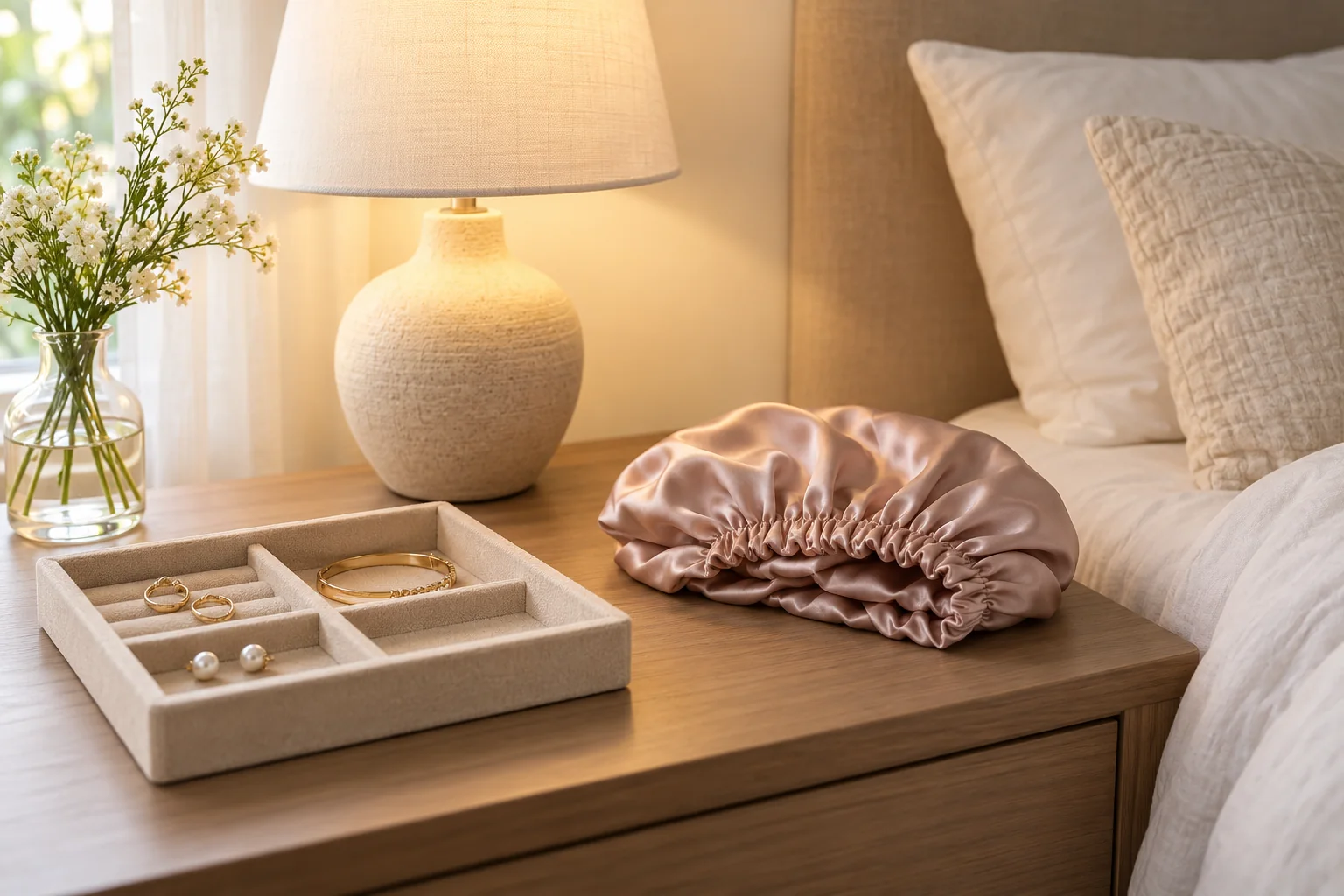
I reduce the decisions I need to make at bedtime
I choose an ordinary cue, such as changing into sleepwear or putting away my daytime accessories. I remove the necklace at that point instead of waiting until I am already in bed. I keep the intended storage place clear so that I do not have to decide where the piece belongs each evening.
I make the routine specific to the necklace. I check whether I need to wipe it as directed and whether its parts are dry before storage. I do not add a nightly cleaning treatment that the maker has not recommended. I also do not assume that more polishing means better care. I want only the handling steps that suit the actual item.
I separate the necklace from my bonnet, sleep mask and other soft accessories. I do not wrap a chain around them or leave a pendant inside a folded fabric item. I want to be able to pick up each object without moving the others. I use our bedside routine guide when I want to arrange that space around a few useful items.
I make a second plan for travel or a late return home. I can pack the suitable storage pouch with the necklace or put a small lined container where I change. I do not need to buy a whole new organization system to keep one piece separate. I also consider whether a necklace's clasp suits my daily handling before I choose another style. I want removal to remain an ordinary part of wearing jewelry, with enough light, space and attention to make the step manageable.
Conclusion
I remove my necklace before sleep, follow its own care instructions and store it separately. I keep the routine simple enough to repeat every evening.
- Pandora's Australia and New Zealand care card gives sleep-removal advice for Pandora jewelry; it does not establish another brand's materials or warranty. ↩
- GIA's jewelry-care guidance provides general handling and storage context with attention to material differences. ↩
Images are AI-generated editorial illustrations. They do not identify or verify a specific product.