
Should I Choose a Silk Bonnet or a Scarf for Sleep?
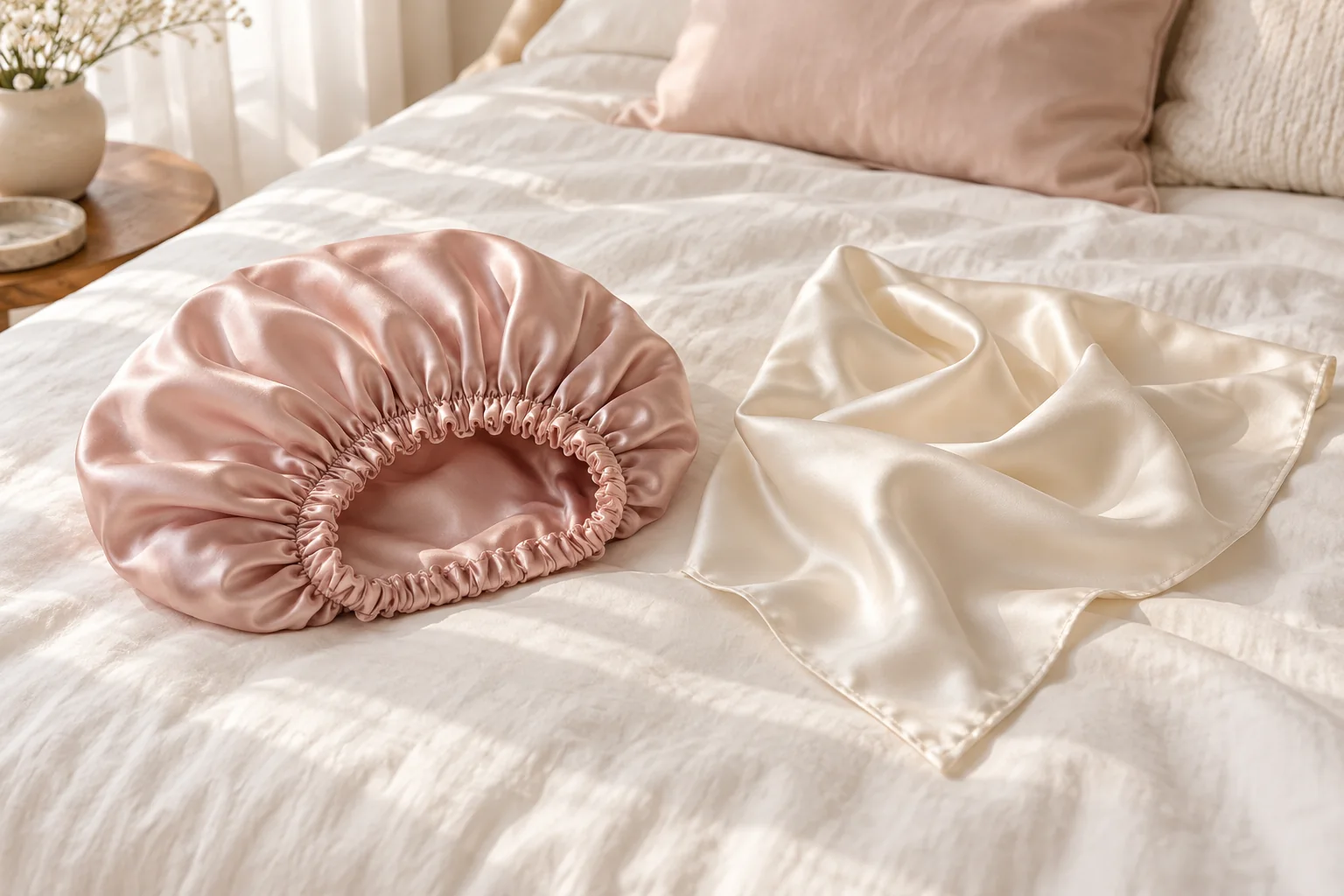
I can see bonnet, scarf and hair wrap used for similar-looking products. I need to understand the shape before choosing another item for my bedtime routine.
I choose a bonnet when I prefer a ready-made crown and an opening I can manage comfortably. I consider a sleep scarf when I prefer arranging a flat piece of fabric myself. I compare actual coverage, fastening, fiber and care rather than expect either format to guarantee a hair result.
I start with the object and the task it needs to perform. I can then decide whether a different format solves a real difficulty or simply adds another accessory to the drawer.
How are a bonnet and a sleep scarf different in shape?
I can buy a hair wrap expecting a flat scarf and receive a shaped cap. I look past the product name before comparing how I will use it.
I check whether the item has a sewn crown and opening or starts as a flat square or rectangle. I read its dimensions and intended wearing method. I do not assume that wrap, turban or scarf consistently names the same construction across different listings.
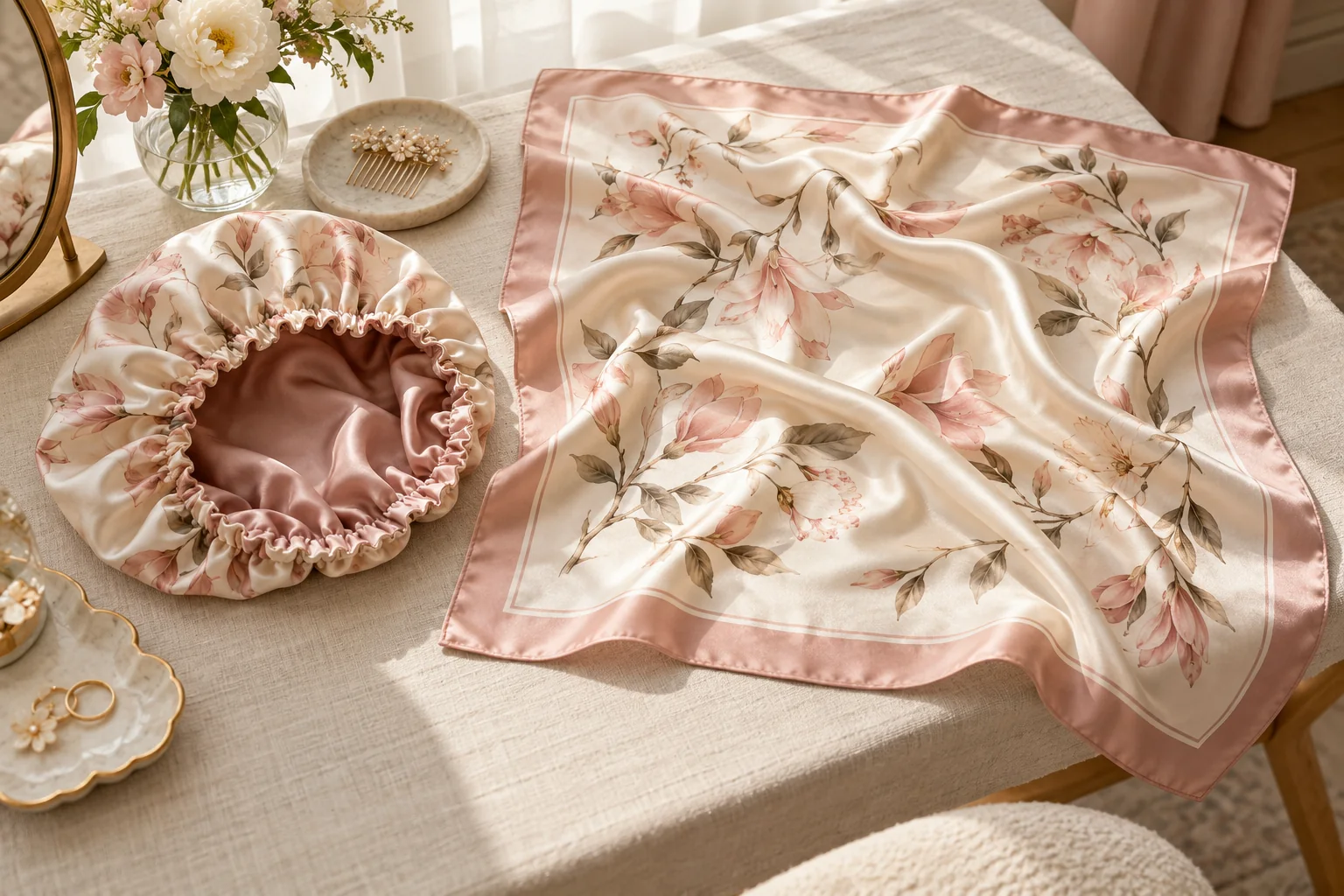
I identify what the fabric is already shaped to do
I look for seams, an elasticated opening, ties and any extended section. A shaped bonnet gives me a container for my hair before I put it on. A flat scarf asks me to create the coverage through its arrangement. I keep that practical difference separate from the fiber description. I can find different materials in either format.
I check how a seller uses the word wrap. SILKE London's FAQ describes its Hair Wrap as an item with an elasticated edge and its own putting-on instructions.1 I use that as one example of a shaped product carrying the wrap name. I do not assume that it is a square scarf or borrow its instructions for another maker's item.
| Detail I see | Question I ask |
|---|---|
| I see a sewn crown | I ask how much usable space it provides |
| I see a flat square | I ask which arrangement the maker intends for sleep |
| I see a wrap or turban name | I check the actual construction instead of guessing |
I also read the measurements in context. I do not compare a flat scarf's side length directly with a bonnet's opening circumference. Those numbers describe different parts of different objects. I want the supplier to explain what was measured and how the item is meant to sit. I can then rule out a format that requires an arrangement I do not want to make each evening, before I spend time comparing colors or decorative details.
Which format gives my hair enough room without extra pressure?
I can make a cap stay on more firmly and still leave my hair crowded. I need to consider the space inside and the contact around my head separately.
I compare the bonnet's crown space with the scarf coverage I can arrange comfortably. I keep my hair loose enough for the intended setup and check the opening or tie position. I reject an arrangement that needs pulling, a tight bundle or repeated tightening to remain usable.
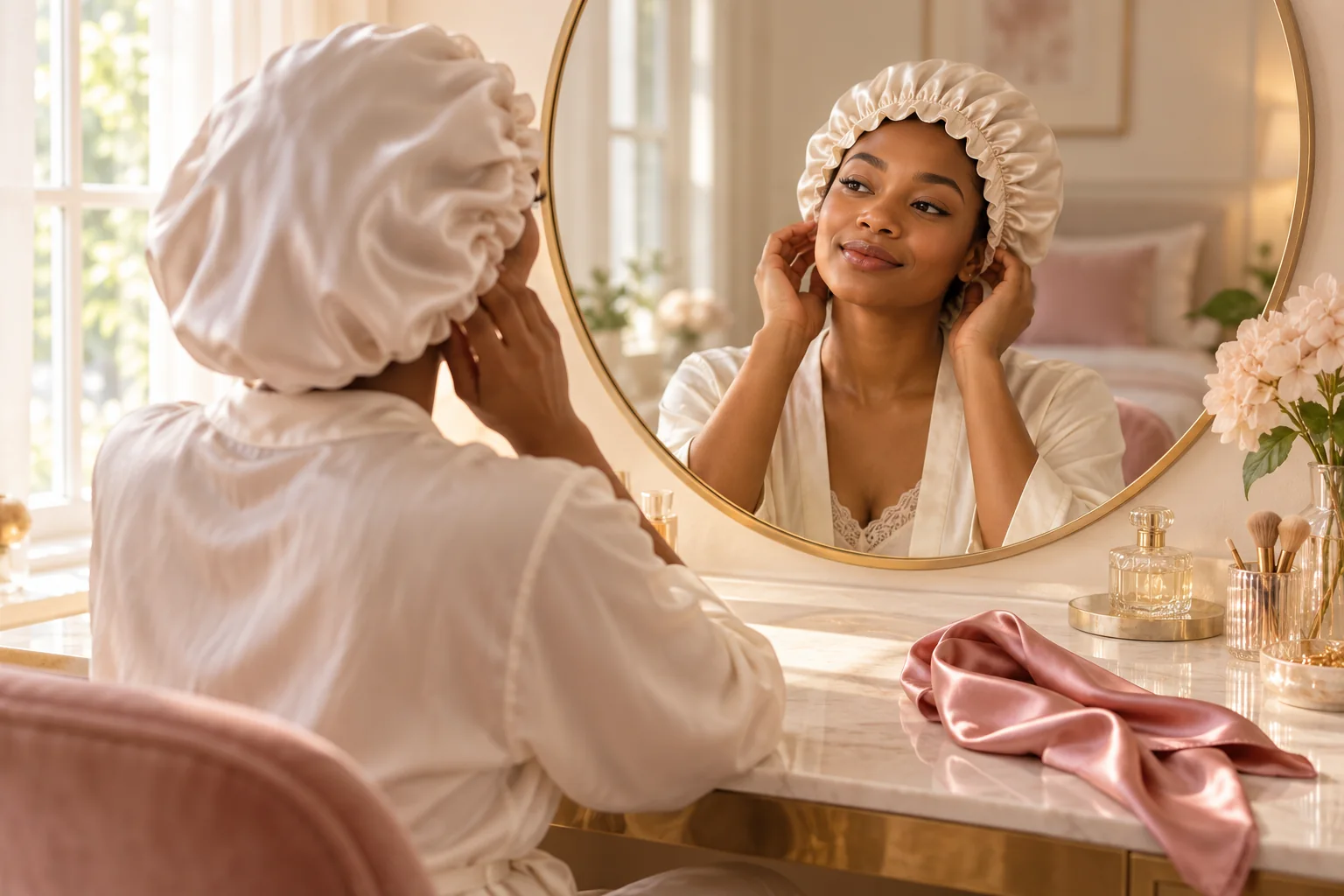
I compare usable space rather than a large-looking photograph
I start with my dry hair in the state I usually have before bed. I consider where the lengths will rest and whether I need more room behind my head or above it. I do not judge the whole fit from the size of the opening. I also do not assume that a large flat scarf can become a comfortable pocket for every length or hairstyle.
I use our bonnet capacity guide for the detailed distinction between the opening and the crown. Here, I use that distinction to choose a format. I may prefer a ready-made pocket because I do not want to recreate it with folds. I may prefer a scarf arrangement because I already know a comfortable method that suits its actual dimensions.
I look for the maker's limits instead of trusting a universal size label. Slip's Black Turban listing, for example, describes a non-adjustable design and notes that it may fit more loosely on short or fine hair.2 I keep those details attached to that product. I do not transfer its measurements to our bonnets or treat its fit note as a rule for every turban.
I check my own comfort without increasing tension to compensate for poor coverage. I consider the forehead, ears and where folds or ties meet the pillow. I stop an uncomfortable arrangement and choose another setup. I do not need to force a format to work because its fabric is attractive or because someone with different hair recommends it.
Does a silk or satin description settle the choice for me?
I can focus on a shiny finish and miss the actual fiber or lining. I want the material information to be as clear as the shape comparison.
I read the fiber statement and identify the surface that touches my hair. I keep silk separate from satin, which describes a weave rather than a single fiber. I do not use shine, a silky name or a higher price to verify what a bonnet or scarf contains.
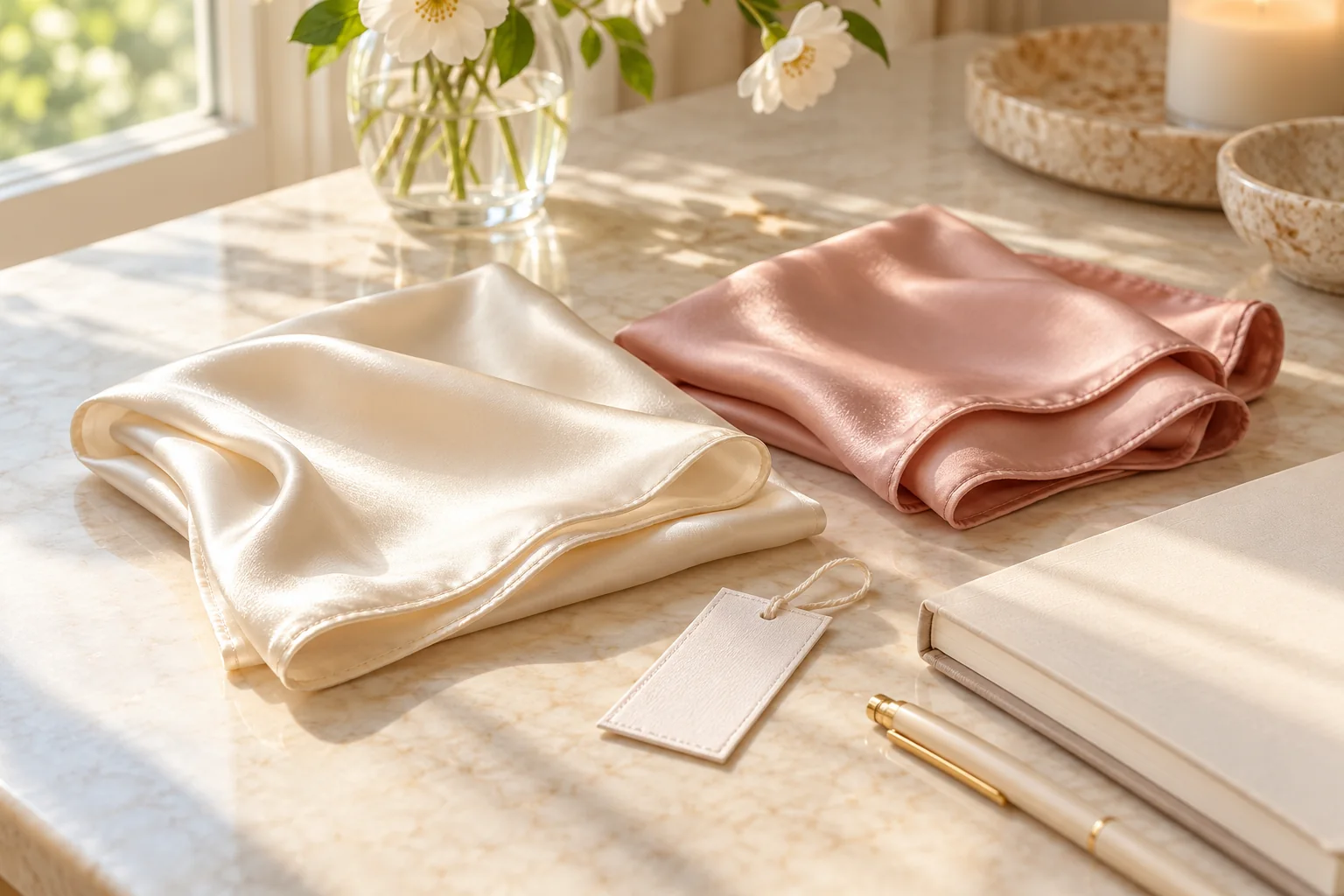
I compare the contact layer and the complete item
I read the product details for the specific option. I look for a stated fiber composition, any lining and any exceptions for elastic or other parts. I do not assume that a silk outer surface means every surface uses silk. I also do not assume that two layers tell me the fiber content of either layer.
I use our silk and satin comparison when I want to untangle those material terms. I then return to the format question. A clear fiber statement does not tell me whether I want a shaped crown or a flat scarf. I still need both the material and the construction to suit the way I plan to wear and care for the item.
| Information I read | Decision it helps me make |
|---|---|
| I read a fiber composition | I understand the seller's stated material |
| I read a lining description | I identify the intended contact surface |
| I read a shape and closure description | I judge how I will put the item on |
I keep advertised hair benefits separate from this evidence. I do not promise that a scarf will preserve every style or that a bonnet will prevent every tangle. I can make a useful choice by asking whether the item provides the coverage and handling I want. I also ask about an unclear material statement before ordering. I would rather resolve one specific question about the contact layer than treat a decorative product name as proof of its contents or of the result I will see the next morning.
Which option can I put on and remove more easily?
I can like an accessory during a careful demonstration and struggle with it when I am tired. I compare the handling steps before making it part of my evening.
I choose the setup whose intended opening or wrapping method I can manage without rushing. I check the fabric folds, loose ends and removal route. I do not add pins, hard clips or stronger tension just to make an unsuitable bonnet or scarf arrangement stay together.
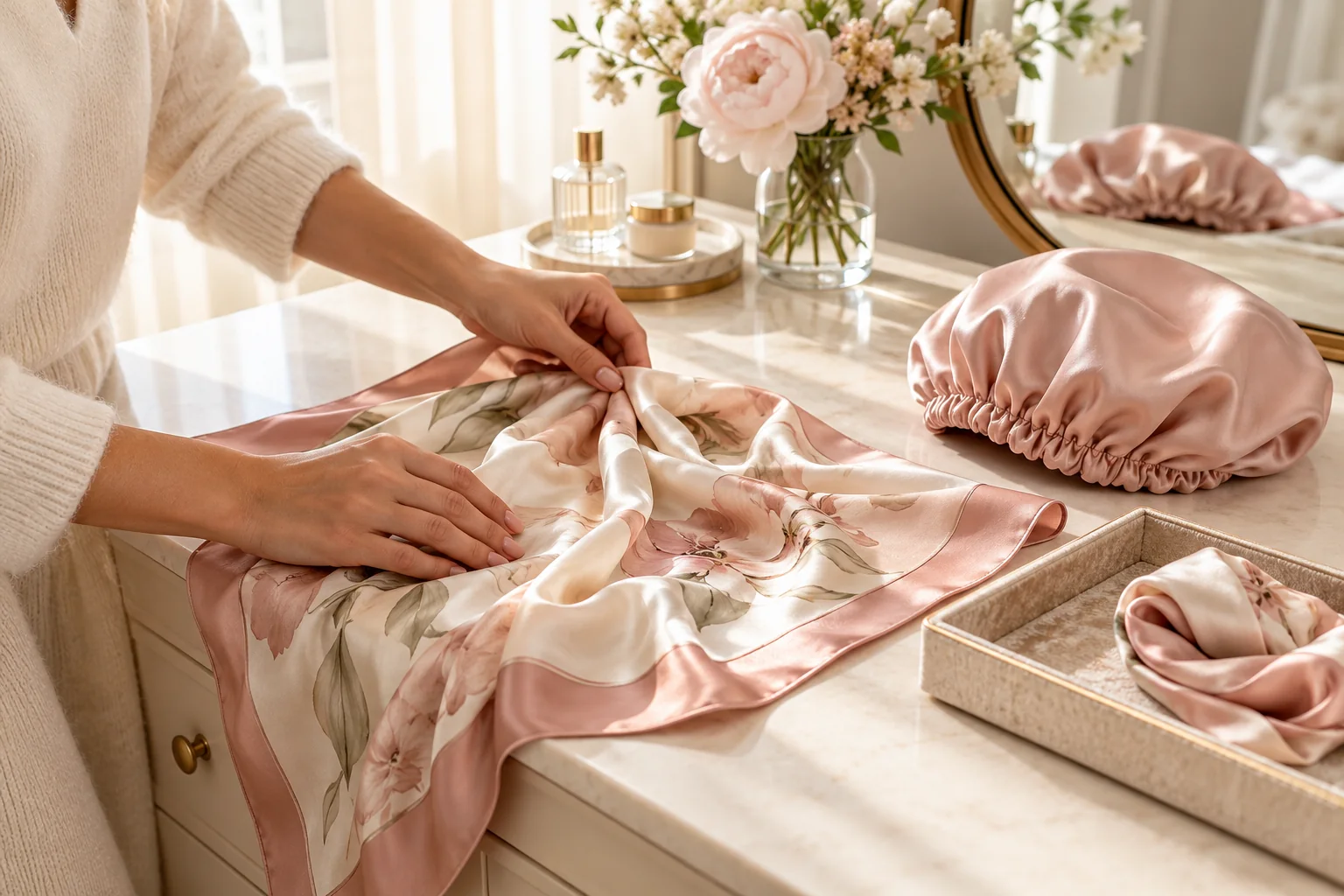
I count the steps that matter in my own routine
I think through putting the item on from start to finish. I may need to support my hair with one hand while opening a bonnet with the other. A scarf may require a fold and a tie arrangement that I need to see clearly. I do not call one format easier for everyone. I want the steps to suit my own hands, space and patience.
I also think through removal. I want to release a fastening or fold without pulling the hair caught near it. I keep the fabric supported rather than drag it away abruptly. I do not assume that a front knot is comfortable just because I can tie it. I consider where that knot or folded fabric will rest in the positions I normally use.
I make a short comfort check before relying on the arrangement overnight. I turn my head normally and check whether fabric shifts into an awkward position. I keep that observation modest. I am choosing a workable setup, not running a controlled trial or proving that one format performs better for everyone.
I do not keep both items on simply because I own them. An extra layer adds another edge or fold to manage, and I would need a clear reason to combine them. I can use one item alone when it answers my needs. I leave an unsuitable arrangement out of the routine instead of adding hardware or tightening it until the handling problem disappears at the cost of comfort.
How do I choose one option without buying unnecessary extras?
I can keep searching for a perfect accessory and end up with several versions of the same problem. I narrow the choice to the specific change I need.
I choose one relevant bonnet and one relevant scarf to compare by construction, dimensions, wearing steps and care. I identify the problem each would solve and mark unknown details. I keep a suitable item I already own when neither candidate offers a useful improvement.
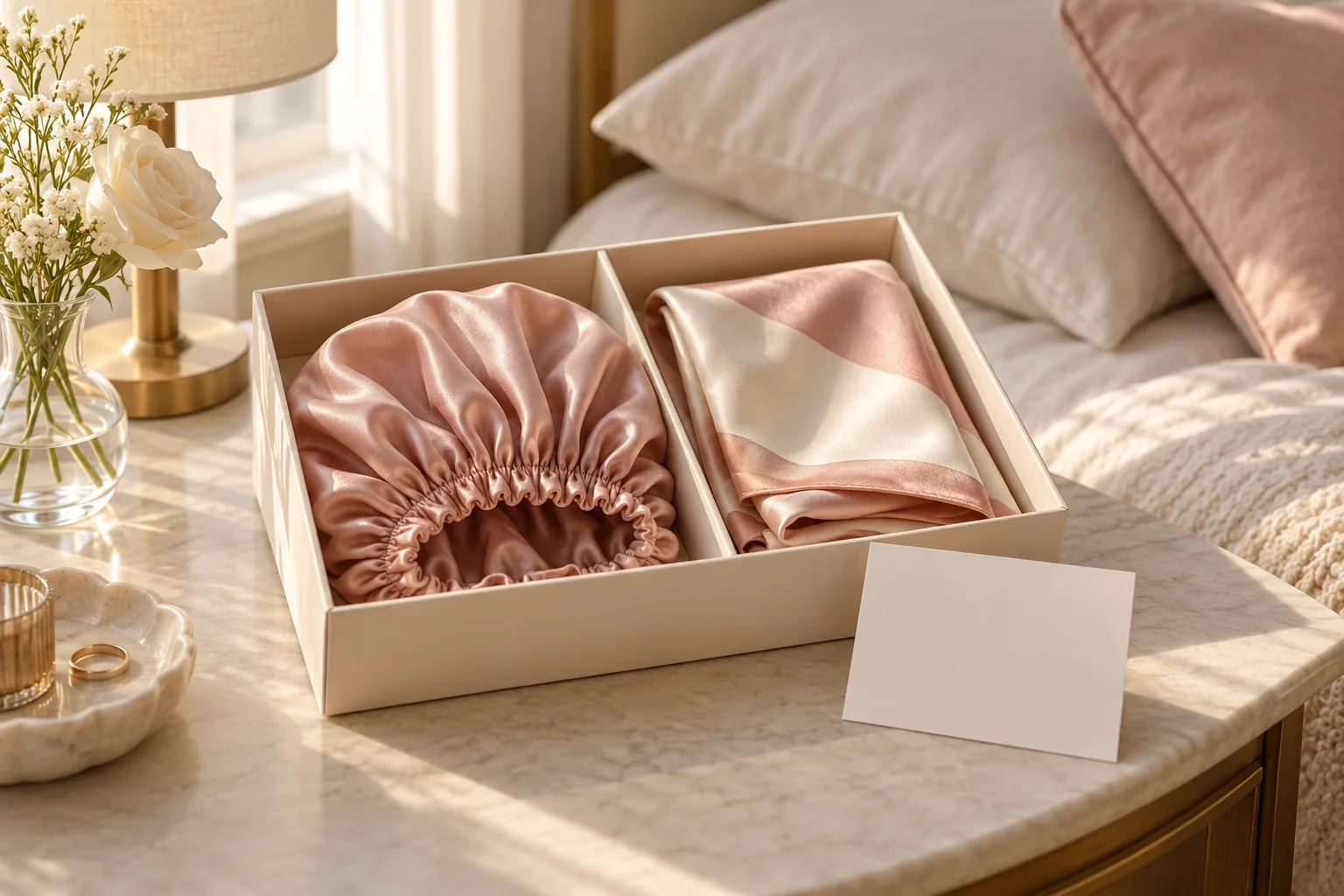
I choose for a clear job rather than a collection
I write down the difficulty first. I may dislike making a scarf arrangement each evening, need a different pocket for my lengths or want fewer folds behind my head. I use that one difficulty to compare the two candidates. I do not choose a replacement only because its name appears often in shopping results.
I include care in the decision. I check the instructions supplied for the complete item, the drying space I have and how I will store it when dry. I do not assume that a flat scarf can be washed like bedding or that every bonnet marked silk shares one cleaning method. I want the wearing routine and the care routine to be manageable together.
| Question I ask myself | Choice it clarifies |
|---|---|
| I want fewer arranging steps | I compare a shaped crown with my current scarf method |
| I need different coverage | I compare usable dimensions rather than names |
| I already have a comfortable setup | I ask whether a second item solves anything new |
I use our everyday essentials guide when I need to review what I already own. I can keep a useful scarf for its current role and choose a bonnet only if it solves another need. I can also decide against a purchase when the measurements or instructions remain unclear. I want a decision I can explain in practical terms, with no promise that a different accessory will transform every morning's hair.
Conclusion
I compare shape, coverage, material and handling before choosing. I keep the bonnet or scarf that suits my routine without forcing a fit or adding unnecessary pieces.
- SILKE London's FAQ describes its own shaped Hair Wrap and wearing instructions; those details are not universal scarf instructions. ↩
- Slip's Black Turban listing gives product-specific construction and fit notes, not measurements for other brands. ↩
Images are AI-generated editorial illustrations. They do not identify or verify a specific product.