
What Should I Check If My Silk Bonnet Feels Too Hot?
I can buy a silk bonnet for bedtime and keep wanting to take it off. I want to understand the discomfort before choosing another cap.
I remove a bonnet that feels uncomfortable, then check its complete construction, opening, hair space and my bedtime setup. I compare one detail at a time. I do not treat silk, breathable or cooling as a guarantee, and I do not tighten the cap to make myself keep wearing it.
I use this guide for a practical fit decision. I do not use the feeling of warmth to identify a fiber, diagnose a condition or judge someone else's experience.
What does the complete bonnet construction tell me?
I can focus on the word silk and miss a second layer or a broad band. I read the finished item's description before blaming one material.
I check the shell, lining, layer count and opening separately. I ask which parts the stated fiber content covers. I do not assume that two silk bonnets share the same construction or that a thicker-looking cap must feel warmer to every wearer.
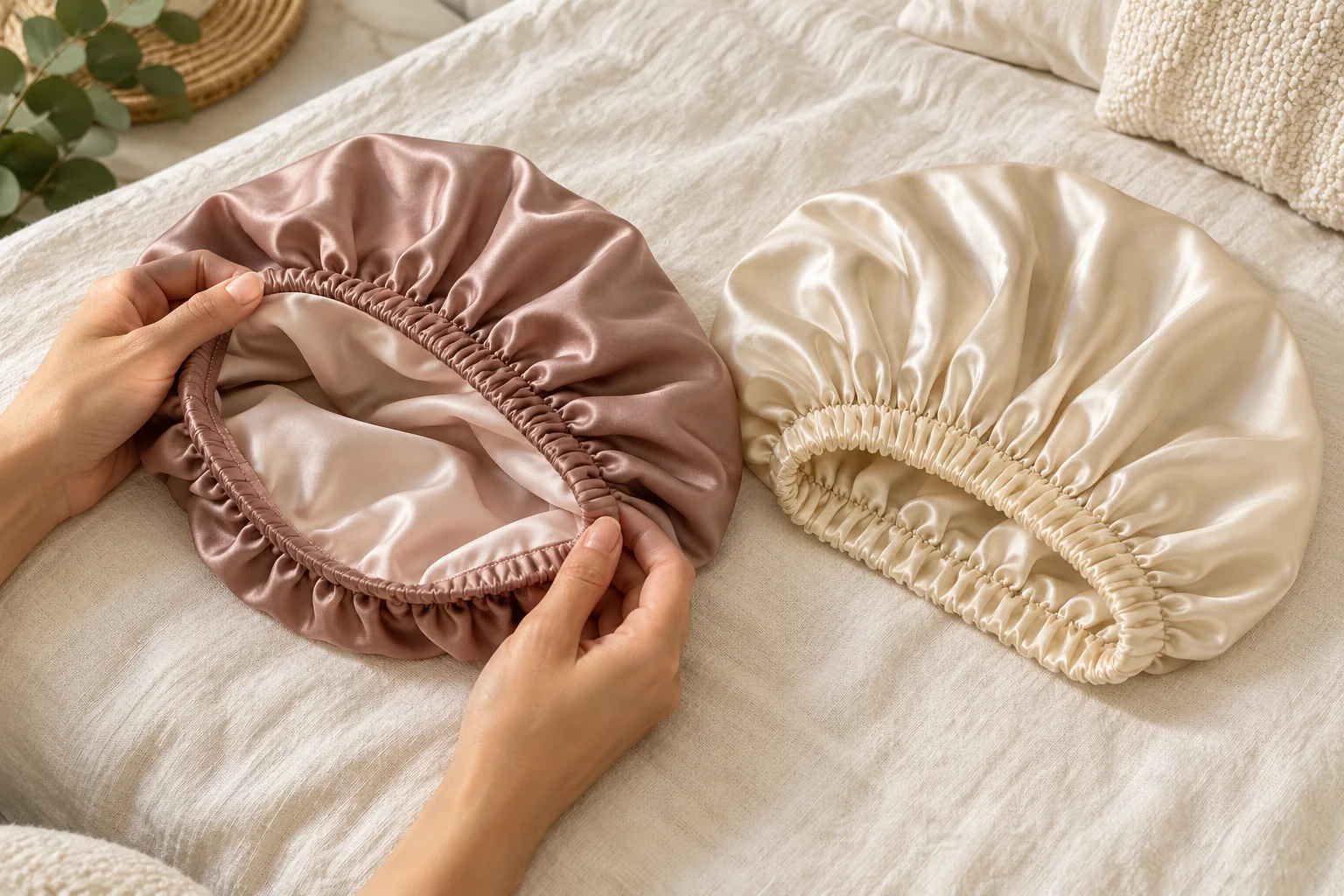
I compare the item rather than its headline
I start with the actual cap I own or the exact option I am considering. I look for information about both surfaces and any lining. I also check whether the opening contains a broad fabric band, elastic or another fastening. Those details describe the object I will wear more clearly than a single word in its title.
I keep the source of each detail visible. Slip's Black Turban description, for example, identifies a double-lined design and silk content exclusive of elastic.1 I use it as one concrete construction example. I do not borrow its measurements, fit claims or materials for a Zolay bonnet, and I do not treat it as evidence that all double-layer caps feel alike.
| Detail I check | Question I ask |
|---|---|
| I find a shell description | I ask what touches my hair |
| I find a layer count | I ask whether both layers share the stated fiber |
| I see a broad opening band | I check its construction separately |
I mark missing information instead of filling it from a photograph. Shine and a smooth surface cannot give me the full fiber or lining details. Our silk-versus-satin guide explains that distinction. I use a complete description to narrow my comparison, but I still leave room for personal comfort. A useful specification helps me ask a better question; it does not tell me in advance exactly how a cap will feel during my own evening.
Is the opening uncomfortable, or does the whole cap feel warm?
I can describe every uncomfortable bonnet as hot when the band is the part I notice. I separate the opening from the space inside the crown.
I note whether I notice a close band, a bulky seam, crowded hair or general warmth under the cap. I remove the bonnet before inspecting it. I do not tighten the opening, add a second band or bundle my hair more tightly to make the cap stay in place.
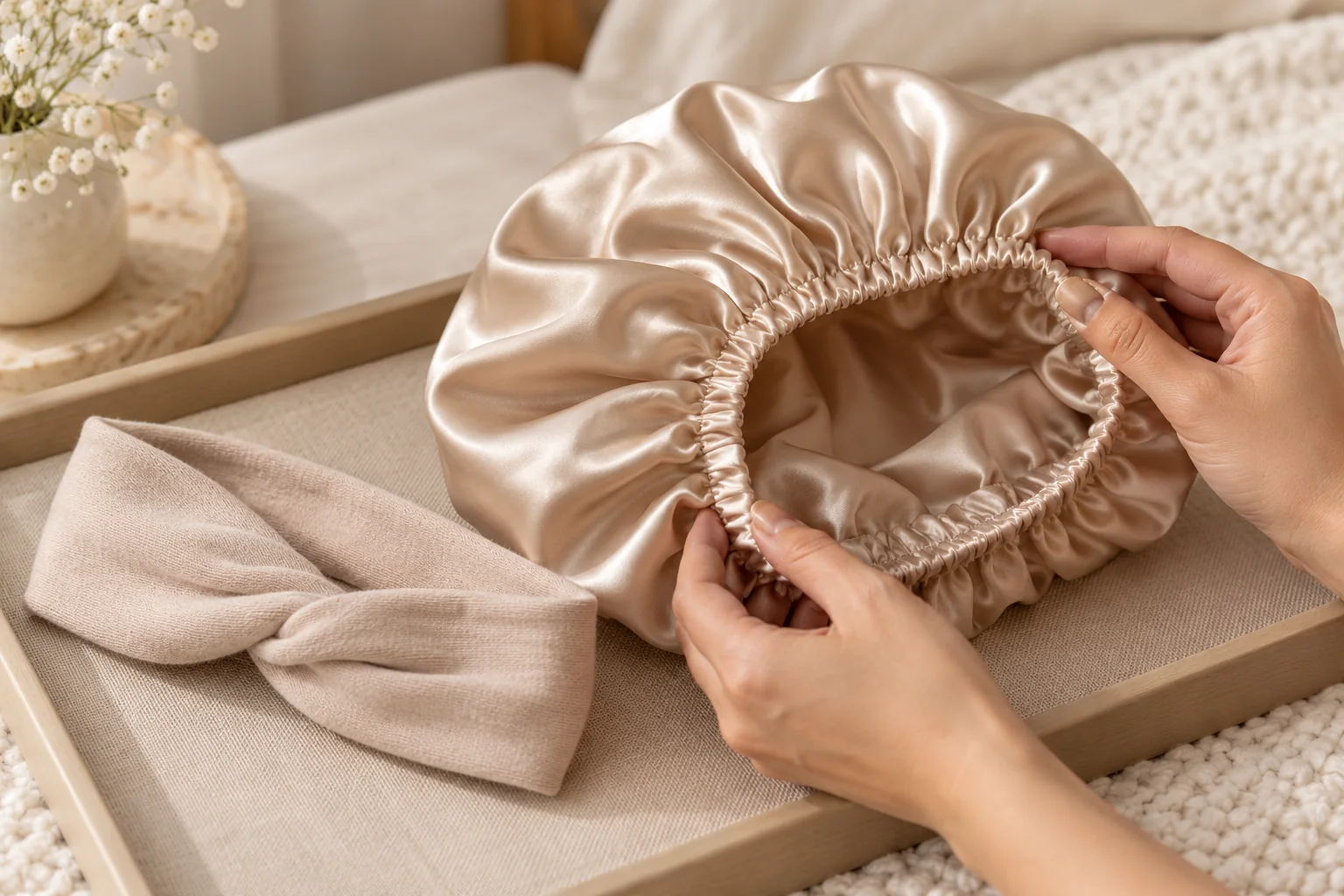
I describe the contact in ordinary words
I take the cap off and look at how the opening is made. I identify where a seam, knot or gathered section would sit. I do not stretch the elastic repeatedly to see whether it will become looser. If I need to change the supplied adjustment, I check the maker's instructions rather than improvise a new fastening.
I keep my observations specific. I may notice the band across my forehead, a seam near one ear or hair pressed into a small crown. Those descriptions point to different questions. I cannot determine the cause of general warmth from a band mark, and I do not use an uncomfortable fit as a reason to push through another night.
I also consider the room the cap gives my hair. I want to place my hair without a tight bundle that exists only to fit inside the crown. An opening can feel loose while the crown still feels crowded. A broad-looking bonnet can also have less usable space than I expect once I account for its seams and lining. Our crown-capacity guide helps me compare that separate fit issue.
I keep health questions outside this adjustment exercise. I do not identify a scalp condition from a warm feeling or treat the cap as a treatment. My immediate choice is simpler: I can remove an item that does not feel comfortable. I can then ask about its construction without changing the item or deciding that every bonnet must behave the same way.
What else in my bedtime setup should I keep in view?
I can change the bonnet and my whole evening routine at once. That makes it hard to tell whether a new cap actually suits me better.
I note my ordinary bedding, clothing, room setup and any extra head covering. I avoid layering caps as a comfort experiment. I keep observations simple and stop when I feel uncomfortable, rather than make the room or my routine unpleasant just to accommodate one accessory.

I keep the comparison small enough to understand
I think about the evening I actually want. I may prefer light bedding, a particular pillow or a simple routine after washing my hair. I do not want a bonnet decision to create a long list of changes that I would not otherwise choose. I record the setup because it gives context to my observation, not because it proves the source of the warmth.
I avoid adding another cap, scarf or improvised covering while I try to understand the original item. That changes several parts of the setup together. It also makes it harder to explain the exact arrangement if I ask the seller for help. I want to know whether the cap itself suits the role I planned for it.
| Context I record | Limit I remember |
|---|---|
| I note my ordinary bedding | I do not claim it caused the discomfort |
| I note any extra covering | I assess the complete arrangement |
| I note when I remove the cap | I do not force a longer trial |
I keep other people's accounts in perspective. A recent Reddit discussion includes different experiences of warmth and bonnet use.2 I read those accounts as a reminder that one person's comfortable setup may not be mine. I do not turn a few comments into a measured failure rate or a promise that changing fiber will fix the problem. A clear personal observation is enough to decide that I would prefer a different arrangement, even when I cannot isolate one cause.
How do I compare another bonnet without chasing a cooling claim?
I can replace a hot-feeling cap with one advertised as breathable and still face the same uncertainty. I need details I can actually compare before buying again.
I compare the exact layers, lining, opening, crown space and care instructions of two options. I ask what a cooling or breathable statement specifically means for that product. I do not infer a tested temperature difference, a guaranteed outcome or a shared standard from the word alone.
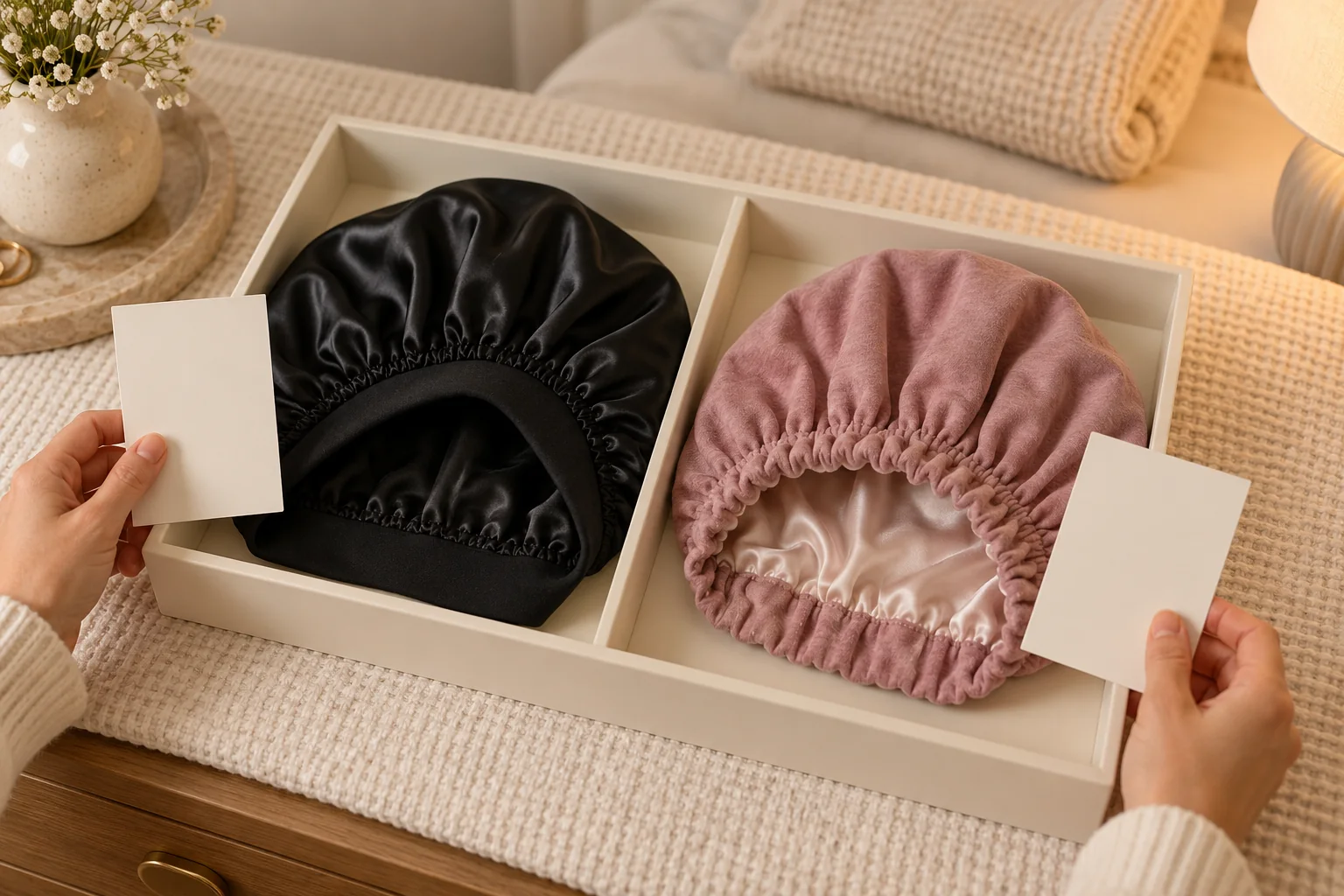
I ask for concrete differences
I keep the comparison to two complete items. I write down the details I already know about the cap I removed. I then record the same fields for the alternative. An unanswered question stays unanswered until the seller clarifies it. I do not label an unknown lining as silk because the outer surface looks smooth.
I pay attention to what would actually change. A different cap may have a different band, more crown space or another layer arrangement. I can compare those features with the specific issue I noticed. I do not need to assume that a thinner-looking cap will suit me, and I do not use a momme figure as a personal comfort score.
I also read the care instructions. A design that seems appealing may need a washing or drying routine that does not fit my evenings. I want to compare the whole ownership task, not only the first few minutes of use. If I would need extra items or complicated handling to make the new cap practical, I keep that cost in the decision.
I read current terms before assuming that I can try and return a worn item. I ask the seller how to assess fit within its stated conditions. That is a question about the actual order, not a promise made by this guide. I can choose not to buy when the supplied facts do not support a useful comparison. I do not need to make a confident purchase merely because a short marketing phrase sounds reassuring.
When should I choose a different bedtime arrangement?
I can keep trying to make a bonnet work because I expected to use it every night. I want an accessory to support my routine without becoming another task.
I choose a different arrangement when the bonnet remains uncomfortable or needs repeated adjustments I do not want to make. I can leave my head uncovered or consider an alternative already available to me. I do not assume that I must wear a bonnet to have a valid bedtime routine.
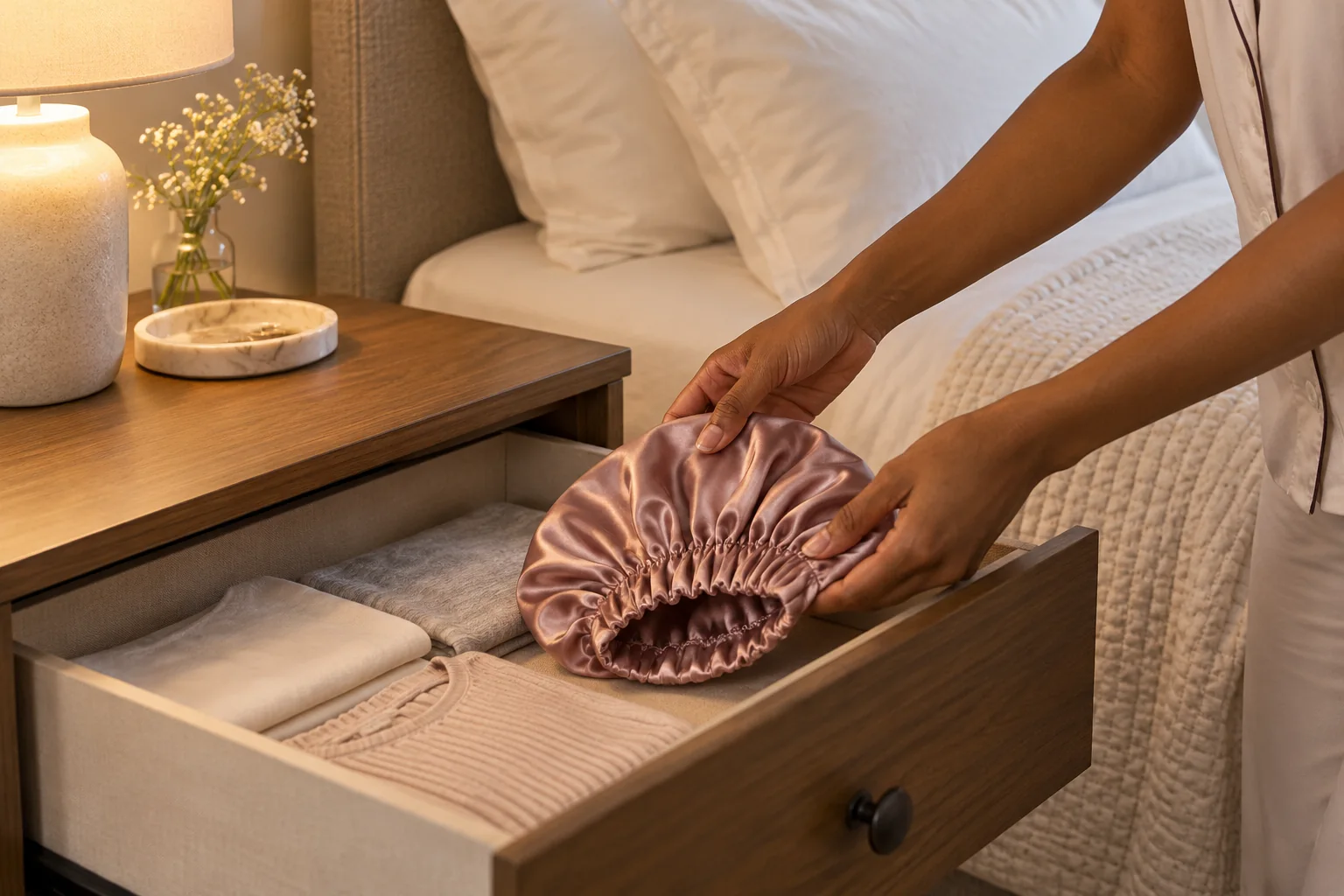
I decide what I would willingly use again
I separate the reason I bought the item from the way I now find it. A bonnet may suit someone else's hair, sleep habits or preferences and still be a poor match for mine. I do not need to prove that the whole category is flawed before deciding to stop wearing one particular cap.
I consider whether an alternative already fits my needs. I may have a suitable pillowcase or a routine that works without headwear. Our bonnet-or-pillowcase comparison looks at the different objects and handling tasks. I do not treat either choice as a guaranteed hair result, and I do not buy both simply because I feel that more accessories must be better.
| Outcome I notice | Choice I consider |
|---|---|
| I remain uncomfortable | I stop wearing the cap |
| I have an unclear product detail | I ask a precise question before buying again |
| I already have a workable routine | I keep that routine simple |
I store the bonnet according to its care needs while I decide what to do with it. I avoid cutting the band, removing a lining or opening seams to create a different cap. Those changes could affect its shape and any options I still have with the seller. I keep the decision grounded in ordinary use: I want something I can put on, wear comfortably and remove without repeated effort. I do not turn that preference into a duty to keep testing an item I would rather leave off.
Conclusion
I check the whole cap and my actual routine. I use specific product details, respect my comfort and avoid relying on a universal cooling promise.
- Slip, Black Turban. I use its stated lining and elastic details as one construction example, not evidence about Zolay products or temperature performance. ↩
- Reddit, Does Anyone Actually Sleep in a Silk Bonnet?. I use these differing personal accounts as a qualitative sample, not measured demand or a universal result. ↩
Images are AI-generated editorial illustrations. They do not identify or verify a specific product.