
How Do I Wear a Necklace With a Button-Front Shirt?
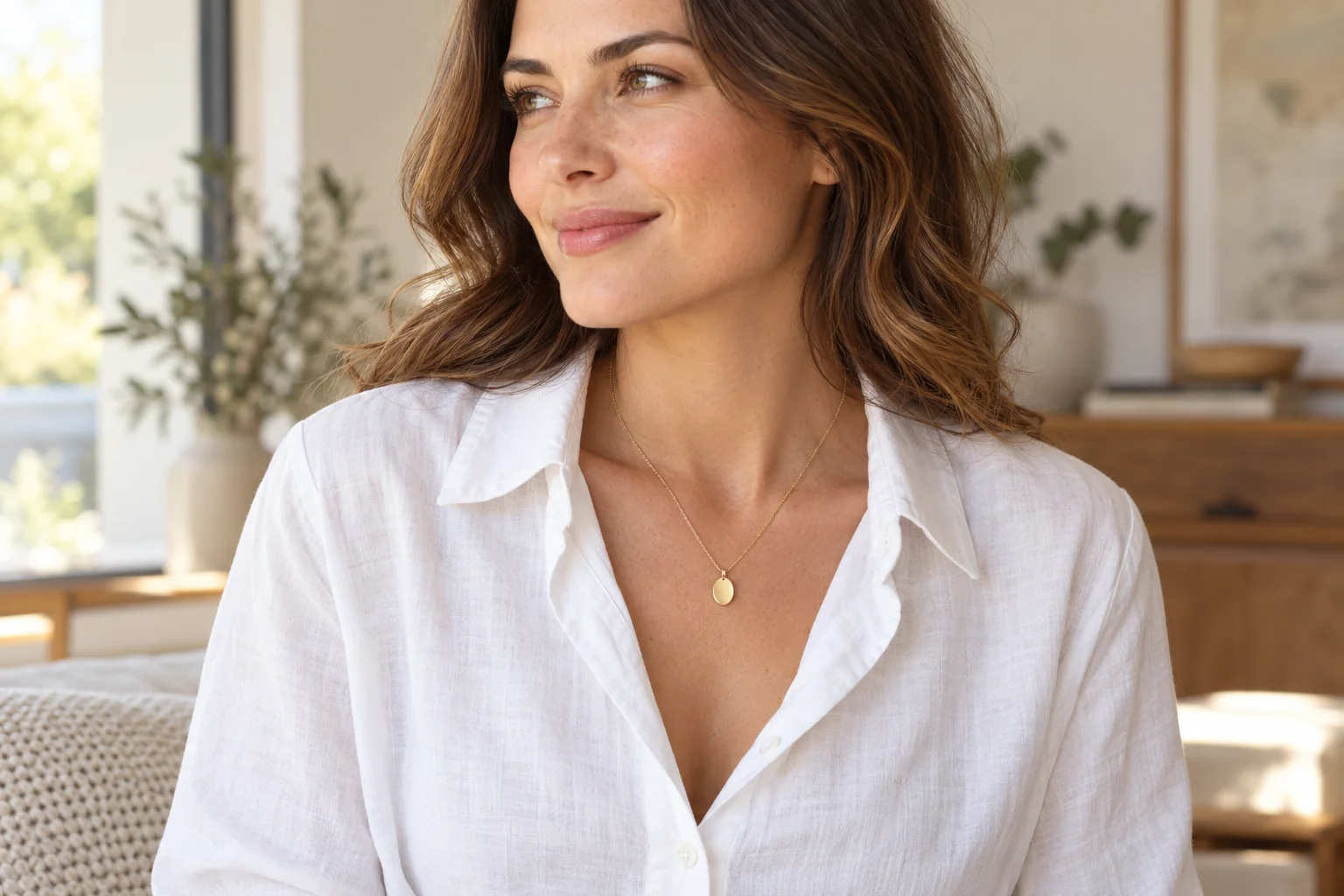
I can like a necklace on its own and lose the pendant behind my shirt. I want a clear starting point before changing the whole outfit.
I choose my shirt opening first, then compare one necklace inside or outside that space. I check the pendant when I sit and move. I use its actual resting point, comfort and contact with buttons instead of a length rule that is supposed to fit everyone.
I approach this as a dressing choice. I can use the necklace I already own, and I can decide that the shirt works better without one.
How do I choose the shirt opening before the necklace?
I can keep moving a pendant while changing my collar at the same time. I need one stable outfit detail before I compare the jewelry.
I button the shirt as I would actually wear it, then let the collar settle. I look at the open space and any fabric that overlaps it. I do not undo extra buttons just to make one necklace fit a look I would not otherwise choose.
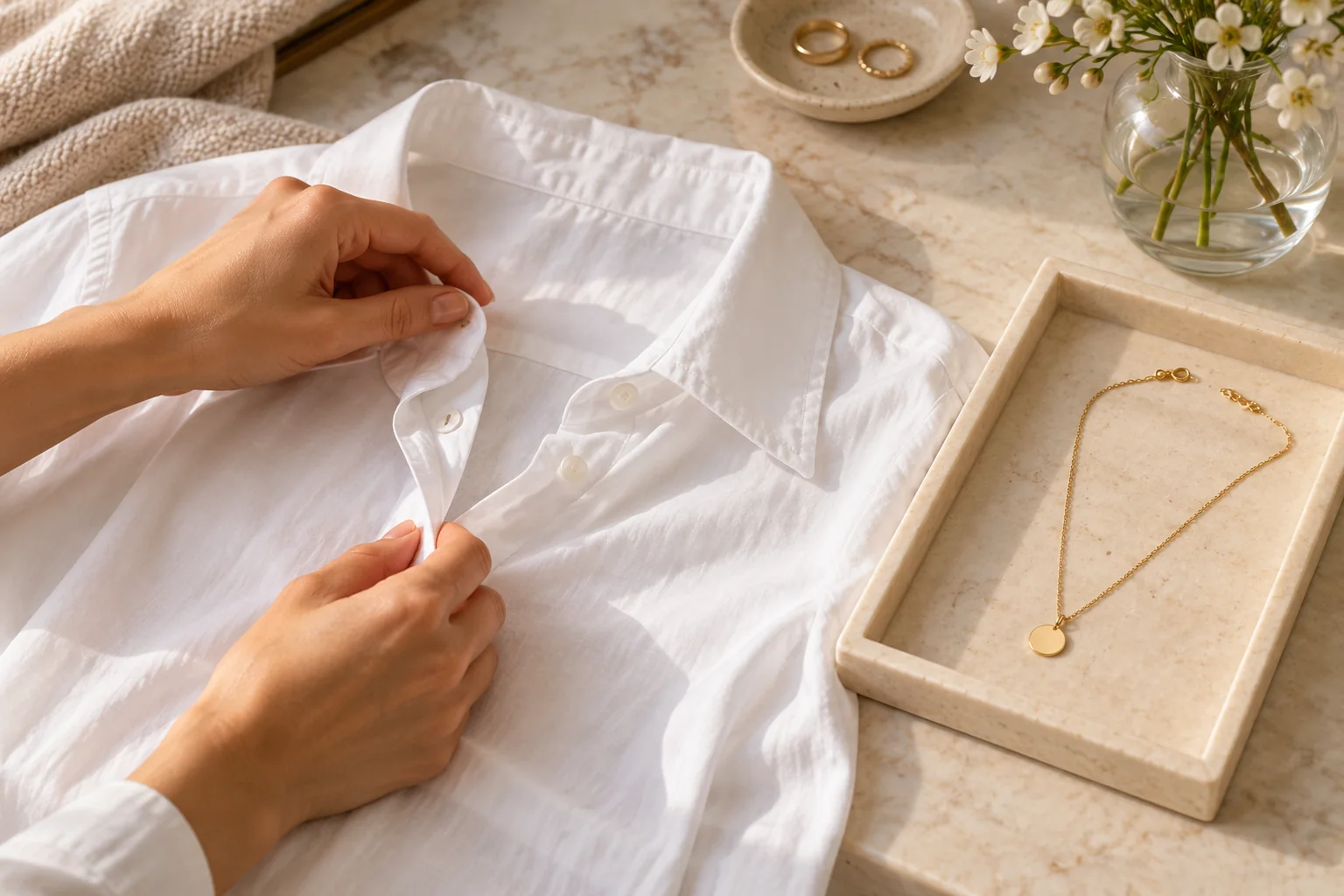
I start with the shirt I plan to wear
I put the shirt on rather than judge the opening while it lies on a bed. My shoulders, posture and the way I button it change the space I see. I also keep any top beneath it in place. A necklace that sits above a plain layer gives me a different view from one that rests within the open collar.
I choose a comfortable opening before I reach for a chain. I want the shirt to suit my day when I sit, walk and lean forward. I do not use the necklace as a reason to keep adjusting the shirt. If I would normally fasten another button at work, I include that version in the decision from the start.
| Shirt detail I notice | Question I ask |
|---|---|
| I have a narrow opening | I ask whether I want jewelry visible there |
| I have a top underneath | I compare the pendant against that surface |
| I wear the collar closed | I consider a necklace outside the shirt |
I then look at where the points of the collar and the central button strip sit. I use those as visible reference points, not strict borders. I may like a small pendant within the opening or a longer line over the shirt. Both choices can work as personal preferences. I keep the opening unchanged while I compare them so that I can tell which difference comes from the necklace itself.
Where should I let the pendant rest?
I can choose a familiar chain length and still find its pendant behind a button. I need to see the complete necklace on this particular shirt.
I compare the bottom of the pendant with the open collar, the top underneath and the nearest button. I choose a resting point I like without tension at my neck. I allow for the pendant's own drop instead of judging the chain measurement alone.
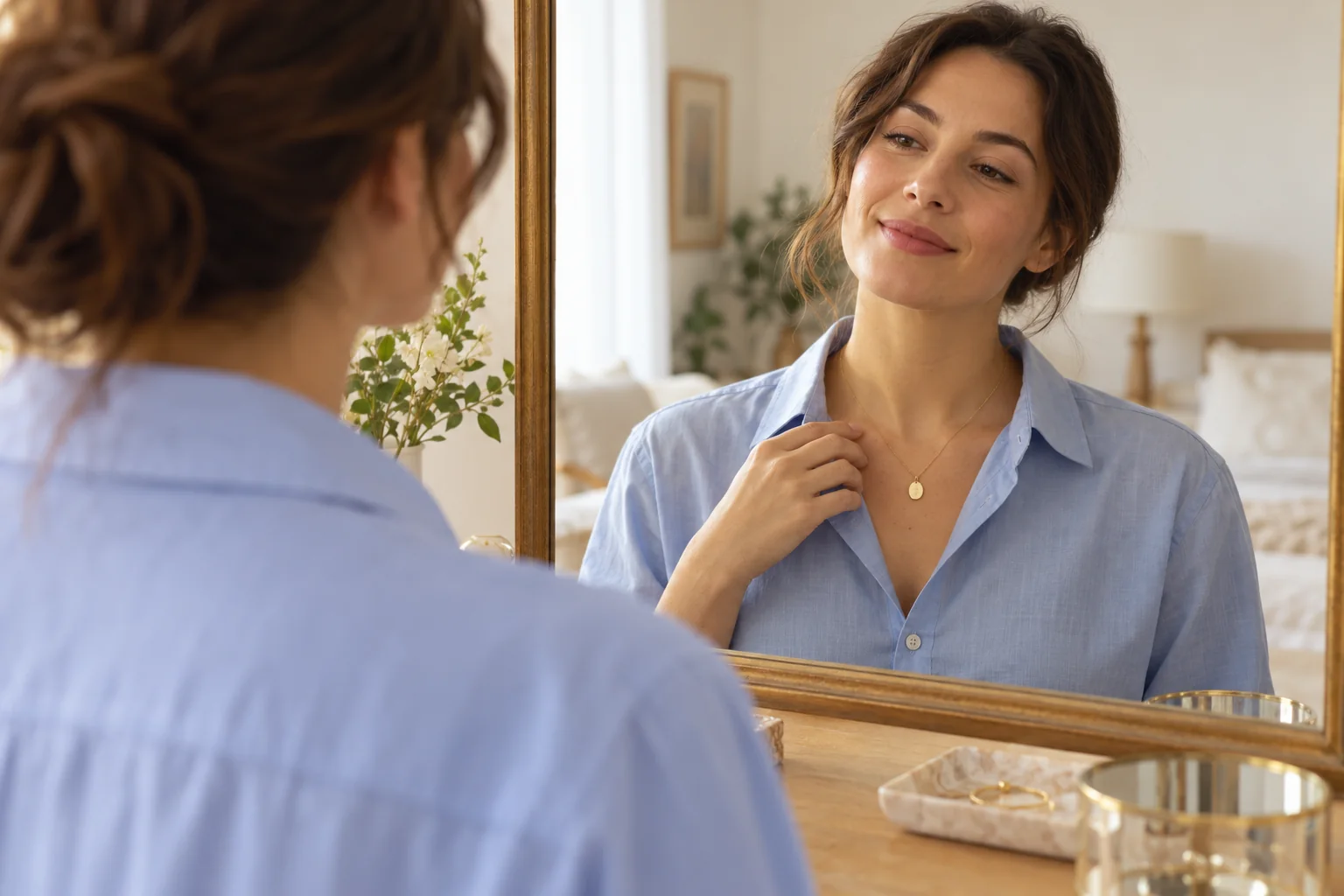
I compare position rather than a universal number
I hold the unclasped necklace in front of the shirt first if I am only choosing between pieces. I keep it supported and avoid dragging it across the buttons. That gives me an early view of its size and color. I still need to wear it normally before I decide how it rests, because a held chain does not show the final position.
I note the complete drop. A plain chain and a chain with a long pendant can have the same stated length and show different lower edges. I use our necklace-length guide when I need to check what a measurement includes. I do not turn a familiar number into a promise about where a particular pendant will land on me.
I look at the space around the piece. A pendant just above a button may be clear while I stand and hidden when the shirt folds. A longer necklace outside the shirt can be easier to see, but I still want to check that I enjoy the line it creates. I do not assume that outside is always better than inside.
I compare two positions at most before making a small decision. If the supplied adjustment lets me choose either position, I follow its normal method. If it does not, I avoid knots or makeshift fastenings. I can choose a different necklace, change the outfit on its own terms or leave the opening free of jewelry.
What should I check when I sit and move?
I can make a necklace look right while standing still and keep fixing it at my desk. I want the ordinary seated view to count too.
I sit, stand and turn as I normally would while wearing one necklace. I notice whether the pendant disappears, lands on a button or needs repeated handling. I stop if it catches. I do not pull the chain or change my posture to keep the pendant visible.

I include the day I actually expect
I use a normal chair and a mirror if one is nearby. I do not need to turn dressing into a performance test. I only want to notice the common positions I will spend time in. My shirt may fold differently when I sit, and its opening may look less even than it did while I stood squarely in front of the mirror.
I keep my hands away from the pendant for a moment. If I immediately want to put it back in place, I ask what changed. I may have chosen a position at the edge of the opening. I may prefer a plain chain for this shirt. I describe the contact I can see rather than guess that the necklace is faulty.
| Ordinary moment I check | Detail I watch |
|---|---|
| I sit at a desk | I watch where the shirt folds |
| I turn my shoulders | I notice whether the pendant catches an edge |
| I put on an outer layer | I check the complete outfit again |
I remove the necklace before investigating a catch. I do not keep moving to reproduce it under tension. If I find a damaged link, a loose setting or a clasp that does not close, I separate that condition issue from styling. GIA's care guidance supports thoughtful handling and protected storage.1 I use that as a reason to handle the piece carefully, not as proof that any necklace can tolerate rubbing against clothing all day.
How do I compare the collar, buttons and jewelry details?
I can add more jewelry to balance a busy shirt and make the choice harder. I prefer to see what one piece contributes before I add another.
I compare the pendant's outline with the collar and buttons, then decide which detail I want to notice first. I can repeat a shape or choose a quieter chain. I treat color, scale and balance as preferences, and I check contact separately from appearance.
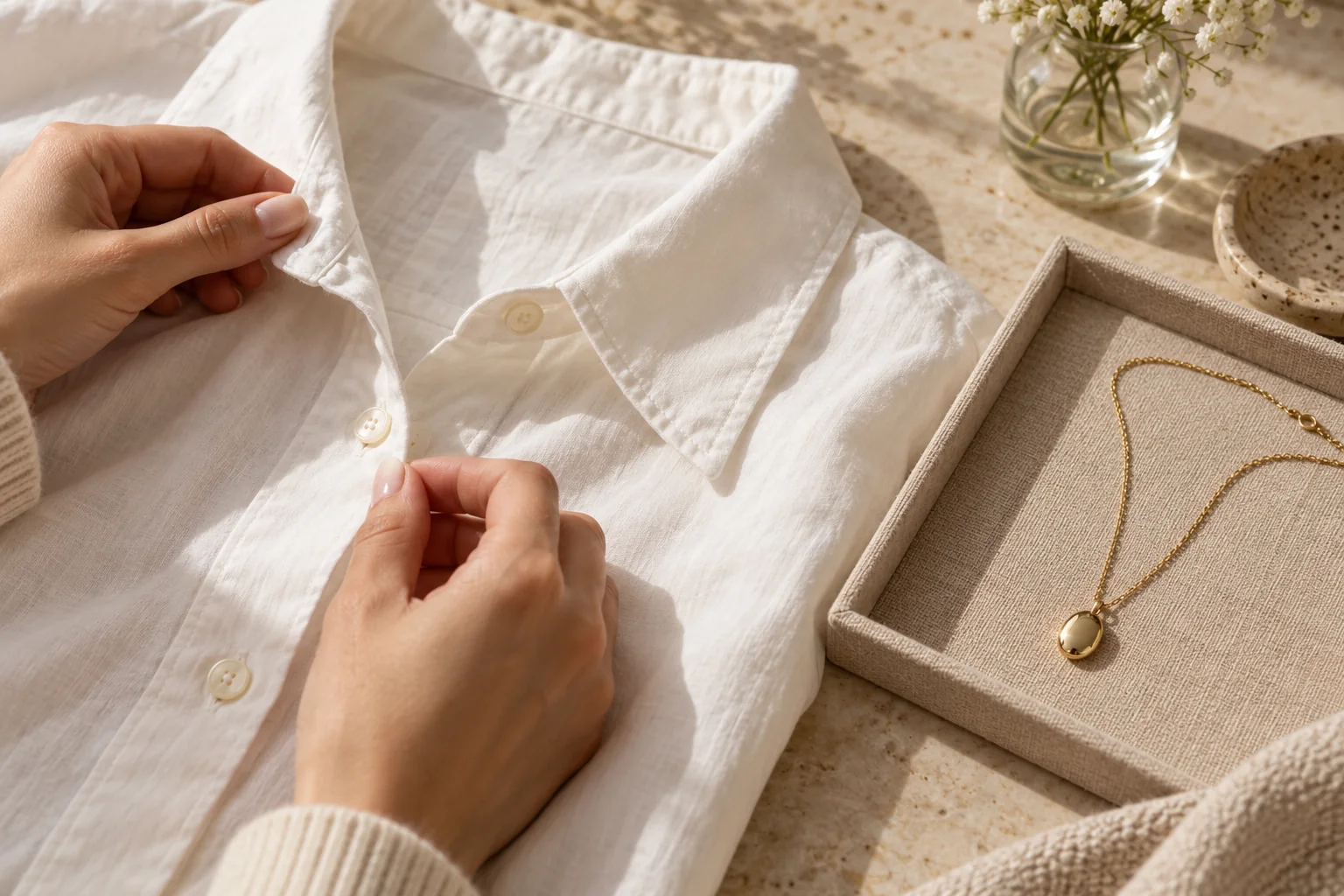
I give each visible detail enough room
I look at the shirt from a normal viewing distance. A close photograph can make a small pendant seem like the main feature, while the full outfit gives more attention to the collar, pattern or buttons. I compare both views if I am choosing a piece for photographs, but I do not choose only from a tightly cropped image.
I can keep a patterned shirt with a plain chain, or I can enjoy a pendant against a plain shirt. I do not need the metal color to match every button. I decide whether I like the overall combination and whether it feels like something I would willingly wear. A rule about matching finishes does not replace that choice.
I leave layering until the single necklace works. Etsy's styling guide discusses varying necklace lengths to make separate layers visible.2 I take that as an optional styling idea, not a guarantee against tangles. If I do add another piece, our layering guide gives me a separate place to compare the chains rather than solve every issue through the shirt.
I also distinguish appearance from physical contact. I may like the way a long pendant overlaps the button strip but dislike its movement there. I can change my choice without deciding that the styling idea is wrong for everyone. I want a combination that works at the distance I see it and in the positions I actually use.
How do I choose a simple outfit I will use again?
I can spend longer fixing a necklace than enjoying the outfit. I want a choice that I can repeat without rebuilding the whole look each time.
I keep the shirt opening, necklace choice and normal adjustment together as one outfit note. I choose a different piece if I keep correcting this one. I can also skip the necklace, and I do not buy a new accessory just to satisfy a styling rule.
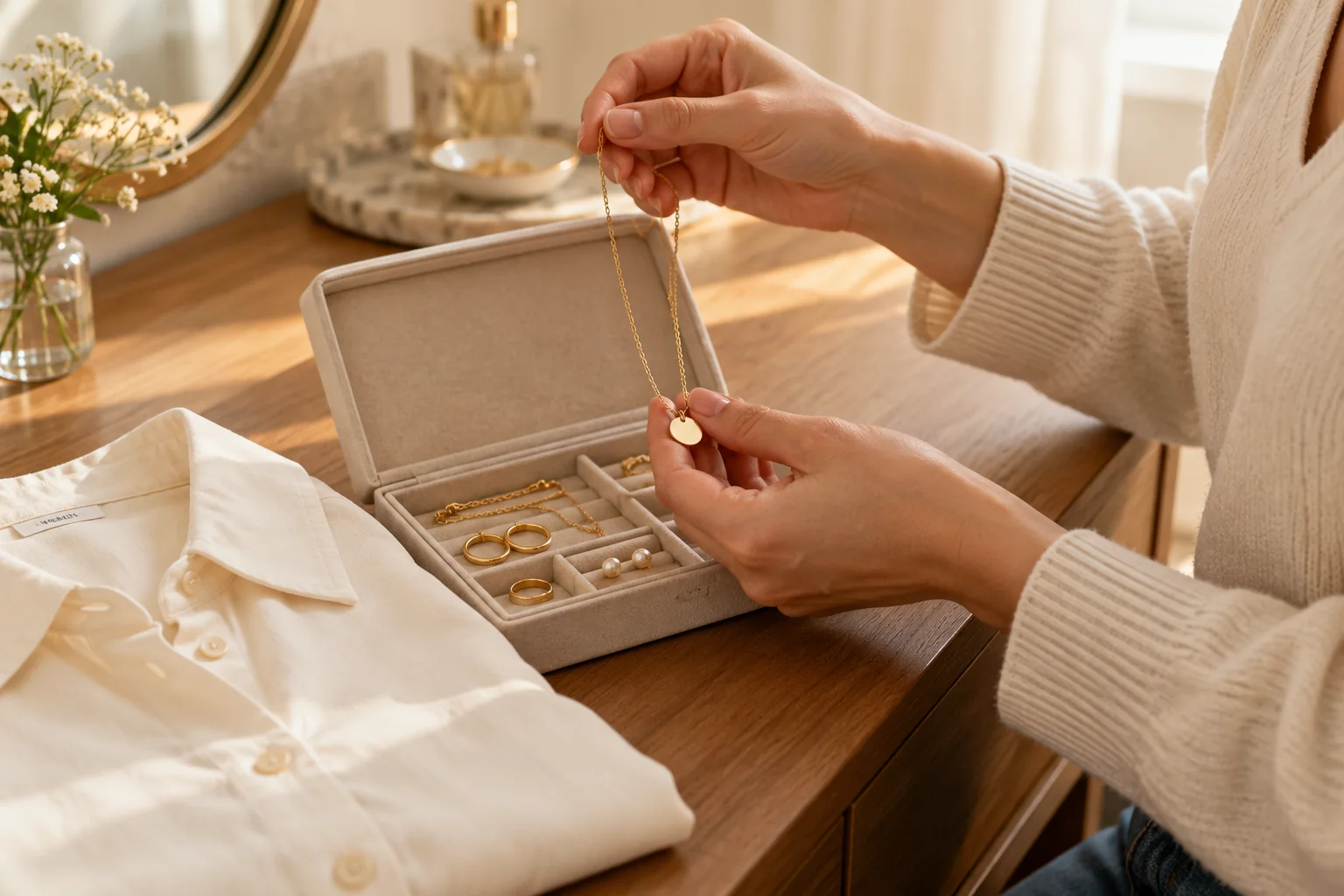
I keep the useful detail and leave the extra work
I can take a simple outfit photograph for my own reference. I include enough of the shirt to see the opening and the pendant's lower edge. I do not need a perfect image or a public post. The purpose is to remember a choice that felt easy, not to collect evidence that my look follows a particular trend.
I record only the detail I would otherwise forget. I may note which supplied clasp position I used, whether I wore a top beneath the shirt or whether I preferred the necklace outside it. I do not need to measure every fold. I want the next dressing decision to be shorter than the first one.
| Result I notice | Choice I keep available |
|---|---|
| I like the position without fixing it | I save that outfit combination |
| I keep moving the pendant | I compare another piece |
| I prefer the collar on its own | I leave the necklace off |
I avoid buying an extender without checking the complete change it would make. Our extender-fit guide covers that extra component. I may already have a necklace that suits the opening better. If I put the unused piece away, I support it in its own space rather than leave it over a shirt button or hanger. I want the outfit choice and the care task to stay simple enough that I will repeat them willingly.
Conclusion
I choose the shirt opening first, compare the whole necklace and include ordinary movement. I keep the combination that looks right and needs little handling.
- GIA, Tips on Caring for Jewelry. I use its careful-handling and storage guidance, not a clothing-wear guarantee. ↩
- Etsy, How to Layer Necklaces. I use varied lengths as an optional visual idea, not a promise of tangle-free wear. ↩
Images are AI-generated editorial illustrations. They do not identify or verify a specific product.