
What Should I Check If My Pendant Keeps Flipping Over?
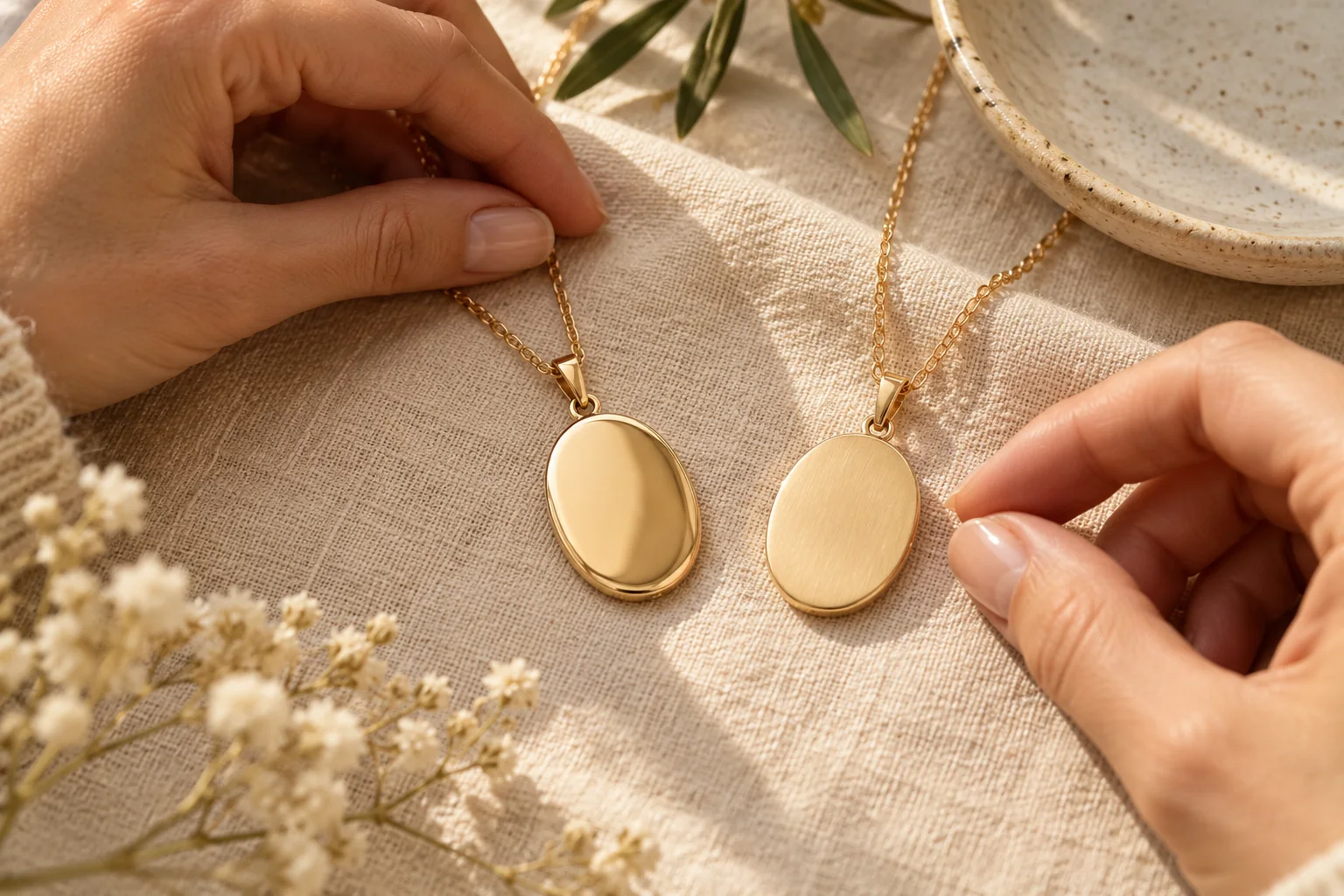
I can keep turning a pendant forward and find its back showing again. I want to describe the movement before I change the necklace.
I check whether only the pendant turns over or the whole chain moves around my neck. I inspect the unworn piece, note clothing contact and compare its normal position. I ask for item-specific advice if the movement persists, and I avoid glue, extra weight or bending the attachment myself.
I use this guide to make a clear next decision. I do not need to keep wearing a piece that needs constant attention or assume that one fix suits every design.
Is my pendant turning over or is the whole chain rotating?
I can call several necklace problems flipping and ask for the wrong repair. I first separate the pendant's front and back from the clasp's position.
I note which part changes position. A pendant can show its back while the clasp stays behind my neck. The whole chain can also rotate until the clasp comes forward. I describe those observations separately, and I remove the necklace before inspecting a catch or a tight section.
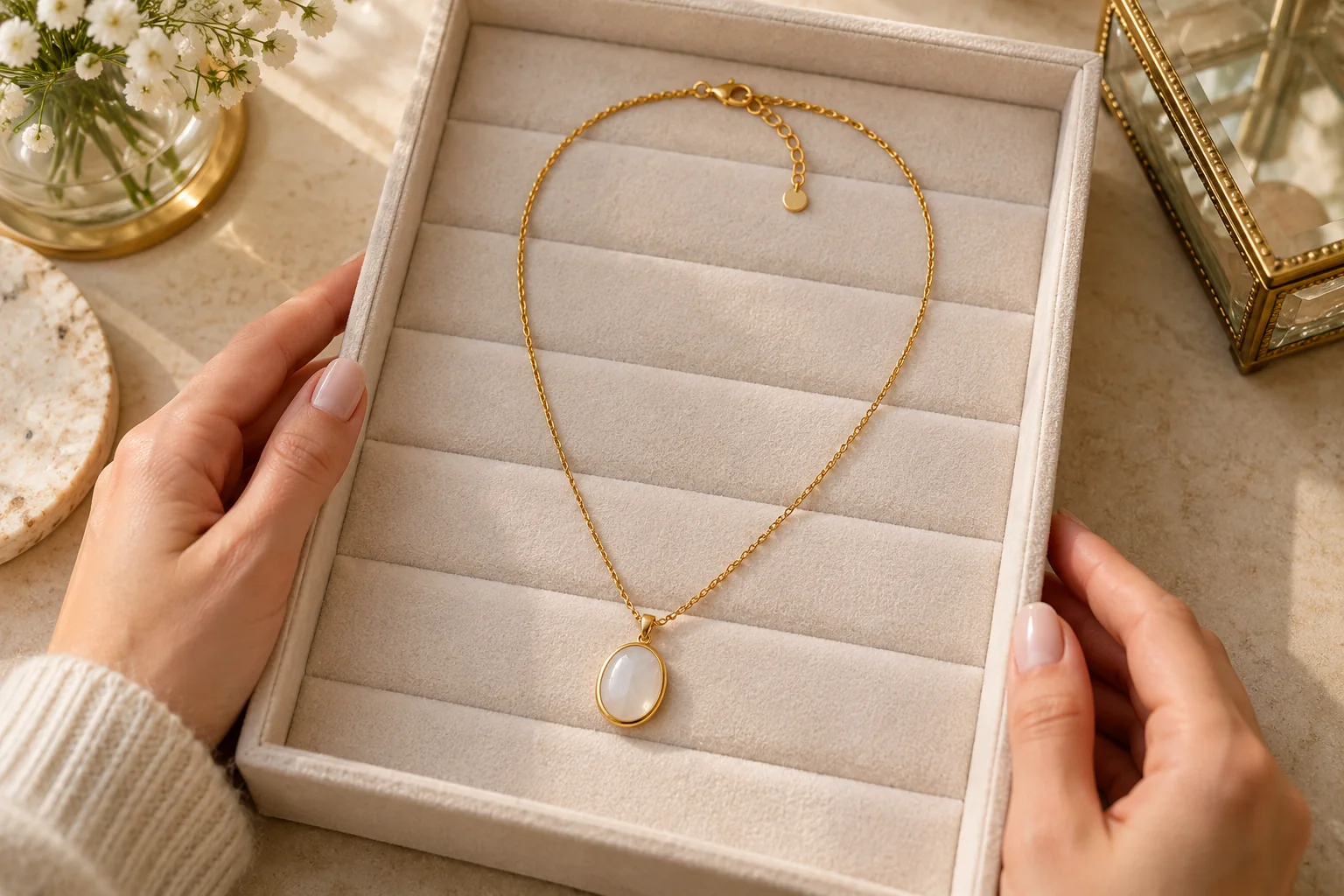
I describe the movement I can actually see
I start with one necklace rather than a stack. I want to see its own chain and pendant without another piece covering them. I look in a mirror at its ordinary resting position. I do not pull it straight or hold my shoulders in a special way to keep the front visible. I am trying to describe normal use, not a pose that hides the problem.
I identify the visible change in plain words. I may see the smooth rear of the pendant while the clasp remains at the back. I may instead see the clasp travel toward my shoulder. I may find a chain twisted near the attachment while the pendant still faces forward. Each description gives the seller a more useful starting point than saying the whole necklace will not behave.
| Observation I can describe | Question I keep separate |
|---|---|
| I see the pendant's rear | I ask about how the pendant hangs |
| I see the clasp at the front | I ask about chain rotation |
| I see a folded or twisted section | I stop and inspect the unworn piece |
I use our clasp-position guide for the second question. I do not try every suggestion from that different problem on a flipping pendant. I also keep the timing useful. I note whether the change happens when I sit, add a jacket or handle my hair. Those details do not prove a cause, but they help me explain the actual situation without guessing about the metal or construction.
What can I learn from the pendant attachment?
I can assume that any visible loop works the same way and start moving it. I want to understand what I own before touching a connection.
I look at the unworn pendant and identify how it connects to the chain. I note a fixed connection, a separate loop or a visible opening without bending it. I do not assume that an attachment is adjustable, removable or safe to alter because I can see a seam.
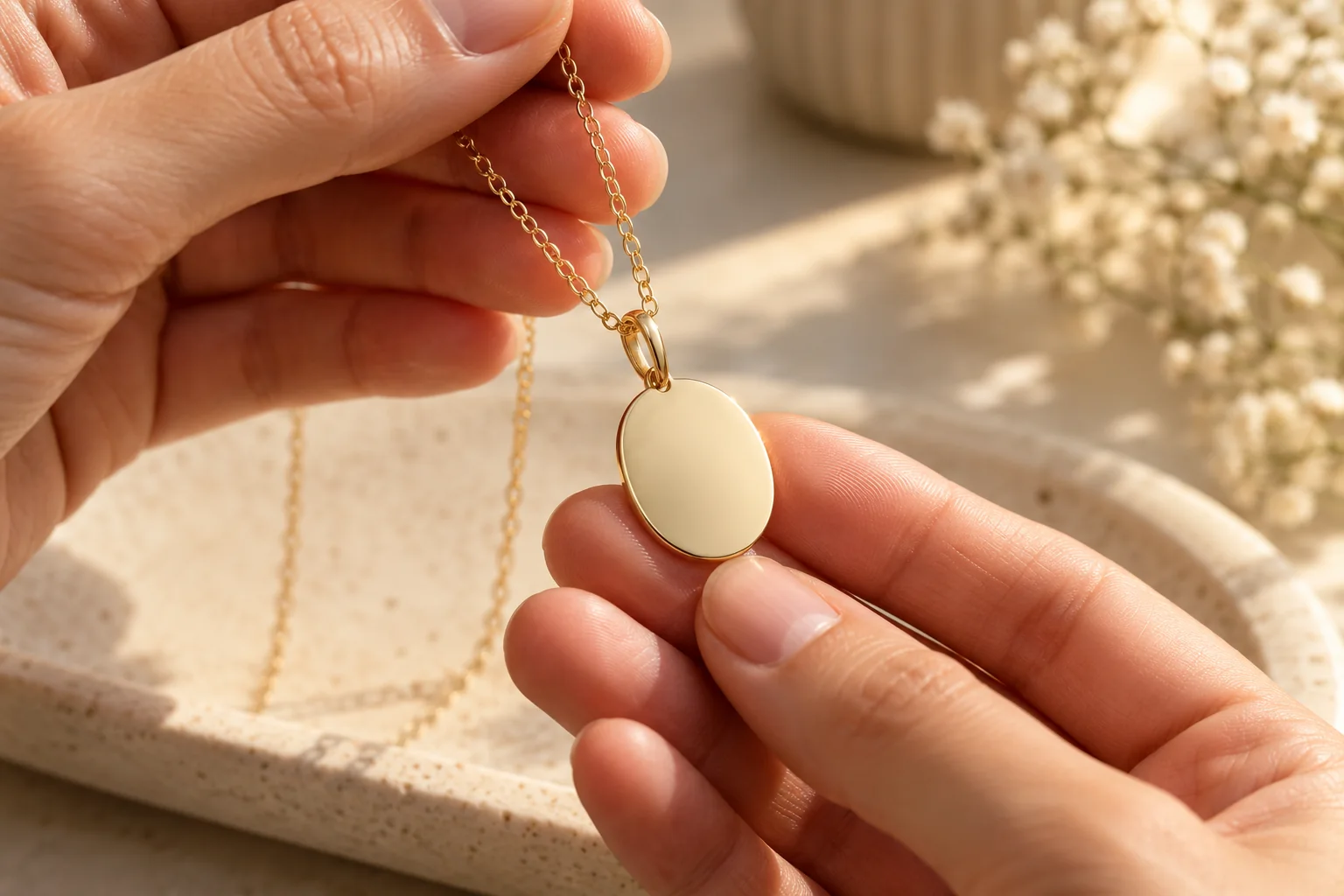
I inspect without turning observation into repair
I support the necklace on a clean tray and give it enough room to lie without a sharp fold. I look at the front, back and attachment under ordinary good light. I do not hang the pendant from one end of the chain while I inspect it. I want to see the parts without adding tension that could hide their normal relationship.
I check the listing or information that came with the piece. A pendant may be part of a finished necklace, or it may be described as removable. I keep that distinction visible because I cannot assume I can exchange its chain. Our pendant-and-chain guide covers compatibility when the design actually allows separate parts. I do not turn a styling problem into a reason to force a chain end through an opening.
I photograph a visible gap or change instead of trying to close it. GIA's care page explains that heat and chemicals can affect jewelry materials differently.1 I keep those limits in mind before considering glue or heat-based changes to an unknown construction. I do not treat a general care page as a repair method or a service promise for a Zolay item.
I also avoid diagnosing balance from a photograph. I can describe the pendant's outline and attachment position, but I cannot prove its weight distribution or future wear from those observations. A jeweler who can examine the complete piece has more information than a short online description. I keep my own task to preserving that information and explaining the movement clearly.
Does my clothing change when the pendant turns over?
I can blame a pendant while its edge keeps meeting the same shirt opening. I want to notice that contact before choosing a permanent change.
I compare the necklace alone with the outfit I actually plan to wear. I note whether the pendant touches a collar, seam or folded edge when it turns. I do not attach it to my skin or clothes, and I stop if the chain or setting catches.

I compare one ordinary detail at a time
I keep the supplied necklace adjustment unchanged while I compare two tops, if I already have both available. I do not need to buy a new outfit for this purpose. I want to know whether I see a different contact point. I may notice that one neckline sits below the pendant while another meets its lower edge. That is a useful observation even if it does not explain every turn.
I include a seated view because clothes move with me. A shirt can form a fold that is absent while I stand. A jacket can create another edge near the chain. I do not need to repeat an uncomfortable movement to prove that it happens. I can remove the necklace and describe the contact from the observation I already have.
| Detail I change | Detail I keep stable |
|---|---|
| I compare two tops I own | I keep one necklace |
| I add my usual jacket | I keep the supplied adjustment |
| I look while seated | I keep my ordinary posture |
I avoid interpreting a successful short comparison as a permanent solution. I may simply prefer the way the piece works with one outfit. I can keep that combination without claiming the pendant will never move again. I also avoid copying advice to add glue or tape. I want the piece to remain easy to remove, and I do not want an adhesive choice to create a separate care problem that I have not checked with its maker.
What information should I give the seller or jeweler?
I can ask for a no-flip fix and receive advice that assumes the wrong necklace. I want my question to include the actual item and its condition.
I provide the exact product, clear front and back photographs, the attachment view and a short description of when the pendant turns. I ask what can be assessed without altering the piece and what any proposed work would change. I do not request a guaranteed result from a photograph alone.
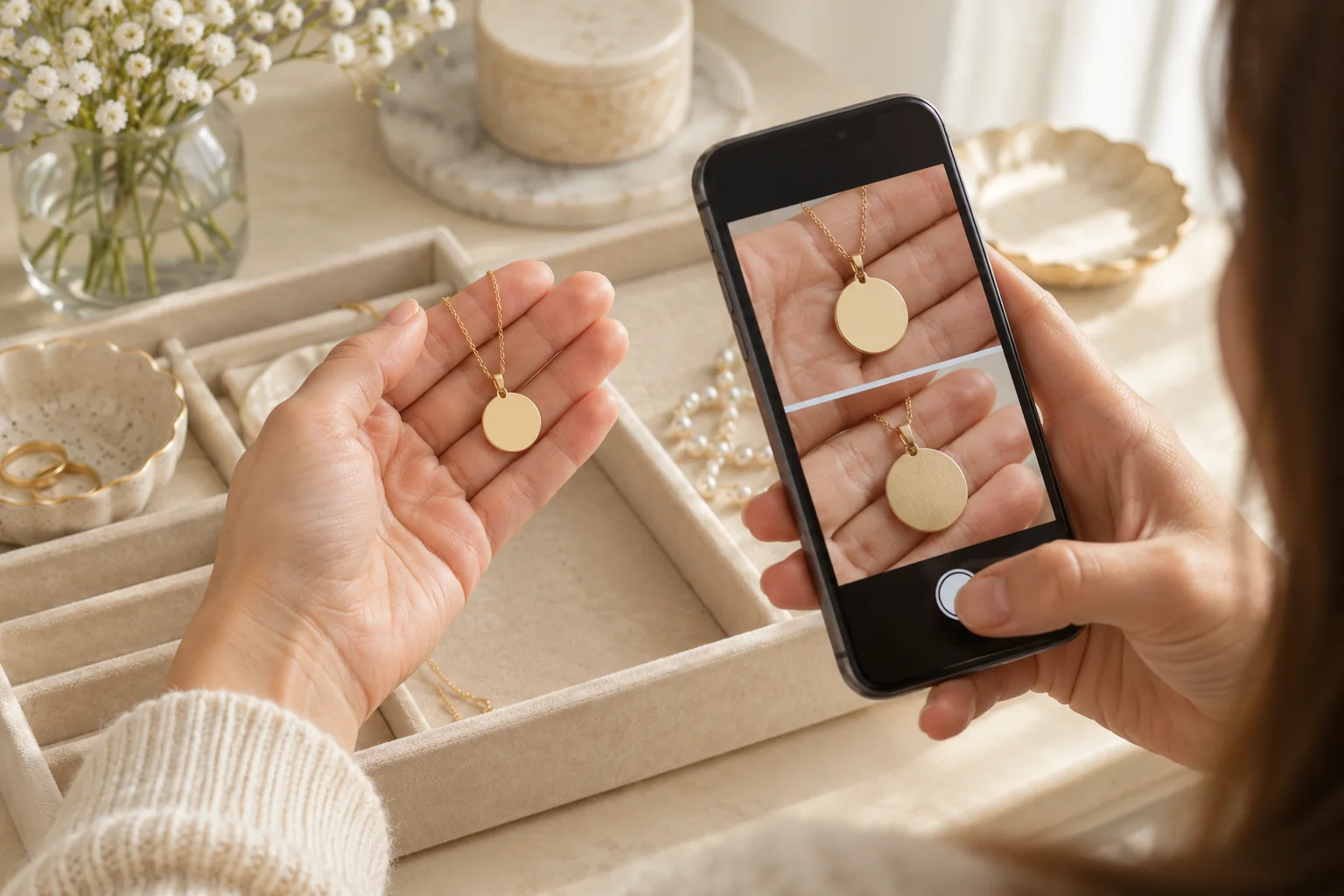
I make the question concrete enough to answer
I keep the order or product reference with my photographs. I include any supplied adjustment position that I use. I say whether the necklace has always behaved this way or whether I have noticed a recent change. I do not invent a cause to make the question sound more precise. A clear account of what I know is more useful than a confident guess about a connection I have not examined closely.
I ask whether the suggested change is reversible. A new connection, a different chain or a permanent join can change more than the direction of the pendant. I want to understand its appearance, removal method, care needs and any effect on the seller's stated terms. I ask for the actual cost and limits before I agree to work, rather than assume that a small-looking adjustment must be simple.
I keep community advice in its proper role. A Reddit discussion about a wedding pendant shows the same frustration and several different suggested fixes.2 I use it as a sample of the question, not proof that a particular ring or repair suits my necklace. I do not copy an unverified glue or soldering recipe from a comment.
I ask what the professional needs to see in person. If the answer depends on the chain, I bring or describe the whole necklace rather than only the pendant. I also say what outcome matters to me. I may care more about keeping the original design than making it face forward in every position.
When should I choose another way to wear the piece?
I can keep looking for a perfect fix because I like the pendant's front. I still want the final choice to fit my routine without constant attention.
I choose another outfit, another suitable necklace or no necklace when repeated correction outweighs the enjoyment. I can consider a design meant to look finished on both sides when shopping later. I do not add weight or shorten a chain tightly around my neck to force one position.
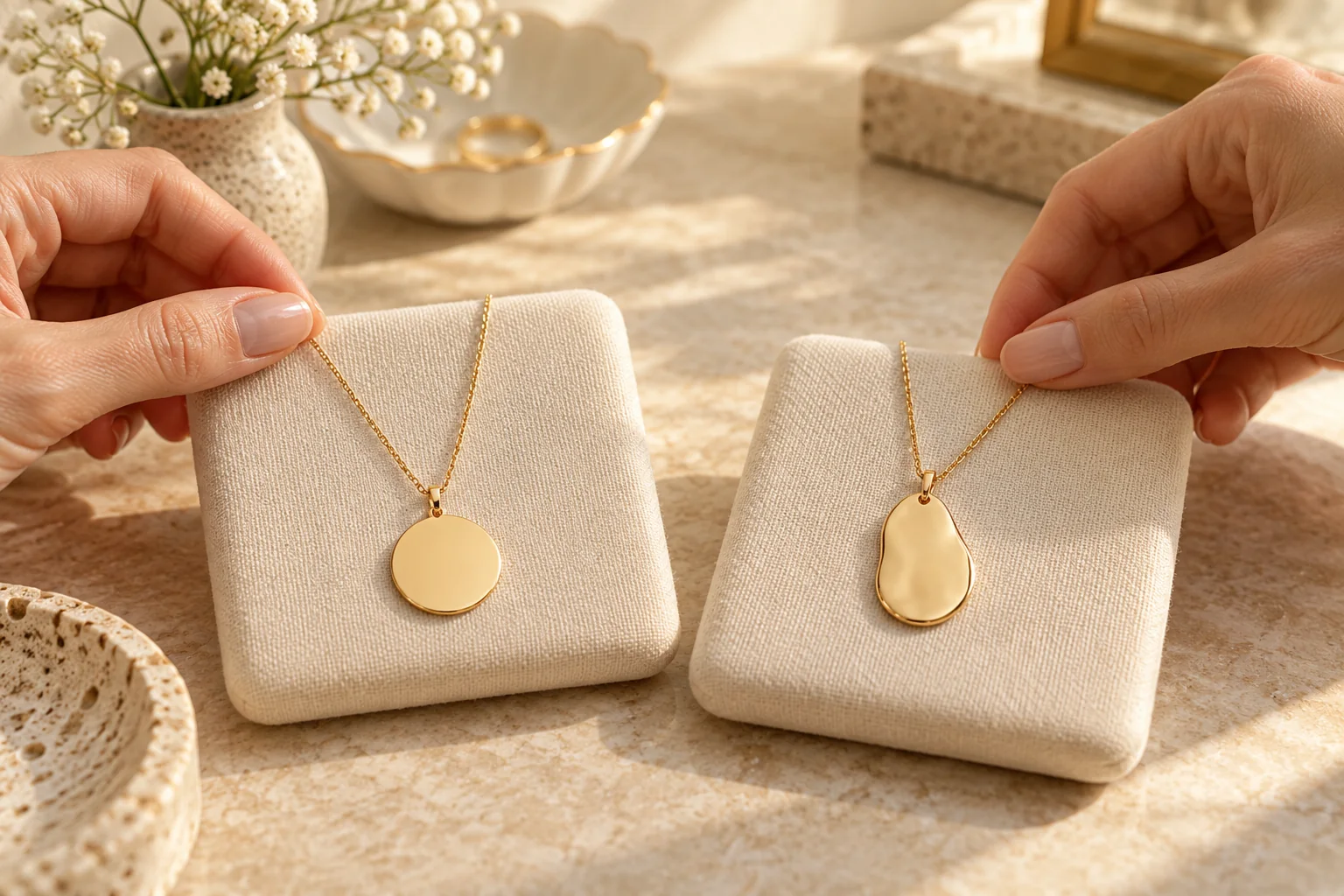
I decide which compromise I actually want
I separate liking the object from wanting to wear it for every activity. A pendant can remain meaningful even if I prefer it with one particular top or for a shorter occasion. I do not need to make it a daily necklace to justify keeping it. I can also decide that I would enjoy another piece more without declaring that the original design is wrong.
I compare the cost of any proposed work with the outcome I want. If a change would replace a detail that drew me to the necklace, I pause before treating it as an improvement. Our repair-or-replace guide helps me organize those questions. I use it for the decision process, not to label ordinary movement as damage that must be repaired.
| Choice I consider | Question I ask myself |
|---|---|
| I keep it for one outfit | I ask whether I enjoy wearing it there |
| I seek a professional assessment | I ask what the work would change |
| I compare another design later | I check both sides before buying |
I leave unverified promises out of the choice. I cannot know that a heavier chain, shorter length or added attachment will stop every movement. I want to understand the full necklace before spending more on it. If I set the piece aside, I give it its own supported space and keep the notes with the item, so the next decision starts with the facts I have already collected.
Conclusion
I describe the movement, inspect the whole necklace and compare ordinary clothing contact. I choose a clear next step without forcing or permanently altering the piece myself.
- GIA, Tips on Caring for Jewelry. I use its material-dependent heat and chemical-care guidance, not a pendant-repair recipe. ↩
- Reddit, Any Suggestions to Stop This Pendant Flipping. I treat the thread as a qualitative problem sample, not a verified repair method or demand measure. ↩
Images are AI-generated editorial illustrations. They do not identify or verify a specific product.