
Can I Use My Silk Bonnet as a Shower Cap?
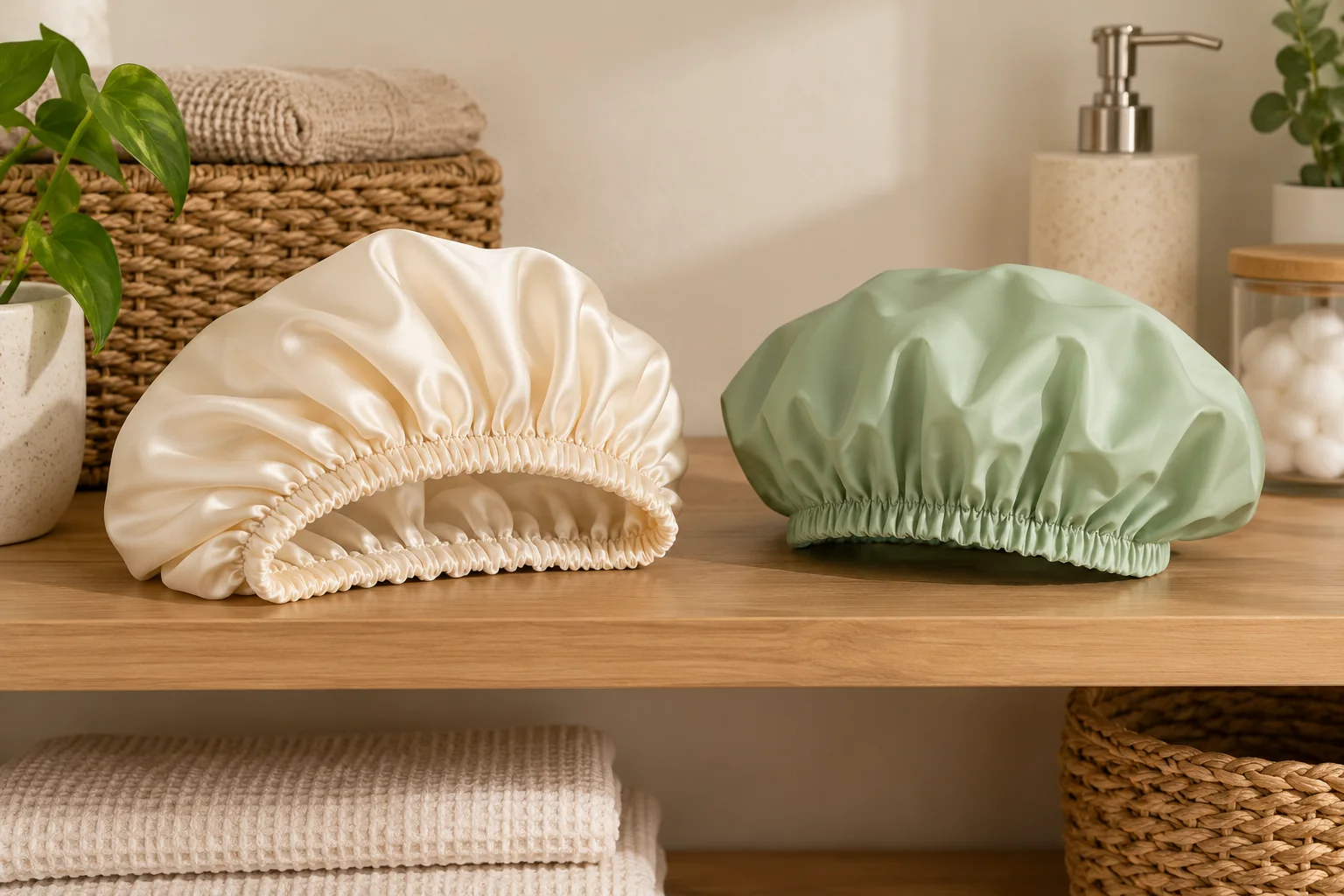
I can reach for my sleep bonnet to keep my hair dry in the shower. A similar shape can hide a very different purpose and construction.
I do not assume that a silk sleep bonnet is a shower cap or a water barrier. I check its intended use and construction. If I need protection from shower water, I choose an item explicitly intended for that task rather than rely on a silk or satin description.
I separate the name, the lining and the outer layer. That helps me choose a useful setup and avoid leaving my bedtime cap wet when I want to wear it later.
Is shower cap style a shape or an intended use?
I can read shower cap style in a bonnet description and assume it means waterproof. I check whether those words describe the opening or the actual job.
I distinguish a gathered cap shape from a product made for shower use. I look for the maker's stated purpose, materials and instructions. I do not treat a photograph, elastic opening or similar name as evidence that a sleep bonnet will keep water out.

I start with the task I want the item to do
I write the purpose in ordinary words. I may want a soft cap for bedtime, a wrap for handling wet hair or a barrier against shower water. Those are different jobs. An item can share a rounded shape with another product without sharing its intended use. I want the description to identify the job before I compare the appearance.
I look at the wording around the product name. A seller may use shower cap style to distinguish a gathered opening from a tied wrap. That does not by itself describe the outer layer or any water-resistance feature. I ask a direct question when the wording is unclear: is this item intended to be worn in the shower to help keep hair dry?
| Wording I find | Detail I still need |
|---|---|
| I read shower cap style | I ask whether this describes shape or use |
| I read silk sleep bonnet | I check its stated bedtime purpose |
| I read water-resistant outer shell | I ask which item and layer the claim covers |
I keep a hair-drying wrap separate too. Our drying-wrap comparison explains that different task. I do not use an item's ability to absorb or handle water as proof that it blocks water. I can avoid a poor comparison by naming the result I need before I search. That small step keeps a familiar shape from becoming an unsupported performance assumption.
Does a silk or satin lining establish a water barrier?
I can notice a smooth lining and overlook the outside of the cap. I need to know what each layer is meant to do before relying on it.
I check the lining and outer shell separately. Silk or satin wording does not, on its own, tell me that the finished cap has a water barrier. I look for an explicit shower-use description and the maker's instructions rather than infer performance from a smooth surface.

I read the construction one layer at a time
I begin with the part named in the listing. A description may concern the hair-facing lining, the outer shell or the whole item. I keep those scopes separate. I cannot assume that a cap described as satin lined has a silk lining, and I cannot establish the outer layer's intended function from the lining alone.
I use a current manufacturer example carefully. Kitsch describes its satin-lined shower caps as pairing a waterproof outer shell with a smooth satin lining.1 That is an example of two layers with different described roles. I do not treat its claim as a test of another brand's cap or assume that every satin-lined product has the same outer construction.
I also check the instructions for the complete cap. I want to know how the maker intends it to be worn, adjusted, cleaned and dried. I do not turn the word waterproof into a promise that every arrangement will keep every strand dry. Fit, placement and the maker's stated use still matter to my choice.
Our silk-versus-satin guide helps me read fiber and fabric wording without confusing it with a finished product's purpose. I can then ask a precise question about the outer layer instead of asking whether silk is good in the shower. I want the answer to describe the actual cap I would use, not an attractive material word that leaves the main task unresolved.
Should I put a shower cap over my sleep bonnet?
I can add a second cap to solve the water question and create a crowded or awkward fit. I consider the whole arrangement before treating layering as an easy fix.
I check whether the shower-cap maker intends its item to accommodate another cap and whether the setup fits without force or tightening. I do not assume that layering preserves either item's intended use. I can keep the sleep bonnet out of the shower and use a suitable shower cap alone.

I assess the complete setup rather than one layer
I consider how much space the arrangement needs. A sleep bonnet can add fabric around the crown and opening. A shower cap that fits my hair alone may not fit the extra cap in the way its maker intended. I do not solve that uncertainty by squeezing the hair into a tighter bundle or pulling the outer band more firmly against my head.
I keep the edge of each item in view. If a section of the sleep bonnet extends beyond the outer cap, I cannot simply assume that it will remain dry. I also consider how I would put on and remove both items without catching or pulling their bands. A setup that takes repeated adjustment may be less useful than one suitable item.
| Question I ask | Decision it supports |
|---|---|
| I ask what the maker permits | I avoid inventing a new intended use |
| I check the available space | I avoid forcing two caps into one fit |
| I consider removal afterward | I keep wet and dry handling understandable |
I do not use a shopping bag, improvised plastic wrap or an added tie as a replacement for a product made for shower use. I also do not need to test a layered arrangement under running water to prove a point. If the instructions do not address the combination, I can ask before using it or choose the simpler route. I keep the sleep bonnet dry elsewhere and assess the shower cap as the complete item it was designed to be.
What do I do if the silk bonnet becomes wet?
I can leave a damp bonnet in a pouch and discover it is not ready at bedtime. I switch from the shower question to the item's actual care instructions.
I remove the bonnet, support it on a suitable clean surface and check its care label before deciding whether washing is needed. I follow the permitted drying method. I do not add heat, wring the fabric or close it away while damp just to make the evening routine faster.

I treat care as an item-specific task
I first note what happened. A small splash, a wet band and a cap exposed to shampoo are different situations to describe. I do not assume that all three need the same treatment. I read the bonnet's supplied instructions and ask the seller if I cannot decide how they apply to the item in front of me.
I keep washing and drying instructions separate. GINETEX distinguishes natural drying methods, including flat and line drying, through different symbols.2 I use that distinction to read the actual label. I do not choose a method from the word silk alone or assume that a care instruction for a shower cap also applies to the separate sleep bonnet beneath it.
I avoid shortcuts that change the fabric's condition while I am still deciding. I do not wring the cap, rub the wet band or use a hair dryer to rush it back into service. I keep it supported in the way its instructions allow and leave it out of a closed storage pouch until it is ready to store.
Our washing and drying guide helps me follow that care task more fully. I keep this page focused on the choice that led to the wet bonnet. If the repeated problem is that my sleep cap keeps getting wet during showers, I change that arrangement instead of building my evenings around an avoidable emergency drying step. I want the item ready for its intended role without inventing a new care method every time.
How do I keep the two jobs simple in my routine?
I can collect more caps without making either showering or bedtime easier. I choose clear roles and storage places before deciding that I need another accessory.
I assign shower use to a suitable shower cap and bedtime use to a comfortable sleep bonnet, if I choose to use one. I keep their instructions and drying needs separate. I buy another item only when it fills a real gap rather than duplicates something I already have.

I plan for the next use of each item
I think about where I reach for the item and where it goes afterward. I want the shower cap near its intended use and the sleep bonnet away from routine splashes. I keep the storage plan easy enough to follow when I am in a hurry. I do not rely on leaving both items together in a damp bathroom corner and sorting them out at bedtime.
I keep the supplied care information with each role. A shower cap's cleaning instructions may differ from a sleep bonnet's. A lining does not make them interchangeable, and similar colors do not help me remember which directions belong to which item. I can keep a simple note identifying the product and its instructions without building a complicated tracking system.
| Item I choose to use | Role I keep clear |
|---|---|
| I use a sleep bonnet | I follow its intended bedtime use and care |
| I use a shower cap | I follow its stated shower-use instructions |
| I consider another accessory | I identify the gap it would actually fill |
I also allow the routine to remain small. I may already have a suitable shower cap and need only to stop using the sleep bonnet for that job. I may decide that I do not want bedtime headwear at all. I do not treat either choice as a failure or a reason to buy a whole set. I want each item to have a clear purpose, an understandable care routine and a place where it is ready for the next use.
Conclusion
I match the cap to its intended job, check each layer's role and keep care instructions separate. A familiar shape does not establish a water barrier.
- Kitsch, Shower Caps. I use the maker's shell-and-lining description as one product-construction example, not a test of Zolay or other caps. ↩
- GINETEX, Care Symbols. I use its distinction between drying processes to interpret the finished item's own instructions. ↩
Images are AI-generated editorial illustrations. They do not identify or verify a specific product.