
Do I Need a Hair-Drying Wrap or a Silk Sleep Bonnet?
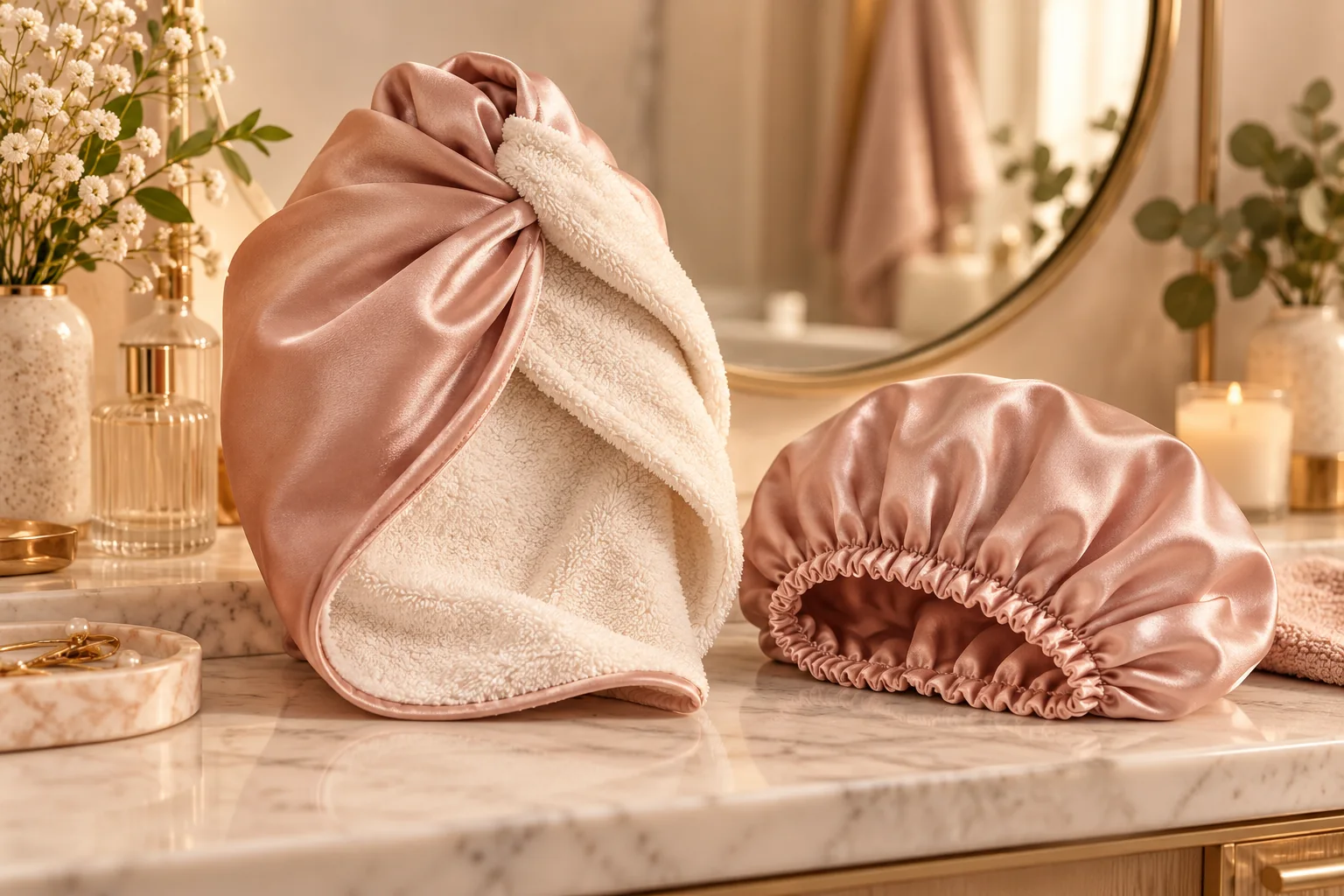
I can mistake a silk-looking cap for an accessory that does every job. Then I use a sleep bonnet on wet hair or expect a wrap to dry everything.
I choose a hair-drying wrap for short post-shower use when its absorbent contact layer matches that job. I choose a silk sleep bonnet for its stated overnight purpose after my hair and the bonnet are dry. I check the finished construction because a silk exterior does not describe every layer.
At Zolay Nights, I keep these two uses separate. Our drying wrap has a mulberry silk exterior and a soft absorbent inner layer. Our sleep styles have a different purpose. I work through the layers, handling, timing, and care choices so a similar-looking shape does not lead to the wrong expectation.
Which layer does the work in a hair-drying wrap?
I can focus on a smooth outer surface and miss the fabric touching my hair. That can leave me comparing accessories by appearance rather than by their actual construction.
I check the lining that touches damp hair, the outer shell, and the stated purpose of the finished wrap. An absorbent inner layer is the relevant feature for taking up excess surface moisture. I do not assume that a silk exterior means an all-silk cap.
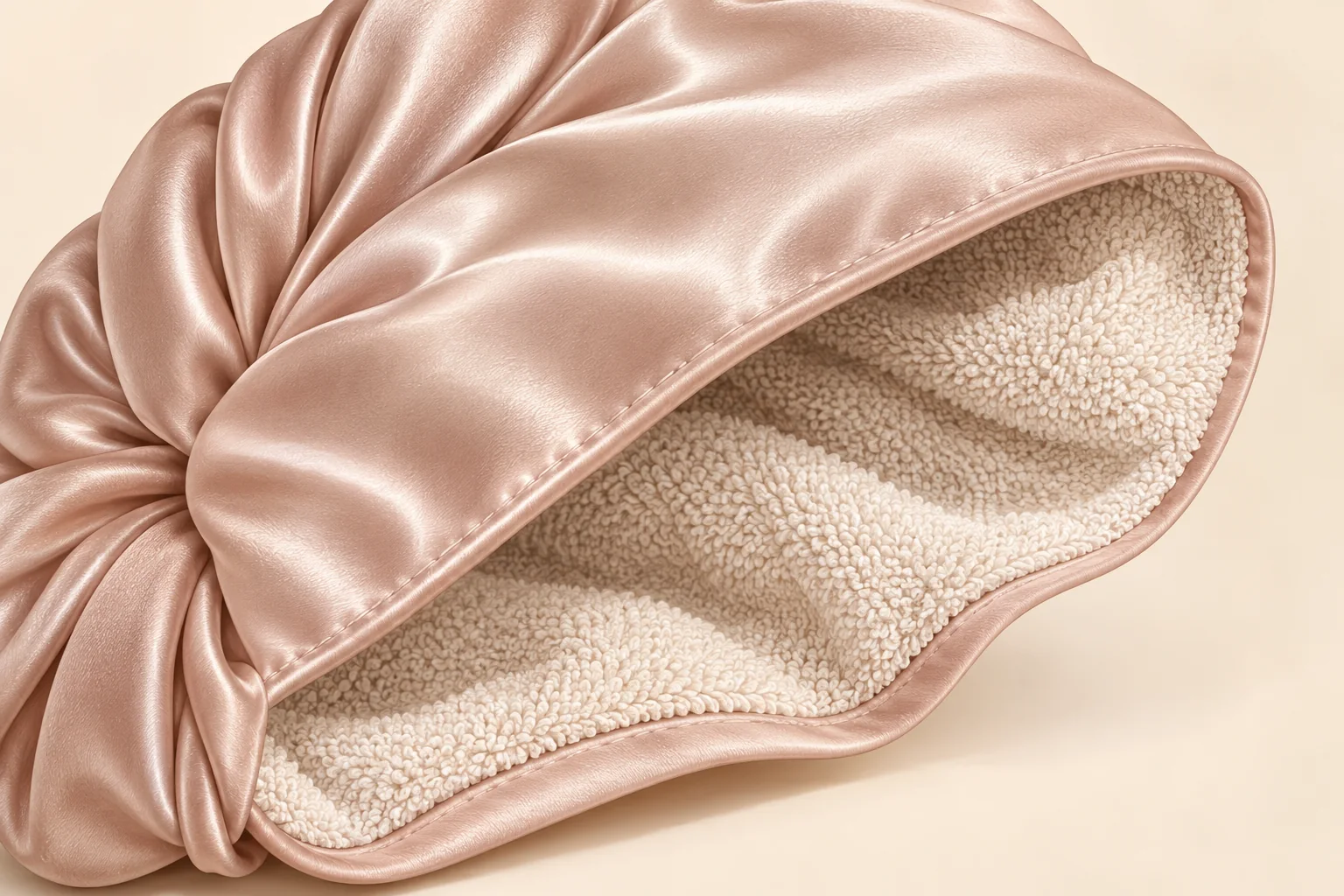
I read each layer separately
I begin with the full product description. I look for a clear account of what touches the hair and what forms the outer surface. I also check whether the seller describes a drying accessory, a sleep accessory, or a shower barrier. A product name alone may not make that distinction clear.
For our Mulberry Silk Hair-Drying Wrap Cap, the description states that the exterior is mulberry silk and the inner layer is soft and absorbent. It specifically says that the whole cap is not represented as all-silk. I keep that distinction in my comparison, and I do not assign an unlisted fiber to the lining.
| My detail to compare | My drying-wrap question | My sleep-bonnet question |
|---|---|---|
| I check the contact layer | I ask what takes up excess water | I ask what touches dry hair |
| I check the shape | I ask how damp lengths fit | I ask how lengths rest overnight |
| I check the instructions | I ask when to remove the wrap | I ask how the bonnet should be worn |
I also distinguish an absorbent lining from complete drying. The product page describes taking up excess surface moisture. It does not provide a measured drying speed, a percentage of water removed, or a guarantee that my roots will become dry. I do not invent those figures.
If a listing combines the words silk, satin, microfiber, and sleep without explaining the layers, I ask for clarification. I use my silk-versus-satin guide for the separate fiber and weave question. I then return to the finished item's intended job, because vocabulary alone cannot tell me how to use it.
How do I put damp hair into a wrap without a tight twist?
I can copy the way I balance a heavy bath towel and pull the wrap too tightly. That can make a lighter accessory feel uncomfortable before it has helped.
I remove excess water gently, support my lengths, and follow the wrap's own placement and closure instructions. I use only a light twist where the design calls for one. I loosen or remove the wrap if it pulls, feels heavy, or needs force to close.

I let the shape hold the lengths
I check the instructions before putting the accessory on. Our wrap's stated method begins with gently squeezing excess water from the hair without rubbing. It then places the wider end over the back of the head, gathers the lengths into the tapered section, and uses a light twist. I follow the closure supplied with the item, rather than assuming that every wrap uses the same button or loop.
The American Academy of Dermatology's hair-handling guidance recommends absorbing water with a towel instead of roughly rubbing the hair.1 I use that principle for gentle handling. It does not establish that this particular silk-exterior wrap dries faster or works for every hair type.
I give long lengths space before I fasten anything. I do not pull the end of the wrap to force more hair into a small pocket. If the accessory cannot close comfortably with the hair arranged loosely, I treat capacity as a fit question. A one-size description does not mean unlimited room.
I also avoid treating a firmer twist as a way to increase absorption. More tension is not a verified performance setting. I check whether the wrap feels stable without pulling at the front or sides. I can take it off and try a gentler arrangement, but I stop if comfort does not improve.
I keep this stage separate from styling my final curl pattern. I do not promise that a wrap will preserve every shape. I choose the handling approach that matches my hair and the item's instructions, and I leave the accessory out of the routine when it creates more pulling or difficulty than it solves.
When do I remove a drying wrap and continue my routine?
I can leave a wrap on because I am waiting for completely dry hair. That expectation can keep a damp accessory in place long after its useful short-term job.
I remove the wrap according to its instructions and its condition, rather than waiting for a universal time limit. I check comfort and moisture as I go. I do not treat a saturated lining as a reason to leave it on until every part of my hair is dry.
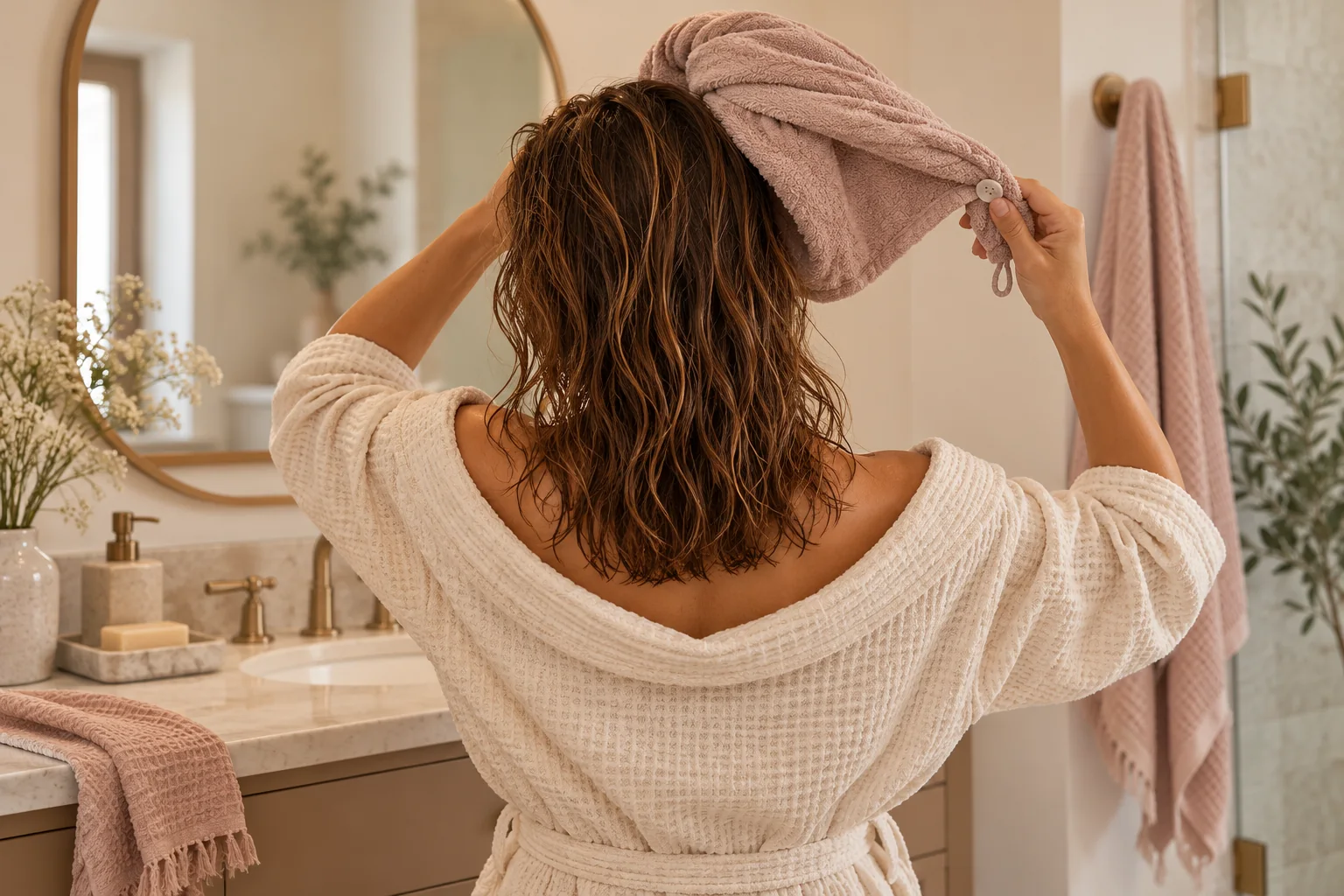
I check progress without inventing a timer
I use the wrap for the minutes after washing, which is the purpose stated for the Zolay item. I do not publish a five-minute or fifteen-minute promise that the page does not support. Hair length, density, and starting moisture can change the experience. The accessory's condition also matters, so I inspect it rather than relying only on a clock.
The current product instructions say to remove the wrap once it feels comfortably damp rather than saturated. I keep that wording tied to this item. I do not transfer it to a different brand with a different construction or a different stated method. If another wrap gives a specific use limit, I follow that limit.
| My observation | My next decision |
|---|---|
| I feel pulling or heaviness | I loosen or remove the wrap |
| I find the lining saturated | I remove it and continue drying |
| I still have damp roots | I continue my normal drying routine |
| I cannot judge the intended use | I check the item's instructions |
I then continue with the drying method that is appropriate for my hair. I do not claim that the wrap replaces every other drying step. I also do not place a sleep bonnet over a damp wrap to keep the shape together. Those are separate accessories with separate purposes.
I set the used wrap aside in its care area after removal. I avoid folding the damp lining into a tight bundle while I finish getting ready. This small handoff lets me see that the accessory still needs attention. It also prevents me from confusing a wrap that was used after a shower with a clean, dry piece ready for another use.
Can I use the drying wrap as my overnight bonnet?
I can finish an evening shower and keep the wrap on because it is already secure. That skips the question of whether the accessory was designed for sleep.
I do not substitute Zolay's temporary drying wrap for its sleep bonnets. I let my hair and overnight accessory dry before that stage of the routine. I check comfort and capacity in the sleep style separately, rather than assuming that a wrap's daytime fit will work overnight.
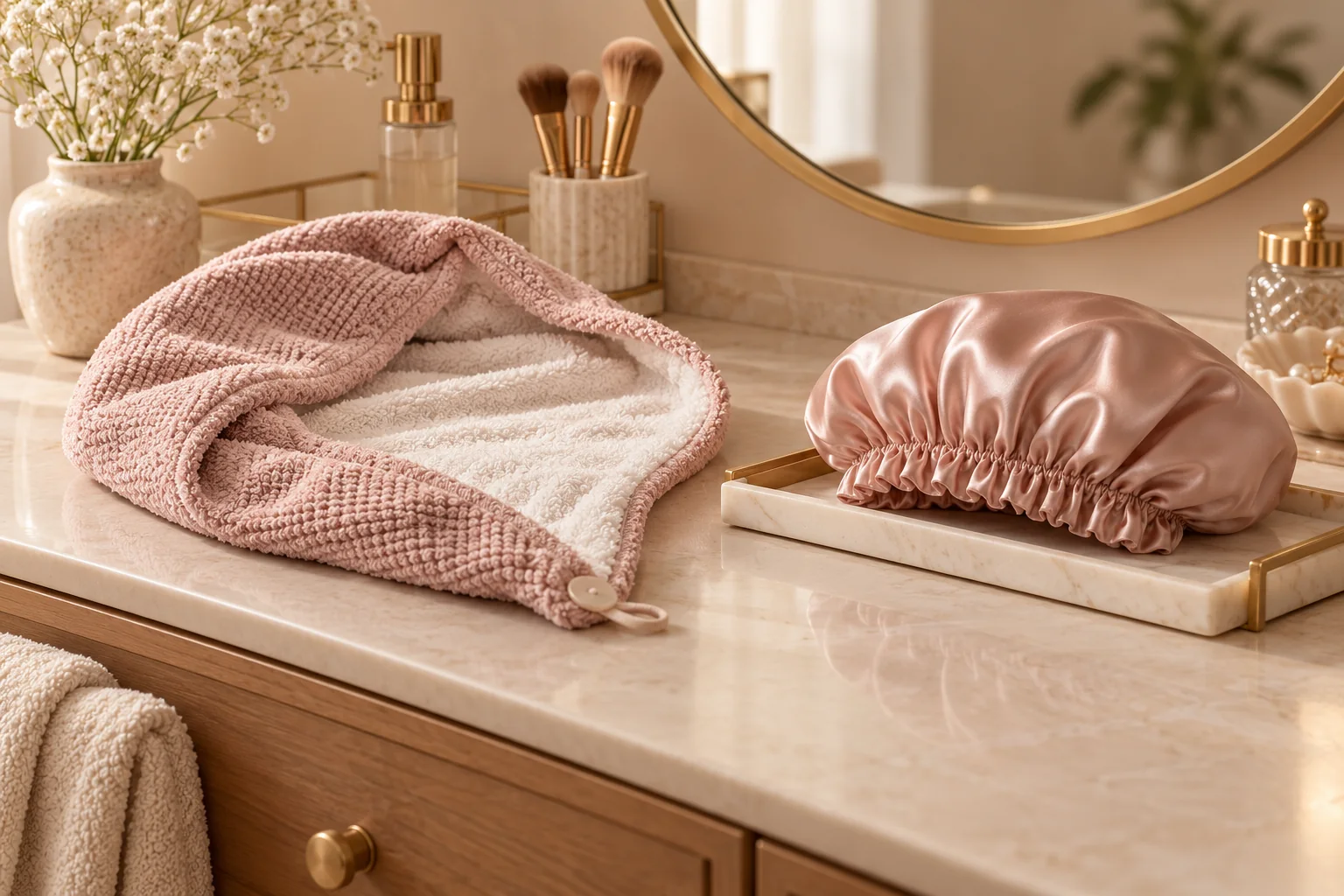
I choose for the next job
I look at the point where my post-shower routine ends and my overnight routine begins. The Zolay wrap's product questions say that it is designed primarily as a temporary drying wrap. They direct shoppers toward a silk sleep bonnet for overnight wear. I follow that stated division of use instead of relying on the word cap to make the two pieces interchangeable.
I check that my hair is dry before considering the sleep accessory. I also check the bonnet itself, including its band and seams. A bonnet that has just been washed may not be ready even when my hair is. I do not use the bonnet to finish a drying job that the wrap has not completed.
I assess sleep fit as a separate decision. The opening needs to feel comfortable, and the crown needs enough room for my lengths without a tight bundle. A tapered drying shape does not tell me how my hair will rest against a pillow. I use the sleep-bonnet selection guide for that fit question.
I also keep expectations limited. Neither accessory is a medical treatment. I do not promise hair growth, scalp improvement, or a particular morning style from choosing one. I am comparing their stated functions and the practical steps around them.
If my evening schedule leaves little time for hair drying, I adjust the schedule or choose another comfortable routine. I do not turn the wrap into an overnight solution by leaving it on longer. The accessory should serve the stage I am in, and I can remove it when that stage changes.
How do I care for a wrap that combines different layers?
I can wash a silk-exterior wrap like an ordinary towel and miss the needs of its outer fabric. I can also store it before the thicker lining has dried.
I follow care instructions for the complete wrap, including both layers and its closure. For the Zolay wrap, the guidance is cool-water hand washing with silk-safe detergent, no bleach or wringing, gentle reshaping, and air drying away from direct sunlight. I store it clean and dry.

I care for the finished accessory
I do not choose a wash setting from the lining alone. An absorbent inner layer does not make the whole wrap an ordinary bath towel. The shell, seams, and closure are part of the item that I need to preserve. I read the full care instructions before the first wash and keep them available for later use.
The current Zolay page provides the method described above. I do not add a hot wash, tumble drying, fabric softener, or an improvised stain treatment to that method. If the item needs a treatment that its instructions do not explain, I ask for guidance before trying it. A household recipe from a discussion about another fabric is not enough.
I use the Canadian Conservation Institute's textile guidance as background on handling and avoiding damp storage.2 I do not use museum conservation instructions as a washing recipe for this modern accessory.
| My care stage | My practical check |
|---|---|
| I prepare to wash | I read the finished-item method |
| I remove water | I avoid wringing and rough rubbing |
| I prepare drying | I reshape without stretching |
| I put the wrap away | I check the lining, seams, and closure |
I keep the wrap open while it dries as its instructions allow. I inspect thicker areas before storage, because a dry shell does not prove that the inner layer is ready. I also keep jewelry and open cosmetic bottles away from the drying fabric.
I give the wrap a clear place apart from my ready sleep bonnet. That makes the next-use decision easier. I can see which piece belongs to the post-shower stage and which belongs to the overnight stage, and I can care for each without pretending that their similar appearance means the same function.
Conclusion
I choose the accessory by its contact layer and intended job. I use a drying wrap briefly, check moisture, and keep overnight fit and care separate.
- I use AAD for gentle hair-handling advice, not evidence of this wrap's drying speed or performance. ↩
- I use CCI for general textile-handling and storage context; the modern wrap's own care instructions govern washing. ↩
Images are AI-generated editorial illustrations. They do not identify or verify a specific product.