
Should I Buy a Jewelry Set or Choose Individual Pieces?
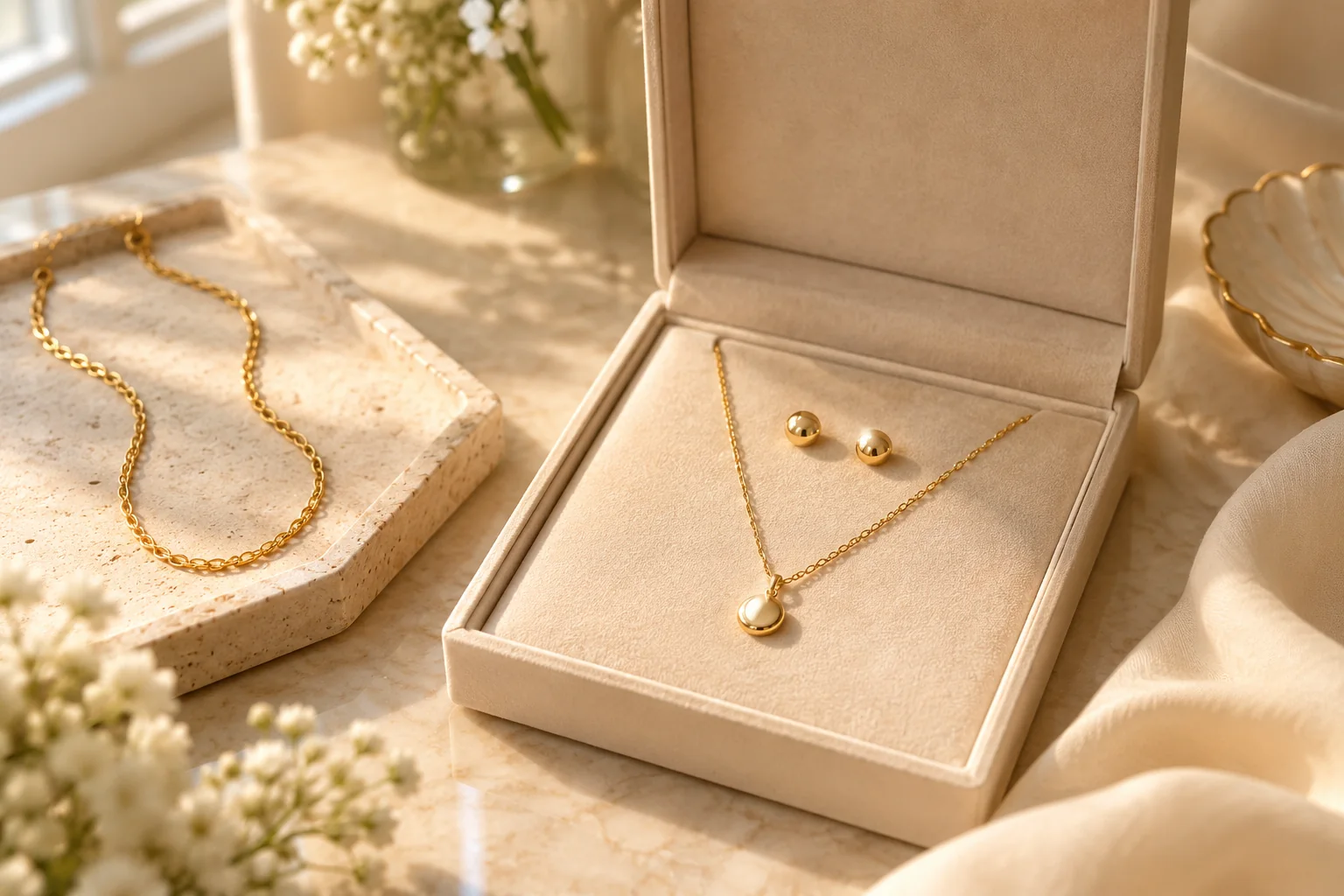
I can like a coordinated jewelry set and use only its necklace. I want to compare the pieces I will wear before I compare the bundle price.
I choose a jewelry set when its included pieces suit my actual outfits, fit and care needs. I choose individual pieces when I want one item or need different details for each. I compare the full purchase cost and terms rather than assume more pieces mean better value.
I make this decision one item at a time, then look at the group. I do not need every piece to match exactly. I need to know what is included, what I would use and whether the whole order makes sense for me.
Would I choose every included piece on its own?
I can let a favorite pendant make the rest of a set feel necessary. I get a clearer decision when I assess each included item separately.
I list the pieces in the set and give each a real use. I compare them with items I already own. I do not count a piece as useful just because it matches another one, and I do not invent a need to justify the bundle.
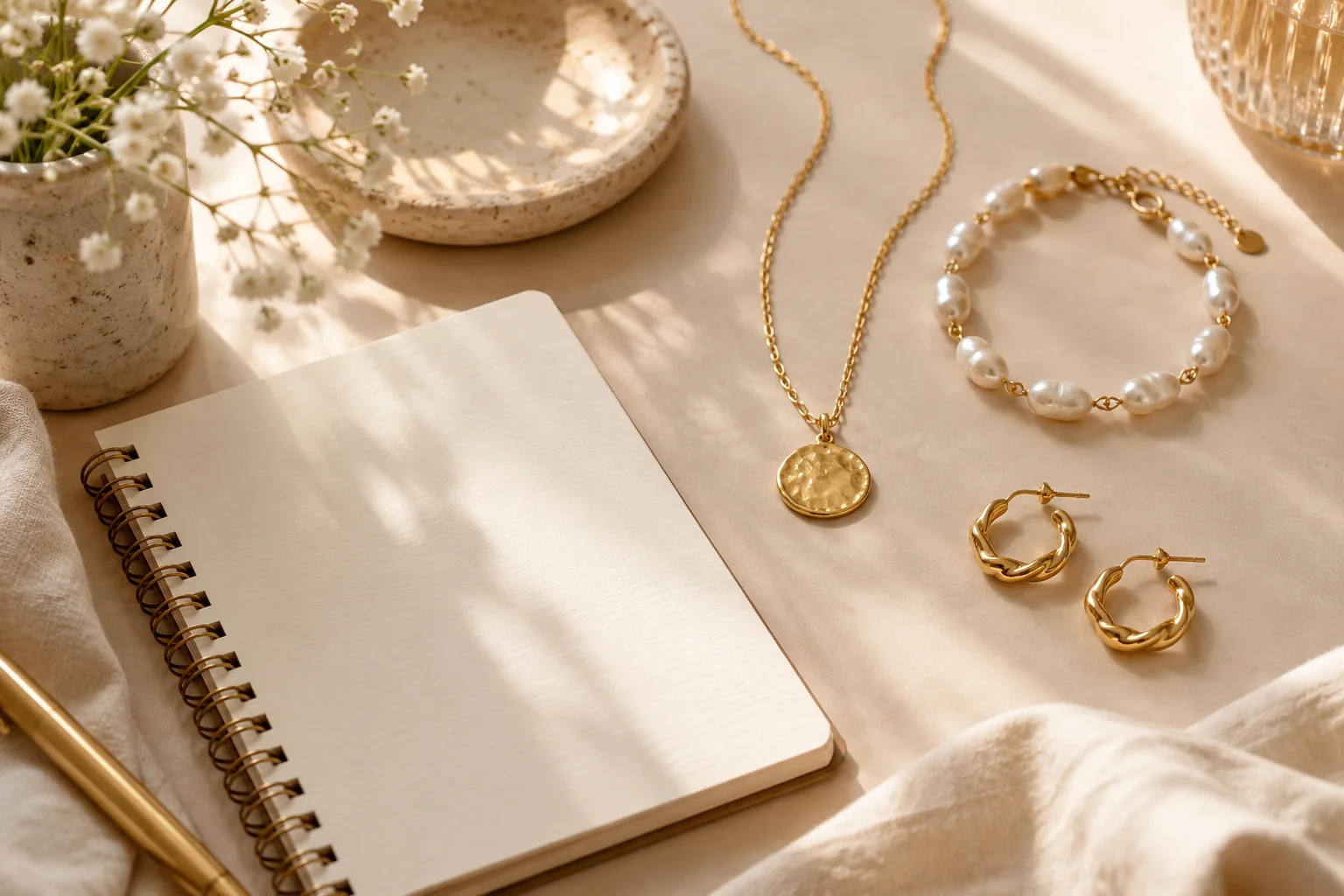
I make an item-by-item use list
I start with the contents actually stated in the listing. I check whether the image shows everything in the price or includes styling accessories that are not part of the order. I do not assume that a photographed bracelet, chain or box is included. I want an exact list before I compare the group with separate purchases.
I write one ordinary occasion beside each included piece. I may want the necklace for work and the earrings for a particular outfit. I may find that I would not wear the bracelet at all. I keep that answer visible. I do not treat a matching appearance as a reason to count an unused item as an extra benefit.
| Piece I assess | Question I ask myself |
|---|---|
| I consider the necklace | I ask which neckline I would wear it with |
| I consider the earrings | I check whether their type suits my preferences |
| I consider another included item | I name a separate reason I would use it |
I compare the list with my existing collection. I may already own a piece that fills the same role, even if its color is slightly different. I use the everyday essentials guide when I need help checking that overlap. I keep this comparison focused on the proposed set. I can enjoy the way the pieces look together and still choose only the item that serves a clear purpose for me.
Do I want a matching look or room to mix pieces?
I can buy a set for visual ease and later feel that I must wear it all together. I want to decide how much matching I actually enjoy.
I compare the set as a group and as individual pieces. I choose a coordinated look when I like that effect with my clothes. I leave room to mix or wear one item when I prefer it, rather than treat a set as a rule about what must go together.
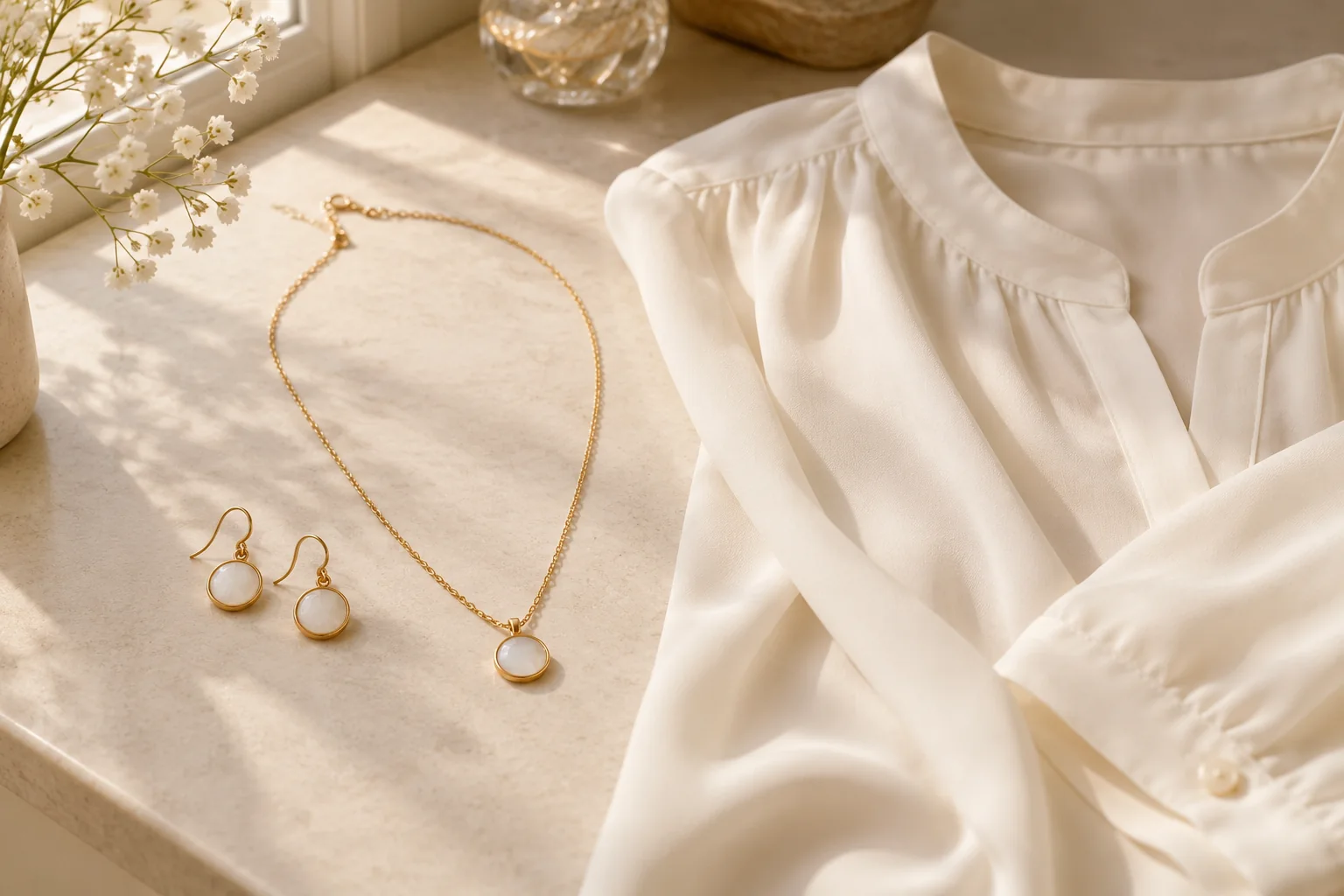
I picture the outfit rather than the display box
I look at an outfit I already wear. I consider where the necklace sits and how much detail appears near my face. I do not judge only from a neat product arrangement. The space inside a box differs from the space around a neckline, and a group can feel different when I imagine it with ordinary clothes.
I consider which piece I want to draw attention to. I may prefer a necklace with quiet earrings, or earrings with no necklace. I can also enjoy a full matching look. I do not need to turn either preference into a universal styling rule. I want to know whether the actual set gives me combinations I would choose without feeling obliged to use every item.
I compare color separately from material. Two gold-colored pieces can look close in a photograph while their written construction differs. I do not assume that matching appearance establishes the same metal or finish. I use the gold-tone and silver-tone guide when I want to consider color with my clothes, and I read each piece's material details as another task.
I also think about wearing the set in parts. I may be happy to use its necklace alone if I still have a real use for the other items. I do not call that a waste merely because the pieces were sold together. The useful question is whether I would choose those combinations in my routine, rather than whether the seller's photograph presents the only way to wear them.
Have I checked the fit and materials of each item?
I can read one measurement and assume it describes a whole set. I need separate information for the parts I will handle and wear differently.
I check each item's dimensions, closure, material statement and selected option. I do not transfer the necklace's details to earrings or a bracelet. I ask about missing information before buying, especially when the listing gives only a group photograph or a broad description of the set.
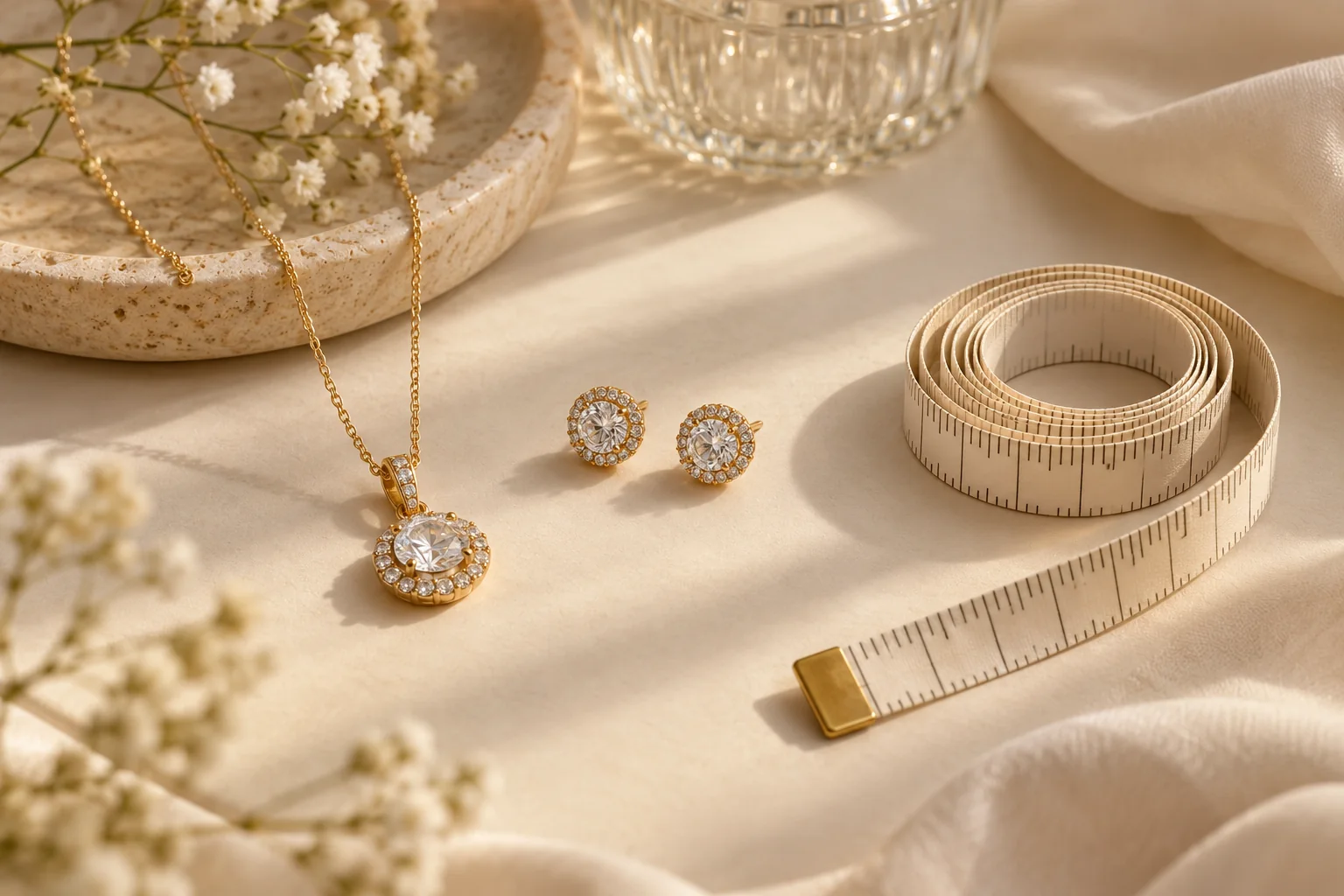
I compare finished pieces rather than a shared name
I read the necklace length and any stated adjustment separately from the dimensions of other items. I consider the pendant's scale as well as the chain. I do not assume that a matching bracelet has an adjustment range simply because the necklace has an extender. Each piece needs a description tied to its own construction.
I check closures and attachment types too. I may have a clear preference for how I put on a necklace or which earring style I use. I do not let a coordinated design hide a handling detail that matters to me. I request a clear view when the group photograph does not show the connection or fastening method.
| Detail I compare | Information I keep separate |
|---|---|
| I read dimensions | I keep each item's size and adjustment range |
| I inspect closures | I check each intended operating method |
| I read materials | I check which components each statement covers |
I use the FTC's Jewelry Guides overview as context for clear descriptions of metallic content, color and treatment.1 I do not treat the overview as certification of a particular set. I ask the seller to identify the actual option and the parts a statement covers. I avoid assuming that an attractive package means identical construction throughout. I can then compare a complete set with individually described alternatives using the same questions, rather than give one route an advantage because its missing details are easier to overlook.
Does the total cost still make sense for the items I want?
I can compare a bundle with the price of every possible separate piece and overlook what I intended to buy. I need a comparison tied to my actual choice.
I compare the set's total purchase cost with the cost of the individual pieces I would otherwise choose. I include applicable charges and read the actual order terms. I do not claim savings from a displayed discount or divide the price among items I will not use.
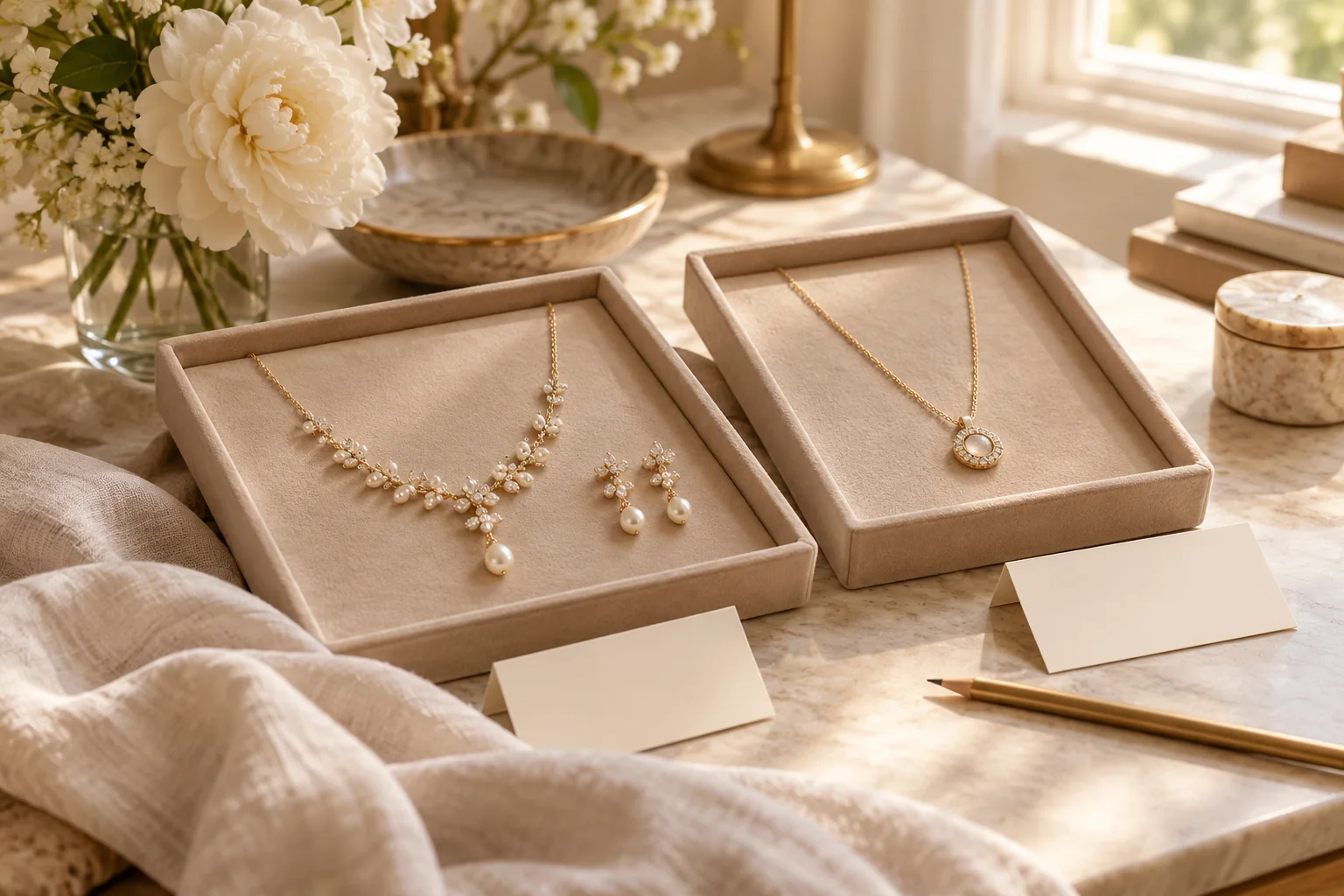
I compare the two orders I could really place
I write down the total for each realistic order. One may contain a set, while the other contains only a necklace. I do not add earrings to the second order just to make both lists equally long. I want the comparison to represent my intended purchase. A higher item count is not automatically a better result for that purpose.
I use the current selected options and delivery destination. I check whether a promotion applies to those items rather than borrow a banner price from another variation. I include any stated shipping and charges shown for the order. I avoid describing a saving until I can compare the actual totals on the same basis.
I read the return terms before relying on them. I check whether the seller describes a set as one unit and whether the stated conditions suit my situation. I do not assume I can keep one piece and return the rest. The FTC's online-shopping advice supports checking descriptions, costs and policies before ordering.2 I use that advice as a comparison method, not a promise about an individual seller's terms.
I can decide that a coordinated group is worth its total cost because I want and can use its contents. I can also choose one separately priced piece when that better matches my purpose. I keep the decision tied to useful items and clear terms, rather than let a discount label decide how much jewelry belongs in my order.
Can I care for and store the whole set without extra work?
I can keep a matching group in one box and assume every piece needs the same care. I want a routine that respects each finished item's details.
I read the supplied care instructions for every included piece. I store the items so they do not rub or tangle together, as their construction allows. I do not assume matching color means matching care, and I keep the original material details available after I put the packaging away.
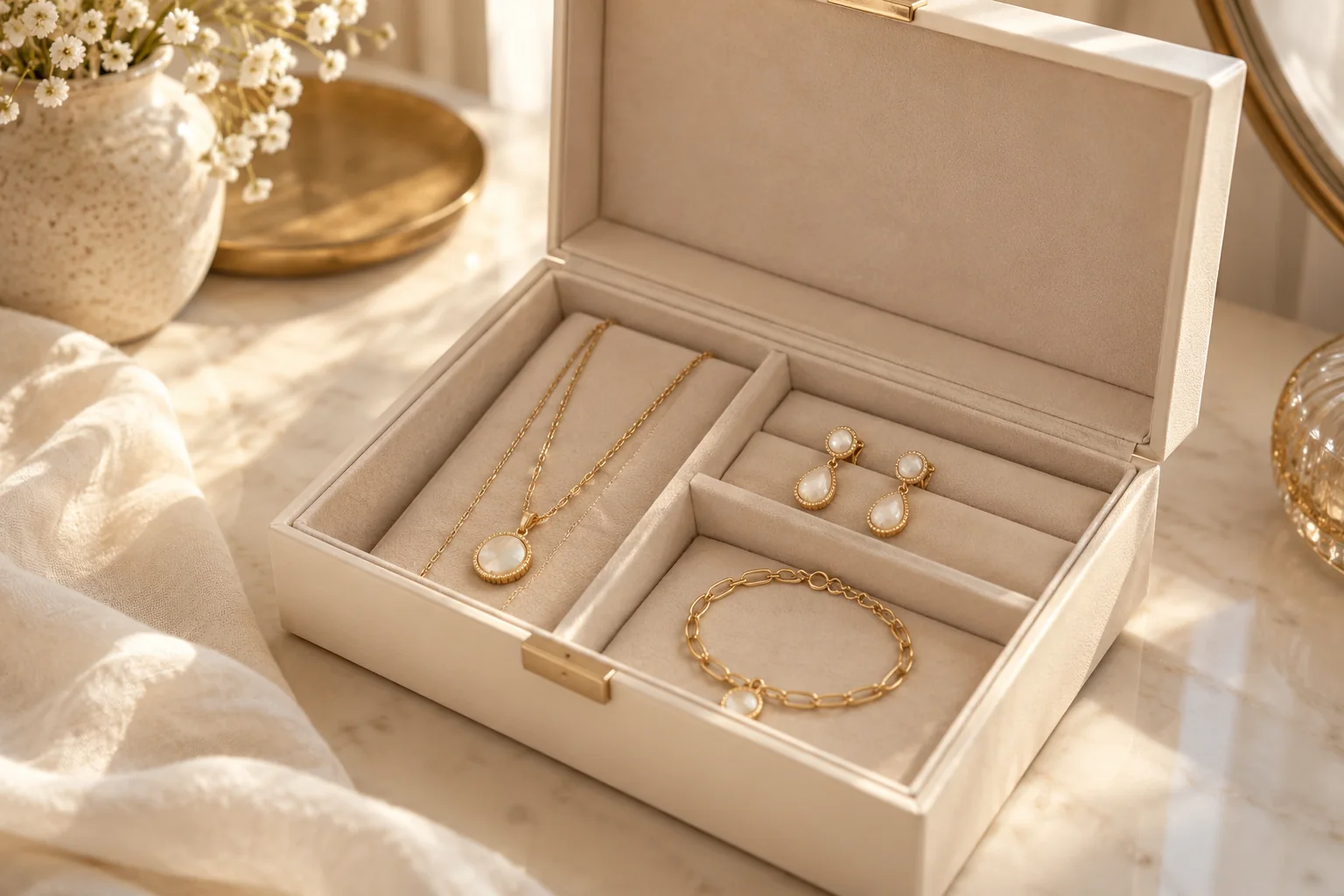
I include the after-purchase routine in the choice
I check whether the pieces contain different accents or finishes. I may find separate directions for a chain, decorative element or another component. I do not use one cleaner on the full set merely because the items were sold together. I follow the instructions for the finished pieces and ask when a care detail remains unclear.
I look at the storage space I already have. I may need separate compartments or enough room to lay a chain without sharp folds. I do not assume that the presentation box is suitable for every storage arrangement. I check whether the pieces can sit without rubbing one another and whether I can put them away without forcing a clasp or pendant into a small space.
| Routine I plan | Question I answer |
|---|---|
| I put the set away | I check whether the pieces remain separate |
| I prepare an item for wear | I can find its own care instructions |
| I keep only part of the group in use | I can store the other pieces without a tangle |
I use the accessory care-note guide when I want a simple way to keep useful item information together. I can apply that habit to my own purchase without turning it into another shopping list. I choose the group only when its fit, use and care make sense as real items in my routine, rather than as a finished arrangement that looks appealing in a photograph.
Conclusion
I compare each piece's use, fit and care before the total price. I choose a set or individual items by what I will actually wear and maintain.
- FTC: Jewelry Guides. I use its accurate-description context, not a certificate of a particular set's materials. ↩
- FTC: What to know before you buy something online. I use its cost and policy-checking advice without assuming a specific seller's terms. ↩
Images are AI-generated editorial illustrations. They do not identify or verify a specific product.